
Jihepu 2XZ-2B Direct-Coupled Rotary Vane Vacuum Pump
| Brand | Jihepu |
|---|---|
| Origin | Shandong, China |
| Model | 2XZ-2B |
| Pump Type | Oil-Lubricated Rotary Vane Pump |
| Ultimate Pressure (Total) | ≤1 Pa |
| Pumping Speed | 7.2 m³/h (2 L/s) at 50 Hz |
| Motor Power | 0.37 kW |
| Dimensions (L×W×H) | 480 × 140 × 250 mm |
| Net Weight | 20 kg |
| Gross Weight | 22 kg |
| Inlet Port | φ30 mm (or optional KF-25 flange) |
| Noise Level | 65 dBA |
| Oil Capacity | 1 L |
| Rated Speed | 1400 rpm (50 Hz) |
Overview
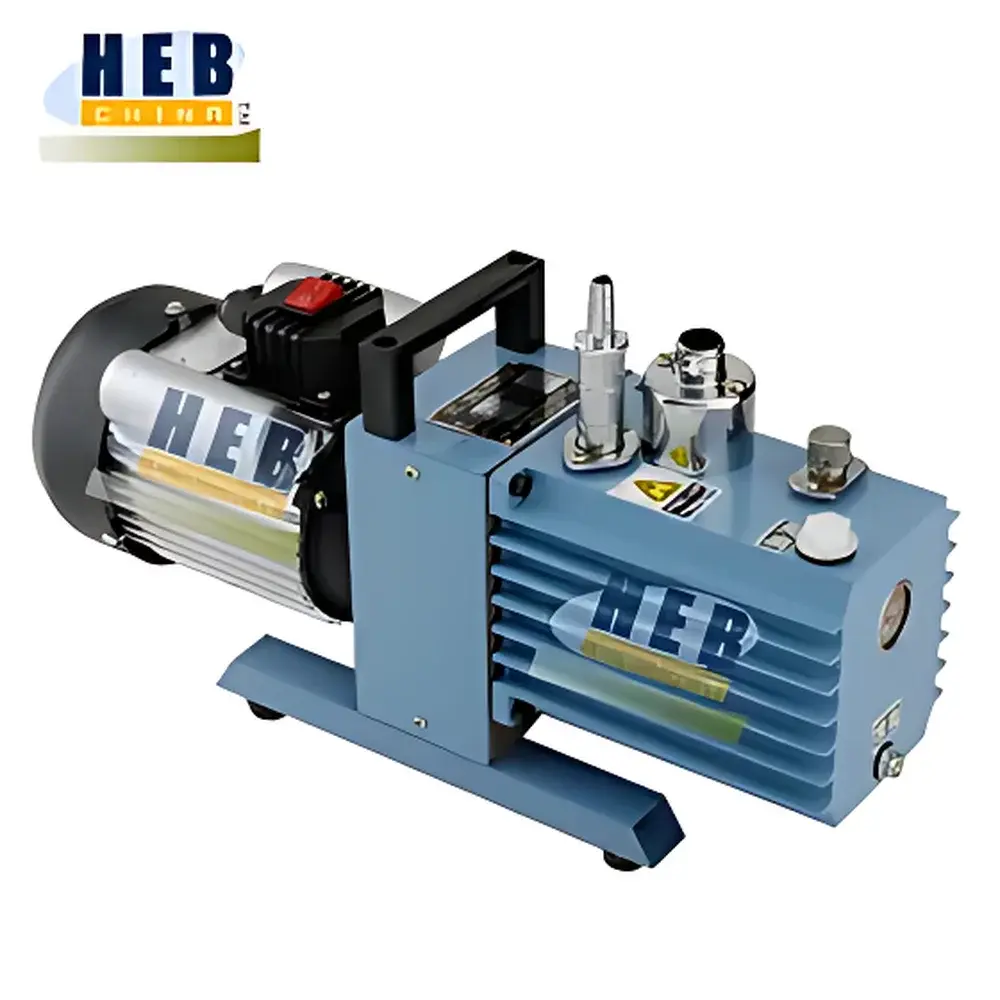
The Jihepu 2XZ-2B is a direct-coupled, oil-lubricated rotary vane vacuum pump engineered for reliable primary vacuum generation in laboratory and light industrial environments. It operates on the principle of positive displacement via rotating vanes within an eccentrically mounted rotor chamber, where oil serves both as a sealing medium and lubricant to maintain tight clearances and thermal stability. Designed for continuous operation at inlet pressures up to 1.33 × 10³ Pa, the pump features a forced-oil feed system that ensures consistent oil distribution under variable load conditions—critical for maintaining stable vacuum performance during extended duty cycles. Its compact footprint and low noise signature (65 dBA) make it suitable for integration into benchtop vacuum systems, including freeze dryers, vacuum ovens, and analytical instrument foreline applications. As a general-purpose roughing pump, it meets functional requirements for backing high-vacuum devices such as diffusion pumps, turbomolecular pumps, and sputter coating systems.
Key Features
- Integrated gas ballast (air bleed) valve to minimize water vapor condensation in pump oil, significantly extending oil service life and reducing maintenance frequency.
- Self-actuating anti-backstreaming check valve prevents reverse oil migration into the vacuum chamber upon shutdown—eliminating contamination risk to sensitive samples or process lines.
- High pumping efficiency and reproducible ultimate vacuum (≤1 Pa total pressure) achieved through precision-machined rotor/vane geometry and optimized oil circulation dynamics.
- Dedicated small-bore configuration (φ30 mm inlet) with optional KF-25 quick-release flange for seamless compatibility with standard laboratory vacuum vessels and lyophilizers.
- Robust cast-aluminum housing with vibration-damped motor mounting to ensure mechanical stability and operational longevity under intermittent or cyclic duty profiles.
- Thermally protected induction motor (0.37 kW, 50 Hz / 1400 rpm) rated for continuous operation with IP54 ingress protection.
Sample Compatibility & Compliance
The 2XZ-2B is intended for use with non-corrosive, non-reactive, and non-particulate gases—including ambient air, nitrogen, argon, and inert process atmospheres. For vapors (e.g., solvents, water), particulates, or mildly corrosive gases, external conditioning—such as inline cold traps, particulate filters, or chemical scrubbers—is required upstream of the inlet port per ISO 21360-1 guidelines for vacuum pump protection. While not certified to specific international safety standards (e.g., CE, UL), the unit complies with GB/T 19956.1–2005 (Chinese national standard for rotary vane vacuum pumps) regarding performance verification, noise emission, and oil retention. Its design supports GLP-aligned lab workflows when paired with documented maintenance logs and scheduled oil changes per manufacturer-recommended intervals (typically every 500–1000 operating hours).
Software & Data Management
This is a standalone electromechanical vacuum pump with no embedded digital control interface or firmware. Operation requires external manual or relay-based switching; analog vacuum gauges (e.g., Pirani or capacitance manometers) must be installed separately for pressure monitoring. For automated integration, users may connect the pump to programmable logic controllers (PLCs) or LabVIEW-driven systems via its 220 V AC power input and auxiliary dry-contact status outputs (optional accessory). No proprietary software, cloud connectivity, or FDA 21 CFR Part 11-compliant audit trail functionality is provided—consistent with its role as a utility-grade support device rather than a regulated analytical instrument.
Applications
- Primary vacuum source for laboratory freeze dryers (lyophilizers) and vacuum drying ovens.
- Foreline pump for diffusion pumps, turbo-molecular pumps, and ion getter pumps in thin-film deposition (PVD/CVD) and surface analysis systems.
- Vacuum packaging and degassing in food science, pharmaceutical formulation, and materials R&D.
- Process vacuum in photovoltaic cell manufacturing, LED encapsulation, and semiconductor packaging lines.
- Support vacuum for electron microscopy sample preparation, vacuum impregnation, and resin casting.
- General-purpose evacuation in HVAC service rigs, refrigeration system testing, and academic physics demonstrations.
FAQ
What type of oil is recommended for the 2XZ-2B?
Jihepu specifies ISO VG 68 mineral-based vacuum pump oil (e.g., Shell Vacuolube 68 or equivalent) for optimal viscosity index, oxidation resistance, and vapor pressure characteristics. Synthetic oils may be used only if explicitly approved by the manufacturer for rotary vane service.
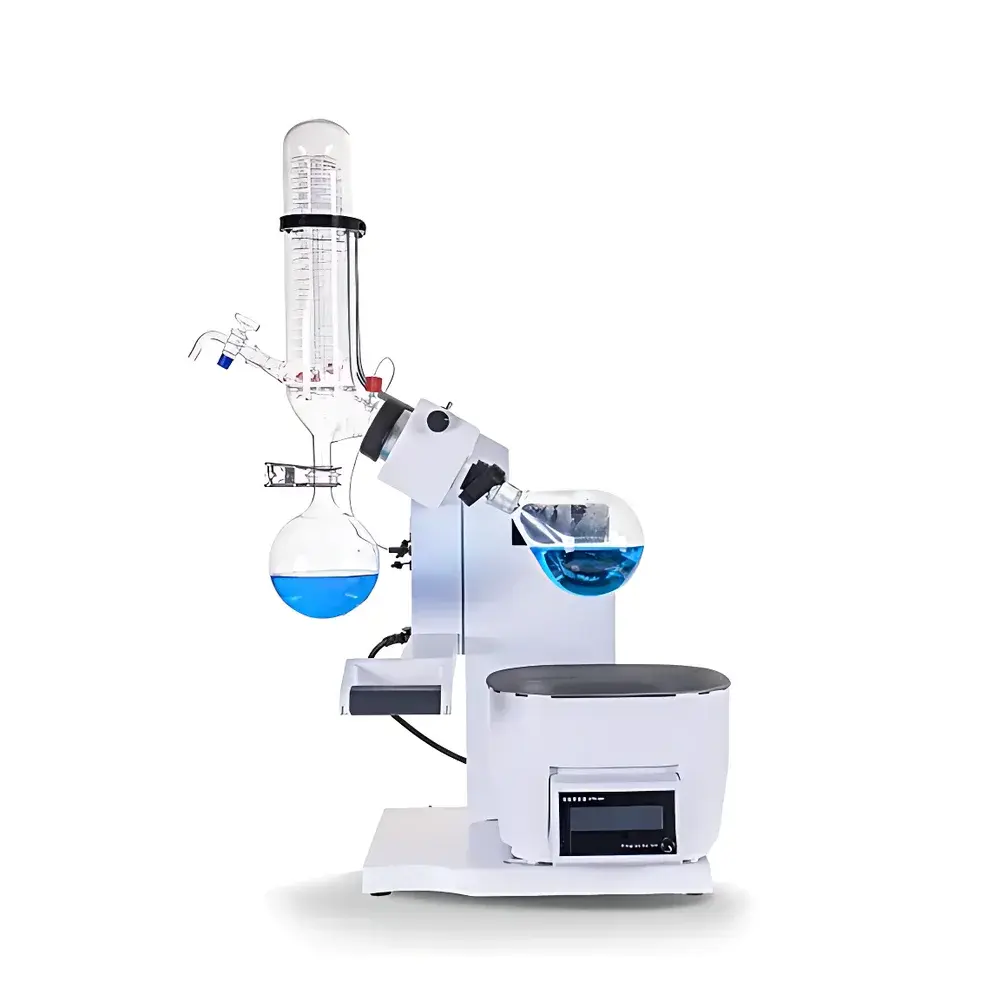
Can this pump handle solvent vapors from rotary evaporation?
No—solvent vapors must be condensed upstream using a chiller-based cold trap. Uncondensed organics degrade pump oil, accelerate vane wear, and compromise ultimate vacuum. Refer to ASTM F2699 for solvent-handling best practices in roughing pumps.
Is KF-25 flange mounting included by default?
The standard inlet is a plain φ30 mm threaded port. KF-25 flange adapters are available as optional accessories and require separate ordering.
How often should the oil be changed?
Under normal clean-air operation, change oil every 500 hours or quarterly—whichever occurs first. More frequent changes are required when pumping humid or contaminated gases.
Does the pump include thermal overload protection?
Yes—the motor incorporates a bimetallic thermal cutout switch compliant with IEC 60034-11, automatically interrupting power during sustained overtemperature events.
Related Products



