
Onefive Origami-HP High-Power Femtosecond Fiber Laser
| Brand | Onefive |
|---|---|
| Origin | Switzerland |
| Model | Origami-HP |
| Wavelength Options | 514–520 nm, 780–820 nm, 1028–1040 nm |
| Pulse Width | < 100–200 fs |
| Avg. Power | >300 mW to >3 W |
| Repetition Rate | 40–200 MHz |
| Pulse Energy | up to 80 nJ |
| Beam Quality | M² < 1.2 |
| Amplitude Noise | < 0.5% rms (1 h) |
| Timing Jitter | Ultra-low (phase-noise limited) |
| Cooling | Passive air-cooled |
| Enclosure | Sealed, dust-proof OEM package |
| Control | Fully remote, GUI & TTL/USB/Ethernet interfaces |
| Compliance | Designed for ISO 13694, IEC 60825-1 Class 4 laser safety |
Overview
The Onefive Origami-HP is a turnkey, high-repetition-rate femtosecond fiber laser engineered for demanding OEM integration and advanced scientific research applications. Based on mode-locked Yb-doped or Er-doped fiber oscillator architecture, it delivers transform-limited sech²-shaped pulses with negligible Kelly sidebands and absence of spectral ripple—ensuring intrinsic pulse fidelity without post-compression or external filtering. Its all-fiber, monolithic design eliminates alignment sensitivity and enables diffraction-limited beam quality (M² < 1.2) and exceptional pointing stability (< 50 μrad rms over 12 h). Unlike amplified systems, the Origami-HP operates without internal amplifiers—eliminating amplified spontaneous emission (ASE) background and enabling shot-to-shot amplitude stability critical for pump-probe spectroscopy, frequency comb seeding, and nonlinear microscopy. The laser is fully compliant with IEC 60825-1 Class 4 safety requirements and conforms to mechanical and thermal specifications outlined in ISO 13694 for ultrafast laser beam characterization.
Key Features
- Ultra-low timing jitter and phase noise: Engineered for synchronization-critical applications including optical sampling, RF photonics, and attosecond science
- No user-serviceable parts: Hermetically sealed, dust-proof OEM enclosure ensures 24/7 reliability without field maintenance
- Passive air cooling: Eliminates water chillers, reducing system footprint, power draw, and acoustic noise—ideal for cleanroom and portable platforms
- Plug-and-play operation: Single-button start-up; no manual alignment, cavity tuning, or knob adjustment required
- Multi-wavelength variants: Available at 514–520 nm (frequency-doubled), 780–820 nm (Ti:Sapphire-pumped OPO seeding), and 1028–1040 nm (direct Yb-oscillator output)
- Full digital control: Native support for USB 2.0, Ethernet (TCP/IP), and TTL-triggered start/stop, burst mode, and repetition rate modulation
- Low RMS amplitude noise: < 0.5% (1 h), validated per ANSI T1.105.02 and IEEE 1139 standards for optical intensity stability
Sample Compatibility & Compliance
The Origami-HP is compatible with standard free-space optical benches, fiber-coupled end stations (PM fiber optional), and vacuum-compatible ultrafast beamlines. Its collimated output (Ø1.2–2.0 mm, divergence < 1.5 mrad) integrates seamlessly with commercial autocorrelators, FROG devices, and dispersion compensation modules. All models meet CE marking requirements under the EU Machinery Directive and comply with RoHS 2015/863. For regulated environments—including GLP/GMP laboratories and medical device R&D—the laser supports audit-ready logging via its embedded firmware, with timestamped operational records traceable to NTP-synchronized clocks. While not FDA-cleared as a medical device, its performance parameters align with USP recommendations for ultrafast light sources used in analytical instrumentation validation.
Software & Data Management
Onefive provides the proprietary Origami Control Center software—a cross-platform (Windows/macOS/Linux) GUI supporting real-time monitoring of output power, repetition rate, temperature, and interlock status. All control commands are accessible via SCPI-like ASCII protocol over Ethernet or USB, enabling native integration into LabVIEW, Python (PyVISA), MATLAB, and EPICS-based control systems. Firmware logs include cyclic redundancy-checked operational metadata (uptime, thermal cycles, error flags), stored internally for ≥30 days and exportable as CSV or HDF5. Remote diagnostics and over-the-air firmware updates are supported under TLS 1.2 encryption—meeting baseline cybersecurity expectations for industrial laser systems per IEC 62443-3-3.
Applications
- Time-resolved spectroscopy: Pump-probe experiments requiring sub-100-fs temporal resolution and <100-as relative jitter between pump and probe arms
- Frequency comb generation: Low-noise carrier-envelope offset (CEO) detection in f–2f interferometers due to intrinsic amplitude-phase correlation suppression
- Two-photon polymerization (2PP): High-repetition-rate processing of sub-micron photoresist features with minimized thermal accumulation
- OPO and OPCPA seeding: Stable, narrow-bandwidth injection for tunable mid-IR generation with <0.1 cm⁻¹ spectral purity
- THz time-domain spectroscopy (THz-TDS): Photoconductive antenna excitation with optimized signal-to-noise ratio and dynamic range >90 dB
- Quantum optics: Heralded single-photon source pumping and entangled photon pair generation via SPDC in PPLN waveguides
FAQ
Is the Origami-HP suitable for integration into ISO Class 5 cleanroom environments?
Yes—its sealed, fan-filtered enclosure meets particle emission limits specified in ISO 14644-1 for airborne particulate cleanliness.
Can the repetition rate be externally modulated in real time?
Yes—via analog voltage input (0–5 V) or digital TTL command, supporting sweep rates up to 10 kHz with <1 µs latency.
Does the laser support synchronization to an external RF reference?
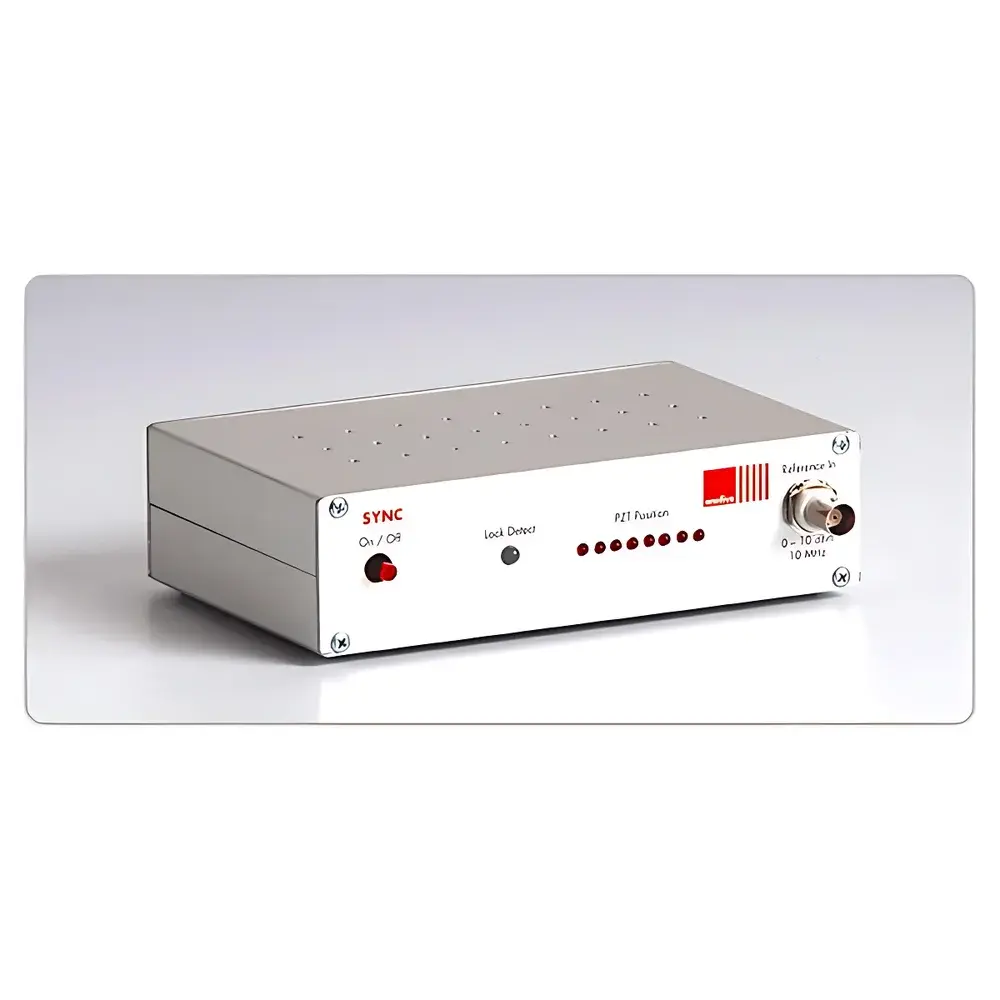
Yes—optional SYNC module enables sub-35 fs rms timing jitter lock to 10 MHz–1 GHz references, compliant with IEEE 1139 jitter measurement protocols.
What is the expected lifetime of the pump diodes under continuous operation?
Rated for >50,000 hours MTBF at 25 °C ambient, per Telcordia GR-468-CORE reliability testing standards.
Is factory recalibration required after shipment or relocation?
No—monolithic fiber design and passive thermal management eliminate need for post-installation alignment or wavelength recalibration.



