
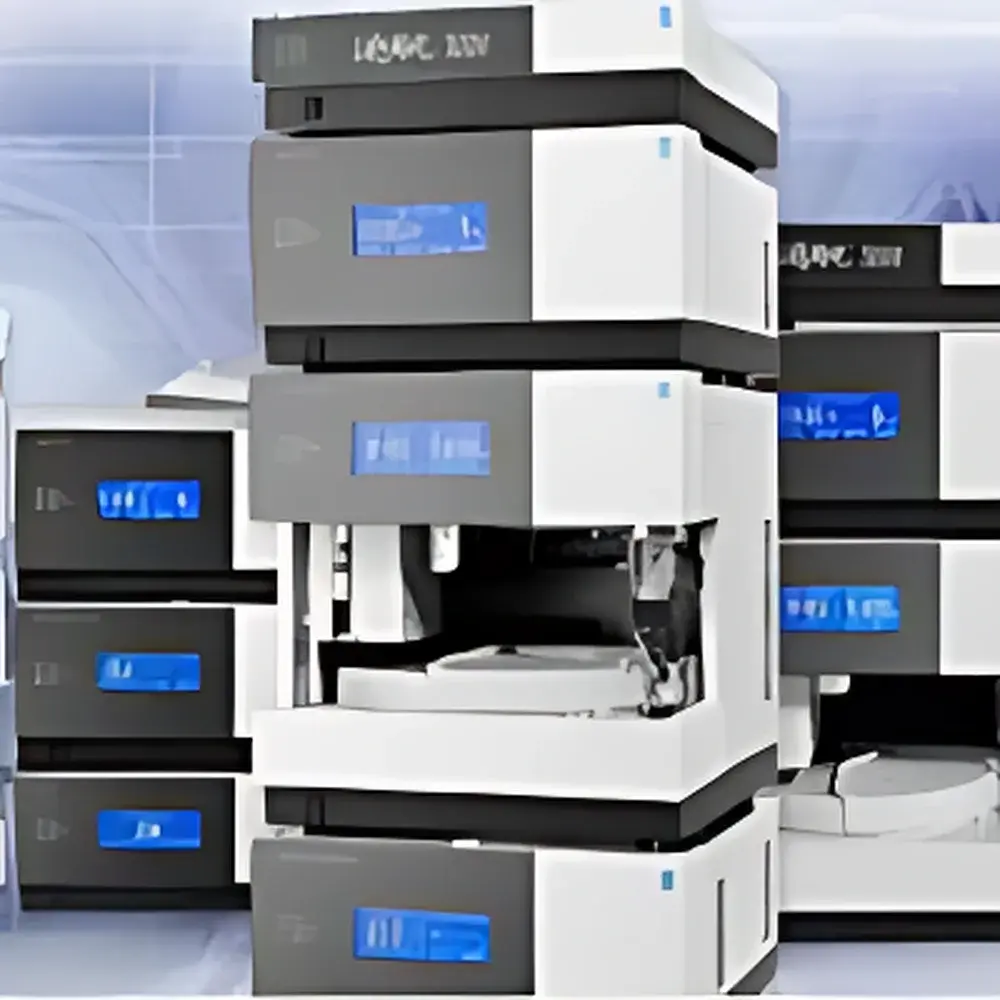
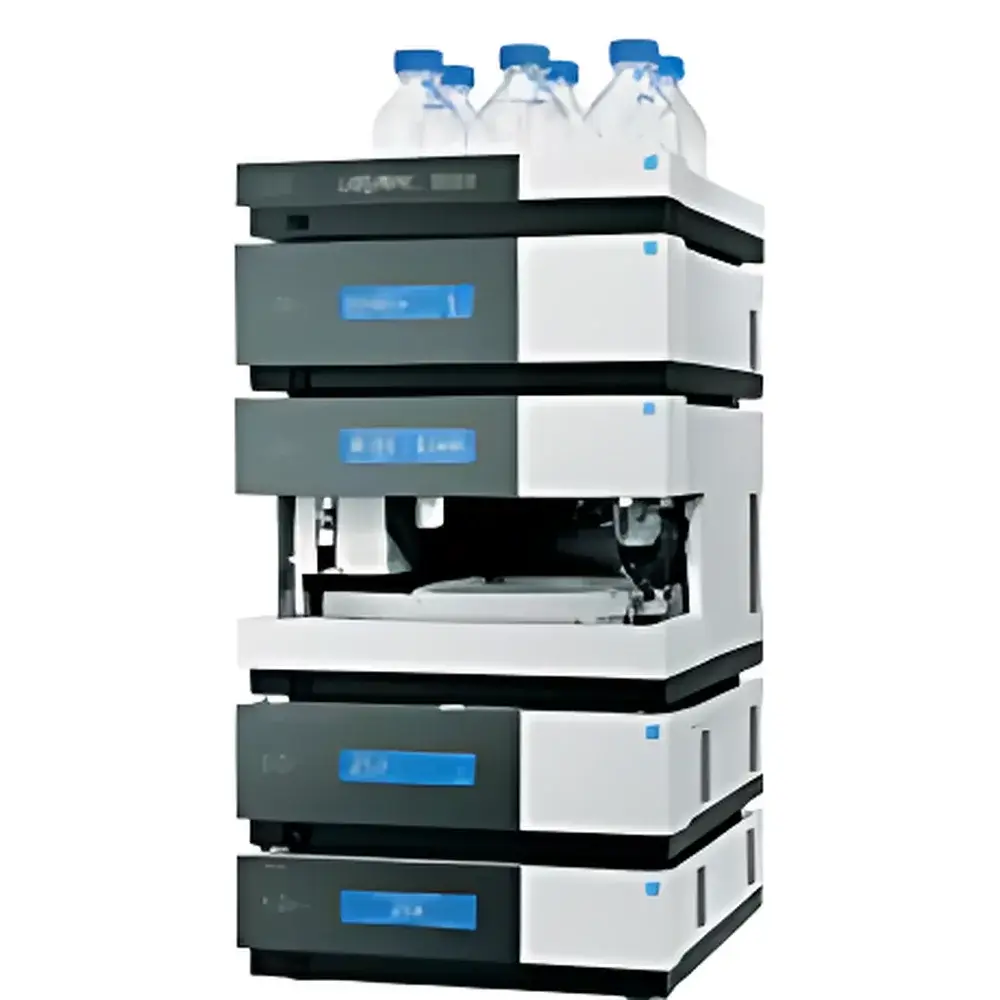
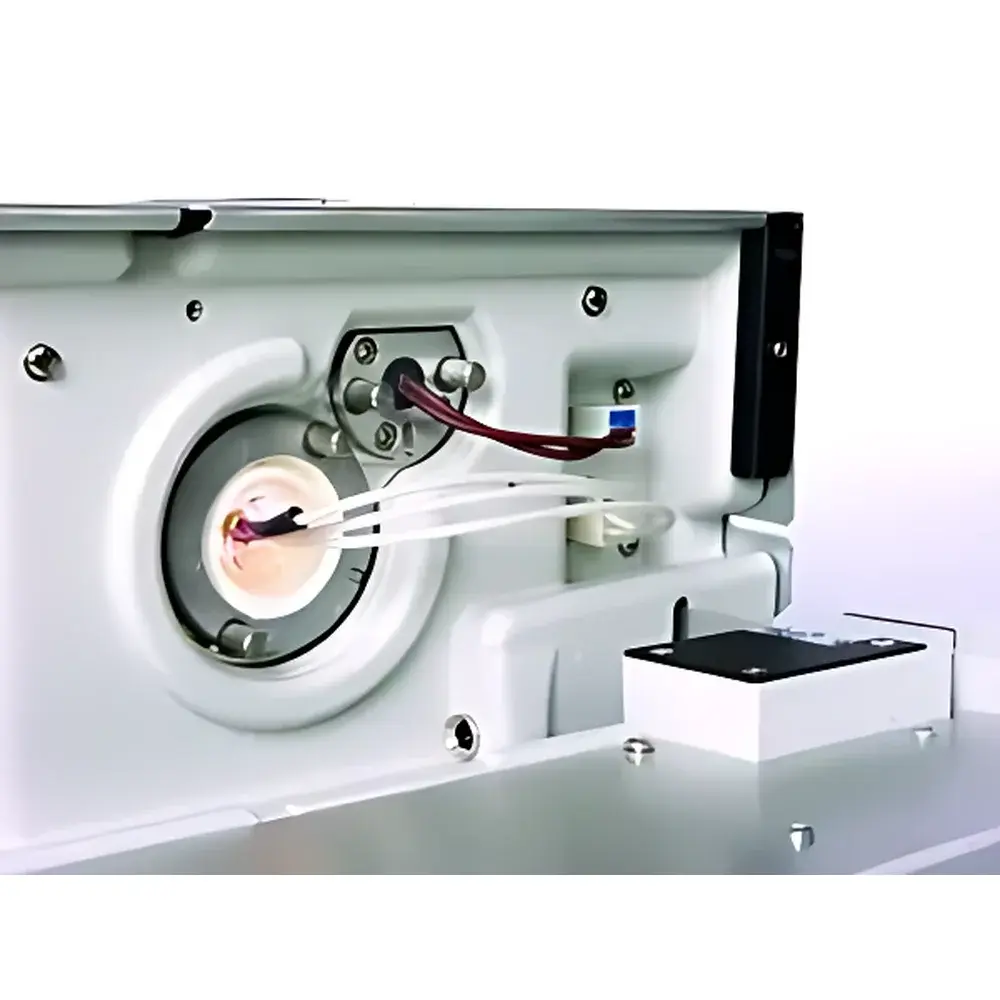
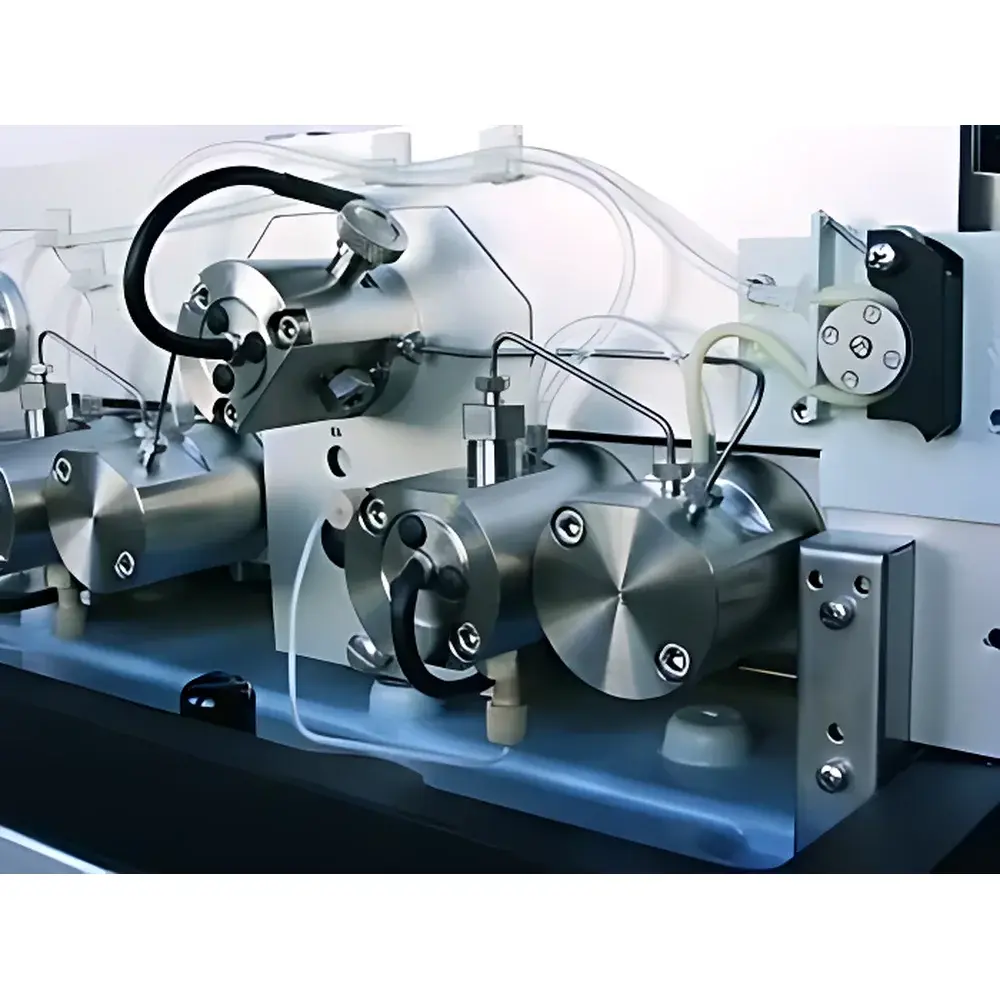
Thermo Fisher UltiMate3000 Preparative Liquid Chromatography System
| Brand | Thermo Fisher |
|---|---|
| Origin | Germany |
| Manufacturer Type | Original Equipment Manufacturer (OEM) |
| Product Origin | Imported |
| Model | UltiMate3000 |
| Price Range | USD 42,000 – 56,000 (FOB) |
| Application Level | Laboratory-Scale |
| Instrument Type | Medium-to-Low Pressure Preparative LC |
| Maximum Operating Pressure | 620 bar |
| Data Acquisition Rate | 100 Hz |
| Maximum Flow Rate | 10 mL/min |
| Pump Configuration Options | 7 single-pump and 5 dual-pump modular combinations |
| Dimensionality Support | 1D, 2D, and multi-dimensional LC workflows |
Overview
The Thermo Fisher UltiMate3000 Preparative Liquid Chromatography System is an engineered platform designed for laboratory-scale purification and isolation of target compounds from complex mixtures. Based on high-precision low-to-medium pressure liquid chromatography principles, it operates within a robust 620 bar pressure envelope—enabling compatibility with both conventional silica-based packings and modern superficially porous particles (SPPs) used in fast, high-resolution separations. Unlike analytical HPLC systems optimized solely for detection sensitivity, the UltiMate3000 preparative configuration prioritizes flow stability, gradient fidelity, fraction collection accuracy, and system modularity to support scalable method development—from analytical scouting to gram-level purification. Its architecture integrates industry-standard fluidic design, thermally stabilized column compartments, and real-time pressure monitoring to ensure reproducible retention time alignment across repeated injections and extended run times.
Key Features
- Modular pump architecture supporting seven single-pump and five dual-pump configurations—enabling tailored setups for isocratic, gradient, binary, ternary, or multi-solvent delivery in both isocratic and gradient elution modes.
- High-fidelity gradient formation with ≤0.1% RSD composition accuracy and 100 Hz real-time pressure and flow monitoring—critical for method transfer between analytical and preparative scales.
- Thermally controlled column compartment (ambient to 80 °C) with active air circulation for retention time stability under varying ambient conditions.
- Integrated fraction collector with UV-triggered or time-based collection, configurable vial racks (up to 120 positions), and optional mass-directed triggering when coupled with MS detectors.
- 620 bar maximum system pressure rating—compatible with sub-2 µm and 2.7 µm SPP columns for ultrafast separations without sacrificing loading capacity.
- Front-panel touchscreen interface with embedded method editor and real-time chromatogram display—complemented by remote operation via Chromeleon CDS software.
Sample Compatibility & Compliance
The UltiMate3000 preparative system accommodates a broad range of sample types—including small-molecule pharmaceuticals, natural product extracts, synthetic intermediates, peptides, and oligonucleotides—across solvent systems ranging from aqueous buffers to high-organic mobile phases (e.g., acetonitrile/water, methanol/water, THF, and chlorinated solvents). Column compatibility spans standard 10–50 mm ID preparative columns and custom-packed glass or stainless-steel cartridges. The system conforms to key regulatory frameworks for laboratory instrumentation: it supports audit trail generation, electronic signatures, and secure user access control per FDA 21 CFR Part 11 requirements when operated under Chromeleon CDS in validated environments. It also aligns with ISO/IEC 17025 documentation standards for testing laboratories and supports GLP-compliant workflow logging for nonclinical studies.
Software & Data Management
Chromeleon Chromatography Data System (CDS) 7.3 or later serves as the primary control and data handling platform. It provides full instrument control, sequence management, peak integration, purity analysis, and automated method translation tools—including analytical-to-preparative scaling calculators based on linear velocity and column volume normalization. All raw data are stored in vendor-neutral .cdf format, enabling third-party processing with open-source tools (e.g., OpenChrom) or commercial packages (e.g., ACD/Labs, Empower). Audit trails record operator actions, parameter changes, and calibration events with timestamping and user attribution—ensuring traceability during internal audits or regulatory inspections. Optional modules include FractionTrack for mass-directed purification and AutoPrep for unattended multi-step gradient optimization.
Applications
- Purification of reaction mixtures in medicinal chemistry workflows—supporting rapid isolation of lead compounds prior to structural elucidation (NMR, HRMS).
- Isolation of bioactive constituents from botanical extracts or fermentation broths using reversed-phase, HILIC, or ion-exchange modes.
- Method development for chiral separations—leveraging dual-pump configurations for mobile phase blending and back-pressure regulation during polysaccharide-based column use.
- Two-dimensional LC (2D-LC) coupling with online heart-cutting or comprehensive modulation—enhancing resolution for proteomics digests or polymer distribution analysis.
- Process analytical technology (PAT) integration via analog/digital I/O ports—enabling real-time feedback control of fraction collection based on inline UV or conductivity signals.
FAQ
What is the maximum injection volume supported by the UltiMate3000 preparative system?
Standard loop injectors accommodate volumes from 10 µL to 5 mL; optional large-volume injectors extend capacity up to 20 mL with precision syringe-driven actuation.
Can this system be integrated with a mass spectrometer for mass-directed purification?
Yes—via analog signal output (0–10 V) or digital communication protocols (e.g., LAN-based API), enabling real-time fraction triggering based on m/z-selected ions when paired with Thermo Scientific Q Exactive or Orbitrap systems.
Is method transfer from analytical UHPLC to this preparative platform supported?
Yes—the system includes built-in scaling algorithms in Chromeleon that preserve linear velocity, gradient slope, and dwell volume equivalence across column dimensions and flow rates.
Does the system meet GMP requirements for quality control laboratories?
When deployed with Chromeleon CDS in 21 CFR Part 11-compliant mode—including role-based access, electronic signatures, and immutable audit trails—it satisfies core GMP documentation and data integrity expectations for QC release testing.
What maintenance intervals are recommended for pump seals and check valves?
Under typical usage (≤8 h/day, aqueous/organic solvents), pump seal replacement is advised every 6–12 months; check valves should be inspected quarterly and replaced if pressure pulsation exceeds ±2% of setpoint.
Related Products





