
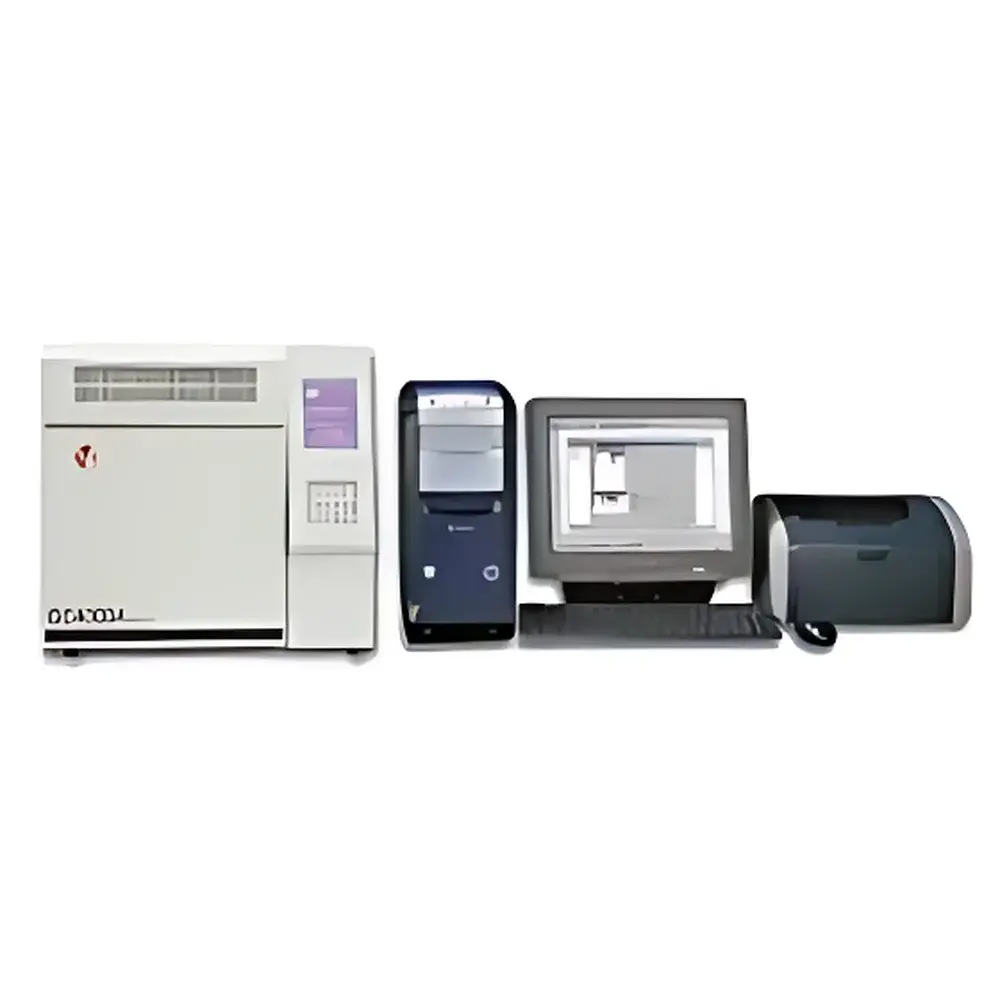
GC-4000A Series Portable Gas Chromatograph
| Origin | Shandong, China |
|---|---|
| Manufacturer Type | Authorized Distributor |
| Origin Category | Domestic (China) |
| Model | GC-4000A |
| Price Range | USD 7,000 – 14,000 |
| Detector Options | TCD, FID, ECD, FPD, NPD |
| Column Compatibility | Packed & Capillary (0.1–0.53 mm ID) |
| Temperature Control | 7 Independent Zones, 10-Step Programmable Ramp |
| Gas Control | Triple Digital Pressure/Flow Display (0.1 psi Resolution) |
| Detection Limits | FID ≤1×10⁻¹¹ g/s, ECD ≤1×10⁻¹⁴ g/mL, FPD (S) ≤5×10⁻¹¹ g/s, NPD (P) ≤1×10⁻¹² g/s |
| Data Acquisition | PC-Based Workstation with Auto-Ignition & Remote Control |
Overview
The GC-4000A Series Portable Gas Chromatograph is a benchtop-to-field deployable analytical instrument engineered for high-fidelity separation and quantitative detection of volatile and semi-volatile organic compounds, permanent gases, and light hydrocarbons (boiling point range up to 400 °C). Based on classical gas–solid and gas–liquid partition chromatography principles, the system utilizes carrier gas-driven solute migration through temperature-programmable capillary or packed columns, followed by selective detection via interchangeable, independently controlled detector modules. Designed for operational flexibility in resource-constrained environments—including environmental monitoring stations, petrochemical field labs, food safety screening units, and forensic mobile units—the GC-4000A meets core functional requirements for ISO/IEC 17025-compliant routine analysis while maintaining structural integrity under non-laboratory conditions. Its modular architecture supports rapid reconfiguration between application-specific detector setups without hardware recalibration.
Key Features
- Five selectable, electrically isolated detectors: Thermal Conductivity Detector (TCD), Flame Ionization Detector (FID), Electron Capture Detector (ECD), Flame Photometric Detector (FPD), and Nitrogen–Phosphorus Detector (NPD), each with dedicated power supply and signal conditioning circuitry.
- Seven-zone independent temperature control system: Includes inlet port, column oven (with 10-step programmable ramp), and five detector zones—each equipped with over-temperature cut-off protection and real-time digital readout.
- Expandable column compartment accommodating up to three parallel columns (capillary or packed), supporting simultaneous multi-channel analysis or method validation workflows.
- Digital triple-gas control module with 0.1 psi pressure resolution, enabling precise regulation of carrier (N₂/He/H₂), make-up, and detector gases; compatible with air generators, H₂ generators, and high-purity cylinder sources.
- Integrated auto-ignition sequence managed via workstation software, eliminating manual flame adjustment and reducing operator dependency during FID/FPD operation.
- Optional rapid-cool column oven with motorized rear door actuation, reducing cooldown time by ≥40% versus passive cooling—critical for high-throughput field deployment.
- Modular inlet systems: Compatible with syringe injection, gas-tight valve loops, and optional accessories including back-flush modules, pre-cutting valves, methane converters, and pyrolysis furnaces.
Sample Compatibility & Compliance
The GC-4000A accepts gaseous samples (via gas-tight valves or Tedlar bags), liquid injections (1–10 µL), and headspace vials (with optional headspace autosampler interface). It complies with ASTM D1945 (gaseous fuels), ASTM D3612 (petroleum hydrocarbons), EPA Method 8021B (halogenated organics), and USP (chromatographic separations). All detector configurations support GLP/GMP-aligned audit trails when paired with validated workstation software. Data files adhere to AIA/ANDI standards for long-term archival and regulatory submission (e.g., FDA 21 CFR Part 11–compliant electronic records when configured with digital signature and access control).
Software & Data Management
Control and data acquisition are performed using a Windows-based chromatography workstation featuring real-time signal visualization, peak integration with customizable baselines, retention time locking, and calibration curve generation (linear, quadratic, or weighted least-squares). Raw data (.CDF) and processed reports (.PDF/.XLSX) are exportable with embedded metadata (instrument ID, method name, operator ID, timestamp, detector configuration). The software supports method transfer between GC-4000A units and includes built-in diagnostics for detector performance trending, column bleed monitoring, and pressure stability logging—enabling predictive maintenance scheduling.
Applications
- Petrochemical QA/QC: Hydrocarbon profiling in LPG, gasoline, and refinery streams per ASTM D5599 and D6730.
- Environmental analysis: VOC screening in ambient air, soil vapor, and water extracts (EPA TO-17, Method 8260).
- Food & agriculture: Pesticide residue quantification (organophosphates, organochlorines) using ECD/NPD/FID dual-detection strategies.
- Public health: Formaldehyde, acetaldehyde, and benzene monitoring in indoor air per ISO 16000-6.
- Forensic toxicology: Volatile substance identification in blood headspace (ethanol, acetone, isopropanol) using FID with cryo-focusing.
- Mining safety: Real-time methane and CO detection in coal mine ventilation air via TCD with thermal conductivity differential measurement.
FAQ
Is the GC-4000A certified for use in hazardous locations (e.g., Class I, Division 1)?
No—the GC-4000A is rated for general laboratory and industrial environments only. For Zone 1/2 applications, external explosion-proof enclosures or intrinsically safe sample introduction modules must be integrated separately.
Can the instrument operate unattended for extended periods (e.g., overnight runs)?
Yes—when connected to uninterrupted power and stable gas supplies, the system supports scheduled start/stop, auto-shutdown after final run, and email/SMS alerts upon fault detection via optional network interface.
What column dimensions and phases are supported out of the box?
Standard compatibility includes fused-silica capillaries (10–60 m × 0.25–0.53 mm ID, 0.1–5.0 µm film thickness) and stainless-steel packed columns (2–4 mm ID × 1–4 m); custom phase selection requires user-defined method parameters.
Does the workstation software support 21 CFR Part 11 compliance?
Yes—when deployed with role-based user accounts, electronic signatures, and audit trail activation, the software satisfies predicate rule requirements for regulated pharmaceutical and clinical laboratories.
What maintenance intervals are recommended for detector components?
FID jets require quarterly cleaning; ECD radioactive foil sources have a 10-year half-life and do not require replacement within standard service life; TCD filaments should be inspected annually for oxidation or mechanical deformation.



