
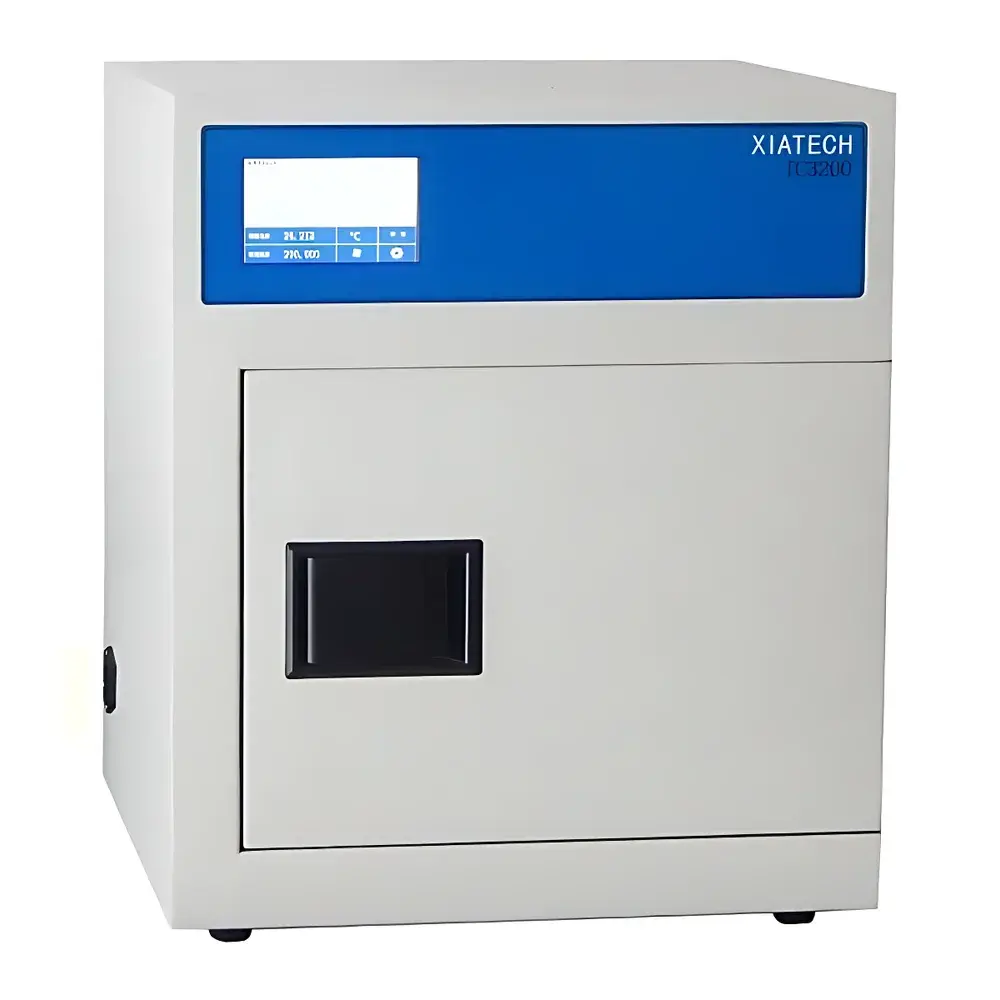
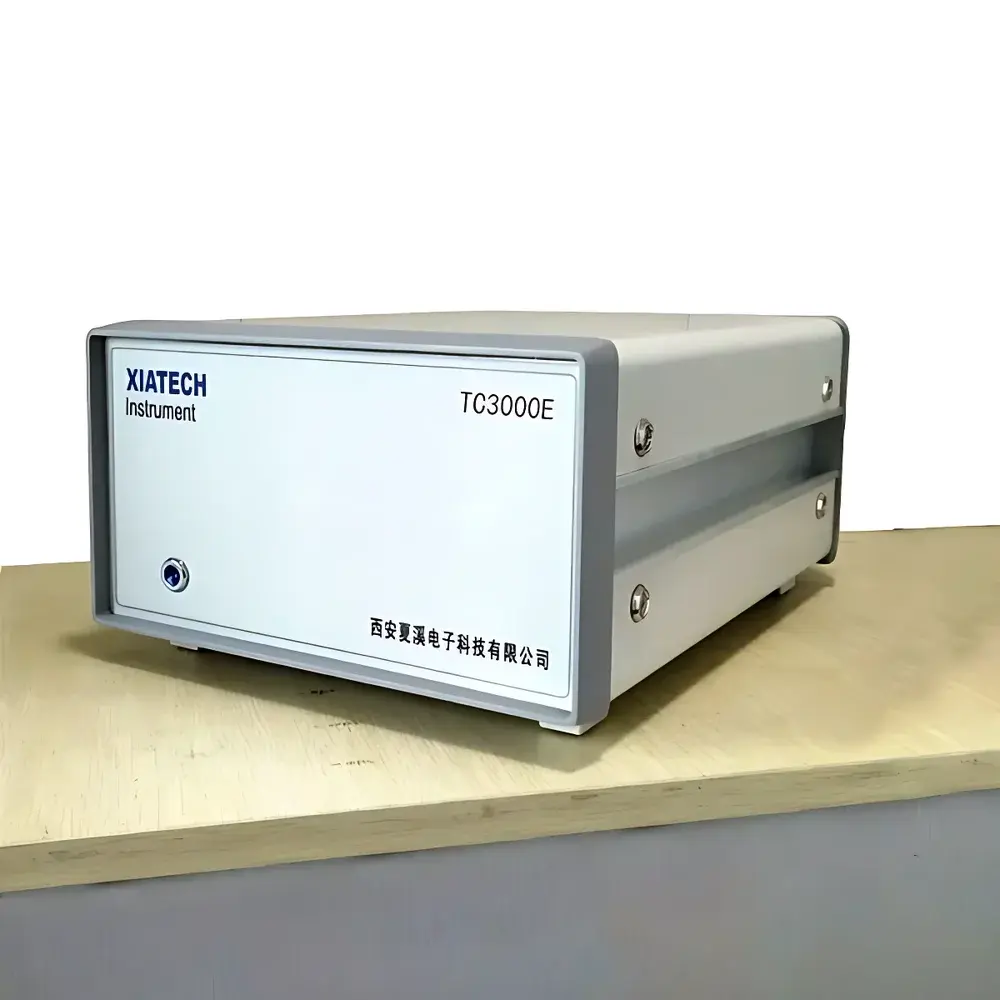
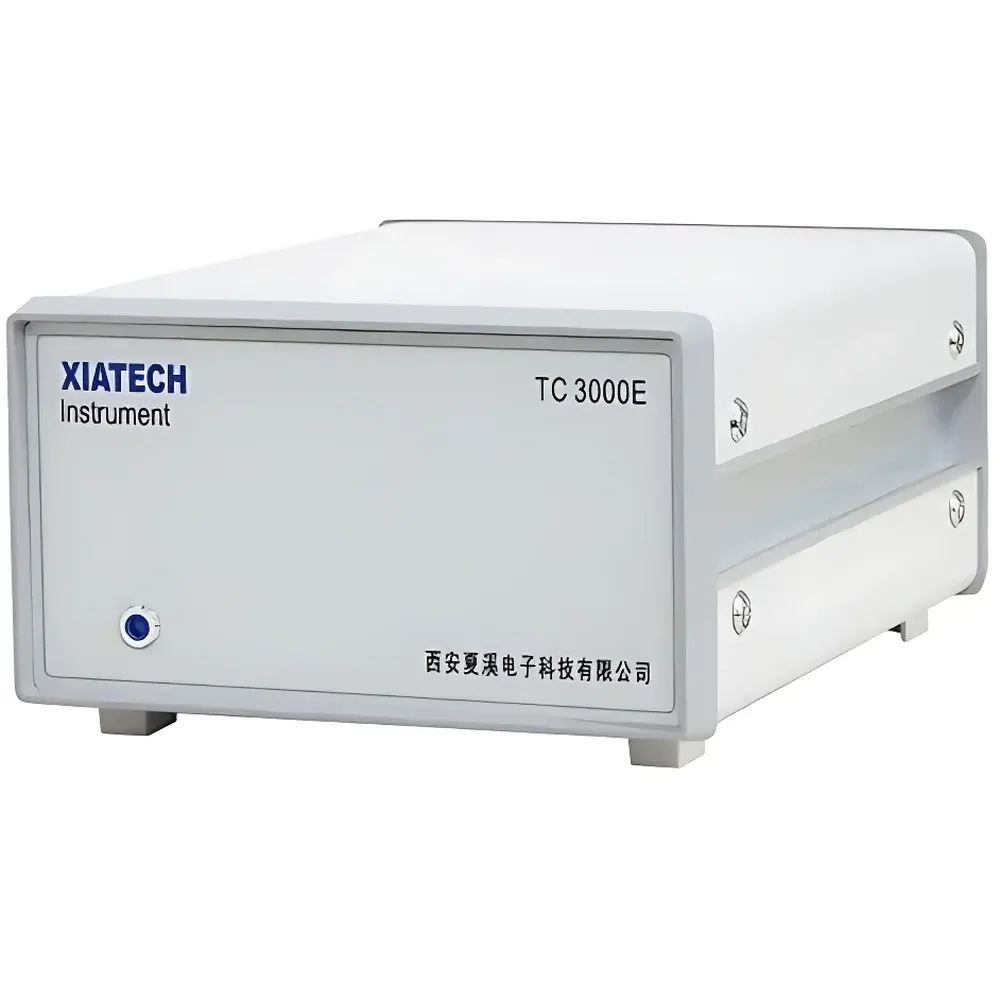
Xiatech TC3000 Transient Hot Wire Thermal Conductivity Analyzer
| Brand | Xiatech |
|---|---|
| Origin | Shaanxi, China |
| Model | TC3000 |
| Measurement Principle | Transient Hot Wire (THW) Method |
| Sample Form | Solid, Liquid, Gel, Powder, Granular, Paste |
| Test Atmosphere | Ambient Air |
| Operating Pressure | Atmospheric |
| Dimensions (L×W×H) | 550 × 500 × 650 mm |
| Accuracy | ±3% |
| Repeatability | ±3% |
| Thermal Conductivity Range | 0.001–50 W/(m·K) (extendable to 100 W/(m·K)) |
| Compliance | ASTM C1113, ASTM D5930, GB/T 10297, GB/T 11205 |
Overview
The Xiatech TC3000 Transient Hot Wire Thermal Conductivity Analyzer is a precision-engineered instrument designed for rapid, non-destructive determination of thermal conductivity across a broad spectrum of material states—including solids, liquids, gels, powders, granules, and pastes—without requiring probe replacement or sample shape modification. Based on the internationally standardized transient hot wire (THW) method, the TC3000 applies a short-duration electrical pulse to a thin, embedded platinum wire sensor, inducing a controlled temperature rise in the surrounding medium. The rate of temperature decay over time is directly related to the material’s thermal diffusivity and, when combined with known density and specific heat capacity (or calibrated reference standards), yields thermal conductivity with high physical fidelity. This principle ensures minimal thermal perturbation, low power input (<100 mW), and intrinsic suitability for thermally sensitive, compositionally unstable, or low-conductivity materials—such as phase-change composites, biological tissues, or nanofluids—where steady-state techniques may introduce significant error due to convection or contact resistance.
Key Features
- Transient hot wire measurement architecture compliant with ISO 22007-1 and ASTM C1113 / D5930 protocols
- Full-range accuracy of ±3% across 0.001–50 W/(m·K), extendable to 100 W/(m·K) via optional calibration modules
- Measurement duration per sample: 1–20 seconds, enabling high-throughput screening and real-time process monitoring
- No sample shaping required: accommodates irregular geometries, loose powders, viscous pastes, and free-standing liquids without mounting fixtures or compression
- Low-energy heating profile minimizes thermal degradation—critical for polymers, biological specimens, and volatile solvents
- Integrated ambient-pressure air test environment; no vacuum or inert gas enclosure needed for standard operation
- Dual patented sensor design (ZL201720327874.7, ZL201720324616.3) enhancing signal-to-noise ratio and long-term stability
Sample Compatibility & Compliance
The TC3000 supports heterogeneous sample classes without hardware reconfiguration: rigid solids (e.g., ceramics, metals, rock cores), flexible sheets (foams, elastomers), granular media (sand, catalysts), colloidal dispersions (nanofluids, gels), and Newtonian/non-Newtonian liquids (lubricants, cryogens, pharmaceutical emulsions). Its compliance with ASTM C1113 (for solids), ASTM D5930 (for liquids), and Chinese national standards GB/T 10297 and GB/T 11205 ensures data traceability in QA/QC, R&D, and regulatory submissions. While not intrinsically rated for hazardous atmospheres or elevated temperatures, the system operates reliably within ambient laboratory conditions (15–30 °C, 30–70% RH) and meets general electrical safety requirements per IEC 61010-1.
Software & Data Management
The TC3000 is operated via Xiatech’s proprietary ThermalLab v3.x software suite, providing guided workflow control, real-time curve visualization, automated baseline correction, and statistical reporting (mean, SD, CV%). Raw voltage-time datasets are stored in HDF5 format with embedded metadata (operator ID, timestamp, ambient T/P, calibration certificate ID). Export options include CSV, Excel, and PDF reports conforming to GLP documentation practices. Audit trail functionality logs all parameter changes and result modifications, supporting 21 CFR Part 11 readiness when deployed on validated Windows OS platforms with user access controls.
Applications
- Thermal interface material (TIM) qualification: conductive greases, gap fillers, and phase-change pads used in electronics thermal management
- Geotechnical and building science: thermal characterization of soils, insulating foams, aerogels, and fire-retardant composites
- Energy materials research: thermal transport analysis of thermoelectrics, battery electrode slurries, and molten salts
- Food and agricultural science: non-invasive assessment of thermal properties in grains, fruits, meat, and dairy products
- Chemical and petrochemical QA: batch consistency verification of lubricants, refrigerants, and specialty solvents
- Biomedical engineering: thermal property mapping of hydrogels, tissue-mimicking phantoms, and cryopreservation media
FAQ
What measurement principle does the TC3000 employ?
It utilizes the transient hot wire (THW) method, where a linear heat source is embedded in the sample and the temporal temperature response is analyzed to derive thermal conductivity.
Can the TC3000 measure anisotropic materials?
No—the standard configuration assumes isotropic thermal behavior. Anisotropy requires directional probe alignment and multi-axis measurement setups not supported by the base TC3000 platform.
Is calibration traceable to NIST or other national metrology institutes?
Yes—Xiatech provides factory calibration certificates traceable to NIM (National Institute of Metrology, China); optional NIST-traceable reference fluids (e.g., deionized water, toluene) are available for user verification.
Does the system support temperature-controlled measurements?
Not natively—the TC3000 operates at ambient temperature. For variable-temperature testing, integration with external environmental chambers (e.g., Julabo F25) is possible using custom mounting adapters and external temperature feedback loops.
How is sample contact resistance mitigated in solid measurements?
The THW method inherently minimizes interfacial resistance effects due to its localized, volumetric heating geometry—unlike guarded-hot-plate or laser-flash methods that rely on planar contact interfaces.



