
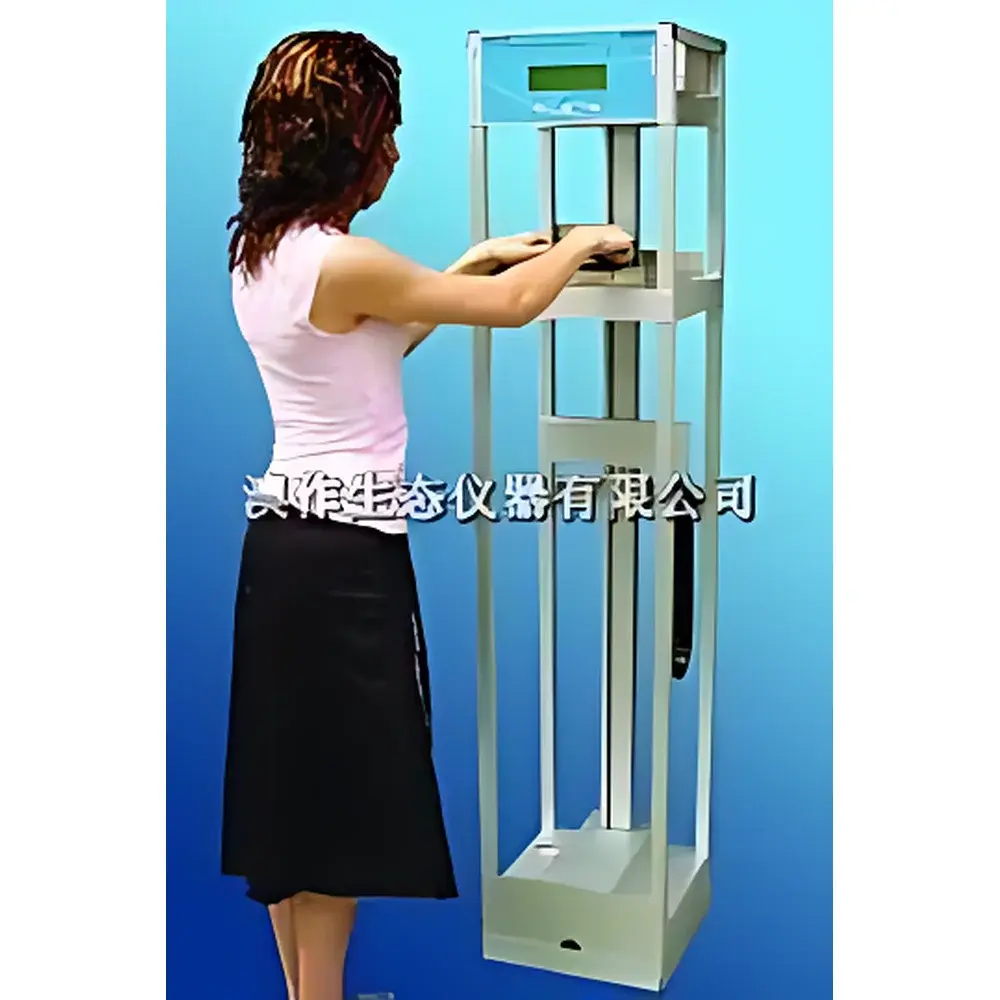
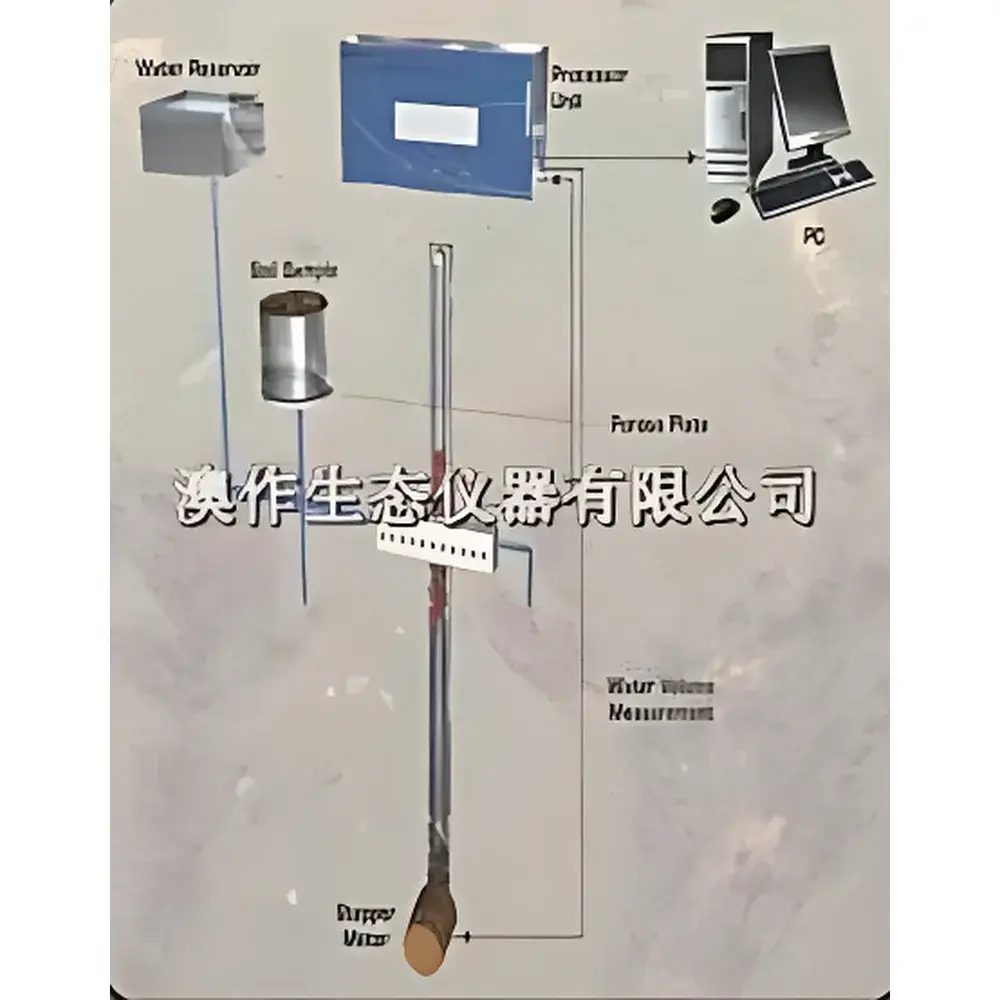
Equi-pf Automated Soil Water Retention Curve Analyzer
| Origin | New Zealand |
|---|---|
| Manufacturer Type | Authorized Distributor |
| Origin Category | Imported Instrument |
| Model | Equi-pf |
| Pricing | Available Upon Request |
Overview
The Equi-pf Automated Soil Water Retention Curve Analyzer is a precision laboratory instrument engineered for the quantitative determination of soil water retention characteristics under controlled matric potential conditions. It operates on the fundamental principle of the pressure plate apparatus—applying defined suction pressures to soil samples to induce controlled desaturation—but eliminates the operational limitations inherent in manual pressure plate systems. Unlike conventional setups requiring frequent manual intervention, pressure adjustment, and gravimetric weighing, the Equi-pf integrates closed-loop hydraulic control, real-time mass monitoring, and automated equilibrium validation to generate high-resolution water retention curves (WRCs) with minimal operator involvement. This enables rigorous investigation of hysteresis—the divergence between drying and wetting paths—as well as quantification of unsaturated hydraulic conductivity via transient outflow analysis. Designed for soil physics laboratories, hydrological research centers, and environmental engineering departments, the Equi-pf supports reproducible, standards-aligned characterization of soil hydraulic properties essential for vadose zone modeling, irrigation scheduling, contaminant transport simulation, and land-use impact assessment.
Key Features
- Fully automated operation: No manual pressure adjustment, sample handling, or intermediate weighing during testing.
- Dynamic equilibrium detection: Pressure steps are held until true hydraulic-mass equilibrium is confirmed—defined by <0.1 mL/h mass stabilization over a user-defined window—ensuring thermodynamic consistency per suction level.
- Real-time visualization: Integrated LCD interface displays cumulative moisture release curves, current suction level, elapsed time, mass change rate, and equilibrium status—accessible at any stage without PC connection.
- Hysteresis quantification: Supports up to four sequential wetting–drying cycles within a single test sequence, enabling direct comparison of main drying, scanning drying, main wetting, and scanning wetting curves.
- Non-destructive sampling: Soil cores remain physically undisturbed throughout the entire measurement process, preserving structural integrity and minimizing boundary effects.
- High-resolution flow quantification: Integrated volumetric flow sensing (±0.1 mL resolution) allows derivation of unsaturated hydraulic conductivity using the instantaneous profile method or Boltzmann transform-based inversion.
- Calibration-compensated mass tracking: Built-in drift compensation algorithms eliminate systematic weighing errors arising from thermal expansion or sensor creep over multi-day tests.
- Configurable pressure stepping: Up to 50 discrete suction levels (0–1000 mm H₂O, adjustable in 1 mm increments), programmable via PC software to target specific regions of interest on the WRC (e.g., air-entry value, residual saturation).
Sample Compatibility & Compliance
The Equi-pf accommodates standard cylindrical soil cores (typically 50–100 mm diameter × 20–50 mm height) sealed with impermeable membranes to prevent lateral evaporation. It is compatible with mineral soils ranging from coarse sand to heavy clay, structured aggregates, and repacked or undisturbed field samples. All hardware and firmware comply with IEC 61000-6-3 (EMC emission standards) and IEC 61000-6-2 (immunity). Data acquisition and storage workflows support GLP-compliant documentation when used with validated PC software—including electronic signatures, audit trails, and version-controlled method templates. While not certified to ISO 14034 or ASTM D6836 per se, its operational methodology aligns with the physical principles and reporting conventions outlined in ISO 11274 and ASTM D6836–22 (“Standard Test Methods for Determination of Water Retention Characteristics of Soils”).
Software & Data Management
Control and data acquisition are managed via Windows-based software communicating through RS232 serial protocol. The application provides full method scripting (step duration, pressure ramp rates, equilibrium criteria), real-time graphing of mass vs. time and θ vs. ψ, automatic export of CSV/Excel-compatible datasets, and batch processing for multi-sample comparative analysis. All raw sensor timestamps, pressure setpoints, measured mass values, and calculated volumetric water content (θ) are logged with millisecond resolution. Software-generated reports include metadata (sample ID, operator, calibration date), instrument configuration, equilibrium verification logs, and hysteresis loop overlays—structured to meet internal QA requirements and external peer-review transparency standards.
Applications
- Parameterization of van Genuchten or Brooks–Corey hydraulic functions for numerical modeling (e.g., HYDRUS, STANMOD, TOUGH2).
- Evaluation of soil structural stability under repeated wetting–drying stress.
- Validation of pedotransfer functions (PTFs) derived from texture and organic matter content.
- Assessment of biochar or amendment effects on soil water retention and hysteresis behavior.
- Supporting regulatory submissions for landfill cover design, mine reclamation plans, and agricultural best management practices (BMPs).
FAQ
What is the maximum allowable sample height for the Equi-pf chamber?
The system is designed for standard core heights up to 50 mm; taller specimens require custom sealing fixtures and are not covered under standard warranty.
Does the Equi-pf support simultaneous multi-sample measurement?
No—it processes one soil core per test cycle. Parallel throughput requires multiple units or sequential scheduling.
Can the system be integrated into a LIMS environment?
Yes—via CSV export and configurable metadata fields; direct API or ODBC connectivity is not natively supported but can be implemented via third-party middleware.
Is temperature control available during testing?
Ambient temperature must be maintained between 0–40 °C; optional external climate chambers may be used, though the Equi-pf itself does not regulate sample temperature.
How is equilibrium verified at each pressure step?
By monitoring mass change rate over time; equilibrium is declared when the derivative dM/dt remains below 0.1 mL/h for ≥30 minutes, configurable in software.







