
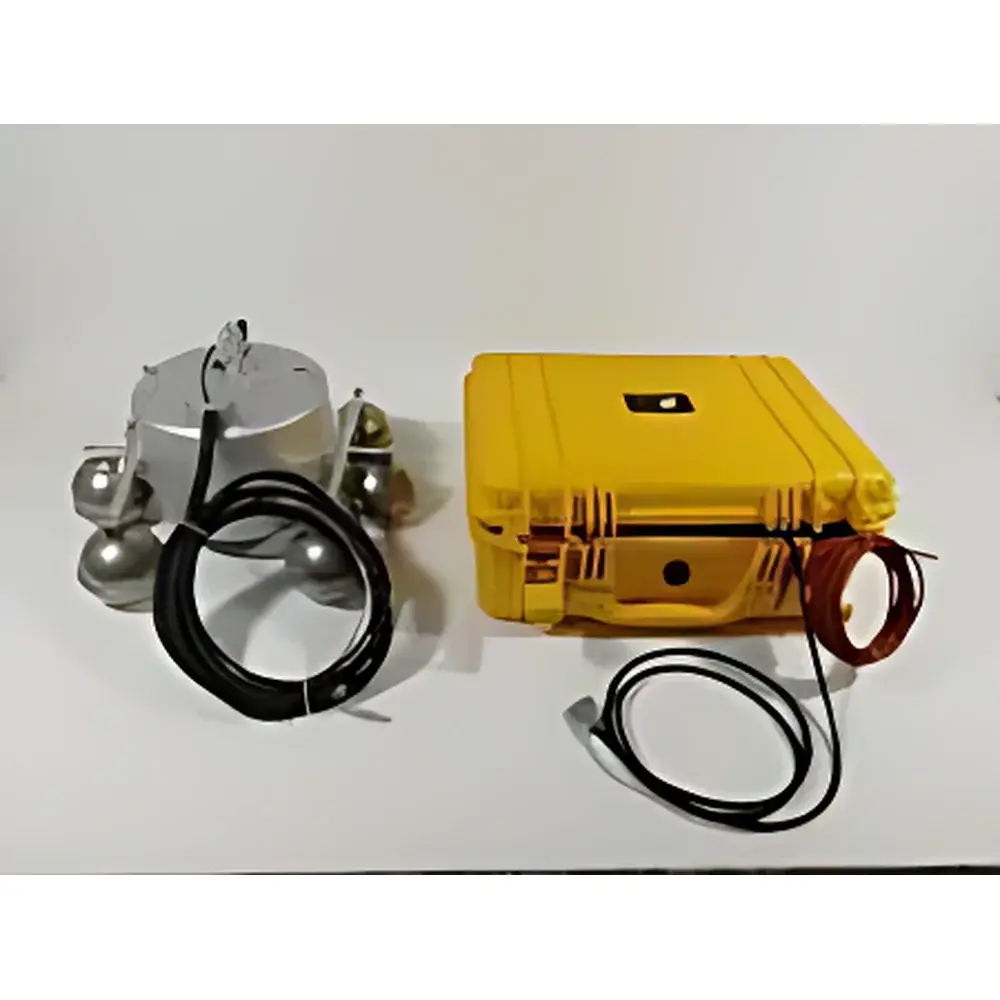
AZG-300 CO₂ CH₄ H₂O Tri-Gas Greenhouse Gas Analyzer
| Brand | AZ (Beijing Aozuo) |
|---|---|
| Model | AZG-300 |
| Measurement Principle | NDIR for CO₂, TDLAS for CH₄, Capacitive Dew Point for H₂O |
| Measurement Range | CO₂: 0–2000 ppm (optional: up to 80,000 ppm), CH₄: 0–100 ppm (optional: 0–100% vol), H₂O: 0–75 mbar |
| Accuracy | ±1.5% of reading (CO₂ & H₂O), ±2% of reading (CH₄) |
| Resolution | 0.01 ppm (CO₂), 0.1 ppm (CH₄) |
| Linearity Error | ≤±2% F.S. |
| Repeatability | ≤±1% F.S. |
| Flow Rate | 0.1–1 L/min |
| Response Time | <2 s |
| Warm-up Time | 20 min |
| Operating Temperature | 0–45 °C |
| Power Supply | 12–24 V DC or AC adapter |
| Data Storage | Internal SD card (≥32 GB), ≥1 million records |
| Display | 7-inch capacitive touchscreen |
| Compliance | Designed for field-deployable GLP-compliant environmental monitoring |
Overview
The AZG-300 CO₂ CH₄ H₂O Tri-Gas Greenhouse Gas Analyzer is an integrated, field-deployable optical gas analyzer engineered for high-temporal-resolution in situ quantification of carbon dioxide (CO₂), methane (CH₄), and water vapor (H₂O) partial pressures in soil-atmosphere exchange studies. It employs non-dispersive infrared (NDIR) spectroscopy for CO₂ detection, tunable diode laser absorption spectroscopy (TDLAS) at 1653 nm for selective CH₄ measurement, and a calibrated capacitive dew point sensor for absolute H₂O vapor pressure determination. This multi-parameter architecture enables simultaneous, co-located measurement with sub-second response—critical for capturing transient flux events driven by diurnal cycles, rainfall pulses, freeze-thaw transitions, or microbial activity bursts. The system operates across diverse terrestrial ecosystems—including forests, grasslands, croplands, peatlands, and flooded rice paddies—and supports both portable chamber-based flux estimation and continuous soil profile gas profiling via compatible accessories.
Key Features
- Triple-gas simultaneous detection: Real-time, synchronized output of CO₂, CH₄, and H₂O at user-configurable sampling intervals (1–60 s).
- Thermally stabilized optical path: Integrated Peltier-controlled detector housing maintains thermal equilibrium (±0.1 °C), ensuring long-term zero stability and calibration retention without daily re-zeroing.
- Modular deployment flexibility: Supports three operational modes—(1) handheld portable survey, (2) automated static chamber coupling (iChamber), and (3) subsurface gas profiling via iChamber-G gas probes.
- Embedded data acquisition: Onboard 7-inch capacitive touchscreen interface with intuitive menu navigation, real-time waveform visualization, and local storage on industrial-grade SD card (≥32 GB, >1 million timestamped records).
- Self-calibration capability: Programmable auto-zero and span calibration using certified reference gases; optional integrated permeation tube for CH₄ span verification.
- Ruggedized field design: IP65-rated enclosure, operating range 0–45 °C, 12–24 V DC input compatibility, and low power consumption (<8 W average) for solar-battery operation.
Sample Compatibility & Compliance
The AZG-300 is validated for use with standard soil gas sampling protocols aligned with ISO 18589-5 (radiological characterization of soils) and ASTM D5209 (determination of methane in landfill gas). When paired with the iChamber automatic chamber system, it meets the methodological requirements for closed-chamber flux calculation per IPCC 2019 Refinement guidelines. The iChamber’s frameless, wind-resistant (up to Beaufort Scale 12) design minimizes microclimate disturbance—ensuring representative boundary-layer conditions during soil CO₂/CH₄ efflux measurements. For submerged environments (e.g., wetlands, reservoirs), optional floating chamber adapters maintain gas-tight integrity while accommodating surface wave motion. All firmware and data logging routines support audit-trail generation compliant with GLP principles; raw sensor outputs are stored unprocessed to preserve traceability for regulatory review.
Software & Data Management
The AZG-300 communicates via RS-232, RS-485, and Ethernet interfaces, enabling integration into centralized environmental monitoring networks. Its native software suite (Aozuo EnviroLog v4.x) provides post-processing tools for flux calculation (linear/non-linear regression, HMR correction), spectral interference diagnostics, and QA/QC flagging based on signal-to-noise ratio, flow stability, and pressure drift thresholds. Export formats include CSV, NetCDF, and CF-compliant metadata headers—facilitating ingestion into FluxNet, AmeriFlux, or ICOS data repositories. Firmware updates are delivered via secure HTTPS, and all configuration changes are logged with user ID, timestamp, and parameter delta—supporting FDA 21 CFR Part 11–aligned electronic record integrity where required.
Applications
- Soil carbon flux partitioning: Quantifying autotrophic vs. heterotrophic respiration contributions via temperature-moisture response modeling.
- Methanogenesis inhibition studies: Evaluating redox-sensitive CH₄ production dynamics in rice paddies under alternate wetting-drying regimes.
- Permafrost thaw monitoring: Tracking CH₄ pulse emissions from thermokarst features using vertically stacked iChamber-G probes.
- Landfill cover performance assessment: Measuring lateral gas migration and oxidation efficiency through engineered soil barriers.
- Ecosystem-scale validation: Ground-truthing eddy covariance tower data with spatially distributed AZG-300/iChamber transects.
- Microbial process modeling: Coupling gas time-series with concurrent in situ soil sensors (EC, Eh, pH, TDR moisture) to constrain biogeochemical reaction rates.
FAQ
What calibration standards are recommended for field deployment?
Certified gas mixtures traceable to NIST SRMs: CO₂ in N₂ (e.g., 500 ppm ±1%), CH₄ in air (e.g., 10 ppm ±2%), and humidity generators calibrated against chilled mirror hygrometers.
Can the AZG-300 operate unattended for extended periods?
Yes—when powered by a 24 V battery bank (≥50 Ah) and solar charge controller, continuous operation exceeds 30 days; internal storage ensures no data loss during intermittent telemetry outages.
Is the iChamber compatible with vegetation taller than 1.5 m?
Yes—the telescoping mast design allows height extension up to 2.5 m; custom mounting brackets accommodate stem diameters from 1 cm to 15 cm without mechanical interference.
How does the system handle condensation in high-humidity soils?
The gas sampling line incorporates a heated (40 °C) Nafion™ dryer module upstream of the analyzer, maintaining dew point depression >15 °C to prevent optical window fogging or sensor saturation.
Does the firmware support remote firmware updates and diagnostic reporting?
Yes—via encrypted OTA (Over-The-Air) protocol; device health reports include laser diode drive current, detector responsivity decay, and flow sensor zero drift metrics.







