
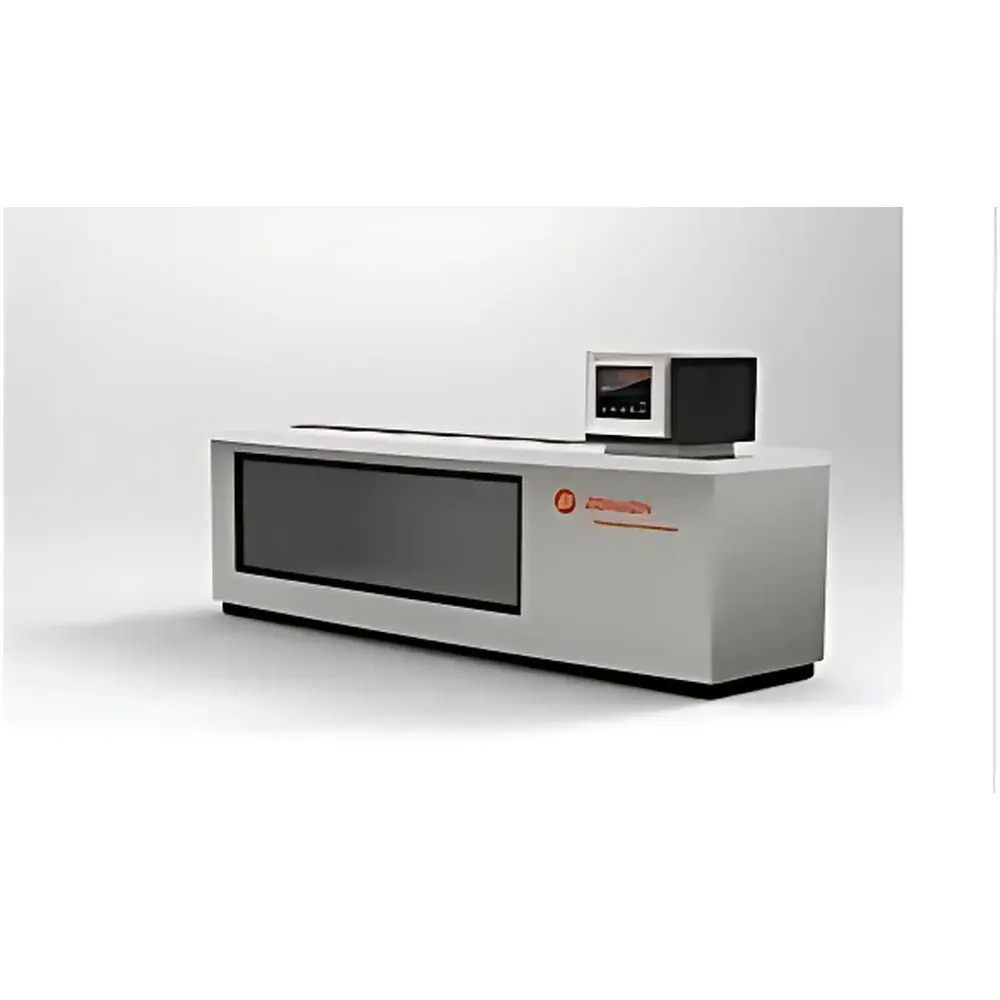
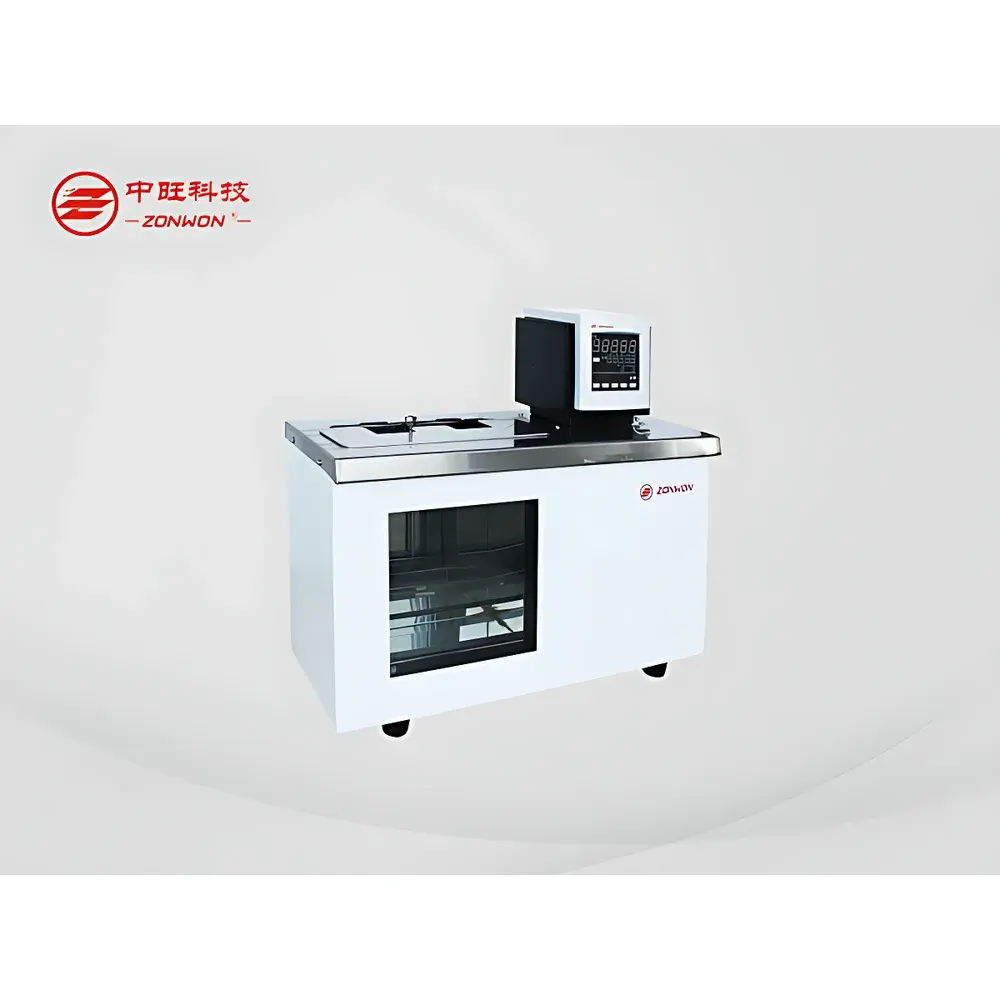
ZONWON VT Series Precision Circulating Water Bath
| Brand | ZONWON |
|---|---|
| Origin | Zhejiang, China |
| Manufacturer Type | Direct Manufacturer |
| Equipment Type | Circulating Constant-Temperature Bath |
| Circulation Mode | Internal & External Loop |
| Temperature Control | Refrigeration & Heating Combined |
| Bath Volume | 25–41 L |
| Temperature Range | 15–40 °C |
| Temperature Stability | ±0.01 °C |
| Cooling Method | Flow-Through Thermoelectric (Peltier) System |
| Viewing Windows | Dual Large-Area Tempered Double-Glazed Panels Filled with Argon |
| Illumination | Integrated High-Uniformity LED Array |
| External Filtration Module | Optional |
| Flow Rate Indicator | Built-in for External Loop |
Overview
The ZONWON VT Series Precision Circulating Water Bath is an engineered thermal platform designed specifically to meet the stringent temperature stability requirements of rheological and viscometric measurements in analytical and quality control laboratories. Unlike conventional water baths relying on mechanical compressor-based cooling—prone to vibration, noise, and thermal overshoot—the VT series employs a flow-through thermoelectric (Peltier) cooling system. This architecture eliminates moving parts in the cooling loop, ensuring mechanical silence, zero oil contamination risk, and superior thermal inertia management. The bath operates within a tightly controlled range of 15–40 °C, maintaining temperature stability at ±0.01 °C over time—a specification aligned with ASTM D445, ISO 3104, and USP guidelines for kinematic viscosity testing. Its dual-function design supports both internal thermal homogenization and external circulation to auxiliary instruments (e.g., rotational viscometers, capillary viscometers, or density meters), enabling synchronized, traceable thermal conditioning across multi-device workflows.
Key Features
- Thermoelectric flow-through cooling module: Delivers precise, vibration-free refrigeration without compressors, minimizing thermal disturbance to sensitive sensors and eliminating refrigerant leakage risks.
- Dual tempered double-glazed observation windows filled with argon gas: Prevent condensation under high-humidity conditions and ensure optical clarity during extended operation.
- LED illumination system with uniform spectral output: Provides consistent, shadow-free lighting for visual sample inspection and alignment verification without introducing radiant heat.
- Integrated external-loop flow rate indicator: Enables real-time monitoring and calibration of recirculation volume—critical for validating thermal transfer efficiency to connected instrumentation.
- Auto-compensating liquid-level stabilization mechanism: Maintains constant immersion depth despite evaporation, preserving hydrostatic consistency for capillary and rotational measurements.
- Modular external filtration unit (optional): Extends operational cycle between deionized water changes by capturing particulates and inhibiting microbial growth—supporting GLP-compliant maintenance logs.
Sample Compatibility & Compliance
The VT bath accommodates standard viscometer geometries—including Ubbelohde, Cannon-Fenske, and DIN capillaries—as well as rotational spindle assemblies (e.g., Brookfield, Anton Paar). Its 25–41 L working volume allows full submersion of large-diameter sample containers or multi-position fixtures. All wetted surfaces are constructed from 316 stainless steel and borosilicate glass, ensuring chemical resistance to aqueous buffers, organic solvents (e.g., toluene, xylene), and mild acids commonly used in polymer and petrochemical analysis. The system complies with IEC 61010-1 for laboratory electrical safety and meets CE marking requirements. Temperature stability data is traceable to NIST-traceable reference probes, supporting audit readiness under FDA 21 CFR Part 11 and ISO/IEC 17025 environments when paired with validated calibration protocols.
Software & Data Management
While the VT bath operates via a dedicated front-panel controller with PID tuning capability, optional RS-485 or Ethernet interfaces enable integration into centralized lab automation systems. Logged temperature profiles (sampled at 1 Hz) can be exported in CSV format for post-acquisition analysis in MATLAB, Python (Pandas), or LIMS platforms. Audit trail functionality records setpoint changes, alarm events, and calibration interventions—fully compliant with electronic record requirements under 21 CFR Part 11 when deployed with user-access controls and digital signature validation.
Applications
- Kinematic and dynamic viscosity determination per ASTM D445, ISO 3104, and GB/T 265 in petroleum, lubricant, and biodiesel labs.
- Temperature-dependent rheology profiling of polymer melts, adhesives, and pharmaceutical suspensions.
- Calibration and verification of temperature-sensitive sensors (e.g., RTDs, thermistors) against certified reference standards.
- Stabilization of optical cells in spectrophotometric assays requiring thermal drift suppression below 0.02 °C/hour.
- Pre-conditioning of reference oils and calibration fluids prior to viscometer certification runs.
FAQ
What cooling technology does the VT bath use, and why is it preferred over compressor-based systems?
It uses a flow-through Peltier thermoelectric system—eliminating vibration, noise, and refrigerant hazards while improving response linearity and long-term drift performance.
Can the VT bath maintain ±0.01 °C stability across its full 25–41 L volume?
Yes—stability is verified at multiple spatial points (center, corners, mid-depth) per ISO 17025-compliant mapping procedures using calibrated platinum resistance thermometers.
Is external circulation compatible with all major viscometer brands?
It supports standard ¼” NPT or M12 quick-connect fittings; adapters for Brookfield, Anton Paar, and Cannon instruments are available upon request.
Does the argon-filled window require periodic gas replenishment?
No—the sealed double-glazed units are factory-fused under inert atmosphere and rated for >10-year service life without maintenance.
How often must the external filter be replaced under continuous operation?
Typically every 3–6 months depending on water purity; integrated pressure-drop monitoring alerts users when differential exceeds 0.1 bar.



