
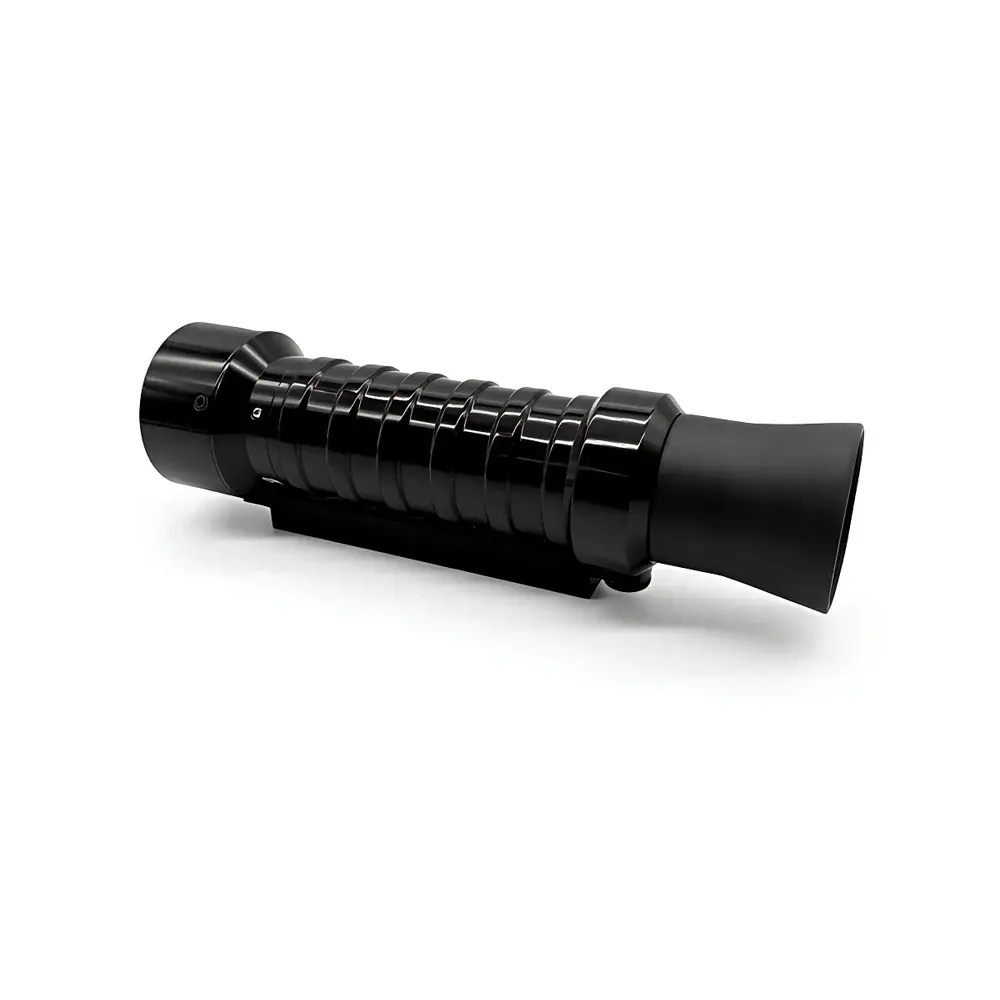
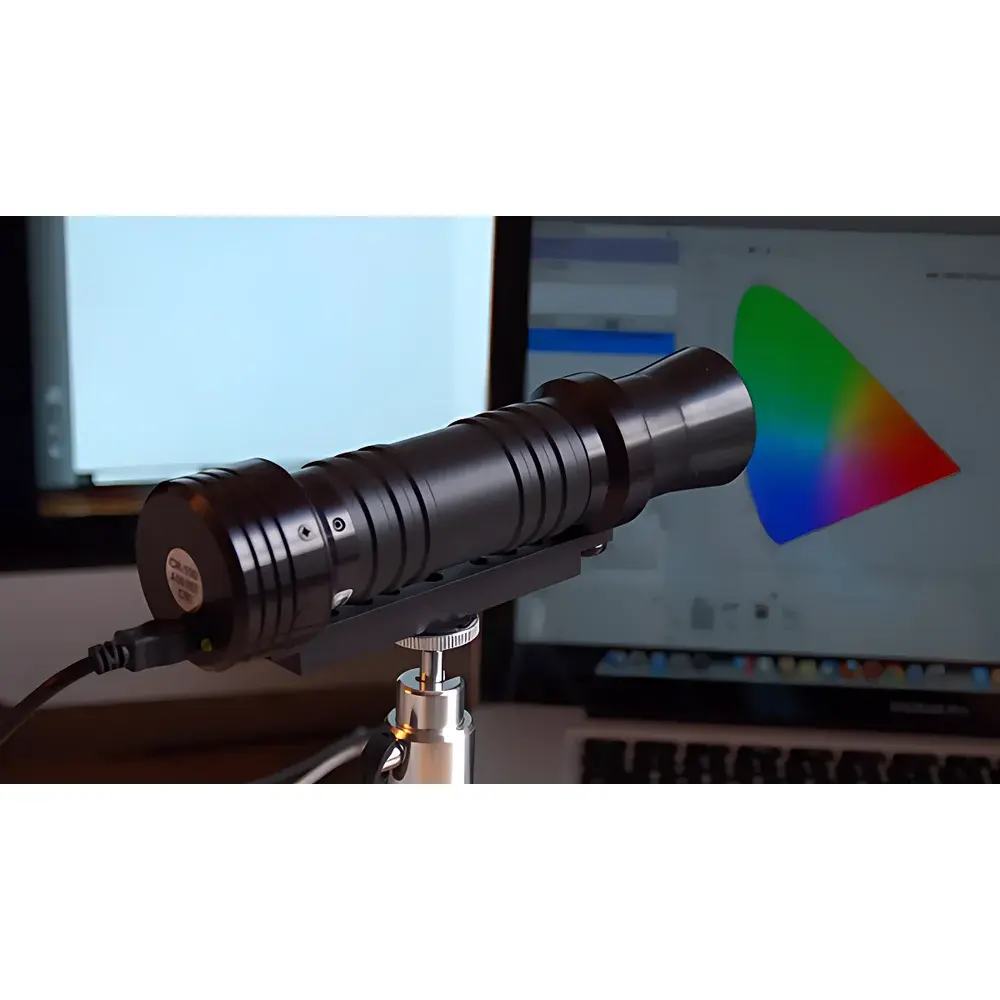
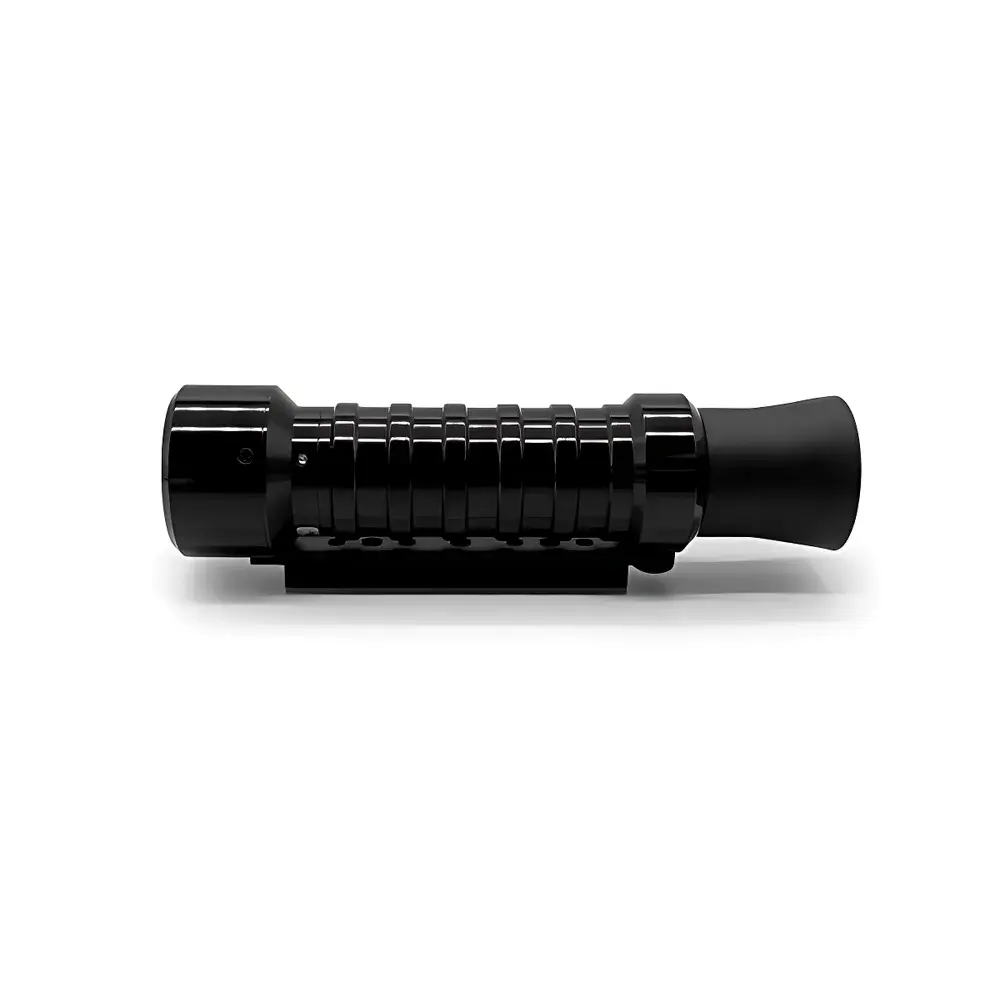
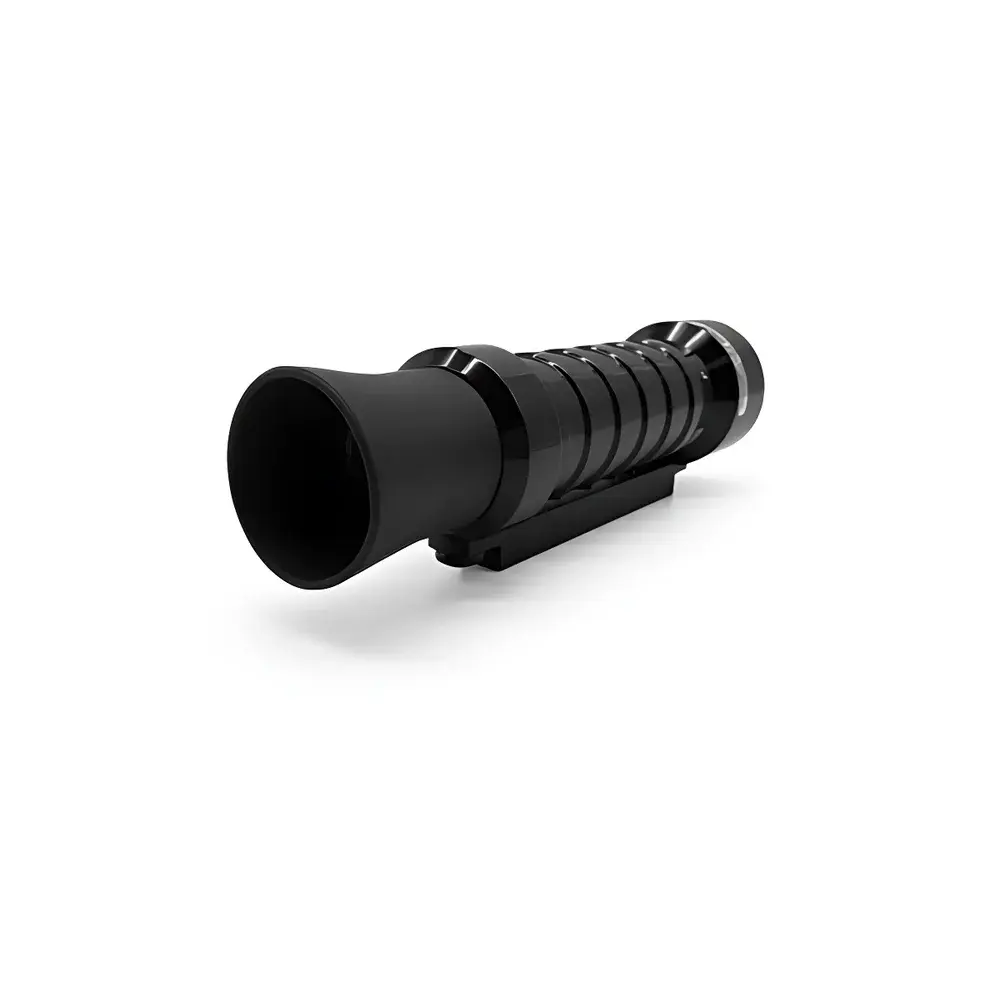
Colorimetry Research CR 100 Luminance and Chromaticity Meter
| Brand | Colorimetry Research (CRI) |
|---|---|
| Origin | USA |
| Model | CR 100 |
| Spectral Range | 380–780 nm |
| Luminance Range | 0.0007–5140 cd/m² (nits) |
| Luminance Accuracy | ±2% @ 0.34 cd/m², 0.4 s exposure |
| Chromaticity Accuracy | ±0.0015 x,y @ 0.34 cd/m², 0.4 s exposure |
| Chromaticity Repeatability | 0.0005 x,y @ 0.34 cd/m², 0.4 s exposure |
| Polarization Error | ≤0.1% |
| Sampling Rate | Up to 500 kHz in luminance mode (2 µs sampling interval) |
| Synchronization Frequency | 10–500 Hz (customizable up to 10 kHz) |
| Exposure Time | 1 ms–20 s |
| Interface | USB 2.0, Ethernet, RS-232 |
| Power | 5 V, 120 mA via USB 2.0 |
| Weight | 0.34 kg |
| Housing | Stainless steel and aluminum alloy |
| Optical Architecture | Fixed tristimulus detector array with Four-Color Matrix Correction |
| Photopic Matching Error (Guaranteed/Typical) | Y ≤2.0%/1.4–1.8%, Xr ≤3.0%/2.3–2.7%, Xb ≤1.2%/0.8–1.0%, Z ≤3.5%/2.2–2.7% |
Overview
The Colorimetry Research CR 100 is a high-fidelity, filter-based luminance and chromaticity meter engineered for precision optical metrology in display characterization, lighting validation, and visual ergonomics applications. Unlike scanning or monochromator-based spectroradiometers, the CR 100 employs a fixed, parallel tristimulus detector architecture—eliminating mechanical filter wheels and shutter mechanisms—to deliver real-time, artifact-free photometric and colorimetric data. Its core design principle centers on minimizing spectral mismatch error—the dominant source of uncertainty in filter-based colorimeters—through rigorously optimized interference filters and a proprietary Four-Color Matrix (FCM) correction algorithm. This enables traceable, display-agnostic measurements across OLED, microLED, LCD, Mini-LED, and projection technologies without requiring per-device calibration transfer. The instrument operates over the CIE standard photopic spectral range (380–780 nm), with guaranteed spectral matching errors below ISO/CIE-defined thresholds for Class A colorimetric instruments.
Key Features
- Fixed-detector tristimulus array: Simultaneous acquisition of X, Y, Z signals without moving parts—ensuring long-term stability and immunity to mechanical wear or vibration-induced drift.
- Four-Color Matrix Correction: Built-in correction matrices calibrated for emissive display technologies (e.g., RGBW subpixel structures, wide-gamut primaries), reducing metameric error and improving accuracy under non-standard illuminants.
- Ultra-high-speed luminance sampling: 500 kHz bandwidth (2 µs sampling interval) supports precise response time measurement, flicker waveform capture, and transient luminance profiling.
- Low-light performance: Capable of stable measurements down to 0.0007 cd/m² at SNR >10 (20 s integration), validated per CIE Publication 127 and IEC 62341-6-3 for OLED testing.
- Ruggedized industrial enclosure: CNC-machined stainless steel and aerospace-grade aluminum housing rated for field deployment, thermal shock resistance, and continuous operation in production-line environments.
- Cross-platform software compatibility: Native drivers and SDK support for Windows (x64) and macOS (Intel & Apple Silicon), enabling integration with industry-standard display calibration suites including CalMAN, LightSpace CMS, and DisplayCAL.
Sample Compatibility & Compliance
The CR 100 is validated for use with self-luminous and transmissive optical sources, including flat-panel displays (mobile, desktop, automotive HUD), architectural and task lighting fixtures, and medical visualization monitors. It meets the optical performance requirements specified in ASTM E308-23 (computing tristimulus values), ISO 11664-3:2019 (CIE colorimetric observers), and IEC 62341-6-1 (OLED display measurement). Its spectral mismatch characteristics comply with CIE Technical Report 214:2014 for Class A colorimeters. For regulated environments, the instrument supports audit-trail-enabled data logging when used with compliant software platforms adhering to FDA 21 CFR Part 11 and ISO/IEC 17025 documentation workflows.
Software & Data Management
The CR 100 interfaces via USB 2.0 (default), Gigabit Ethernet, or RS-232, enabling deterministic timing control for synchronized measurements in automated test rigs. Firmware supports IEEE 1588 Precision Time Protocol (PTP) for sub-millisecond timestamp alignment across distributed sensor networks. Data output includes native CIE 1931 xyY, u’v’, CCT, Duv, dominant wavelength, excitation purity, flicker metrics (Percent Flicker, Flicker Index, SVM), gamma curve fitting (power-law and piecewise models), and full temporal luminance waveforms. All raw and processed data are exportable in CSV, HDF5, and JSON formats—with optional encryption and digital signature embedding for GLP/GMP-compliant reporting.
Applications
- Display manufacturing: Inline verification of luminance uniformity, white point stability, grayscale tracking, and flicker compliance (IEEE 1789, ENERGY STAR Lamps V2.1).
- R&D laboratories: Characterization of novel emissive materials, microdisplay prototypes, and AR/VR near-eye optics under variable viewing angles and ambient conditions.
- Lighting design: Photometric validation of tunable-white LED arrays, circadian lighting systems, and human-centric lighting installations per WELL Building Standard v2 and UL 244A.
- Regulatory testing: Pre-compliance assessment for IEC/EN 62471 (photobiological safety), IEC 62341-6 series (OLED), and VESA DisplayHDR™ certification workflows.
- Academic research: Psychophysical experiments requiring high temporal fidelity, such as visual persistence studies, critical flicker fusion threshold (CFF) mapping, and motion blur quantification.
FAQ
Does the CR 100 require periodic recalibration against a reference spectroradiometer?
Yes—while the CR 100’s solid-state architecture minimizes drift, NIST-traceable recalibration every 12 months (or after 2,000 hours of operation) is recommended to maintain stated accuracy specifications per ISO/IEC 17025 Clause 6.5.
Can the CR 100 measure pulsed or PWM-driven displays accurately?
Yes—its 500 kHz sampling rate and hardware-triggered synchronization (10–500 Hz, extendable to 10 kHz) enable full-cycle capture of pulse-width modulated waveforms, supporting accurate RMS luminance, duty cycle, and temporal modulation depth analysis.
Is Four-Color Matrix Correction compatible with third-party calibration software?
Yes—the CR 100 exposes its FCM coefficients via API, allowing integration with custom calibration pipelines; however, matrix application requires CRI’s licensed firmware module for display-specific coefficient loading.
What is the minimum measurable luminance under typical lab conditions (ambient <1 lux)?
At 20 s integration time and ambient light suppression, the CR 100 achieves reliable measurement at 0.0007 cd/m² (SNR >10), verified using a calibrated blackbody source and neutral density attenuation stack per CIE 127 Annex B.
How does the CR 100 handle polarization-sensitive displays (e.g., LCDs with reflective polarizers)?
Its optical train incorporates a depolarizing diffuser and achromatic λ/2 retarder, limiting polarization-dependent error to ≤0.1% across all measurement modes—well within CIE 15:2018 tolerances for display metrology.





