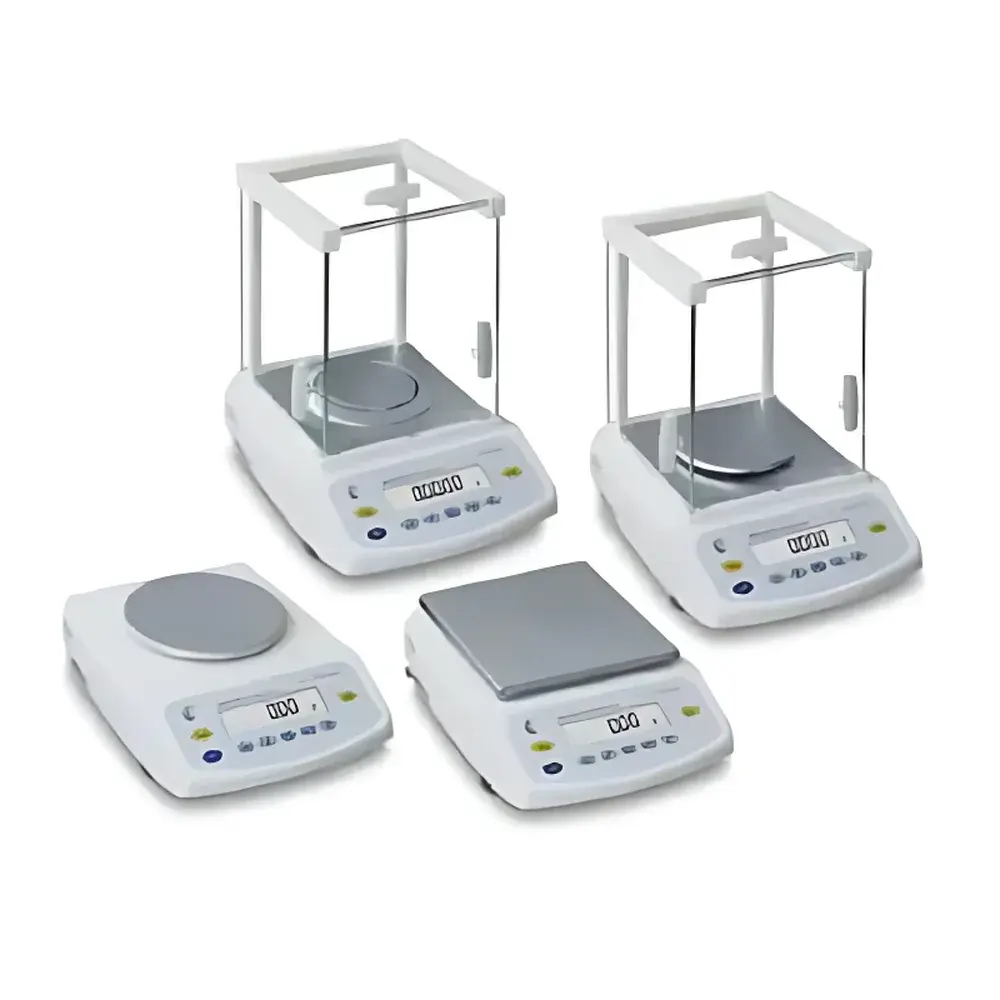
Sartorius BSA Precision Balance
| Brand | Sartorius |
|---|---|
| Origin | Germany |
| Model | BSA |
| Capacity Range | 1 mg–620 g / 10 mg–6200 g |
| Readability | 1 mg / 10 mg |
| Calibration | Motorized internal calibration weights (CW models) |
| Display | Backlit high-contrast LCD, 15 mm digit height |
| Interface | RS-232C bidirectional |
| Compliance | ISO/IEC 17025, GLP/GMP data integrity support, USP Chapter 41 & 1251 compliant |
| Software Compatibility | Sartorius LabX™ (optional), YDP03-0CE printer support |
| Operating Environment | Compensated for draft, temperature drift, and vibration via advanced digital filtering algorithms |
Overview
The Sartorius BSA Precision Balance is an entry-level yet rigorously engineered analytical balance designed for routine laboratory weighing tasks requiring consistent accuracy, operational robustness, and regulatory traceability. Built on Sartorius’ decades of metrological expertise in mass measurement, the BSA series employs electromagnetic force compensation (EMFC) technology — the industry-standard principle for high-precision electronic balances — to deliver stable, reproducible results across variable ambient conditions. Unlike generic gravimetric instruments, the BSA integrates real-time digital signal processing to actively compensate for thermal drift, air currents, and mechanical vibration, ensuring repeatability within ±0.002 g (for 1 mg readability models) under standard ISO 9001-accredited lab environments. Its German-engineered mechanical architecture features a monolithic weighing pan support, low-mass draft shield design, and optimized damping characteristics — all contributing to sub-second stabilization times and reduced susceptibility to operator-induced error.
Key Features
- Motorized internal calibration system (standard on CW variants): One-touch initiation of full-range calibration using built-in certified weights; eliminates manual handling and reduces calibration uncertainty.
- High-contrast backlit LCD display with 15 mm digit height: Ensures legibility under low-light or high-glare conditions; supports viewing angles up to ±45° without contrast loss.
- Intuitive menu-driven interface with five selectable languages (English, German, French, Spanish, Chinese): Context-sensitive prompts guide users through parameter configuration — including auto-zero tracking, stability criteria, filter settings, and unit selection — without requiring technical documentation.
- Dual readability configurations: Available in 1 mg resolution (up to 620 g capacity) and 10 mg resolution (up to 6200 g capacity), enabling flexibility across sample mass ranges while maintaining optimal signal-to-noise ratio.
- RS-232C bidirectional serial interface: Enables direct communication with PCs, label printers (e.g., YDP03-0CE), or LIMS systems; supports ASCII and Sartorius-specific protocols for automated data logging.
- GLP-compliant data output: Timestamped weight records include instrument ID, date/time, operator ID (if configured), net/gross/tare status, and calibration history — fully traceable per FDA 21 CFR Part 11 requirements when paired with validated software.
Sample Compatibility & Compliance
The BSA accommodates standard laboratory containers (weighing boats, vials, beakers) up to Ø160 mm diameter and 200 mm height within its integrated draft shield. Its open-front design allows seamless integration into fume hoods or glove boxes when used with optional extended-height shields. All models conform to international metrological standards including OIML R 76-1 (Class II), EN 45501, and ISO 9001:2015. For regulated environments, the BSA supports audit-ready documentation workflows: internal memory stores up to 999 calibration events with full metadata, and printed reports generated via YDP03-0CE meet ISO/IEC 17025 clause 7.7 record retention mandates. The balance’s firmware architecture complies with IEC 61326-1 for electromagnetic compatibility and IEC 61000-4-2/3/4/6 for immunity testing.
Software & Data Management
While the BSA operates autonomously via front-panel controls, it is fully compatible with Sartorius LabX™ software (sold separately) for centralized instrument management, method validation, and electronic signature workflows. Raw weight data exported via RS-232 can be parsed into Excel, ELN platforms, or ERP systems using configurable delimiters and header formats. Optional USB-to-RS-232 cables enable connection to modern workstations lacking legacy serial ports. All data transmissions are unidirectional by default; bidirectional command execution (e.g., remote tare, print trigger) requires explicit user authorization in LabX or custom scripting environments adhering to GAMP 5 guidelines.
Applications
The BSA serves as a primary weighing platform in quality control laboratories performing raw material verification (USP ), formulation batch release (ICH Q5E), and environmental monitoring sample preparation. It is routinely deployed in pharmaceutical manufacturing for excipient dispensing, tablet weight variation testing (EP 2.9.5), and reference standard aliquoting. Academic research labs utilize its dynamic weighing mode for animal mass tracking and percentage-based dilution workflows. Food safety labs apply its built-in statistical functions (mean, SD, CV%) for moisture content determination per AOAC 985.20. Its motorized calibration also satisfies ISO/IEC 17025 clause 6.4.6 requirement for periodic verification between accredited calibrations.
FAQ
Does the BSA require external calibration weights?
No — CW models include certified internal motorized weights; only periodic verification with traceable external standards is required per ISO/IEC 17025.
Can the BSA connect to modern Windows/macOS systems without legacy ports?
Yes — via Sartorius-certified USB-to-RS-232 adapters (e.g., CB-USB-01); drivers are WHQL-signed and compatible with Windows 10/11 and macOS 12+.
Is the display readable under UV sterilization lamps?
Yes — the high-luminance LED backlight maintains >200 cd/m² brightness and is unaffected by UV-A/B/C exposure typical in biosafety cabinets.
How does the BSA handle temperature fluctuations during long-term measurements?
Its adaptive thermal compensation algorithm continuously monitors sensor temperature gradients and applies real-time correction coefficients derived from factory characterization curves.
Are firmware updates available, and how are they applied?
Yes — updates are distributed via Sartorius Support Portal; installation requires RS-232 connection and validated update files verified by SHA-256 checksums.