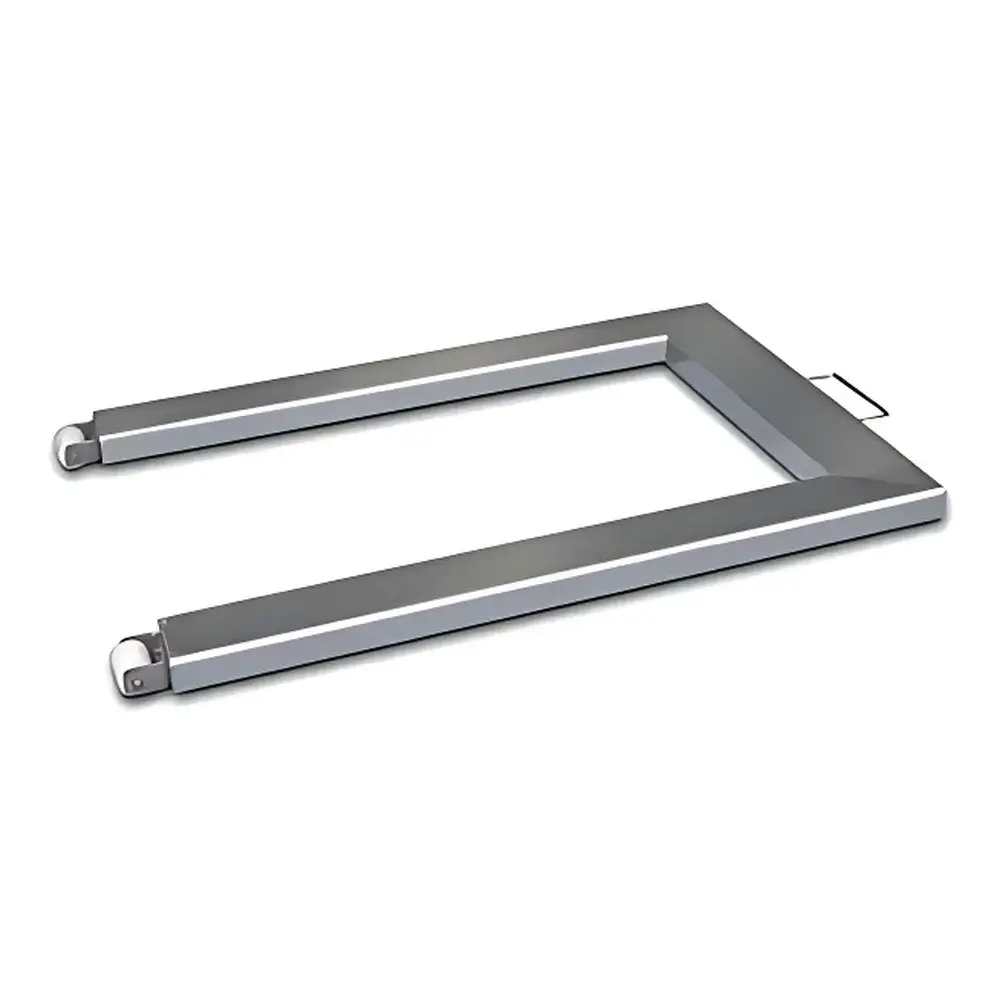
Sartorius IU Stainless Steel Intrinsically Safe Platform Scale
| Brand | Sartorius |
|---|---|
| Origin | Germany |
| Model | IU |
| Explosion Protection Certification | ATEX II 2 G1D EEx ib IIC T4 (Tamb ≤ 135°C), FM/C-UL US Class I, II, III Div 1 & 2, Groups A–G |
| Sensor Type | Four shear-beam load cells with strain gauge technology |
| Capacity Options | 300 kg, 600 kg, 1500 kg, 3000 kg |
| Readability | Configurable up to 15,000 or 30,000 divisions (d) |
| Legal-for-Trade resolution | 1 × 3,000 d/e or 2 × 3,000 d/e |
| Platform Height | 76 mm (standard) |
| Ingress Protection | IP67 / IP68 |
| Construction | AISI 304 stainless steel platform with explosion-proof glass bead finish |
| Optional Surface Finish | Electropolished stainless steel |
| Interface Compatibility | Sartorius Combics series displays, QCT01 terminal, ISI terminal |
Overview
The Sartorius IU Stainless Steel Intrinsically Safe Platform Scale is an industrial-grade weighing solution engineered for high-reliability operation in hazardous environments where flammable gases, vapors, dusts, or fibers may be present. Designed and manufactured in Germany, the IU series employs a robust four-shear-beam load cell architecture based on precision strain gauge technology—ensuring long-term stability, minimal creep, and high reproducibility across its full capacity range (300 kg to 3000 kg). Its intrinsic safety design eliminates ignition risk by limiting electrical energy below levels capable of igniting explosive atmospheres, making it suitable for Zone 1, Zone 2, Zone 21, and Zone 22 classified areas per ATEX and IECEx directives. The scale complies with European Directive 2014/34/EU (ATEX) and meets FM/C-UL standards for Class I, II, III, Division 1 & 2 installations in North America. With a standard platform height of 76 mm and dual IP67/IP68 ingress protection, the IU scale withstands aggressive cleaning protocols, high-pressure washdowns, and prolonged exposure to moisture or corrosive agents—ideal for pharmaceutical manufacturing, chemical processing, food production, and bulk material handling in regulated facilities.
Key Features
- Four high-stability shear-beam load cells with temperature-compensated strain gauges, delivering consistent linearity and hysteresis performance under dynamic loading conditions
- AISI 304 stainless steel construction with optional electropolished surface finish for enhanced corrosion resistance and ease of sterilization
- Intrinsically safe certification for both gas (II 2 G1D EEx ib IIC T4) and dust (II 2 D21 EEx ib IIIC) environments, verified per EN 60079-0, -11, and -31
- Configurable readability up to 30,000 divisions (d), supporting both high-precision process control and legal-for-trade applications (1 × 3,000 d/e or 2 × 3,000 d/e per OIML R76)
- Integrated compatibility with Sartorius Combics family displays (e.g., Combics 1, Combics 2), QCT01 industrial terminals, and ISI-series controllers for seamless data routing and remote configuration
- Modular design enabling rapid integration into automated filling, batching, checkweighing, and inventory management systems
Sample Compatibility & Compliance
The IU platform scale accommodates diverse industrial payloads—from drums and IBCs to palletized goods and reaction vessels—without compromising metrological integrity. Its low-profile 76 mm platform minimizes tripping hazards while maintaining structural rigidity at maximum rated capacity. All models are certified for use in hygienic environments requiring frequent wet cleaning, satisfying ISO 14644-1 cleanroom classification support when installed with appropriate floor sealing. The device conforms to key regulatory frameworks including EU Measuring Instruments Directive (MID) Annex MI-006 for non-automatic weighing instruments, FDA 21 CFR Part 11 requirements for electronic records (when paired with compliant software), and GLP/GMP-aligned validation protocols. Documentation packages include full EC Declaration of Conformity, calibration certificates traceable to national standards (e.g., PTB, NIST), and installation qualification (IQ) templates.
Software & Data Management
While the IU scale operates as a standalone hardware unit, its analog and digital outputs (including 4–20 mA, RS-232, RS-485, and optional Ethernet/IP or PROFINET via compatible terminals) enable bidirectional communication with MES, SCADA, and LIMS platforms. When connected to Sartorius Combics displays or QCT01 terminals, users gain access to configurable weighing modes (gross/net/tare, checkweighing, percentage, accumulation), real-time statistical process control (SPC) logging, and audit-trail-enabled event recording—including operator ID, timestamp, weight value, and status flags. All firmware updates and parameter configurations adhere to change control procedures compliant with ISO 9001 and ICH Q9 principles. Data export formats include CSV and XML, facilitating integration with enterprise analytics tools and ensuring alignment with ALCOA+ data integrity criteria.
Applications
- Batch weighing and formulation verification in API synthesis and sterile drug manufacturing
- Explosion-proof checkweighing of hazardous raw materials in petrochemical and agrochemical plants
- In-process monitoring of reactor feed rates and solvent additions under ATEX-compliant conditions
- Inventory reconciliation and drum/pallet weighing in warehouse zones adjacent to classified areas
- Calibration transfer and reference standard support in metrology labs serving regulated industries
- Integration into automated packaging lines requiring intrinsically safe load feedback for fill-level control
FAQ
What certifications does the IU scale hold for hazardous area use?
It carries ATEX II 2 G1D EEx ib IIC T4 (gas) and II 2 D21 EEx ib IIIC (dust) approvals, plus FM/C-UL Class I, II, III Div 1 & 2, Groups A–G listing.
Can the IU scale be used in outdoor or high-humidity environments?
Yes—its IP67/IP68 rating ensures full protection against immersion and high-pressure water jets, making it suitable for outdoor mounting and washdown-intensive facilities.
Is the IU scale compatible with Sartorius’ data integrity and audit trail requirements?
When interfaced with Combics or QCT01 terminals running validated firmware, it supports time-stamped, operator-logged events and electronic signatures aligned with 21 CFR Part 11 and EU Annex 11.
What is the maximum permissible error (MPE) for legal-for-trade operation?
Per OIML R76, MPE is ±0.5e for Class III instruments at initial verification, where ‘e’ equals the verification scale interval (e.g., 100 g for a 3000 kg × 3000 d/e configuration).
Does Sartorius provide validation documentation for GxP environments?
Yes—factory-supplied IQ/OQ documentation, traceable calibration reports, and risk-based validation support packages are available upon request.