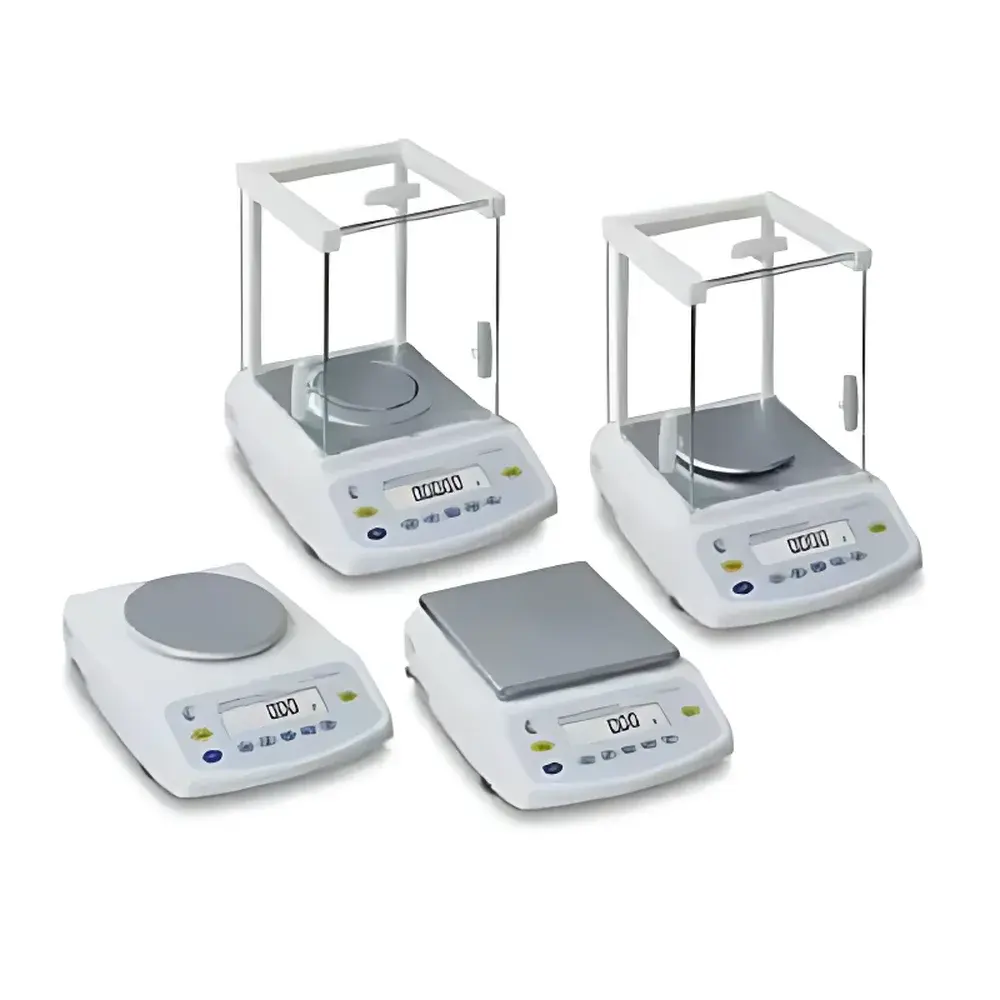
Sartorius BSA223S-CW Precision Balance
| Brand | Sartorius |
|---|---|
| Origin | Germany |
| Model | BSA223S-CW |
| Readability | 1 mg |
| Capacity | 220 g |
| Calibration | Internal motor-driven calibration |
| Display | Backlit LCD with 15 mm high characters |
| Pan Diameter | Ø 115 mm |
| Interface | RS-232C bidirectional |
| Compliance | ISO/IEC 17025, GLP, GMP-ready audit trail support |
| Built-in Applications | Percentage weighing, parts counting, animal/dynamic weighing, unit conversion, arithmetic functions (×, ÷) |
| Language Options | 5 selectable UI languages |
| Level Indicator | Integrated adjacent to display |
| Optional Accessories | YDP03-0CE printer, USB-RS232 adapter |
Overview
The Sartorius BSA223S-CW is a high-performance precision balance engineered for routine analytical and quality control tasks in regulated laboratory environments. Operating on electromagnetic force compensation (EMFC) principle, it delivers stable, drift-resistant measurements under variable ambient conditions—including minor air currents, temperature fluctuations, and vibration—by leveraging advanced digital filtering algorithms and real-time environmental compensation. With a 220 g capacity and 1 mg readability, the BSA223S-CW meets the performance requirements of ISO 9001, USP , and ASTM E898–22 for Class II analytical balances. Its robust mechanical architecture features a monolithic aluminum alloy base, draft shield-compatible design (optional), and thermally stable load cell assembly—ensuring long-term repeatability (<0.002% RSD over 24 h) and minimal warm-up time (<30 min to full specification stability).
Key Features
- Motor-driven internal calibration system with traceable, factory-installed reference weights—activated via single-key press for rapid, operator-independent recalibration.
- Backlit LCD display with 15 mm character height and high-contrast grayscale rendering—optimized for readability under low-light or glare-prone conditions, including laminar flow hoods and glove boxes.
- Integrated bubble level positioned adjacent to the display—enabling immediate visual verification of leveling without requiring auxiliary tools or repositioning.
- Intuitive menu navigation with context-sensitive prompts in five selectable languages (English, German, French, Spanish, Chinese), supporting multilingual lab teams without configuration overhead.
- Dedicated function keys for common workflows: % weighing, piece counting, dynamic/animal weighing, tare memory, and arithmetic operations (multiplication/division)—reducing keystroke count by up to 40% versus legacy interfaces.
- RS-232C bidirectional serial interface compliant with Sartorius DataBridge protocol—enabling seamless integration with LIMS, ELN, and ERP systems; supports automatic data logging, timestamping, and user ID embedding per measurement.
Sample Compatibility & Compliance
The BSA223S-CW accommodates samples up to Ø115 mm on its stainless-steel weighing pan, compatible with standard crucibles, beakers, and sample boats used in pharmaceutical assay preparation, chemical synthesis, and materials characterization. It supports dynamic weighing of live specimens (e.g., small rodents, cell culture flasks) with adjustable damping parameters to suppress motion-induced noise. All firmware and calibration records comply with FDA 21 CFR Part 11 requirements when paired with validated Sartorius software (e.g., LabX Lite). Audit trails—including calibration events, parameter changes, and print/export actions—are time-stamped, user-attributed, and non-erasable. The device conforms to EN 45501 (OIML R76-1), ISO 17025 clause 6.4.3 for measurement uncertainty estimation, and EU Directive 2014/30/EU (EMC) and 2014/35/EU (LVD).
Software & Data Management
The balance operates natively with Sartorius’ embedded application suite—requiring no external PC for core functionality. For regulated environments, optional LabX Lite software provides electronic signature capture, role-based access control, and automated report generation (PDF/CSV) compliant with GLP/GMP documentation standards. Raw measurement data exported via RS-232 includes metadata: date/time stamp, operator ID (if enabled), balance ID, calibration status flag, and environmental sensor readings (where available). Integration with third-party platforms (e.g., Thermo Fisher SampleManager, Waters Empower) is supported through ASCII-based command protocols documented in Sartorius Communication Manual v3.2.
Applications
- Pharmaceutical QC: Accurate formulation of active pharmaceutical ingredients (APIs) and excipients per USP weighing procedures.
- Academic research: Gravimetric analysis of catalysts, nanomaterials, and polymer composites where sub-milligram reproducibility is critical.
- Food safety labs: Moisture content determination via loss-on-drying (LOD), requiring stable zero tracking across extended thermal cycles.
- Environmental testing: Weighing of filter membranes pre/post particulate collection per EPA Method 201A and ISO 12103-1.
- Chemical manufacturing: Batch reconciliation, raw material receipt inspection, and intermediate purity checks aligned with ICH Q7 Annex 11 expectations.
FAQ
Does the BSA223S-CW meet ISO/IEC 17025 requirements for accredited calibration laboratories?
Yes—the internal calibration system uses NIST-traceable weights, and all calibration events generate immutable audit logs with metrological metadata required for scope accreditation.
Can the balance store multiple user profiles with differentiated access rights?
No—user-level permissions are managed externally via LabX Lite; the standalone device supports only operator ID entry for traceability.
Is external ionization support integrated or optional?
Static charge neutralization is provided via optional external ionizer (Sartorius ESD-200), not built-in.
What is the warm-up time to achieve full metrological specification?
30 minutes at 23 ± 2 °C ambient; stabilization time extends by ~10 min per 5 °C deviation from nominal.
Does the RS-232 interface support automatic data transmission upon stabilization?
Yes—via programmable “Auto-Output” mode with configurable delay (0–99 s) and trigger condition (stable reading ±0.002 g for ≥2 s).