
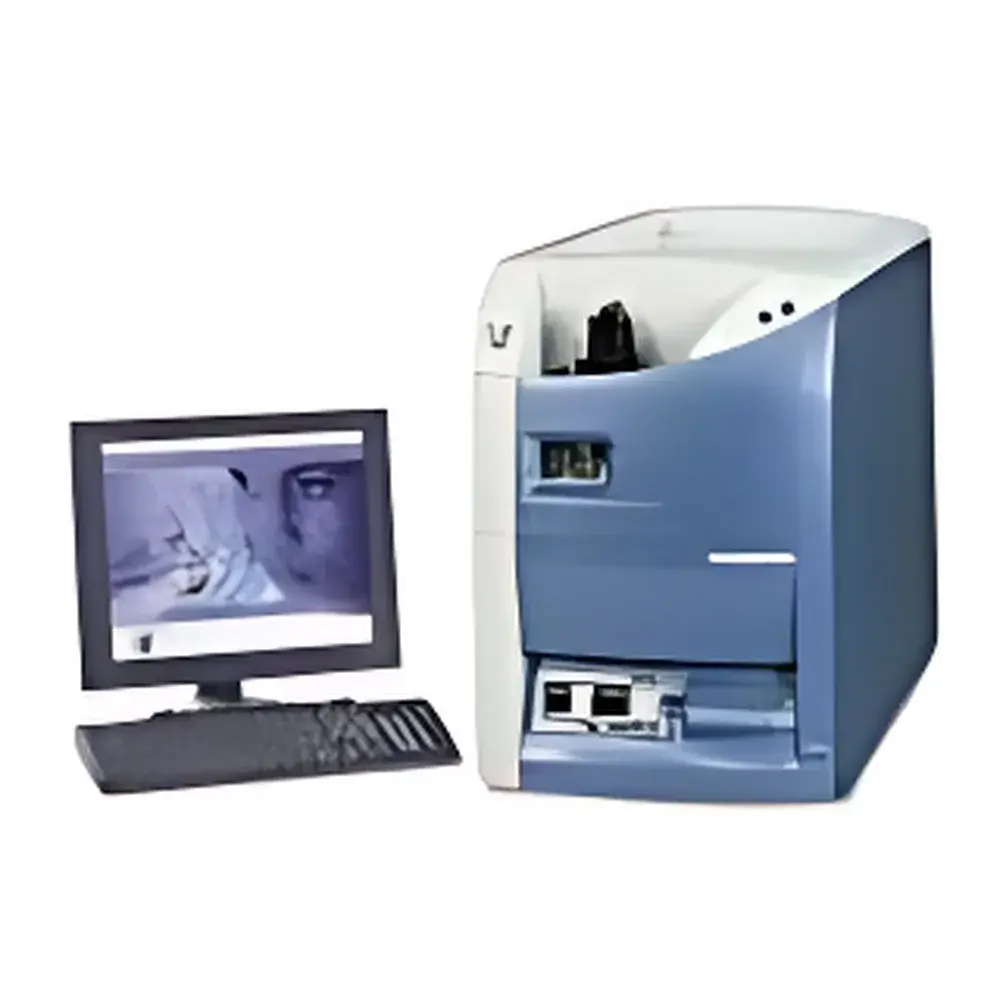
Waters Quattro Premier XE Triple Quadrupole Mass Spectrometer
| Brand | Waters |
|---|---|
| Origin | USA |
| Manufacturer Type | Authorized Distributor |
| Origin Category | Imported |
| Model | Quattro Premier XE |
| Pricing | Upon Request |
Overview
The Waters Quattro Premier XE is a high-performance triple quadrupole liquid chromatography–tandem mass spectrometry (LC/MS/MS) system engineered for quantitative bioanalysis, pharmaceutical development, environmental monitoring, and food safety testing. Built upon Waters’ legacy of robust electrospray ionization (ESI) and atmospheric pressure chemical ionization (APCI) platforms, the Quattro Premier XE employs a proven triple quadrupole architecture with optimized ion transmission optics, low-noise detection electronics, and a vacuum system designed for long-term operational stability. Its core measurement principle relies on precursor ion selection in Q1, collision-induced dissociation (CID) in the RF-only hexapole collision cell (Q2), and product ion analysis in Q3—enabling highly selective multiple reaction monitoring (MRM) with exceptional signal-to-noise ratios and linear dynamic range exceeding 4 orders of magnitude.
Key Features
- 2–4× improvement in MRM sensitivity compared to prior-generation Quattro instruments, achieved through enhanced ion optics, improved detector gain stability, and reduced electronic noise floor;
- Integrated ESCi™ (Electrospray/Atmospheric Pressure Chemical Ionization) dual-mode source and optional APPI/IonSabre™ interface for broad analyte coverage across polar, non-polar, thermally labile, and low-volatility compounds;
- Superior T-Wave™ ion guide technology—employing traveling wave ion mobility principles within the collision cell region—to improve ion transmission efficiency and reduce chemical noise without compromising duty cycle;
- Regulatory-compliant architecture supporting GLP, GMP, and FDA 21 CFR Part 11 requirements, including full audit trail functionality, electronic signatures, and IQ/OQ/PQ validation documentation packages;
- Compact footprint (≤0.5 m²) — approximately 67% smaller than conventional benchtop triple quad systems — enabling deployment in space-constrained laboratories without sacrificing performance or service accessibility;
- Modular design with field-replaceable ion sources, detector assemblies, and vacuum pumps to minimize instrument downtime and extend service intervals.
Sample Compatibility & Compliance
The Quattro Premier XE interfaces seamlessly with all major UHPLC and HPLC systems, including Waters ACQUITY UPLC® and Alliance® platforms. It accommodates flow rates from 5 µL/min to 2 mL/min and supports standard, micro-, and nano-bore column configurations. Sample introduction is compatible with autosamplers meeting ANSI/SBS dimensional standards and supports direct infusion, loop injection, and column-switching workflows. The system conforms to ISO/IEC 17025:2017 for testing laboratories, meets key elements of ICH M10 guidance on bioanalytical method validation, and provides traceable calibration using NIST-traceable tuning compounds (e.g., reserpine, sodium formate). All firmware and control software are validated per GAMP 5 principles and support full 21 CFR Part 11 compliance when deployed with Waters Empower™ 3 CDS or UNIFI Scientific Information System.
Software & Data Management
Control, acquisition, and processing are managed via Waters MassLynx™ 4.2 or later — a Windows-based platform offering intuitive method building, real-time MRM optimization, and automated peak integration with customizable reporting templates. MassLynx includes built-in tools for lock-mass correction, background subtraction, and isotopic pattern recognition. Raw data files (.raw) are stored in an open, vendor-neutral format compliant with Proteomics Standards Initiative (PSI) mzML specifications. When integrated with Empower 3, the system enables centralized audit trails, role-based access control, electronic batch records, and full lifecycle data integrity management aligned with ALCOA+ principles. All software updates undergo rigorous regression testing and are distributed with version-controlled release notes and installation qualification protocols.
Applications
- Quantitative pharmacokinetic/pharmacodynamic (PK/PD) studies in preclinical and clinical development;
- Residue analysis of pesticides, veterinary drugs, and mycotoxins in food and agricultural commodities (per EU SANTE/11813/2021 and FDA CPG 7126.09);
- Environmental screening of PFAS, pharmaceuticals, and endocrine disruptors in wastewater and surface water matrices;
- Metabolite identification and structural elucidation in drug metabolism studies;
- High-throughput toxicology screening in forensic and clinical toxicology laboratories;
- Quality control of biologics, including peptide mapping and post-translational modification analysis under ICH Q5E guidelines.
FAQ
Is the Quattro Premier XE compatible with modern UHPLC systems?
Yes — it supports sub-2-µm particle columns, gradient dwell volumes <100 µL, and flow rates down to 5 µL/min via microflow ESI sources.
Does the system support remote monitoring and diagnostics?
Yes — optional Waters Connect™ remote service module enables secure, encrypted telemetry for predictive maintenance alerts and real-time status dashboards.
Can the Quattro Premier XE be upgraded to support high-resolution capabilities?
No — as a dedicated triple quadrupole platform, it does not incorporate time-of-flight (TOF) or Orbitrap™ technologies; users requiring HRAM should consider the Waters Xevo™ TQ-XS or SELECT SERIES™ Cyclic IMS platforms.
What validation documentation is provided with the instrument?
Waters supplies comprehensive IQ/OQ/PQ protocols, installation checklists, operational test scripts, and traceable calibration certificates aligned with ASTM E2500 and ISO 14644-1 cleanroom classification requirements where applicable.
Is the ESCi source interchangeable with other Waters mass spectrometers?
The ESCi source is mechanically and electrically compatible with the Quattro series and Xevo TQ-S platforms, though firmware and driver versions must be matched to ensure optimal performance.





