
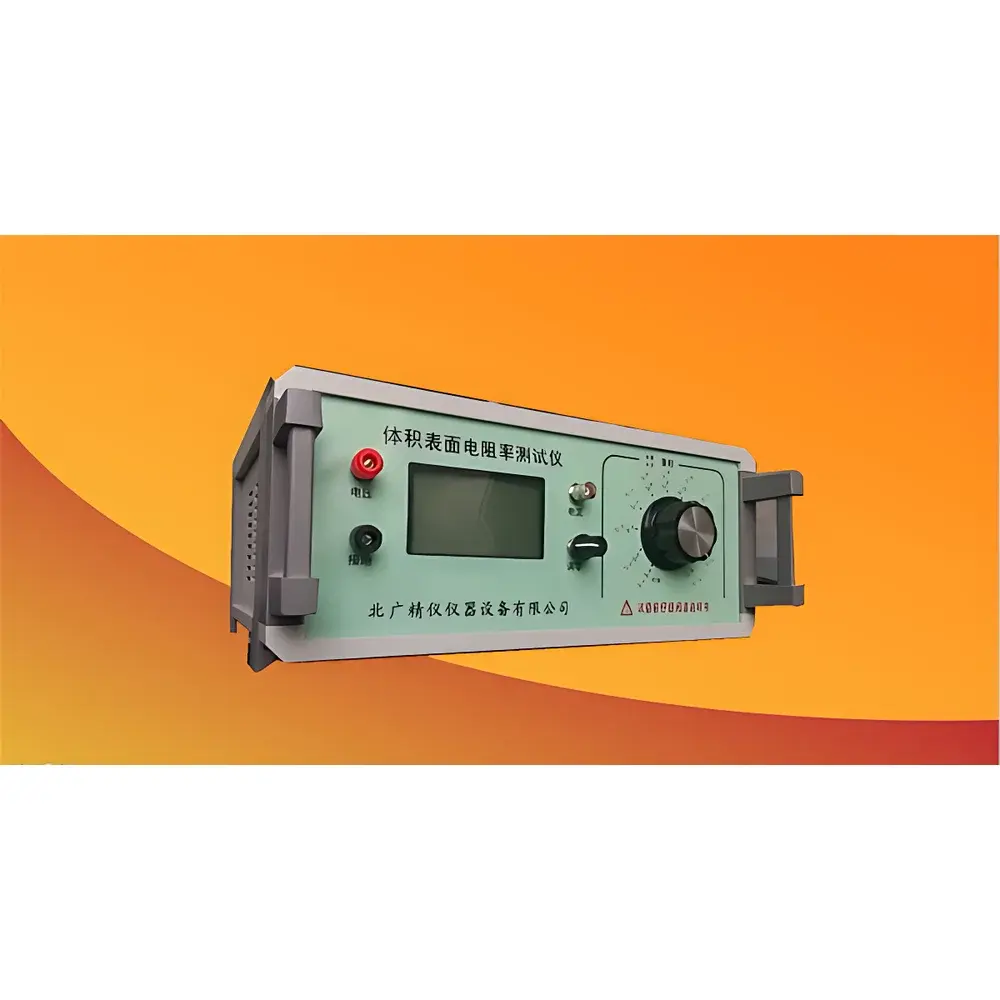
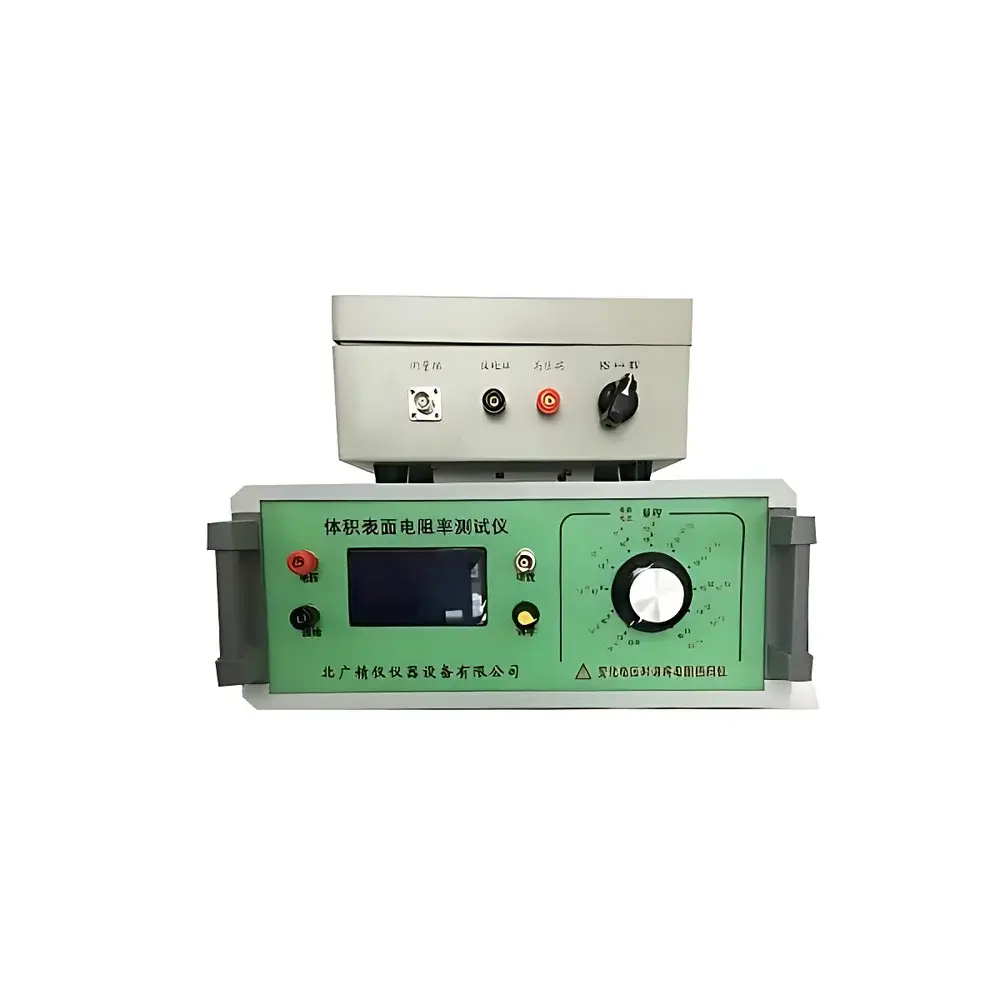
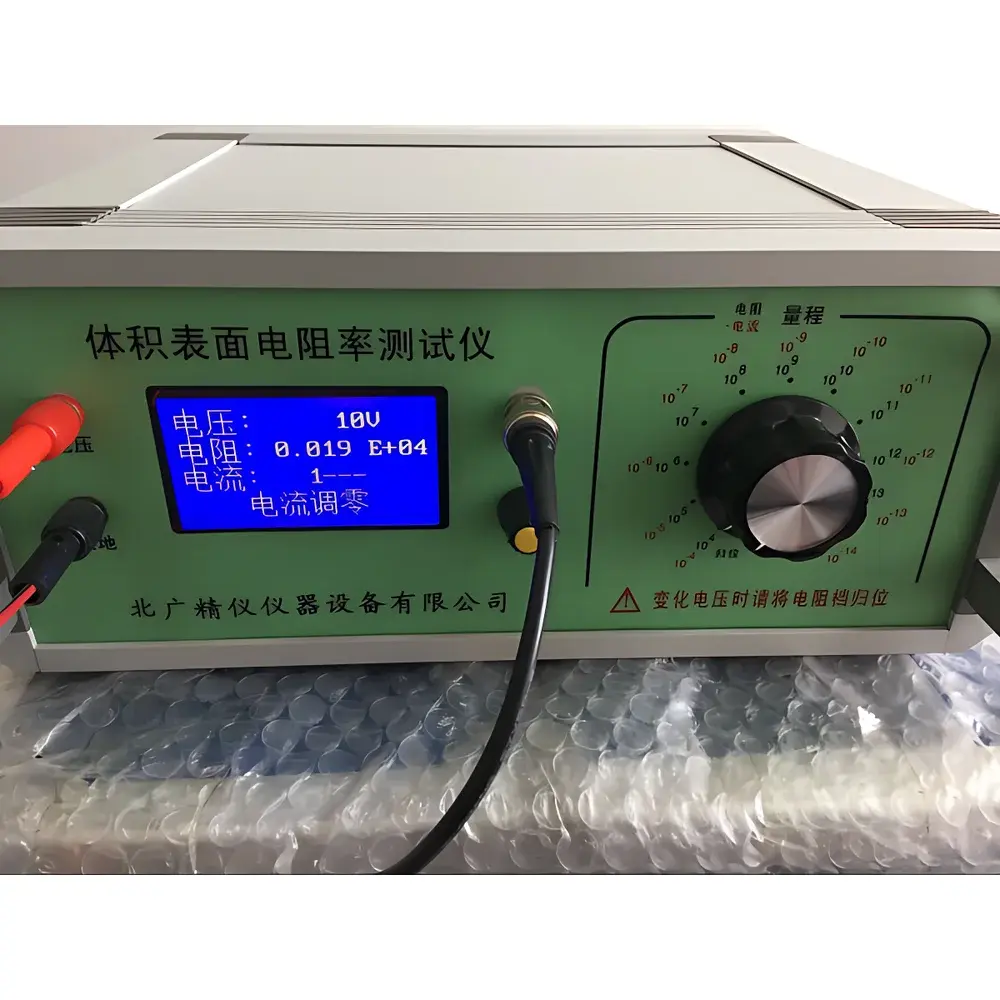
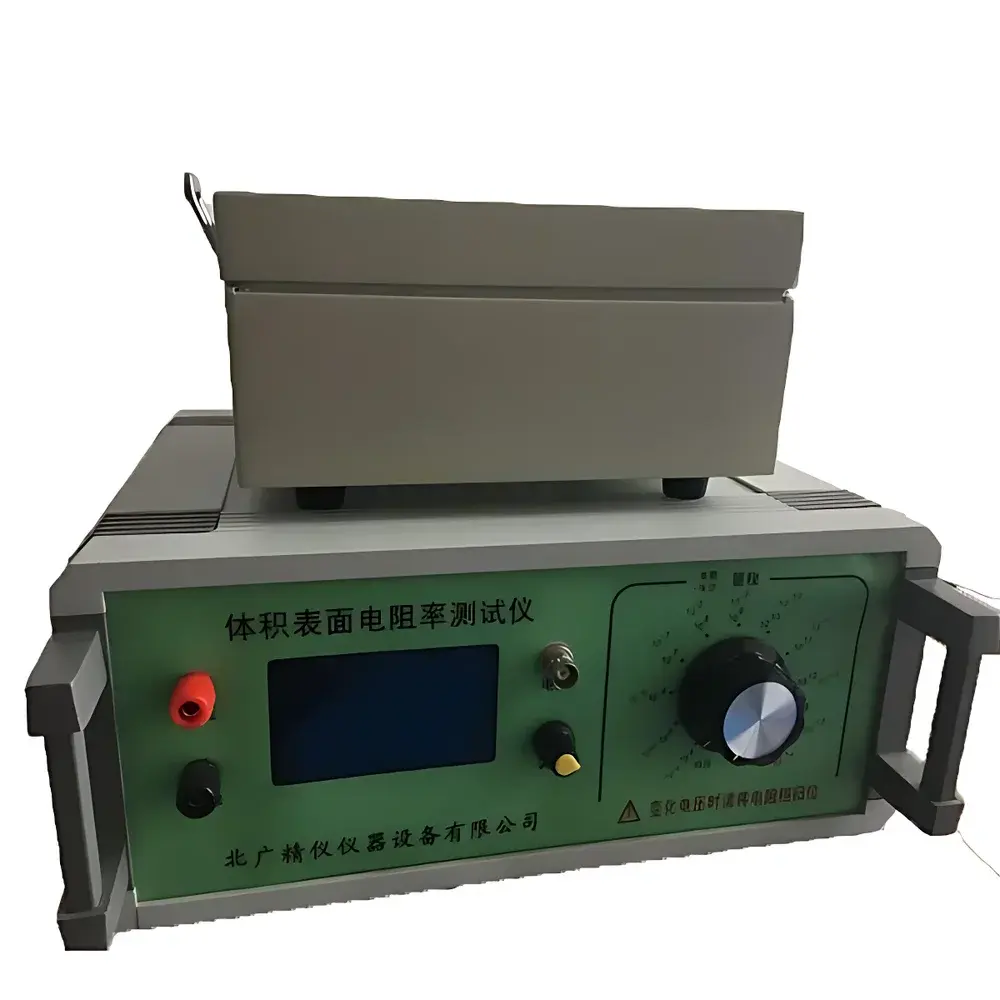
Beijing North Guang Precision Instrument BEST121 Digital High-Resistance Meter for Volume and Surface Resistivity Measurement
| Brand | Beijing North Guang Precision Instrument |
|---|---|
| Origin | Beijing, China |
| Manufacturer Type | OEM/ODM Manufacturer |
| Product Category | Domestic (China-made) |
| Model | BEST121 |
| Price | USD 1,280 (FOB Beijing) |
| Resistance Range | 1×10⁴ Ω to 1×10¹⁸ Ω |
| Current Measurement Range | 2×10⁻⁴ A to 1×10⁻¹⁶ A |
| Test Voltages | DC 10 V, 50 V, 100 V, 250 V, 500 V, 1000 V |
| Basic Accuracy | ±1% of reading (typical) |
| Input Impedance | >10¹⁵ Ω |
| Operating Environment | 0–40 °C, RH <80% non-condensing |
Overview
The Beijing North Guang Precision Instrument BEST121 Digital High-Resistance Meter is a precision instrument engineered for the accurate determination of volume resistivity (ρv) and surface resistivity (ρs) of solid, liquid, paste, and powder insulating materials. It operates on the fundamental principle of Ohm’s Law (R = V/I), employing synchronized high-stability DC voltage sourcing and ultra-low-current measurement via a guarded electrometer architecture. The system simultaneously acquires applied test voltage and resulting current with high-resolution analog-to-digital conversion, eliminating dynamic error associated with sequential measurement methods. Designed for compliance with international standard test protocols—including ASTM D257-99, GB/T 1410-2006, GB/T 1692-2008, and GB/T 2439-2001—the BEST121 delivers traceable, reproducible results essential for quality control in electronics manufacturing, aerospace composites, polymer R&D, antistatic material validation, and regulatory documentation under ISO/IEC 17025 environments.
Key Features
- Simultaneous dual-parameter acquisition: real-time display of resistance value (Ω) and corresponding current (A) on a high-contrast LCD screen
- Adjustable DC test voltages: six precisely regulated output levels (10 V, 50 V, 100 V, 250 V, 500 V, 1000 V) selected via front-panel toggle switch
- Extended resistance measurement range: 1×10⁴ Ω to 1×10¹⁸ Ω with automatic range stepping and overload indication (“1” display)
- Ultra-low current measurement capability: down to 1×10⁻¹⁶ A, enabled by a high-input-impedance (>10¹⁵ Ω), guarded electrometer amplifier stage
- Integrated shielding architecture: supplied with conductive shielded enclosure and triple-electrode configuration (high-voltage, guarded, and measuring electrodes) to minimize surface leakage and stray capacitance effects
- Stable thermal design: low-drift circuitry with 30-minute warm-up stabilization period recommended prior to critical measurements
- Compliance-ready operation: supports standardized 60-second electrification time per ASTM D257 and GB/T 1410, with geometric mean calculation functionality for polarity-dependent resistivity evaluation
Sample Compatibility & Compliance
The BEST121 accommodates diverse sample geometries and physical states—including rigid plastics, elastomers (e.g., vulcanized rubber per GB/T 1692), thin films, coatings, conductive inks, antistatic flooring tiles, ESD footwear, textile fabrics (per GB/T 12703.4), liquid dielectrics (e.g., plasticizers), and powdered insulators. Electrode configurations follow ASTM D257 Annex A1 (concentric ring) and IEC 60093 guidelines. All measurements adhere to the definition of surface resistivity (ρs = Rs × L/W, unit: Ω/sq) and volume resistivity (ρv = Rv × A/d, unit: Ω·m), where geometry factors are manually entered or pre-programmed per standard specimen dimensions. The instrument meets electrical safety requirements per GB 4793.1 and supports GLP/GMP-aligned recordkeeping when paired with external data logging systems.
Software & Data Management
While the BEST121 operates as a standalone benchtop meter with no embedded PC software, it provides RS-232 serial interface (standard) and optional USB-to-serial adapter support for external data capture. Raw resistance and current values can be streamed in ASCII format at user-defined intervals (e.g., 1 Hz sampling during polarization decay studies). When integrated into laboratory information management systems (LIMS), the device supports audit-trail-capable workflows compliant with FDA 21 CFR Part 11—provided timestamped data export, user authentication, and electronic signature mechanisms are implemented at the host system level. Calibration certificates include NIST-traceable reference resistor verification at three points across the measurement span (10⁶ Ω, 10¹² Ω, 10¹⁶ Ω).
Applications
- Quality assurance of ESD-safe packaging, work surfaces, and garments in semiconductor cleanrooms
- Development and certification of high-resistivity polymer formulations (e.g., polyimide films, silicone encapsulants)
- Validation of insulating properties in aerospace-grade composites and ceramic substrates
- Routine testing of cable jacketing, transformer oils, and capacitor dielectrics per IEC 60243
- Research on charge dissipation kinetics in nanocomposites and conductive polymer blends
- Regulatory submission support for medical device insulation (ISO 10993-12) and automotive high-voltage battery components (SAE J2464)
FAQ
What is the difference between volume and surface resistivity?
Volume resistivity quantifies bulk material resistance normalized to thickness and cross-sectional area (Ω·m); surface resistivity measures lateral conduction along a material’s top layer, expressed in ohms per square (Ω/sq), independent of electrode spacing.
Can the BEST121 measure liquids and powders?
Yes—using the included concentric ring electrode set and optional liquid cell fixtures, it complies with GB/T 10581 for high-temperature liquid resistivity and ASTM D257 Annex A3 for powdered samples under controlled compaction pressure.
Is calibration required before each use?
No—zero adjustment is performed once per session with open-circuit input; however, full system calibration using certified reference resistors is recommended every 12 months or after repair.
Why is guarding essential for surface resistivity measurements?
Guarding eliminates parasitic surface leakage paths by actively maintaining the guard electrode at the same potential as the measuring electrode, ensuring only the intended current through the specimen is quantified.
Does the instrument meet CE or UL safety standards?
The BEST121 conforms to GB 4793.1 (equivalent to IEC 61010-1) for laboratory electrical equipment; CE marking requires end-user responsibility for final system integration and risk assessment per EU Machinery Directive.



