
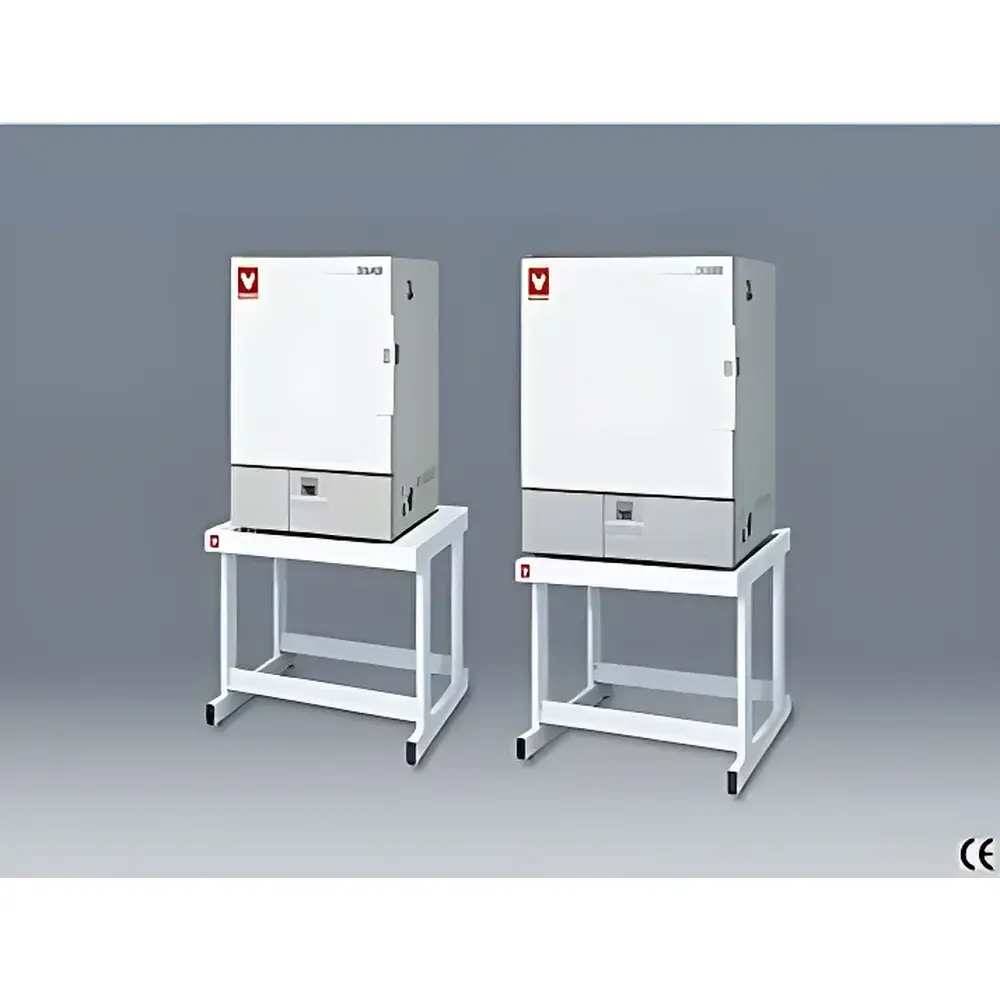
YAMATO DKL310C / DKL410C / DKL610C Forced-Convection Constant-Temperature Drying Oven
| Brand | YAMATO |
|---|---|
| Origin | Japan |
| Manufacturer Type | Authorized Distributor |
| Origin Category | Imported |
| Model | DKL310C / DKL410C / DKL610C |
| Pricing | Upon Request |
Overview
The YAMATO DKL310C, DKL410C, and DKL610C series are precision-engineered forced-convection drying ovens designed for reliable, repeatable thermal processing in academic, industrial, and quality control laboratories. Built upon YAMATO’s decades of Japanese engineering heritage, these ovens employ a robust air-circulation architecture—featuring centrifugal blowers and stainless-steel heating elements—to ensure uniform temperature distribution across the chamber interior. The core operating principle relies on PID-controlled resistive heating combined with continuous airflow to maintain setpoint stability within ±1 °C at 210 °C, making them suitable for applications requiring consistent thermal exposure without active humidity control or vacuum capability. Unlike natural-convection models, the forced-air design minimizes thermal stratification and accelerates heat transfer—critical for drying, baking, sterilization pre-treatment, and thermal aging protocols where reproducibility and time efficiency are essential.
Key Features
- PID-based digital temperature control with dual LED display: red 4-digit readout for actual chamber temperature, green 4-digit readout for setpoint.
- Intuitive operation via dedicated function keys and up/down arrow buttons—enabling quick access to setpoint entry, timer configuration, deviation correction, and parameter lock.
- Comprehensive safety architecture: integrated self-diagnostic circuitry (detects Pt100 sensor failure and overtemperature excursions), independent mechanical overtemperature limiter, earth-leakage circuit breaker, and programmable auto-shutdown.
- Stainless-steel interior chamber (SUS304) for corrosion resistance and ease of cleaning; cold-rolled steel exterior with chemical-resistant coating.
- Thermal insulation using high-density glass fiber; optimized airflow path with rear-mounted centrifugal blower (10 W motor) and adjustable top exhaust ports (2 × Ø30 mm).
- Programmable timer (1 minute to 99 hours 59 minutes) supporting fixed-setpoint operation with automatic termination—ideal for unattended overnight runs under GLP-compliant workflows.
Sample Compatibility & Compliance
These ovens accommodate standard laboratory sample formats including Petri dishes, weighing boats, glassware, metal trays, and polymer substrates. Internal dimensions range from 300 × 300 × 300 mm (DKL310C, 27 L) to 600 × 500 × 500 mm (DKL610C, 150 L), with adjustable stainless-steel wire shelves (6–12 layers, 35 mm spacing, 15 kg load capacity per shelf). All models comply with IEC 61010-1:2010 for electrical safety in laboratory equipment and meet JIS B 7751 Class II accuracy requirements for temperature uniformity. While not certified for sterile processing or ISO 14644 cleanroom use, their construction supports routine validation per ASTM E2297 (Standard Guide for Validation of Thermal Processing Equipment) and internal audit readiness for FDA 21 CFR Part 11–aligned data integrity practices when paired with external logging systems.
Software & Data Management
The DKL series operates via embedded firmware with no external PC interface or proprietary software dependency. Temperature setpoints, timer values, and calibration offsets (via deviation correction function) are stored in non-volatile memory. Parameter lock prevents unauthorized modification during operational shifts—a feature supporting GMP-aligned procedural controls. For traceability, users may integrate optional external data loggers (e.g., compliant with ISO/IEC 17025-accredited recorders) via the Ø30 mm side port. Though lacking native network connectivity or electronic audit trail generation, the system’s deterministic behavior and stable thermal performance enable straightforward IQ/OQ documentation in regulated environments.
Applications
- Drying of moisture-sensitive powders, granules, and filter papers in pharmaceutical QC labs.
- Baking of ceramic precursors, catalyst supports, and thin-film substrates prior to sintering or characterization.
- Pre-conditioning of samples for tensile testing, gravimetric analysis, or ash content determination per ASTM D2867 and ISO 5660.
- Thermal stabilization of reference standards and calibration weights before metrological evaluation.
- Accelerated aging studies of packaging materials, adhesives, and elastomers per ISO 188 and ASTM D573.
- Pre-heating of crucibles, desiccators, and analytical vessels in elemental analysis workflows (e.g., AAS, ICP-OES sample prep).
FAQ
What is the maximum operating temperature and its stability specification?
The oven operates from ambient +10 °C to 260 °C. At 210 °C, temperature control accuracy is ±1 °C, and temperature uniformity across the working volume is ±2.5 °C.
Are the shelves adjustable and what is their load rating?
Yes—shelves are vertically adjustable at 35 mm intervals. Each shelf supports up to 15 kg, with 6, 9, or 12 shelves supplied depending on model.
Does this oven support remote monitoring or data export?
No native Ethernet, USB, or RS-232 interface is provided. Data recording requires third-party external loggers connected through the Ø30 mm side port.
Is the unit suitable for use with flammable solvents?
No. These ovens lack explosion-proof certification (e.g., ATEX, UL 1203) and are not rated for Class I, Division 1 hazardous locations. Solvent evaporation must be performed only in fume hoods or certified solvent-safe ovens.
What maintenance is required for long-term reliability?
Routine cleaning of interior surfaces and blower intake grilles is recommended. Annual verification of Pt100 sensor calibration and mechanical limiter functionality is advised per laboratory quality management procedures.



