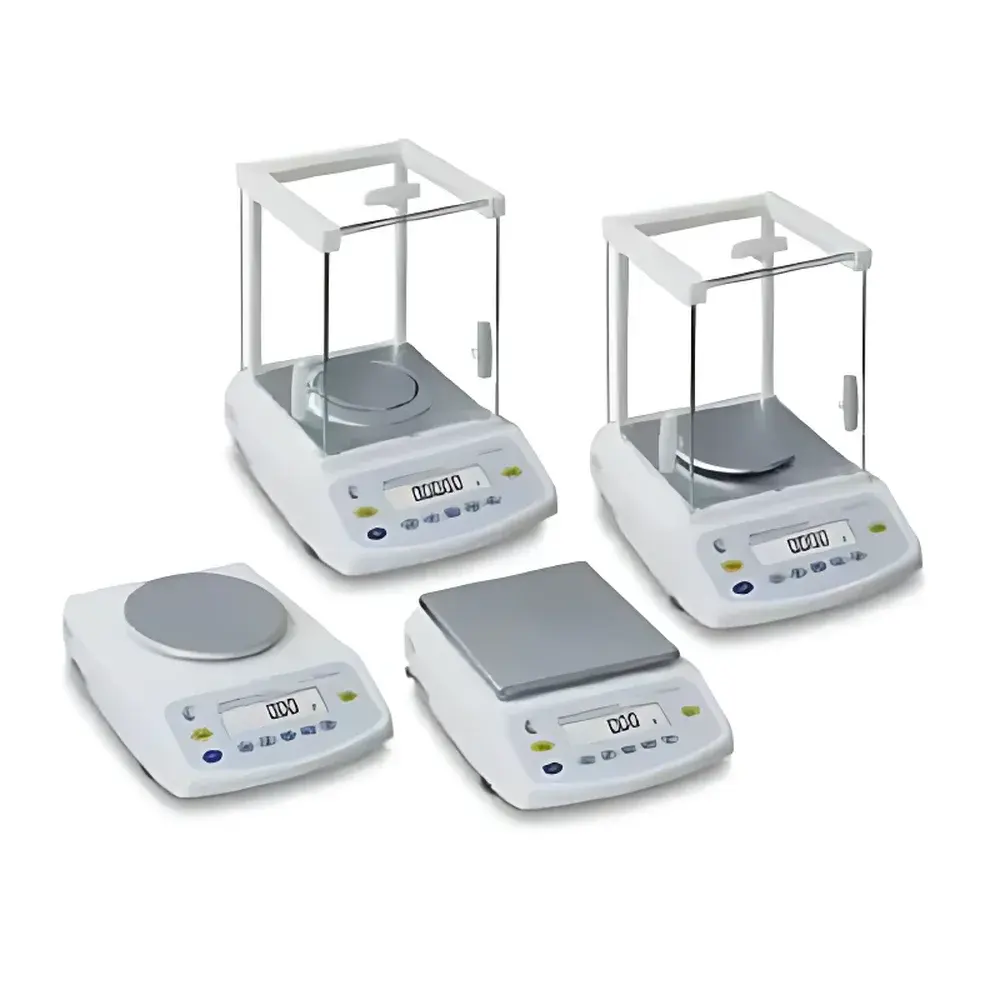
Sartorius BSA623S Precision Balance
| Key | Brand: Sartorius |
|---|---|
| Origin | Germany |
| Model | BSA623S |
| Readability | 1 mg |
| Capacity | 620 g |
| Calibration | External |
| Display | Backlit LCD with 15 mm character height |
| Pan Diameter | Ø 115 mm |
| Interface | RS-232C bidirectional |
| Compliance | ISO/GLP-compliant data output |
| Built-in Applications | Percentage weighing, net weight summation, animal/dynamic weighing, unit conversion, arithmetic calculation (×, ÷) |
| Level Indicator | Integrated adjacent to display |
| Language Options | 5 selectable languages |
| Operating Principle | Electromagnetic force compensation (EMFC) |
Overview
The Sartorius BSA623S Precision Balance is an entry-level analytical-grade instrument engineered for routine laboratory weighing tasks requiring consistent accuracy and operational robustness. Based on the electromagnetic force compensation (EMFC) principle, it delivers stable and repeatable mass measurements by dynamically balancing the gravitational force of a sample against a precisely controlled electromagnetic counterforce. With a capacity of 620 g and readability of 1 mg, the BSA623S meets the performance requirements of general QC labs, educational institutions, and R&D environments where traceable, reproducible results are essential—but where full analytical balance specifications (e.g., sub-0.1 mg readability or internal motorized calibration) are not mandated. Its design emphasizes environmental resilience: advanced digital filtering algorithms compensate for minor air currents, temperature fluctuations, and mechanical vibrations, ensuring reliable performance even in non-climate-controlled lab spaces.
Key Features
- Electromagnetic force compensation (EMFC) sensor architecture ensures high linearity, long-term stability, and minimal drift over time.
- Backlit LCD display with 15 mm high characters provides exceptional legibility under variable ambient lighting—critical for multi-shift operations or shared lab environments.
- Integrated bubble level positioned adjacent to the display enables rapid visual verification of leveling prior to use—reducing setup time and operator error.
- User-friendly interface with intuitive menu navigation, single-touch key activation, and context-sensitive prompts in five selectable languages (English, German, French, Spanish, Chinese).
- RS-232C bidirectional serial interface supports direct connection to printers (e.g., YDP03-0CE), PCs, or LIMS systems for automated data capture and audit trail generation.
- Preloaded application modes include percentage weighing, net weight accumulation, dynamic/animal weighing, unit conversion (g, oz, ct, etc.), and basic arithmetic functions—eliminating manual calculations and transcription errors.
Sample Compatibility & Compliance
The BSA623S accommodates samples up to 620 g on its Ø115 mm stainless steel weighing pan—optimized for standard labware including beakers, weighing boats, and crucibles. Its open pan geometry allows easy placement and retrieval of irregular or tall containers. The balance complies with international metrological standards including OIML R76 and EN 45501 for Class II non-automatic weighing instruments. For regulated environments, it supports ISO/IEC 17025, GLP, and GMP workflows through traceable calibration records and optional printer-generated reports—including date/time stamps, operator ID fields, and balance identification metadata. While external calibration is required (no internal motorized weights), its stable EMFC mechanism ensures minimal recalibration frequency when operated within specified environmental limits (10–30 °C, ≤80% RH non-condensing).
Software & Data Management
Data integrity is maintained via standardized ASCII protocol over RS-232C, enabling seamless integration with third-party laboratory software, spreadsheets, or custom database applications. When paired with the optional YDP03-0CE thermal printer, users generate hard-copy records compliant with ISO/GLP documentation requirements—including calibration history, weighing events, and system diagnostics. All printed outputs include mandatory identifiers: balance serial number, date/time, ambient temperature/humidity (if logged externally), and operator input. No proprietary drivers or closed firmware are required—ensuring long-term interoperability and IT infrastructure compatibility. Audit trails remain fully exportable and human-readable without vendor-specific viewers.
Applications
- Raw material and finished product quality control in pharmaceutical, chemical, and food manufacturing.
- Weighing reagents, standards, and reference materials in academic teaching labs and method development settings.
- Formulation support in cosmetics and nutraceutical production where batch consistency relies on precise mass inputs.
- Dynamic weighing of live specimens (e.g., small rodents, insects) using built-in stabilization filters to suppress motion-induced noise.
- Inventory management and packaging verification in warehouse QA stations where speed and repeatability outweigh ultra-high resolution needs.
FAQ
What calibration procedure does the BSA623S require?
The BSA623S requires external calibration using certified weights traceable to national standards. It does not include internal motorized calibration; however, its EMFC sensor maintains excellent short- and medium-term stability between calibrations.
Is the balance compatible with modern PC operating systems?
Yes—via standard RS-232C communication and widely supported terminal emulation protocols (e.g., Tera Term, PuTTY). USB-to-serial adapters with FTDI or CH340 chipsets are recommended for compatibility with Windows 10/11, macOS, and Linux distributions.
Can the display brightness be adjusted?
No—the backlight operates at fixed intensity optimized for broad ambient light tolerance. This design eliminates user-configurable variables that could affect traceability or introduce inconsistency across operators.
Does the BSA623S meet FDA 21 CFR Part 11 requirements?
While the hardware itself does not enforce electronic signature or audit trail encryption, its RS-232C output and printer-compatible reporting enable compliance when integrated into validated software systems with appropriate procedural controls.
What maintenance is recommended for long-term accuracy?
Routine cleaning of the pan and draft shield (if installed), periodic verification with calibrated check weights, and annual third-party metrological verification per ISO/IEC 17025 are advised. Avoid exposure to corrosive vapors or particulates without appropriate containment.