
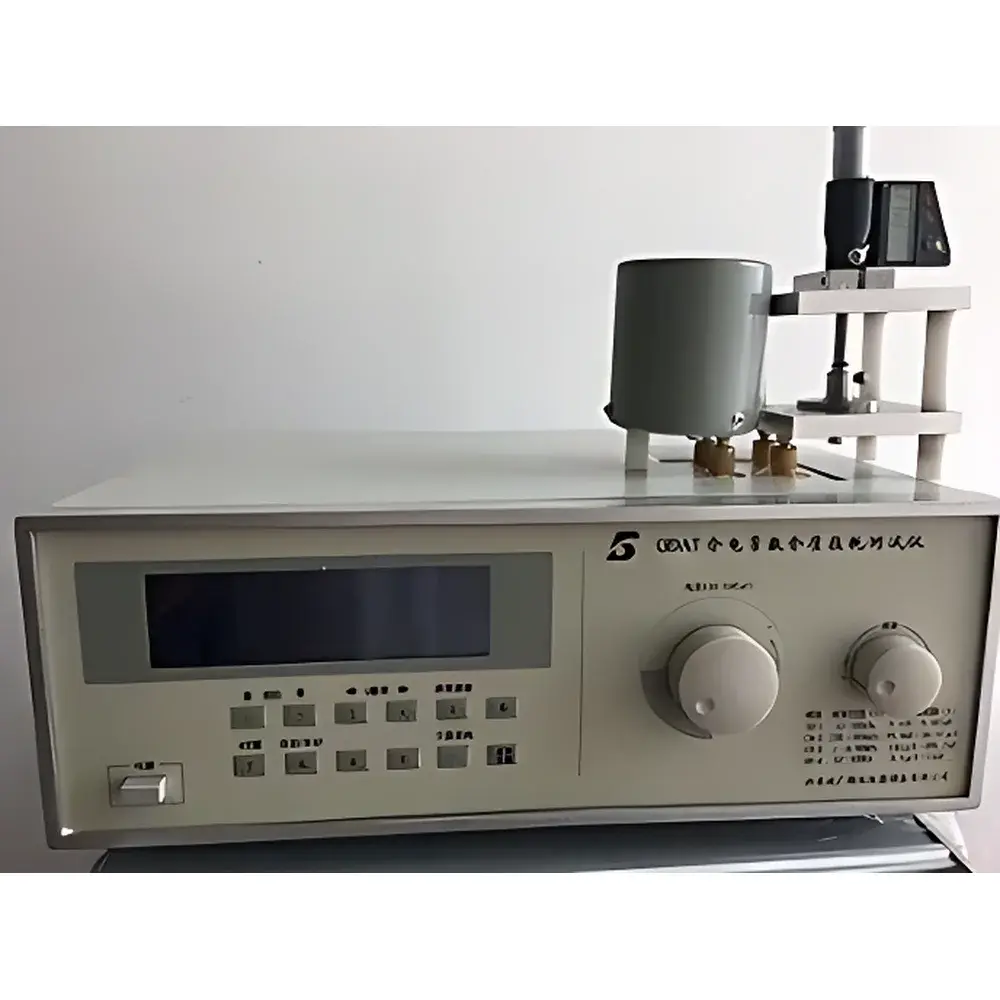
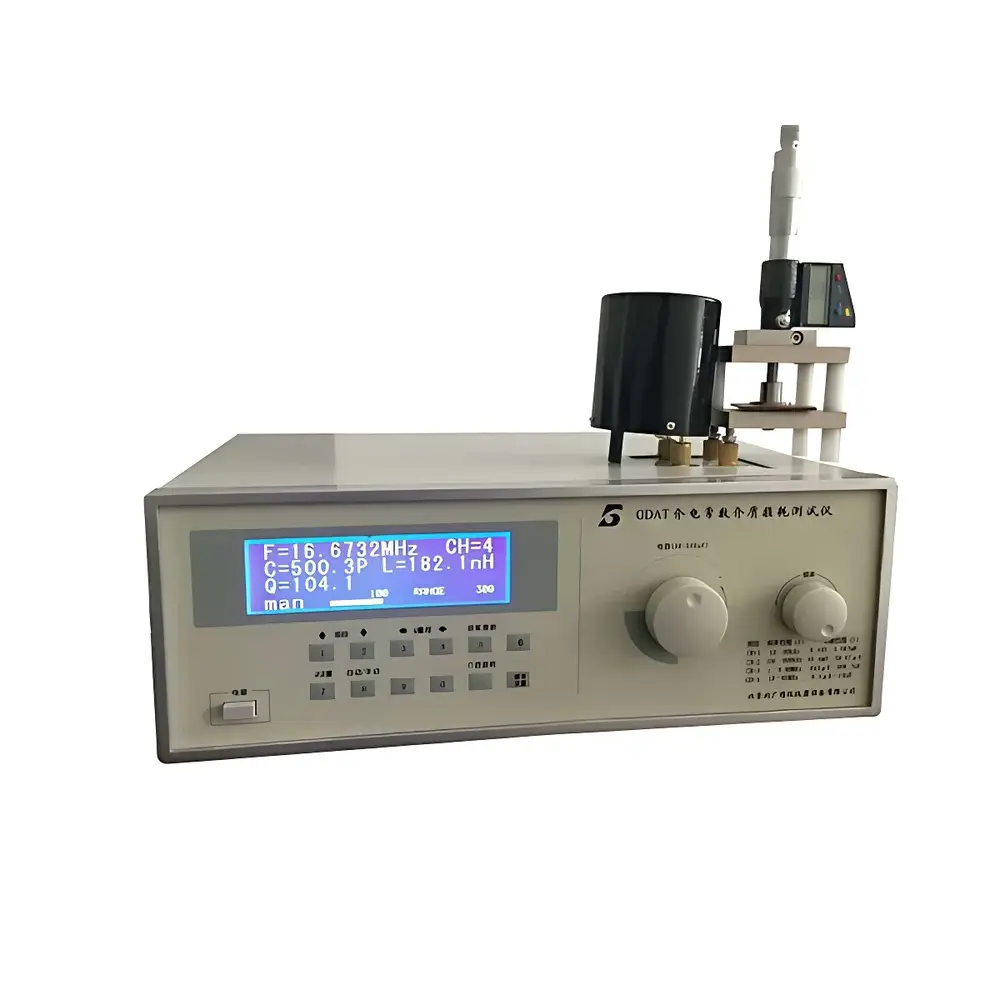
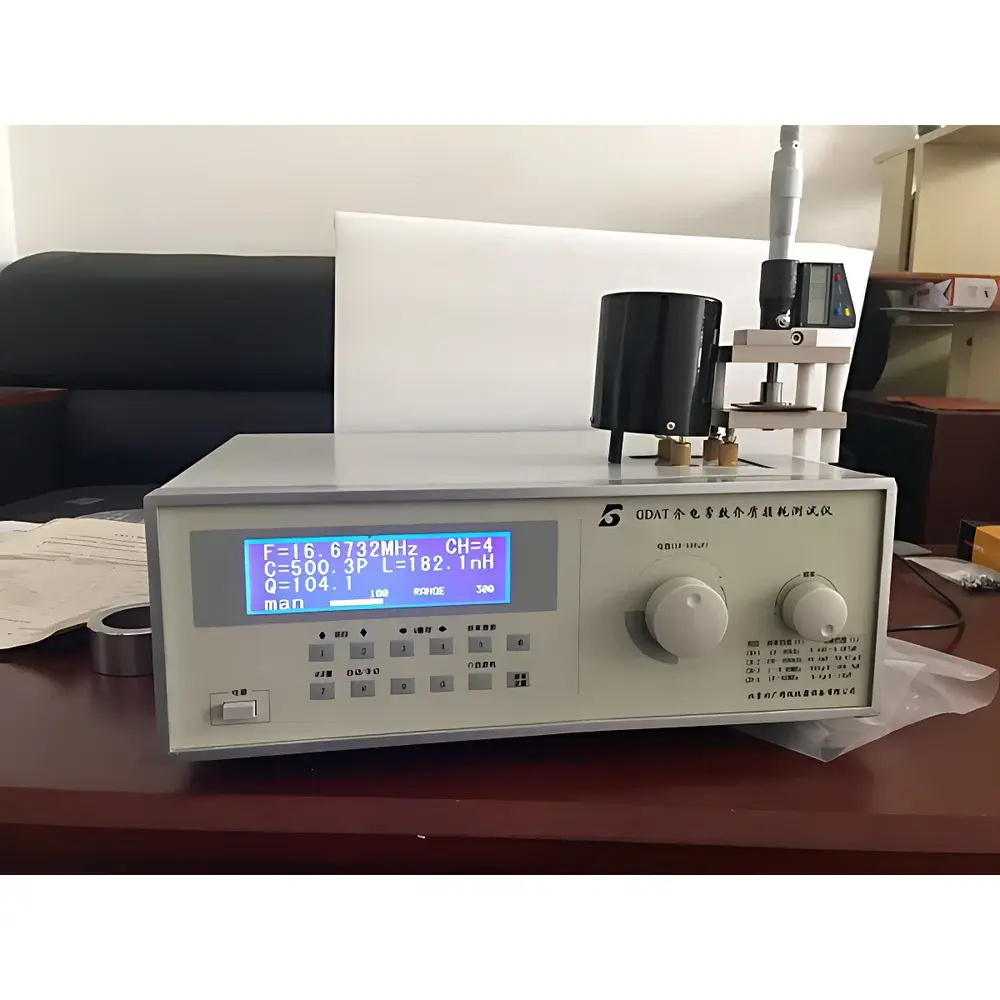
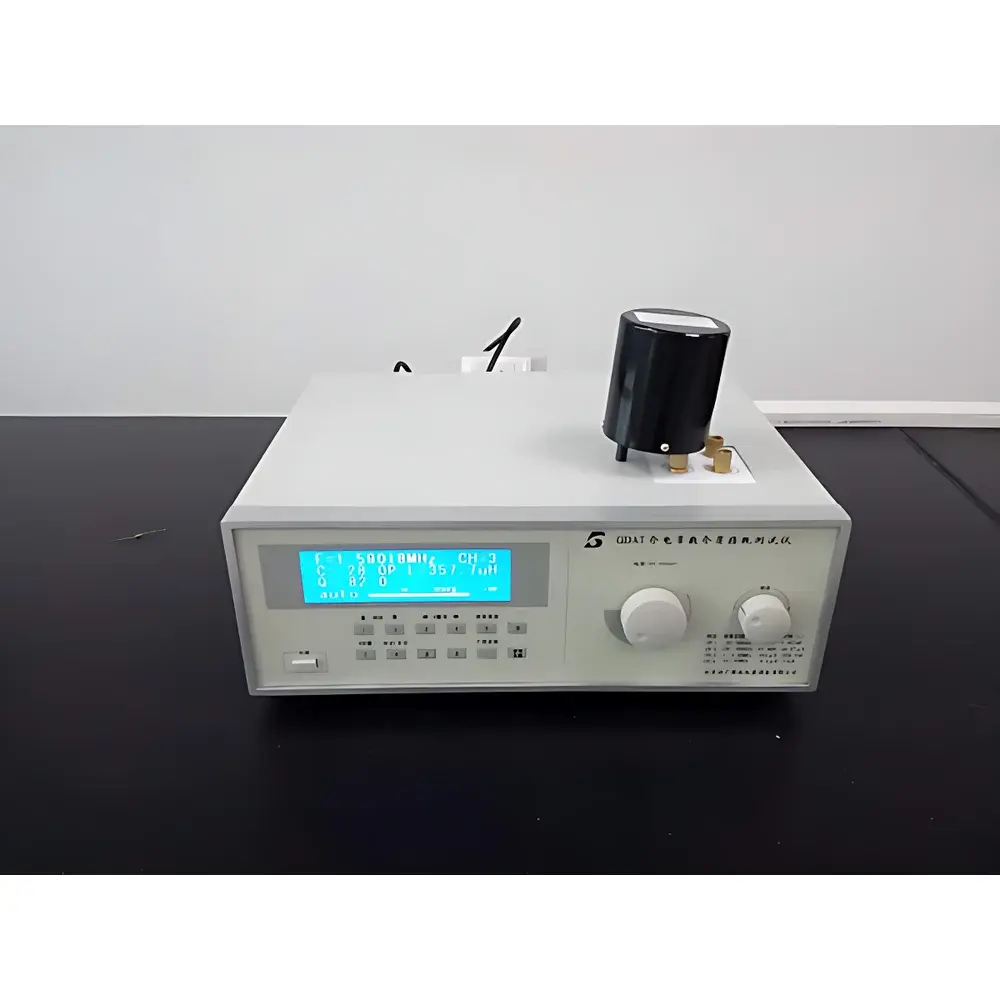
Beijing North Guang Precision Instrument GDAT-A High-Frequency Dielectric Constant and Loss Tangent Analyzer (up to 160 MHz)
| Brand | Beijing North Guang Precision Instrument |
|---|---|
| Origin | Beijing, China |
| Manufacturer Type | Manufacturer |
| Model | GDAT-A (Frequency Range: 10 kHz – 160 MHz) |
| Weight | ~7 kg |
| Dimensions (L×W×H) | 380 × 132 × 280 mm |
| Power Supply | 220 V ±22 V, 50 Hz ±2.5 Hz |
| Operating Temperature | 0–40 °C |
| Relative Humidity | <80% |
| Power Consumption | ~25 W |
| Compliance | GB/T 1409–2006, ASTM D150, IEC 60250 |
Overview
The Beijing North Guang Precision Instrument GDAT-A High-Frequency Dielectric Constant and Loss Tangent Analyzer is an advanced impedance measurement system engineered for precision characterization of polymer insulating materials under alternating electric fields. It operates on the principle of high-frequency resonant cavity perturbation and series/parallel resonance methods—specifically optimized for accurate determination of complex permittivity (ε* = ε′ − jε″) and loss tangent (tan δ = ε″/ε′) across a broad frequency spectrum from 10 kHz to 160 MHz. Unlike low-frequency bridge-based instruments, the GDAT-A employs digitally phase-locked loop (DPLL) synthesized signal generation, automatic resonance tracking, and ultra-low residual inductance (<8 nH) tuning circuitry to minimize parasitic errors at microwave-adjacent frequencies. Its architecture supports both Q-factor-based and admittance-based evaluation modes, enabling quantitative assessment of dielectric dispersion, interfacial polarization, dipole relaxation, and conduction losses in solid polymers, ceramics, composites, and laminated insulators.
Key Features
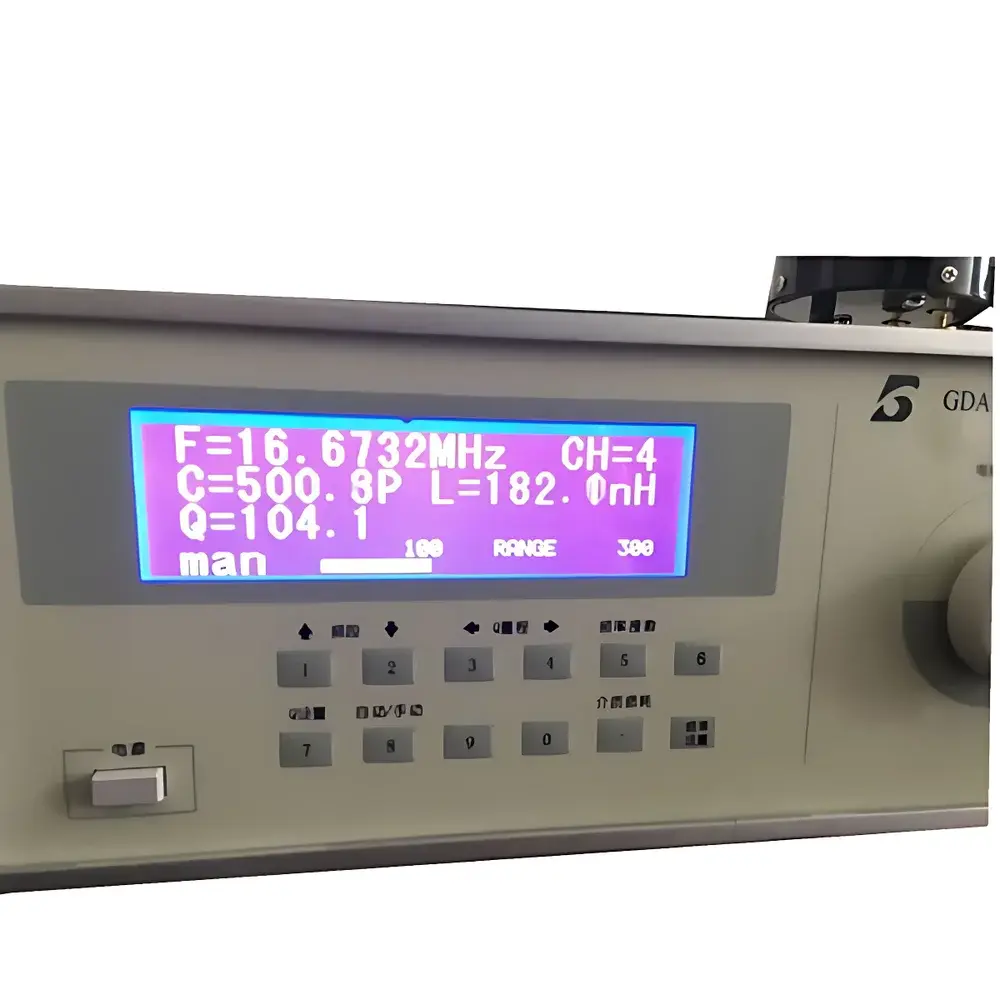
- Wide frequency coverage: 10 kHz to 160 MHz, with four discrete channel bands (CH1: 0.1–0.999999 MHz; CH2: 1–9.99999 MHz; CH3: 10–99.9999 MHz; CH4: 100–160 MHz)
- High-resolution Q measurement: Q range 2–1023, with auto/manual ranging (30, 100, 300, 1000) and resolution down to 0.1 Q
- Precision capacitance measurement: 1–205 pF main tuning range (18–220 pF), accuracy ±1.5 pF below 150 pF or ±1% above
- Inductance measurement capability: 4.5 nH to 7.9 mH
- Low-residual-inductance resonant circuit: <8 nH residual inductance ensures minimal systematic error in tan δ and ε′ at 100+ MHz
- Integrated dual-function design: Functions as both a dielectric analyzer and a wideband RF signal source (output port available)
- VFD dot-matrix display with full-menu navigation, real-time parameter visualization (Q, f, tuning status, tan δ, ε′), and Chinese-language UI
- Onboard thermal stabilization: Recommends 30-minute warm-up for metrological-grade repeatability
Sample Compatibility & Compliance
The GDAT-A accommodates standard solid-dielectric specimens—including discs, sheets, and rods—used in electrical insulation qualification per international material testing protocols. Electrode configurations support guarded/un-guarded parallel-plate setups compliant with ASTM D150 Annex A1 (air-gap electrodes), IEC 60250 Clause 6 (fluid-immersion method), and GB/T 1409–2006 Section 5 (electrode geometry and edge correction). Specimen thickness control, surface preparation, and environmental conditioning (temperature/humidity stabilization per ISO 291 and ASTM D618) are integral to valid reporting. The instrument meets essential electromagnetic compatibility (EMC) and safety requirements for laboratory use under IEC 61010-1. All measurement outputs satisfy traceability requirements for GLP-compliant quality control laboratories performing routine QC on capacitor films, transformer bushings, PCB substrates, and aerospace-grade polyimides.
Software & Data Management
Data acquisition and reporting follow structured digital workflows compatible with regulated environments. Measurement results—including ε′, tan δ, Q, C, L, and test conditions (f, T, RH, electrode type, specimen ID)—are output via built-in thermal printer using bilingual (Chinese/English) templates aligned with ASTM D150 reporting conventions. RS232 serial interface enables direct integration with LIMS or custom statistical analysis platforms. Optional PC software provides time-stamped audit trails, calibration log management, and export to CSV/Excel formats. While native firmware does not implement FDA 21 CFR Part 11 electronic signature controls, the system supports external validation protocols for GMP-aligned production line monitoring when paired with documented SOPs and periodic verification against NIST-traceable reference standards (e.g., quartz, sapphire, or air-dielectric calibrants).
Applications
This analyzer serves critical roles in R&D and manufacturing QA/QC for polymer dielectrics where frequency-dependent permittivity and loss behavior dictate functional performance. Key applications include: evaluation of space-charge accumulation in XLPE cable insulation; comparative screening of epoxy resin formulations for printed circuit board laminates; humidity-induced dielectric aging studies in silicone rubber housings; temperature-dependent α/β relaxation mapping in polyetheretherketone (PEEK) and polyphenylene sulfide (PPS); qualification of nanocomposite fillers (e.g., SiO₂, BaTiO₃) for tunable microwave substrates; and accelerated life testing of high-voltage bushing materials under combined thermal-electrical stress. Its ability to resolve subtle tan δ peaks near 1 MHz and track ε′ dispersion up to 160 MHz makes it particularly valuable for identifying molecular mobility transitions and interfacial charge trapping mechanisms in heterogeneous polymer systems.
FAQ
What is the recommended warm-up time before high-accuracy measurements?
A minimum 30-minute warm-up period is required to stabilize internal oscillator references and thermal gradients in the resonant circuit.
Can the GDAT-A measure samples with protective electrodes?
Yes—guard-ring electrode configurations are supported per ASTM D150 Section 7.2 and GB/T 1409–2006 Annex B, provided proper low-impedance grounding of the guard terminal is maintained.
Is calibration traceable to national standards?
Instrument calibration uses factory-characterized air-dielectric and precision capacitor standards; end-user verification against NIST-traceable reference materials (e.g., SRM 1825) is recommended annually.
How does residual inductance affect measurement uncertainty at 100 MHz?
With <8 nH residual inductance, the GDAT-A limits systematic phase error to <0.1°, ensuring tan δ uncertainty remains within ±0.00005 at 100 MHz under optimal cabling and grounding practices.
Does the instrument support automated frequency sweeps?
No—frequency selection is manual per channel band; however, resonance search and Q auto-ranging functions reduce operator dependency during point-frequency characterization.



