
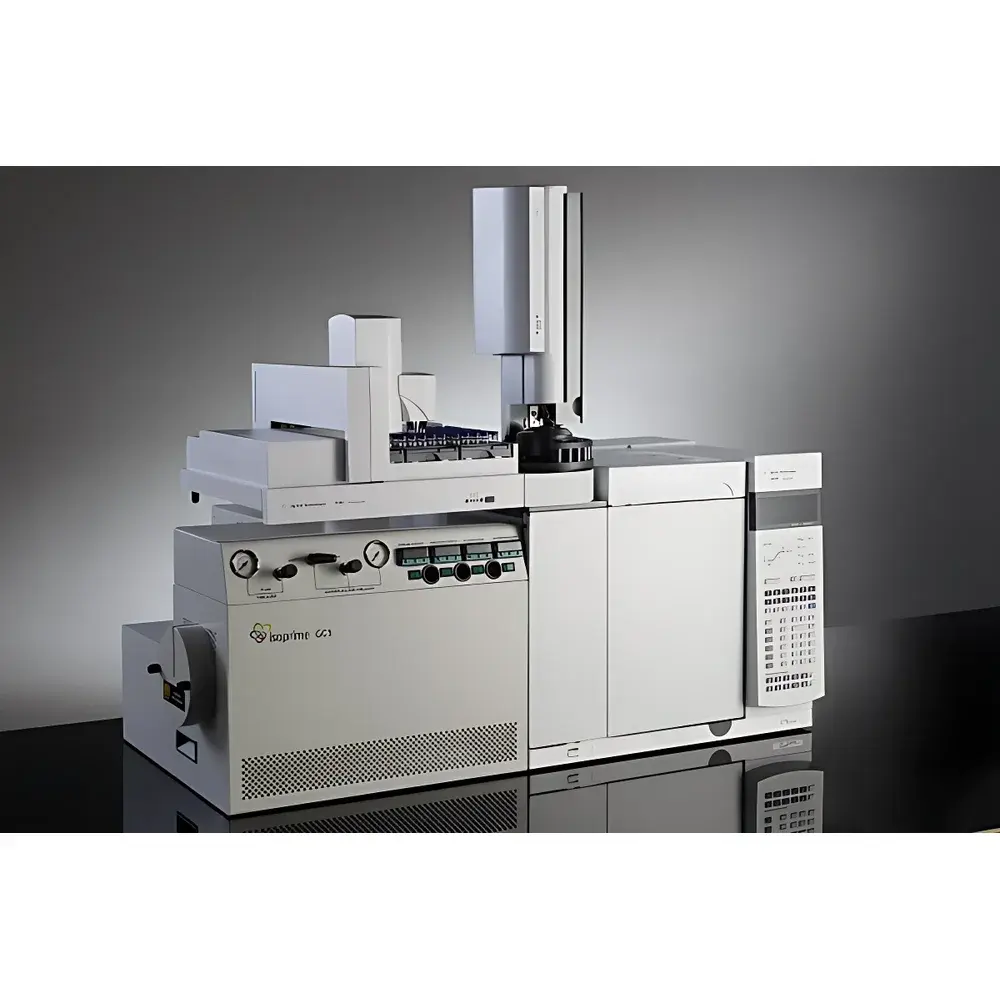
IsoPrime GC5 Gas Chromatography-Combustion Interface for Stable Isotope Ratio Mass Spectrometry
| Brand | IsoPrime |
|---|---|
| Origin | United Kingdom |
| Model | isoprime GC5 |
| Detection Sensitivity | low-picomole level |
| Reaction Furnace Temperature | up to 1500 °C |
| Software | IONOS with Peak Mapping |
| Compatibility | Agilent 7890B GC system |
| Solvent Elimination | complete |
| Combustion Efficiency | quantitative (>99.9%) |
| Maintenance Interval | extended due to robust reaction tube design |
| Regulatory Compliance | supports GLP/GMP workflows and 21 CFR Part 11–compliant data integrity requirements |
Overview
The IsoPrime GC5 is a high-performance gas chromatography–combustion (GC-C) interface engineered for precise, compound-specific stable isotope ratio analysis (CSIA) by continuous-flow isotope ratio mass spectrometry (CF-IRMS). It bridges the separation power of gas chromatography with the isotopic precision of the IsoPrime family of IRMS instruments—enabling δ13C, δ15N, δ2H, δ18O, and δ34S measurements at the molecular level. Unlike bulk isotope analysis, which reports average isotopic composition across an entire sample matrix, the GC5 delivers site-specific or compound-specific isotopic fingerprints essential for forensic attribution, authenticity verification, and geochemical sourcing. Its core architecture relies on high-temperature oxidative conversion (CuO/Pt catalysts at up to 1500 °C), quantitative carbon recovery, and near-complete solvent removal—ensuring stoichiometric conversion of organic analytes into CO2, N2, CO, or SO2 gases compatible with IRMS inlet systems.
Key Features
- Ultra-low detection sensitivity: capable of reliable δ-value determination from sub-picomole amounts of carbon per peak, enabling trace-level CSIA in complex matrices.
- Thermally robust combustion reactor: ceramic-packed furnace with dual-zone temperature control (up to 1500 °C), optimized for complete oxidation of refractory compounds including polycyclic aromatics and heteroatom-containing molecules.
- Integrated solvent elimination module: cryo-focused trapping and selective venting ensure baseline-stable isotope signals even when injecting large-volume, solvent-rich injections—critical for routine environmental or food authenticity labs.
- IONOS software platform: features automated peak integration, retention time alignment, and proprietary Peak Mapping algorithm that reconstructs isotopic profiles directly from raw GC-IRMS transient signals—reducing post-run data processing time from hours to under five minutes.
- Modular GC coupling: designed for seamless integration with Agilent 7890B GC systems—including compatibility with SPME, headspace, pyrolysis, microfluidic backflush, and comprehensive 2D-GC configurations—without hardware modification.
- Long-life reaction tube design: high-purity quartz and ceramic components minimize catalytic degradation and carryover, supporting >2,000 injections between maintenance cycles under standard operating conditions.
Sample Compatibility & Compliance
The GC5 accommodates a broad range of volatile and semi-volatile organic compounds—including pharmaceuticals, flavor compounds, hydrocarbons, amino acids, fatty acids, and environmental contaminants—provided they are amenable to GC separation (typically bp 250 °C). It complies with internationally recognized analytical frameworks: methods developed using the GC5 align with ASTM D7926 (δ13C of gasoline), ISO 17025–accredited validation protocols, and EU Regulation (EC) No 1829/2003 for GMO traceability via isotopic fingerprinting. Data acquisition and audit trails meet FDA 21 CFR Part 11 requirements when deployed with validated IONOS configurations, supporting GLP and GMP-regulated environments such as forensic toxicology, food fraud investigation, and petroleum geochemistry laboratories.
Software & Data Management
IONOS v4.x serves as the central control and evaluation environment for the GC5–IRMS workflow. It provides real-time monitoring of combustion efficiency (via H2O and CO2 signal ratios), automatic correction for memory effects, and batched calibration against certified reference materials (e.g., USGS40, IAEA-CH-7). The Peak Mapping engine correlates GC retention indices with isotopic response curves, permitting retrospective re-integration without re-injection—a capability essential for method development and regulatory dispute resolution. All raw data, processing parameters, and user actions are logged in tamper-evident binary archives compliant with ALCOA+ principles (Attributable, Legible, Contemporaneous, Original, Accurate).
Applications
- Forensic drug profiling: distinguishing synthetic vs. plant-derived opioids or stimulants via δ13C and δ2H patterns.
- Food authenticity: verifying origin claims for honey, vanilla, olive oil, and wine through compound-specific δ13C signatures of key volatiles (e.g., limonene, ethyl acetate).
- Petroleum geochemistry: correlating crude oils and refined products using δ13C of n-alkanes and biomarkers (e.g., pristane, phytane) to assess migration pathways and reservoir continuity.
- Environmental forensics: identifying sources of chlorinated solvents (e.g., TCE, PCE) in groundwater via position-specific δ13C analysis.
- Metabolomics research: tracking isotopic enrichment in 13C-labeled metabolic intermediates following tracer studies in biological systems.
FAQ
What GC detectors or inlet types are compatible with the GC5?
The GC5 interfaces exclusively with split/splitless injectors and standard capillary columns (0.18–0.32 mm ID); it does not support FID, ECD, or TCD outputs. It requires a dedicated transfer line to the IRMS and is not a standalone detector.
Can the GC5 perform position-specific isotope analysis (PSIA)?
No—the GC5 delivers compound-average isotope ratios. For intramolecular isotope distribution (e.g., δ13C at C-1 vs. C-2 of ethanol), offline degradation or derivatization coupled with preparative GC is required.
Is routine maintenance required between every sample batch?
No—under typical operation (≤50 samples/day), cleaning and catalyst refresh are recommended every 1,500–2,000 injections. The system includes automated diagnostic routines to monitor combustion efficiency and signal stability.
Does the GC5 support nitrogen or sulfur isotope analysis?
Yes—when configured with appropriate oxidation/reduction reactors (e.g., Ni/Cu reduction furnace for N2, V2O5/WO3 for SO2 generation), the GC5 enables δ15N and δ34S analysis of amides, nitrates, and sulfonates.
How is data integrity ensured during long unattended runs?
IONOS implements cyclic checksum verification of all raw data streams, automatic backup to network storage, and electronic signature enforcement for method changes—fully aligned with 21 CFR Part 11 Subpart B controls.





