
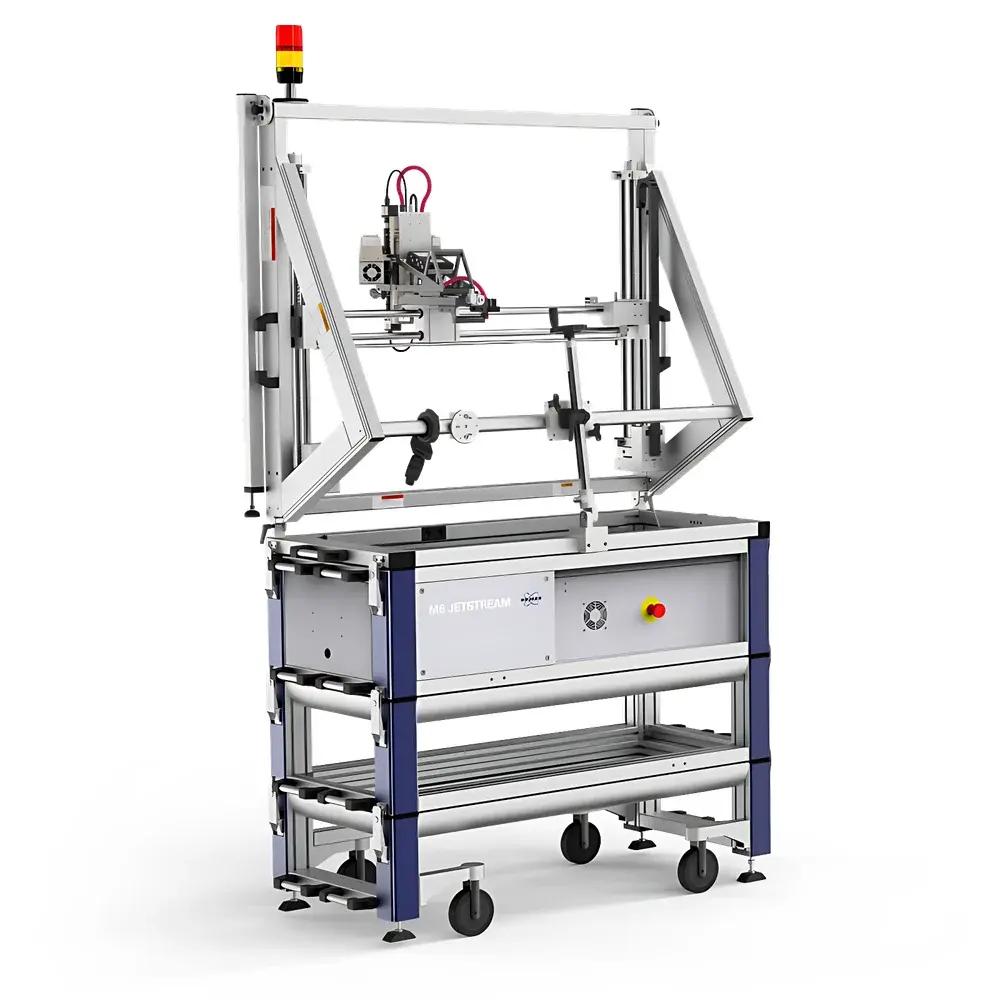
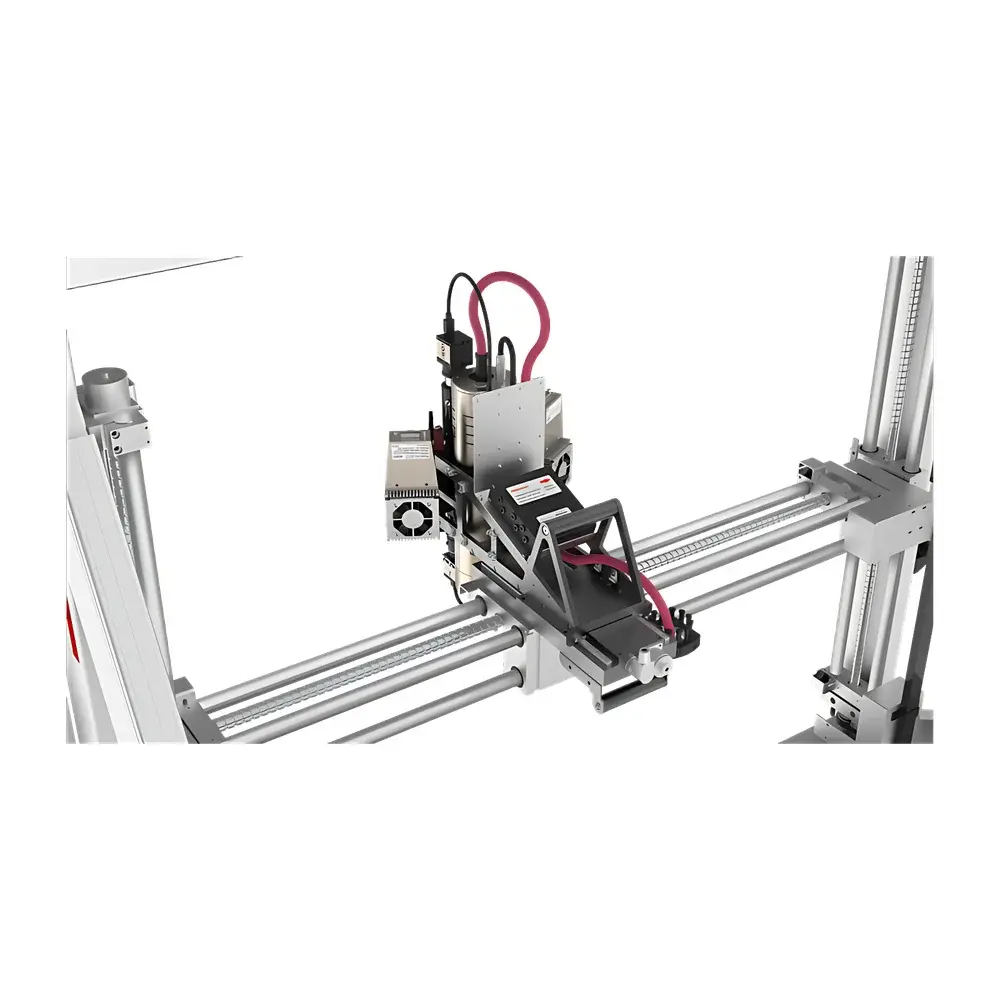
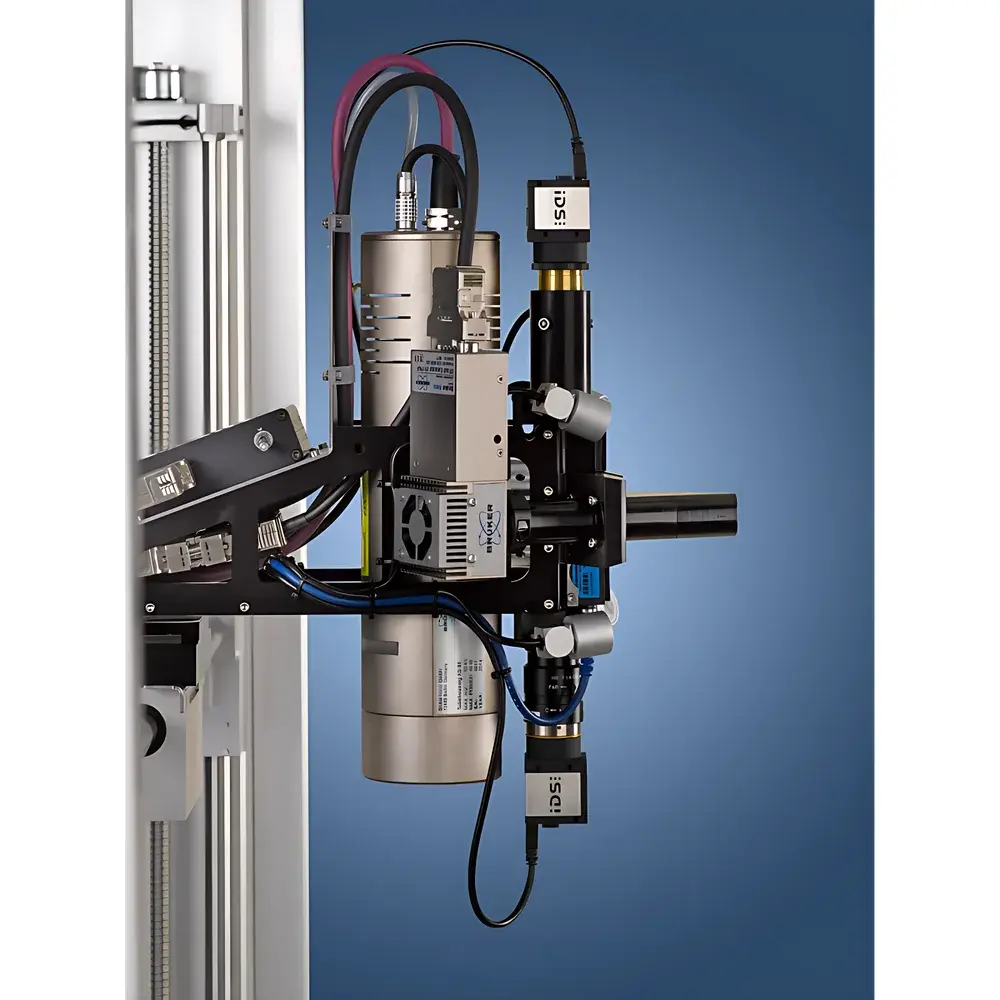
Bruker M6 JETSTREAM Open-Stage Micro-XRF Spectrometer
| Brand | Bruker |
|---|---|
| Origin | Germany |
| Model | M6 JETSTREAM |
| Configuration | Benchtop/Floor-Standing |
| Application Type | General Purpose |
| Elemental Range | Na–U |
| Quantification Range | ppm to wt% |
| Energy Resolution | <140 eV |
| Detector | XFlash® Silicon Drift Detector (SDD) |
| Sample Orientation | Horizontal & Vertical |
| Spot Size Adjustment | 5-step variable microfocus |
| Safety | Integrated X-ray interlock & ultrasonic collision avoidance |
| Portability | Modular design—disassembles into four transportable components |
| Compliance | Designed per IEC 61000-6-3, IEC 61000-6-4, and EN 62471 for radiation safety and EMC |
Overview
The Bruker M6 JETSTREAM is an open-stage, micro-focused energy dispersive X-ray fluorescence (ED-XRF) spectrometer engineered for non-destructive elemental mapping and quantitative microanalysis of heterogeneous, large, or irregularly shaped samples. Unlike conventional sealed-chamber XRF systems, the M6 JETSTREAM employs a fully accessible sample stage with motorized XYZ positioning and a high-brightness microfocus X-ray tube (50 kV, 1 mA), enabling flexible geometry for both horizontal and vertical sample orientations. Its core measurement principle relies on primary X-ray excitation of characteristic secondary (fluorescent) X-rays from elements ranging from sodium (Na, Z=11) to uranium (U, Z=92), with detection performed by a high-performance XFlash® silicon drift detector (SDD) offering <140 eV Mn Kα energy resolution at 100,000 cps. The system operates under vacuum or helium purge for light-element sensitivity enhancement (down to Na), while maintaining full compliance with international radiation safety standards—including IEC 61000-6-3 (EMC emissions), IEC 61000-6-4 (EMC immunity), and EN 62471 (photobiological safety). Its open architecture supports in situ analysis without sample sectioning or coating, making it uniquely suited for fragile, oversized, or immovable specimens.
Key Features
- Open-stage configuration accommodating samples up to 500 × 500 × 300 mm (L×W×H), with optional extended-height kits for vertical analysis of tall objects (e.g., geological cores, sculptures, industrial components)
- 5-step adjustable microfocus spot size (ranging from 10 µm to 500 µm FWHM), optimized via motorized collimator selection to balance spatial resolution and count rate for each application
- XFlash® SDD detector with active cooling, >200,000 cps maximum input count rate, and real-time pulse processing ensuring stable resolution across dynamic range
- Integrated ultrasonic proximity sensor system preventing mechanical contact between X-ray optic and sample surface—critical for delicate surfaces such as painted artifacts or polished metallographic sections
- Dual-mode operation: rapid survey scanning (up to 10 mm/s stage speed) for macro-distribution screening, and high-resolution point mapping (≤10 µm step size) for micro-domain characterization
- Modular mechanical design: instrument separates into four self-contained units (X-ray source module, detector arm, motion stage, control electronics cabinet) for field deployment or lab reconfiguration
Sample Compatibility & Compliance
The M6 JETSTREAM accommodates diverse physical forms—flat sections, curved artifacts, rough-cut rock slabs, assembled electronic boards, or vertically mounted turbine blades—without requiring vacuum-compatible mounting or conductive coating. Its open geometry eliminates chamber size limitations and enables direct analysis of objects that cannot be disassembled or transported to a central lab. From a regulatory perspective, the system meets EU Machinery Directive 2006/42/EC and carries CE marking for safe operation within laboratory and industrial environments. Radiation shielding is certified to IEC 61010-1:2010 for measurement equipment, with redundant hardware interlocks and status monitoring logged in the control software. For regulated industries, audit trails, user access levels, and electronic signature support are available via optional Bruker ESPRIT™ GLP/GMP-compliant software modules aligned with FDA 21 CFR Part 11 requirements.
Software & Data Management
Data acquisition and processing are managed through Bruker’s ESPRIT™ 2.0 platform, a Windows-based application supporting spectral deconvolution (based on fundamental parameters and empirical calibration), elemental map generation (including false-color overlays, line profiles, and ROI statistics), and semi-quantitative or matrix-matched quantitative reporting. All raw spectra, stage coordinates, acquisition parameters, and detector diagnostics are stored in vendor-neutral .spc and .xml formats. Batch processing workflows enable automated analysis of multi-sample trays or serial core sections. Integration with LIMS via ASTM E1382-compliant data export ensures traceability in quality control labs. Raw spectral files retain full metadata for retrospective reprocessing as new standards or algorithms become available.
Applications
- Cultural Heritage: In situ analysis of paintings, manuscripts, ceramics, and bronze artifacts—preserving integrity by eliminating sampling, transport, or vacuum exposure
- Geosciences: High-resolution elemental profiling of drill cores, thin sections, and unpolished rock surfaces; identification of trace metal zoning in ore minerals or fluid inclusion associations
- Failure Analysis & Materials Science: Mapping of segregation, contamination, plating thickness variation, or corrosion products on large-scale components (e.g., aerospace castings, battery electrodes, PCBs)
- Environmental Forensics: Screening of soil aggregates, sediment laminations, or particulate filters for heavy metal hotspots and anthropogenic element signatures
- Forensic Science: Non-contact comparison of paint layers, glass fragments, or gunshot residue distribution patterns on evidence items
FAQ
Does the M6 JETSTREAM require external vacuum pumping or liquid nitrogen cooling?
No. The XFlash® SDD uses Peltier thermoelectric cooling, and vacuum is generated only locally around the detector window when analyzing light elements—no continuous pump is needed.
Can the system perform quantitative analysis without certified reference materials?
Yes—ESPRIT™ supports fundamental parameter (FP) quantification for unknown matrices, though accuracy improves with matrix-matched standards for routine QC applications.
Is remote operation supported for field deployments?
Yes. The system supports VNC-based remote desktop control and scheduled unattended mapping via integrated Ethernet and optional UPS integration.
What is the typical minimum detection limit (MDL) for Fe in steel under air conditions?
Approximately 10–50 ppm, depending on acquisition time, spot size, and surface roughness—validated per ISO 12885 and ASTM E1621 protocols.
How is calibration maintained across field relocations?
Each detector module includes embedded radioactive check sources (e.g., 55Fe) for daily energy calibration verification; full system recalibration is recommended after major mechanical reassembly.




