
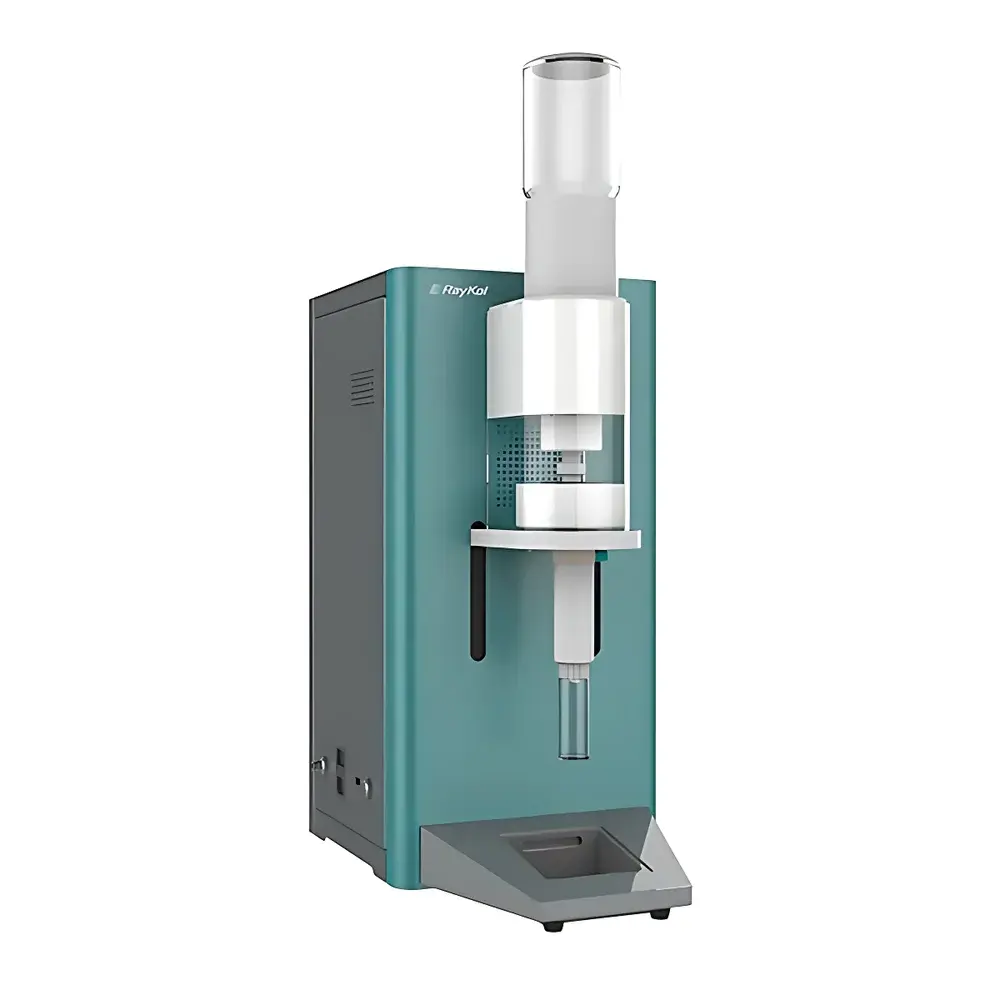
Raykol AutoExtra-D10 Fully Automated Solid Phase Extraction System
| Brand | Raykol |
|---|---|
| Origin | Fujian, China |
| Manufacturer Type | OEM Manufacturer |
| Region of Origin | Domestic (China) |
| Model | AutoExtra-D10 |
| Automation Level | Fully Automated |
| Channel Configuration | Multi-Channel |
| Extraction Technology | Membrane-Based SPE |
| Flow Rate Control Range | 1–100 mL/min |
| Solvent Compatibility | Common Organic Solvents (e.g., Methanol, Acetonitrile, Ethyl Acetate, Dichloromethane) |
| Sample Capacity | 1–10 Samples per Run |
| Sample Loading Volume | 0.2–4 L per Sample |
| Wetted Materials | PTFE, Polypropylene (PP), Borosilicate Glass |
Overview
The Raykol AutoExtra-D10 Fully Automated Solid Phase Extraction System is an engineered solution for high-throughput, reproducible sample preparation in environmental and regulatory laboratories. Designed specifically for the enrichment and cleanup of trace organic contaminants from large-volume aqueous matrices—such as surface water, wastewater, drinking water, and groundwater—the system implements a membrane-based solid phase extraction (SPE) methodology under controlled negative pressure. Unlike conventional cartridge- or disk-based SPE platforms that rely on gravity or positive-pressure pumping, the AutoExtra-D10 utilizes vacuum-driven membrane modules to achieve uniform sample loading, efficient analyte retention, and highly consistent elution kinetics. This architecture eliminates flow-rate dependency during sample introduction, reduces channel-to-channel variability, and mitigates risks associated with column clogging or breakthrough—critical performance attributes when processing complex, particulate-laden environmental samples. The system operates within a sealed, inert fluidic path constructed entirely from chemically resistant materials (PTFE, PP, and borosilicate glass), ensuring compatibility with aggressive solvents and minimizing analyte adsorption or leaching.
Key Features
- Membrane-based SPE platform optimized for large-volume water analysis (0.2–4 L/sample), delivering superior recovery and reproducibility for trace-level organics.
- Fully automated workflow: integrated sample loading, conditioning, washing, drying, and elution—all programmable via intuitive touchscreen interface.
- Dual-level liquid sensing system: lower sensor prevents dry-run conditions during loading; upper sensor prevents overflow and detects seal failure or leakage in real time.
- Intelligent leak detection and auto-pause functionality with audible/visual alerts—ensuring operational safety and data integrity.
- Eight independent solvent channels with precision pump-valve control for accurate, repeatable solvent delivery (±1% volumetric accuracy typical).
- Automated post-run vial rinsing protocol using residual solvent or dedicated rinse solution—reducing carryover and improving inter-sample precision.
- Modular, service-accessible design supporting field-replaceable components and minimal downtime during routine maintenance.
Sample Compatibility & Compliance
The AutoExtra-D10 supports a broad spectrum of target analytes regulated under international environmental monitoring frameworks, including but not limited to: organochlorine pesticides (OCPs), polycyclic aromatic hydrocarbons (PAHs), polychlorinated biphenyls (PCBs), semi-volatile organic compounds (SVOCs), microcystins and other cyanotoxins, pharmaceuticals and personal care products (PPCPs), and emerging contaminants such as per- and polyfluoroalkyl substances (PFAS). Its validated method compatibility aligns with established U.S. EPA methods (e.g., EPA Method 525.3 for pesticides, EPA Method 8270 for SVOCs) and ISO standards (e.g., ISO 17993:2022 for water quality — determination of organic compounds by SPE-LC-MS/MS). All wetted materials comply with USP Class VI biocompatibility requirements and are certified non-leaching for low-level organic analysis. The system’s closed-loop architecture meets essential criteria for GLP-compliant laboratories, supporting audit-ready operation logs and full traceability of instrument parameters, solvent usage, and run history.
Software & Data Management
The AutoExtra-D10 is operated via Raykol’s proprietary SPEControl™ software, a Windows-based application compliant with FDA 21 CFR Part 11 requirements. It features role-based user access control, electronic signatures, immutable audit trails, and automatic generation of PDF-formatted run reports—including timestamps, method version, operator ID, solvent batch IDs, and system diagnostic flags. Method templates can be exported/imported across instruments, facilitating lab-wide standardization and method transfer. Data export supports CSV, XML, and LIMS-compatible formats (ASTM E1384, HL7). Optional integration with third-party chromatography data systems (CDS) enables seamless handoff of sample metadata to GC-MS or LC-MS/MS workflows.
Applications
- Regulatory monitoring of drinking water sources for pesticide residues and endocrine-disrupting compounds.
- Wastewater-based epidemiology (WBE) studies targeting illicit drugs, antivirals, and antimicrobial resistance markers.
- Ecotoxicological assessment of PAHs and PCBs in sediment porewater and effluent discharges.
- Screening of algal toxins (e.g., microcystin-LR, cylindrospermopsin) in reservoirs and recreational waters.
- Forensic environmental analysis of explosives (e.g., RDX, HMX), flame retardants (e.g., PBDEs, HBCDD), and dioxin-like compounds.
FAQ
What types of membranes are supported by the AutoExtra-D10?
The system is configured for commercially available hydrophobic (e.g., PTFE, PVDF) and mixed-mode (e.g., C18/SCX, WAX) membrane disks, with standard diameters of 47 mm and 90 mm.
Can the AutoExtra-D10 be used for non-aqueous samples?
It is primarily engineered for aqueous matrices; however, diluted organic extracts (e.g., after liquid–liquid extraction) may be processed following method validation for matrix compatibility and membrane fouling risk.
Is remote monitoring or network connectivity supported?
Yes—optional Ethernet or Wi-Fi connectivity enables remote status checking, email alerts for completion or error events, and centralized fleet management via Raykol’s LabConnect™ cloud portal.
Does the system support method validation documentation packages?
Raykol provides IQ/OQ documentation templates, along with validation support services—including recovery studies, precision testing, and limit-of-quantitation verification—per ISO/IEC 17025 and EPA guidance.
What maintenance intervals are recommended for routine operation?
Daily visual inspection of seals and tubing; monthly calibration of liquid level sensors and solvent delivery accuracy; annual preventive maintenance including vacuum pump oil replacement and valve actuator testing.



