
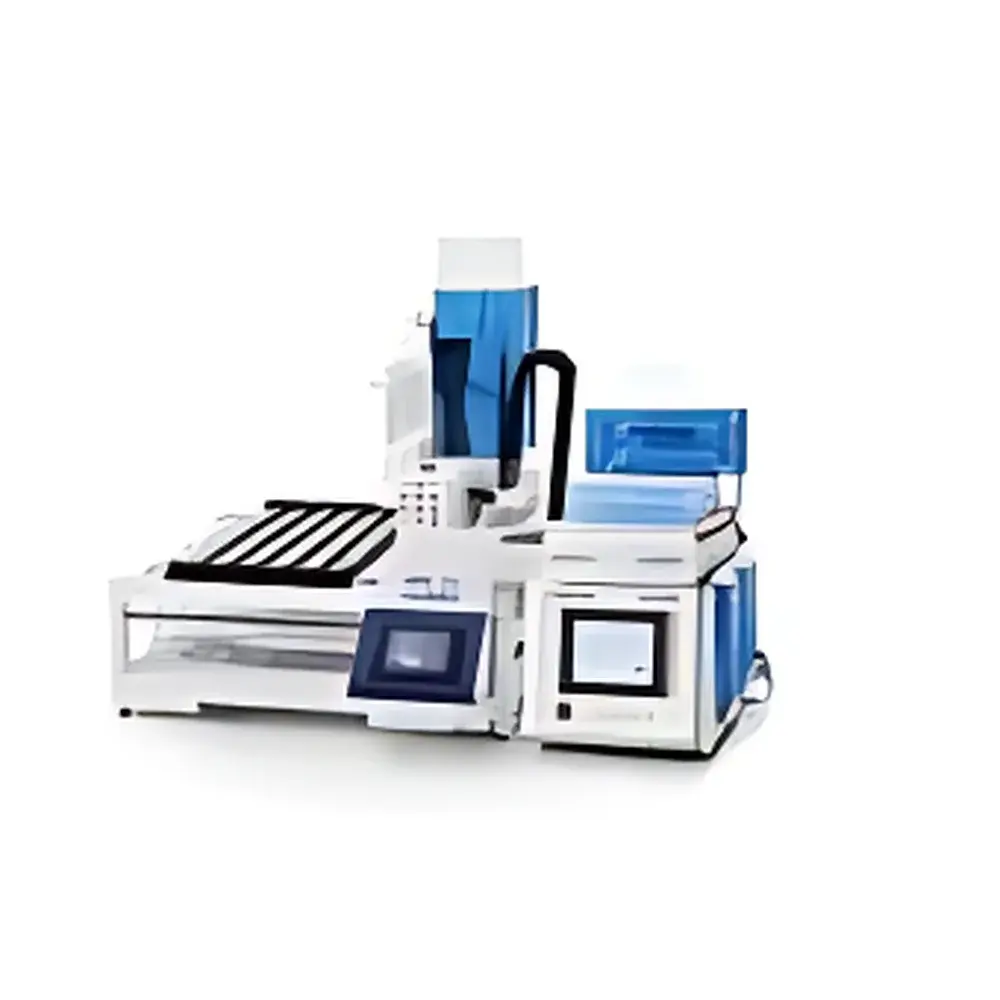
LOGAN SYSTEM ADR III-7 Automated Reciprocating Cylinder Dissolution Tester
| Brand | LOGAN |
|---|---|
| Origin | USA |
| Model | SYSTEM ADR III-7 |
| Instrument Type | Online Dissolution Testing System |
| Vessel Configuration | 8 vessels/row × 6 rows or 12 vessels/row × 12 rows |
| Temperature Range | 20–60°C |
| Temperature Accuracy | ±0.1°C |
| Bath Temperature Range | Ambient to 45°C |
| Bath Temperature Resolution | 0.1°C |
| Bath Volume | 28 L |
| Compliance | USP <711>, <724>, EP 2.9.3, JP 17 |
| Data Integrity | 21 CFR Part 11, GLP/GMP Audit Trail, Role-Based Access Control, Electronic Signatures |
Overview
The LOGAN SYSTEM ADR III-7 is an automated, modular dissolution testing platform engineered for precision and regulatory compliance in pharmaceutical development and quality control laboratories. It implements the USP Apparatus 3 (Reciprocating Holder) and USP Apparatus 7 (Reciprocating Cylinder) methods—two critical hydrodynamic models for evaluating drug release from complex dosage forms where conventional paddle or basket systems are inadequate. Unlike rotational apparatuses, the ADR III-7 relies on controlled vertical reciprocation of cylindrical vessels or sample holders within thermostatically regulated dissolution media, enabling physiologically relevant simulation of gastrointestinal motility, transdermal diffusion, or localized implant erosion. Its architecture supports both immediate-release and advanced delivery systems—including enteric-coated tablets, extended-release matrices, transdermal patches, intravascular stents, balloon catheters, and subcutaneous implants—making it indispensable for formulation scientists validating biorelevant dissolution profiles under ICH Q5C and Q4B guidance.
Key Features
- Modular, dual-method platform certified for USP (Apparatus 3) and USP (Apparatus 7), eliminating the need for separate instruments.
- Intelligent reciprocating sample rack with programmable stroke length (5–30 mm), frequency (5–40 cycles/min), and dwell time per position—fully configurable per vessel row.
- High-capacity dissolution vessel arrays: two configurations available—6 rows × 8 vessels (48 total) or 12 rows × 12 vessels (144 total)—each vessel independently addressable for staggered sampling.
- Integrated anti-evaporation lid system with individual sealing gaskets and inert gas purge capability (N₂ or Argon), minimizing solvent loss and cross-contamination during extended runs (>24 h).
- Real-time visual monitoring via high-resolution industrial camera array with synchronized timestamped video logging, supporting root-cause analysis of tablet disintegration anomalies or patch delamination events.
- Native integration interface for optional inline analytical modules: ADUV (UV-Vis spectrophotometry), ADLC (automated dilution HPLC injection), and fiber-optic absorbance probes compatible with PAT (Process Analytical Technology) workflows.
Sample Compatibility & Compliance
The SYSTEM ADR III-7 accommodates a broad spectrum of non-traditional dosage forms requiring mechanical stress and dynamic fluid exchange: gastro-resistant tablets, osmotic pumps, mucoadhesive films, bioresorbable scaffolds, coated stents, and hydrogel-based implants. All hardware components—including cylinder liners, holder inserts, and media reservoirs—are constructed from USP Class VI-certified materials (e.g., PTFE, borosilicate glass, 316L stainless steel) to prevent leachables and ensure extractables compliance. The system meets the mechanical calibration requirements of USP , , European Pharmacopoeia 2.9.3, and Japanese Pharmacopoeia 17. Full validation documentation—including IQ/OQ/PQ protocols, mechanical verification reports, and temperature uniformity mapping (per ASTM E2500)—is provided with each installation.
Software & Data Management
Control and data acquisition are managed through LOGAN’s validated DSC-800 System Controller software, compliant with FDA 21 CFR Part 11 and Annex 11 requirements. The software provides role-based user accounts (Administrator, Analyst, Reviewer), electronic signatures with biometric or PKI options, immutable audit trails recording all parameter changes, sampling events, and instrument status transitions, and automatic backup to network-attached storage with SHA-256 hashing. Raw dissolution data (time-concentration curves, % release, dissolution efficiency metrics) are exportable in CSV, PDF, and XML formats; metadata conforms to CDISC SDTM and WHO TRS 992 Annex 6 standards. Optional LIMS integration via HL7 v2.5 or RESTful API enables seamless transfer to enterprise quality management systems.
Applications
- Development and optimization of enteric-coated formulations requiring pH-switched release profiling across simulated gastric/intestinal conditions.
- Release kinetics modeling of polymeric implants under pulsatile flow and shear stress mimicking arterial or subcutaneous environments.
- Comparative bioperformance assessment of generic transdermal patches using USP with static and dynamic receptor fluid exchange.
- Stent coating durability evaluation under cyclic compression and simulated blood flow, aligned with ISO 10993-18 and ASTM F2519.
- Regulatory submission support for ANDA, NDA, and MAA dossiers, including full traceability from raw data to final report generation.
FAQ
Does the SYSTEM ADR III-7 support automated calibration verification per USP ?
Yes—built-in thermistor arrays and calibrated reference thermometers enable automated temperature uniformity mapping and mechanical stroke verification at startup and scheduled intervals.
Can vessel temperature be individually monitored per row?
Each row is equipped with dual PT100 sensors (media + jacket), providing real-time feedback to the PID controller and generating per-row temperature deviation logs.
Is remote operation supported for 24/7 unattended testing?
The DSC-800 controller supports secure TLS 1.2 remote access via corporate VPN; all sessions are logged, encrypted, and subject to session timeout and re-authentication policies.
What maintenance protocols are required to maintain 21 CFR Part 11 compliance?
Annual software re-validation, biannual mechanical calibration, and quarterly audit trail integrity checks are recommended—and fully documented within the system’s electronic maintenance log.
Are third-party analytical modules (e.g., Agilent HPLC) certified for use with the ADLC interface?
LOGAN provides interface qualification packages for major vendors (Agilent, Waters, Shimadzu); integration requires vendor-specific driver certification and joint IQ/OQ execution.
Related Products





