
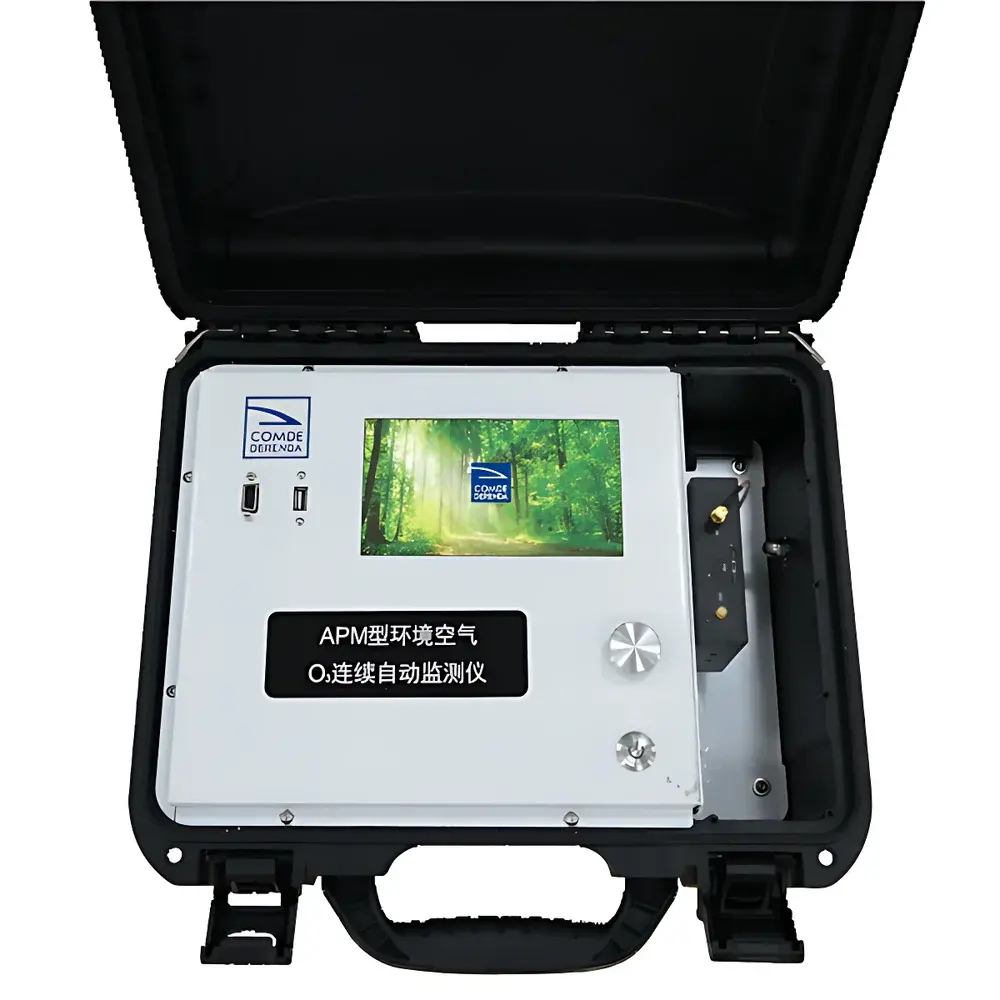
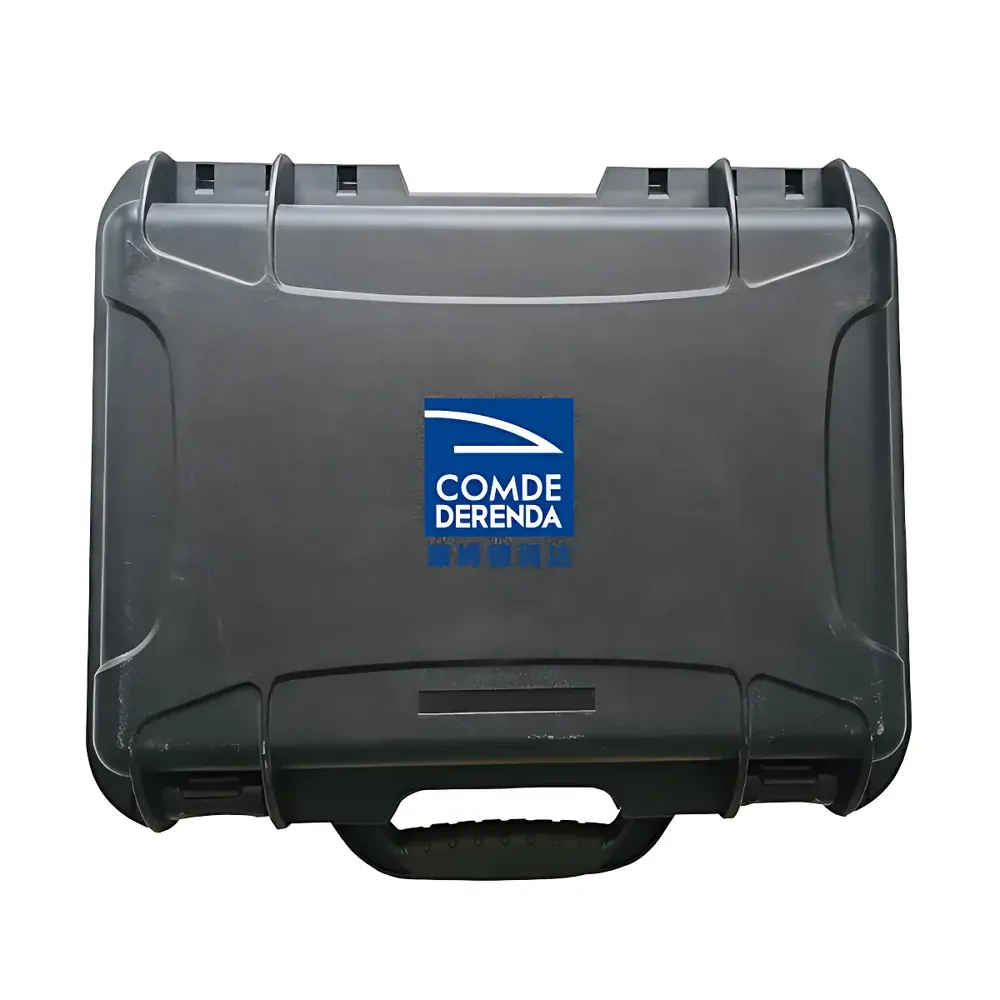
Derenda APM-101 Portable Ozone Analyzer
| Brand | Derenda |
|---|---|
| Origin | Germany |
| Model | APM-101 |
| Measurement Principle | UV Absorption (Beer–Lambert Law) |
| Measurement Range | 0–500 µg/m³ |
| Resolution | 0.1 µg/m³ |
| Accuracy | ±2 µg/m³ |
| Detection Limit | 2.0 µg/m³ |
| Baseline Drift | <3 µg/m³/day, <6 µg/m³/year |
| Measurement Interval | 2 s (0.5 Hz) |
| Data Averaging Options | 10 s, 1 min, 5 min, 1 h |
| Data Storage Capacity | >100,000 records (expandable via USB/SD card) |
| Flow Rate | 0.6–1.5 L/min (nominal 1.0 L/min) |
| Operating Temperature | 0–50 °C |
| Pressure Unit | hPa |
| Temperature Unit | °C |
| Ozone Units | µg/m³, ppb |
| Dimensions | 420 × 320 × 180 mm |
| Weight | ~7 kg |
| Built-in Rechargeable Li-ion Battery | >24 h operation |
| GPS Module | Integrated |
| Compliance | HJ 590–2010, HJ 654–2013, GB/T 18204.2–2014, EPA 40 CFR Part 50, VDI 4202 Part 1, VDI 4203 Part 3 |
Overview
The Derenda APM-101 Portable Ozone Analyzer is a field-deployable, regulatory-grade instrument engineered for high-fidelity ambient ozone (O3) concentration measurement in outdoor and mobile monitoring applications. It implements the standardized ultraviolet (UV) absorption photometric method—fully aligned with Beer–Lambert law fundamentals—where ozone selectively absorbs light at 254 nm. The analyzer employs a single-beam optical path with time-multiplexed detection: alternating between sample air streams that pass through and bypass an ozone scrubber. The differential absorbance signal yields ozone concentration with minimal interference from humidity, particulate scattering, or co-present gases such as NO2 or SO2. This design ensures traceable, metrologically robust performance under variable atmospheric conditions—including fluctuating temperature and pressure—without requiring external calibration gases during routine operation.
Key Features
- Regulatory-compliant UV photometry based on HJ 590–2010 and EPA 40 CFR Part 50 reference methodology
- Real-time environmental compensation: integrated temperature and barometric pressure sensors enable dynamic correction of raw absorbance signals
- High temporal resolution: configurable 2-second measurement interval (0.5 Hz), supporting rapid plume tracking and transient event capture
- Autonomous field operation: built-in rechargeable lithium-ion battery provides >24 hours of continuous measurement at nominal flow (1.0 L/min)
- Integrated GPS module synchronized with timestamped data streams, enabling georeferenced mobile mapping (e.g., vehicle-mounted or handheld “sniffer” surveys)
- Low-flow protection circuitry automatically halts measurement and alerts users when flow drops below 0.6 L/min, preserving sensor integrity and data validity
- Secure remote access via encrypted Ethernet/Wi-Fi interface; firmware updates and parameter reconfiguration supported over TLS-secured connections
Sample Compatibility & Compliance
The APM-101 is validated for direct analysis of ambient air without pre-concentration or chemical conversion. Its optical cell is designed to minimize wall adsorption effects and maintain linearity across the full 0–500 µg/m³ range (equivalent to 0–250 ppb at 25 °C and 1013 hPa). The instrument meets the performance specifications outlined in HJ 654–2013 for continuous ambient ozone monitoring systems, including requirements for zero drift (<3 µg/m³/day), span drift (<2% of full scale per 24 h), and response time (<100 s to 90% of final value). It also satisfies the data quality objectives of EU VDI 4202 Part 1 (ambient air measurement procedures) and VDI 4203 Part 3 (mobile monitoring system validation). All firmware and data handling logic are structured to support audit-ready GLP/GMP workflows, with optional timestamped event logging compatible with 21 CFR Part 11 electronic record controls when deployed in regulated environments.
Software & Data Management
The embedded Linux-based operating system hosts a dual-mode interface: local touchscreen control for field setup and diagnostics, and a RESTful API for integration into centralized air quality platforms. Raw and averaged data (10 s, 1 min, 5 min, 1 h) are stored internally in CSV-compliant format, with automatic rollover to removable SD cards or USB mass storage devices (>100,000 records minimum). Time-synchronized GPS coordinates, pressure, temperature, flow rate, and diagnostic flags (e.g., low-flow warning, lamp intensity decay) are appended to each record. Cloud synchronization is implemented via MQTT or HTTPS POST, supporting TLS 1.2 encryption and OAuth 2.0 authentication. Firmware updates are delivered as signed binary packages, verified prior to installation to prevent unauthorized modification.
Applications
- Mobile ozone mapping: vehicle-mounted or backpack-style deployment for urban pollution hot-spot identification and photochemical modeling input
- Compliance verification: short-term ambient monitoring near industrial zones, traffic corridors, or ozone non-attainment areas per national air quality standards
- Multi-pollutant co-monitoring: modular integration with VOC analyzers (e.g., PID/FID) and PM2.5 sensors to investigate ozone formation precursors and secondary aerosol dynamics
- Field calibration transfer: serving as a transportable reference standard for verifying fixed-site ozone monitors during intercomparison campaigns
- Educational and research use: supporting atmospheric chemistry studies, boundary layer profiling, and ozone exposure assessment in occupational or public health contexts
FAQ
Does the APM-101 require periodic calibration with ozone gas standards?
No—routine calibration is not required due to its stable UV lamp source and dual-path differential measurement architecture. However, annual verification against a NIST-traceable ozone generator is recommended for regulatory reporting.
Can the instrument operate unattended for extended periods?
Yes—when powered by AC or connected to a solar-charged battery bank, it supports continuous logging with watchdog-triggered recovery from power interruptions.
Is the GPS data exportable in standard GIS formats?
Yes—KML and GPX exports are supported via the web interface or automated cloud sync, with sub-5-meter positional accuracy under open-sky conditions.
What maintenance is required for long-term field deployment?
Annual cleaning of the optical window and inlet filter; biannual verification of flow sensor calibration using a primary rotameter or bubble meter.
How does the analyzer handle high-humidity environments?
The sample stream passes through a Nafion® dryer (optional accessory) or utilizes internal temperature-controlled condensation management to suppress water vapor interference without altering ozone concentration.
Related Products







