
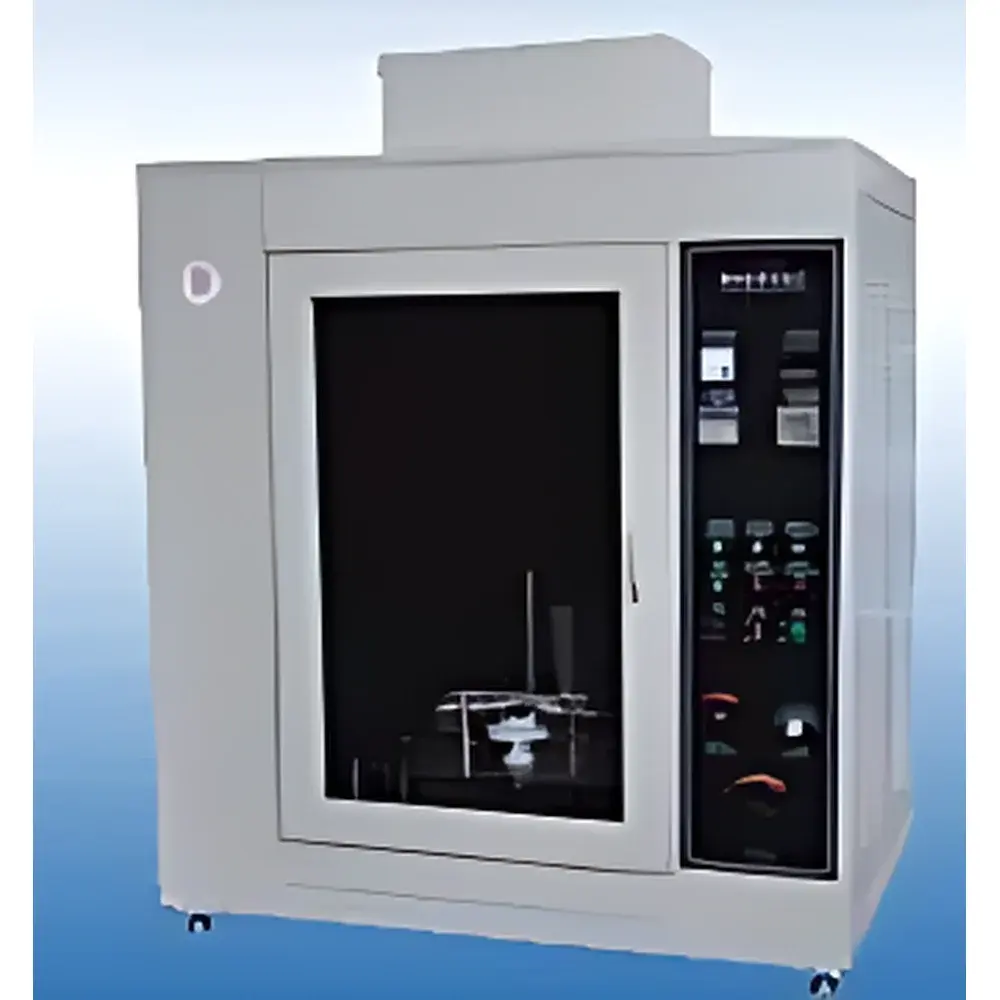
North Guang Precision BDH Electrical Tracking Resistance Tester
| Brand | North Guang Precision Instrument |
|---|---|
| Origin | Beijing, China |
| Manufacturer Type | Manufacturer |
| Product Origin | Domestic (China) |
| Model | BDH |
| Price | USD 2,800 (FOB Beijing) |
| Compliance | IEC 60112, GB/T 4207, GB 4706.1, UL 746A, ASTM D3638-92, IEC 60335, IEC 60884-1 |
Overview
The North Guang Precision BDH Electrical Tracking Resistance Tester is a fully automated, standards-compliant instrument engineered for precise evaluation of the comparative tracking index (CTI) and proof tracking index (PTI) of solid insulating materials under combined electrical stress and electrolytic contamination. Based on the principle of controlled surface tracking degradation—where conductive electrolyte droplets bridge platinum electrodes under sustained AC voltage—the BDH replicates real-world failure mechanisms observed in electrical enclosures, connectors, housings, and insulation components exposed to humid or polluted environments. Its operation strictly follows the electrode geometry, voltage ramping, droplet delivery, and failure detection logic defined in IEC 60112 and its national harmonized equivalents (e.g., GB/T 4207). The system employs a calibrated 60° angled dual-platinum electrode configuration with micron-level positional repeatability, enabling high reproducibility in CTI/PTI classification—a critical parameter for material selection in UL recognition, CE marking, and regulatory submissions under IEC 60695-2-10/11.
Key Features
- Precision-machined platinum-tipped electrodes (99.95% purity) with fixed 60° ±5° included angle and adjustable inter-electrode distance (4.00 ±0.01 mm), ensuring strict conformance to IEC 60112 electrode geometry requirements.
- Electrode loading mechanism delivering consistent 1.0 ±0.05 N contact force—critical for stable current path formation and minimizing mechanical variability across test cycles.
- Programmable AC voltage source (100–600 V, 48–60 Hz) with real-time short-circuit monitoring: voltage drop <10% at 1.0 ±0.1 A short-circuit current, maintaining field integrity during arcing events.
- Motorized, height-adjustable dropper assembly (30–40 mm range) with calibrated volumetric dispensing (44–55 drops per cm³) and programmable 30 ±5 s interval timing—enabling precise replication of standardized electrolyte challenge (0.1% NH₄Cl solution).
- Automated pass/fail detection: integrated current-sensing circuit triggers relay cutoff upon ≥0.5 A leakage current sustained for ≥2 seconds—fully aligning with IEC-defined tracking failure criteria.
- Dedicated ventilation hood with independent exhaust control minimizes fume accumulation and ensures operator safety during prolonged arc-generation phases.
- Microprocessor-based controller with non-volatile memory stores up to 9999 droplet counts per test sequence and supports full test log export via USB interface.
Sample Compatibility & Compliance
The BDH accommodates flat, rigid specimens (minimum 10 mm × 10 mm × 3 mm) made from thermoplastics, thermosets, laminates, elastomers, and composite insulators. It is routinely deployed in laboratories performing UL 746A polymeric material evaluations, IEC 60335-1 appliance safety certification, and GB 2099.1 plug/socket qualification. All operational parameters—including electrode spacing, droplet volume, timing intervals, and failure thresholds—are traceably aligned with IEC 60112:2020 Edition 4.0, GB/T 4207–2012, and ASTM D3638–92 (Reapproved 2020). The instrument architecture supports GLP-compliant workflows through timestamped test records, user-accessible calibration logs, and configurable audit trails—facilitating readiness for ISO/IEC 17025 accreditation audits and FDA 21 CFR Part 11–aligned documentation where electronic records are retained.
Software & Data Management
The BDH operates via an embedded industrial-grade controller with intuitive menu navigation and multilingual UI (English default). Test parameters are configured directly on-device; no external PC is required for basic operation. For advanced data handling, optional USB data export generates CSV-formatted reports containing: test ID, specimen ID, voltage level, droplet count at failure, total elapsed time, CTI/PTI classification result, and operator signature field. Raw sensor timestamps (voltage onset, first droplet, first current anomaly, final cutoff) are preserved to support root-cause analysis of tracking initiation behavior. While the base system does not include network connectivity or LIMS integration, its deterministic serial protocol allows third-party SCADA or laboratory information management systems (LIMS) to poll status and retrieve results via RS-232 or Modbus RTU upon request.
Applications
This tester serves as a core tool in quality assurance labs for electrical component manufacturers, polymer compounders, and contract testing facilities. Typical use cases include: validating CTI ratings for UL Yellow Card submissions; screening flame-retardant additives’ impact on surface tracking resistance; qualifying housing materials for outdoor-rated IP66 enclosures; verifying batch-to-batch consistency of PBT, PA66-GF30, or LCP moldings used in EV charging connectors; and supporting failure analysis of arc-tracked PCB edge connectors or terminal blocks. Its robust mechanical design and repeatable electrochemical stimulation make it suitable for both R&D screening and production-line incoming inspection protocols—particularly where comparative ranking of candidate resins or post-molding aging effects must be quantified under identical stress conditions.
FAQ
What standards does the BDH tester fully comply with?
The BDH conforms to IEC 60112:2020, GB/T 4207–2012, UL 746A, ASTM D3638–92, GB 4706.1, and IEC 60335–1 for CTI/PTI determination.
Is platinum electrode replacement supported by North Guang Precision?
Yes—original-specification platinum electrode sets (including alignment fixtures and torque-calibrated mounting hardware) are available as consumables with documented calibration certificates.
Can the BDH be used for PTI determination only, without CTI step-down testing?
Yes—the controller supports manual voltage hold mode and single-step PTI verification per IEC 60112 Annex B, with user-defined dwell time and droplet count limits.
Does the system meet electromagnetic compatibility (EMC) requirements for lab integration?
The BDH meets IEC 61326-1:2013 Class A emission limits and basic immunity per IEC 61000-4 series, suitable for shared laboratory environments with other test equipment.
What maintenance is required to ensure long-term measurement stability?
Bi-weekly cleaning of electrode tips with analytical-grade ethanol, quarterly verification of droplet volume using gravimetric calibration, and annual verification of voltage/current output accuracy using NIST-traceable meters are recommended.



