
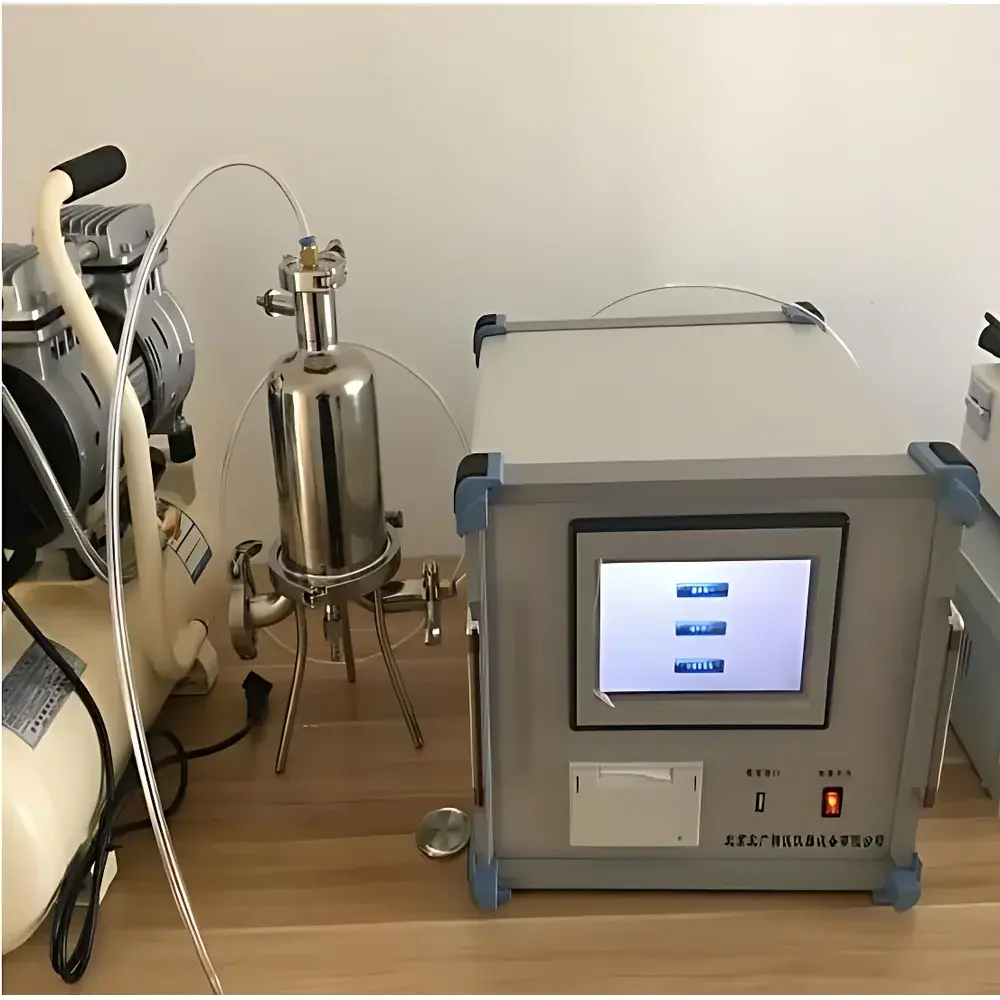
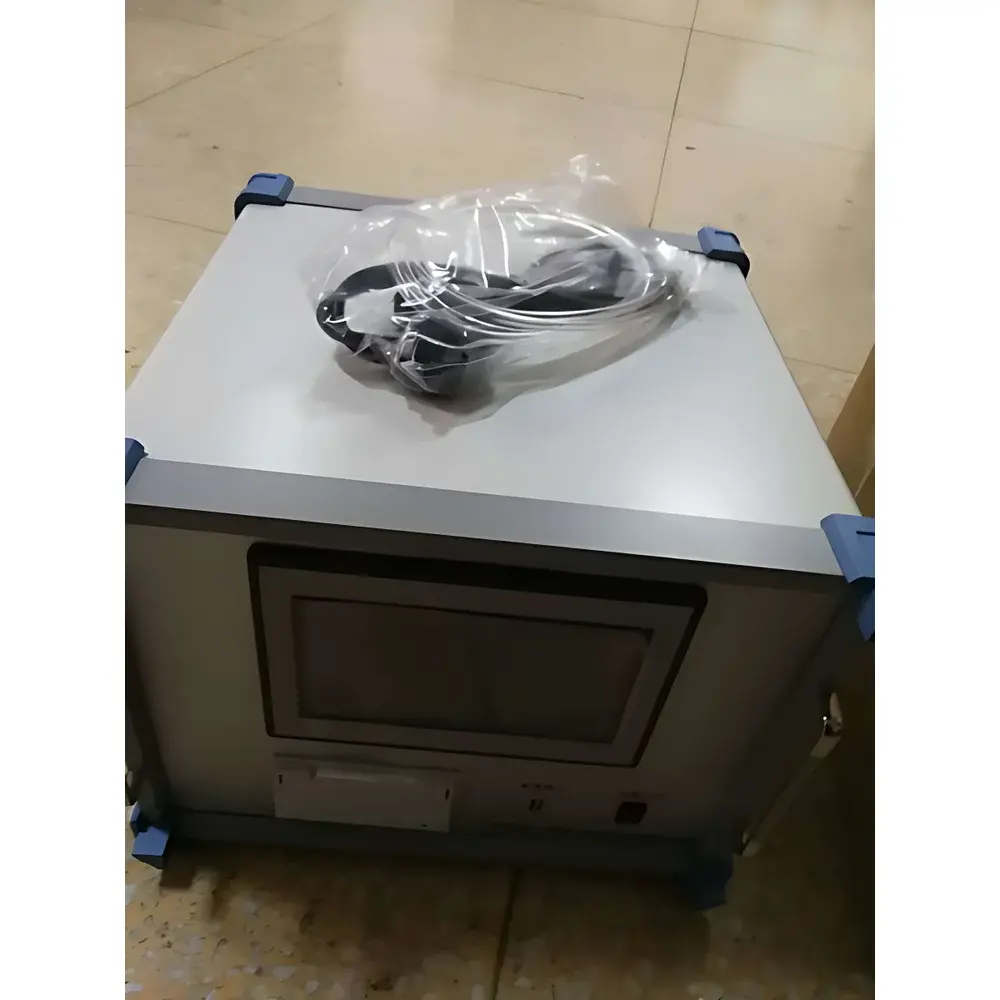
Beiguang BQS1-19 Integrity Tester for Pharmaceutical Filtration Systems
| Brand | Beiguang Precision Instrument |
|---|---|
| Origin | Beijing, China |
| Manufacturer Type | Direct Manufacturer |
| Country of Origin | China |
| Model | BQS1-19 |
| Price | USD 2,500 (FOB Beijing) |
Overview
The Beiguang BQS1-19 Integrity Tester is an engineered solution for non-destructive, quantitative integrity verification of sterilizing-grade membrane filters used in aseptic pharmaceutical manufacturing, bioprocessing, and parenteral drug production. It operates on three internationally recognized physical principles defined in ASTM F838, ISO 13408-2, and USP : bubble point testing (BP), diffusion flow testing (DF), and pressure decay (PD). A fourth mode—water intrusion testing (WIT)—is implemented specifically for hydrophobic membranes (e.g., PTFE, PVDF), eliminating the need for hazardous organic solvents such as alcohols or fluorocarbons during pre-wetting. This complies with ICH Q5A and EU Annex 1 requirements for solvent-free integrity assessment of vent filters and gas filtration systems. The instrument employs dual-core real-time control architecture to synchronize pressure ramping, flow measurement, and data acquisition at sub-second resolution, ensuring high reproducibility across batch validation protocols.
Key Features
- 5.7-inch backlit monochrome LCD display with intuitive Chinese GUI — fully compliant with operator training documentation per FDA 21 CFR Part 11 Annex A (electronic records & signatures)
- Real-time graphical visualization of pressure vs. diffusion flow curves during test execution — supports trend analysis and root-cause investigation of membrane wetting anomalies
- Multi-level user access control with password-protected administrator, supervisor, and operator roles — enabling audit trail compliance for GLP/GMP environments
- Auto-protection logic prevents over-pressurization beyond manufacturer-specified burst limits — configurable safety thresholds per filter housing design (e.g., ≤ 5 bar for standard 316L stainless steel housings)
- Integrated thermal printer interface with optional auto-print trigger — generates time-stamped, tamper-evident reports including test parameters, pass/fail status, and raw curve data
- Dedicated water intrusion test algorithm optimized for hydrophobic membranes — validated per ASTM F2721 and referenced in PDA Technical Report No. 26
- Enhanced signal processing firmware enables accurate diffusion flow quantification on flat-sheet membranes (discs: Φ25–Φ300 mm) and stacked plate configurations — critical for evaluating asymmetric membrane structures
- Full functional parity with leading international integrity testers (e.g., Sartorius M1, Pall Integrity Checker 600) — includes BP, DF, PD, and WIT modes with identical parameter mapping logic
Sample Compatibility & Compliance
The BQS1-19 accommodates a comprehensive range of sterile filtration formats: standard cylindrical cartridges (2.5″–40″ length; 1–15 elements), capsule filters, mini-cartridges, disc membranes (Φ25 mm to Φ300 mm), and inline air/gas filters. It supports all common filter materials including polyethersulfone (PES), polyvinylidene fluoride (PVDF), mixed cellulose ester (MCE), nylon, and hydrophobic fluoropolymers. Test methods conform to global regulatory expectations: bubble point and diffusion flow tests align with USP , EP 2.6.27, and JP 17; pressure decay testing meets ASTM F3154 for low-volume system leak detection; water intrusion testing satisfies ISO 15747 Annex C for solvent-free hydrophobic filter validation. All test reports include metadata required for 21 CFR Part 11-compliant electronic archiving.
Software & Data Management
The instrument includes embedded firmware with built-in audit trail functionality: every parameter change, test initiation, result acceptance, or report print event is timestamped and logged with operator ID. Optional PC-based upper-computer software (Windows 10/11 compatible) enables remote configuration, historical data export (CSV/Excel), statistical process control (SPC) charting, and integration into LIMS via OPC UA or Modbus TCP. Raw pressure and flow datasets are stored in binary format with CRC-32 checksums to ensure data integrity. Software-generated reports include digital signature fields, revision-controlled test templates, and customizable header/footer blocks meeting corporate QA documentation standards.
Applications
This tester is deployed in quality control laboratories for final filter release prior to sterilizing filtration of bulk drug substances, cell culture media, and buffer solutions. It supports routine in-process checks during bioreactor harvest filtration, TFF system integrity verification before and after cleaning-in-place (CIP), and periodic validation of compressed air and nitrogen supply lines. In R&D settings, it facilitates comparative pore structure analysis across membrane lots, wetting agent optimization studies, and accelerated aging protocols under controlled humidity conditions. Its WIT capability makes it particularly valuable for vaccine manufacturing facilities seeking to eliminate IPA use in cleanroom environments.
FAQ
What filter geometries does the BQS1-19 support?
Standard cartridges (2.5″–40″), capsule filters, mini-cartridges, disc membranes (Φ25–Φ300 mm), and inline air filters.
Is water intrusion testing validated for regulatory submissions?
Yes — method validation follows ASTM F2721 and is documented in the instrument’s IQ/OQ/PQ protocol package.
Can test data be exported for LIMS integration?
Yes — via USB drive (CSV), Ethernet (OPC UA), or RS232 serial interface using ASCII command protocol.
Does the system meet 21 CFR Part 11 requirements?
Fully compliant with electronic record and signature controls, including role-based access, audit trails, and electronic signature capture.
What is the maximum allowable test pressure for diffusion flow mode?
3000 mbar (3 bar) — adjustable in 1 mbar increments with automatic pressure hold stabilization.
How is calibration traceability maintained?
Factory calibration uses NIST-traceable pressure transducers and mass flow meters; annual recalibration services available with ISO/IEC 17025-certified certificates.




