
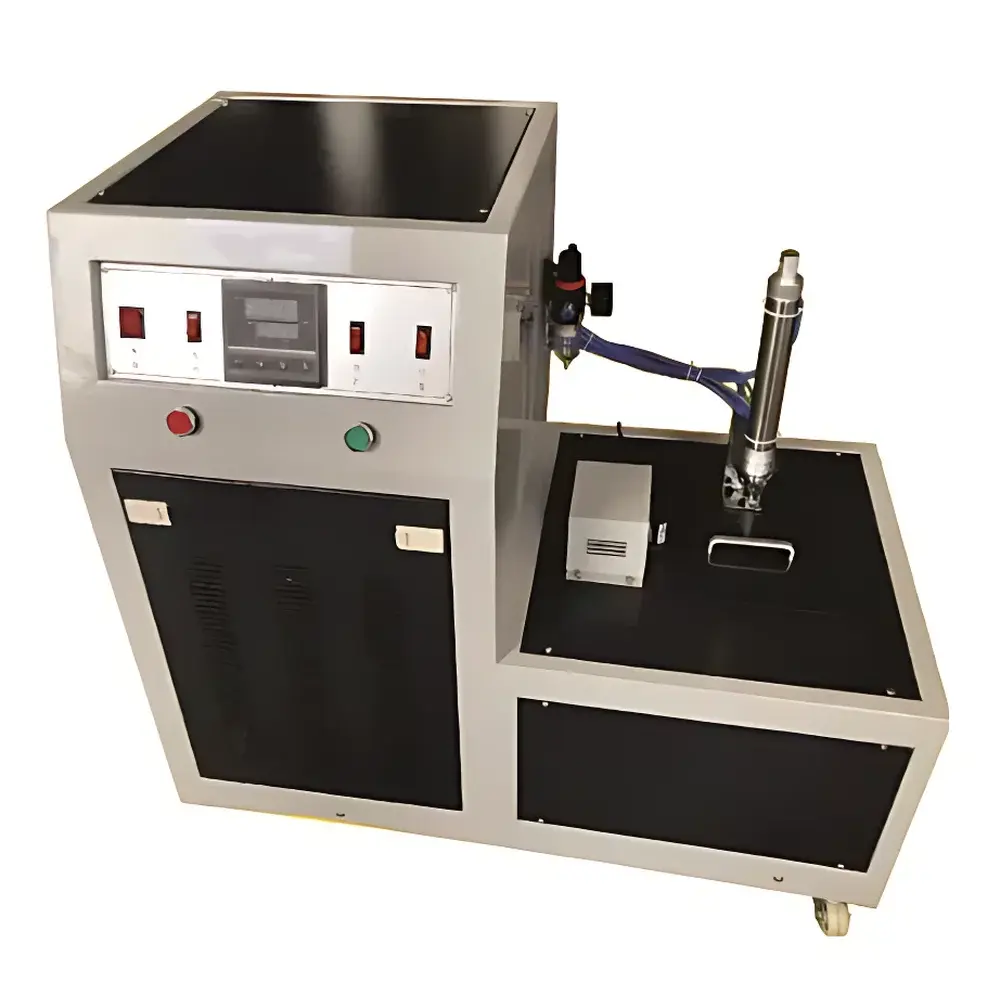
North Guang Jing Yi BWD-C Low-Temperature Brittleness Tester for Rubber and Elastomers
| Brand | North Guang Jing Yi / All Precision Instrument |
|---|---|
| Origin | Beijing, China |
| Manufacturer Type | Direct Manufacturer |
| Country of Origin | China |
| Model | BWD-C |
| Price | USD 3,100 (FOB Beijing) |
| Temperature Range | Ambient to –80 °C (ambient ≤25 °C) |
| Temperature Stability | ±0.3 °C |
| Cooling Rate | ~2.5 °C/min (0 to –30 °C), ~2.5 °C/min (–30 to –40 °C), ~2.0 °C/min (–40 to –80 °C) |
| Internal Chamber Dimensions | 280 × 170 × 120 mm (L×W×H) |
| Sample Capacity | 4 rubber specimens + 15 plastic specimens per test cycle |
| Timer Range | 0–99 min, 1-s resolution |
| Cooling Medium | Industrial ethanol or non-freezing liquid |
| Circulation Motor | 8 W |
| Power Supply | 220–240 V AC, 50 Hz, 1.5 kW |
Overview
The North Guang Jing Yi BWD-C Low-Temperature Brittleness Tester is a precision-controlled thermal-mechanical testing instrument engineered for the standardized determination of brittle transition temperature (Tb) in vulcanized rubbers, thermoplastic elastomers, and rigid plastics. It operates on the principle of impact-induced fracture under cryogenic conditions, in strict accordance with ASTM D746 (Standard Test Method for脆性温度 of Plastics and Elastomers by Impact), ISO 974 (Plastics — Determination of Brittle Temperature), GB/T 5470–2008 (Plastics — Impact Embrittlement Temperature Test Method), and GB/T 1682–2014 (Rubber — Determination of Low-Temperature Brittleness). The system integrates a dual-mode refrigeration unit (compressor-based primary cooling with proportional electric heating compensation), a digitally regulated immersion bath, and a mechanically synchronized impact assembly to ensure reproducible, traceable results across sequential test cycles. Its design prioritizes thermal uniformity, mechanical repeatability, and operational compliance—making it suitable for GLP-compliant laboratories, QC/QA departments in automotive and aerospace supply chains, and R&D facilities validating low-temperature service limits of polymeric components.
Key Features
- Microprocessor-controlled temperature regulation with ±0.3 °C stability over the full operating range (ambient to –80 °C), verified via calibrated Pt100 sensor feedback and real-time PID adjustment
- Dual-zone specimen holder accommodating up to 4 rubber test pieces (per side) and 15 plastic specimens simultaneously, enabling comparative evaluation within a single thermal cycle
- Impact mechanism featuring a hardened steel striker with 1.6 ± 0.1 mm spherical tip, precise 6.4 ± 0.3 mm clearance from clamped specimen surface, and 8 ± 0.3 mm lateral offset—ensuring geometric consistency per ISO 974 Annex A
- Integrated circulation pump and axial stirrer (8 W) maintaining homogenous coolant temperature distribution throughout the 280 × 170 × 120 mm test chamber
- Digital countdown timer (0–99 min, 1-second resolution) synchronized with automated lift-and-drop actuation for standardized 3.0 ± 0.5 min pre-cooling duration
- Fail-safe thermal monitoring: automatic alarm triggers upon ±1 °C deviation during specimen conditioning or loss of coolant flow
Sample Compatibility & Compliance
The BWD-C supports standard dumbbell-shaped, rectangular, or cylindrical specimens conforming to GB/T 5470–2008 (thickness 2.0–4.0 mm), ASTM D746 (6.35 mm × 12.7 mm × 3.2 mm), and ISO 974 (Type A, 20 mm × 2.5 mm × 2.0 mm). It accommodates both vulcanized natural rubber (NR), styrene-butadiene rubber (SBR), nitrile rubber (NBR), EPDM, and thermoplastic polyolefins (TPOs), as well as rigid PVC, ABS, and polycarbonate sheets. All mechanical and thermal performance metrics are validated against national metrological verification protocols. The instrument meets CE marking requirements for electrical safety (EN 61010-1) and electromagnetic compatibility (EN 61326-1). Its operational documentation and calibration records support audit readiness for ISO/IEC 17025-accredited testing laboratories.
Software & Data Management
While the BWD-C operates via embedded hardware controls (no PC dependency), its digital timer and thermal display log timestamped setpoints and actual bath temperatures at 10-second intervals. Users may manually record impact outcomes (pass/fail per specimen), calculated brittle temperature (Tb), and environmental deviations in standardized test reports compliant with FDA 21 CFR Part 11 Annex 11 principles—where handwritten entries are supplemented by operator ID, equipment ID, and calibration certificate numbers. Optional RS-232 output enables connection to external data loggers for long-term trending of thermal drift and inter-laboratory reproducibility studies. All firmware updates and calibration procedures follow documented change control protocols aligned with GMP Annex 15.
Applications
This tester is routinely deployed in:
- Automotive Tier-1 suppliers evaluating cold-weather cracking resistance of door seals, brake hoses, and under-hood gaskets
- Wire & cable manufacturers qualifying jacketing compounds for arctic-grade power transmission cables (IEC 60811-504)
- Polymer formulation labs optimizing plasticizer content and filler dispersion in PVC compounds for medical tubing
- Academic polymer physics research quantifying glass transition broadening effects in block copolymer thermoplastic elastomers
- Defense contractors verifying low-temperature flexibility of silicone-based radar-absorbing materials (RAM)
FAQ
What cooling media are compatible with the BWD-C?
Industrial-grade anhydrous ethanol (≥99.5% purity) is recommended. Alternatives include propylene glycol–water mixtures or commercial non-freezing bath fluids rated for –80 °C service; avoid methanol due to toxicity and volatility.
Is the instrument capable of automated Tb determination?
No—it requires manual iterative testing per GB/T 5470: users adjust bath temperature based on visual fracture assessment after each impact sequence until two consecutive passes/fails occur within ≤1 °C.
Can the BWD-C be integrated into a LIMS environment?
Not natively; however, its RS-232 interface allows third-party data acquisition software to capture time-stamped temperature readings for import into LIMS via CSV or OPC-UA gateways.
What maintenance is required for long-term accuracy?
Annual recalibration of the Pt100 sensor and mechanical verification of striker alignment and drop height (25 ± 0.5 mm) are mandatory. Compressor oil and refrigerant levels should be inspected biannually per manufacturer’s service bulletin.
Does the system meet ASTM D746 Annex A dimensional tolerances?
Yes—the striker geometry, specimen clearance, and lateral offset are factory-verified using NIST-traceable gauge blocks and optical comparators prior to shipment.
Related Products



