
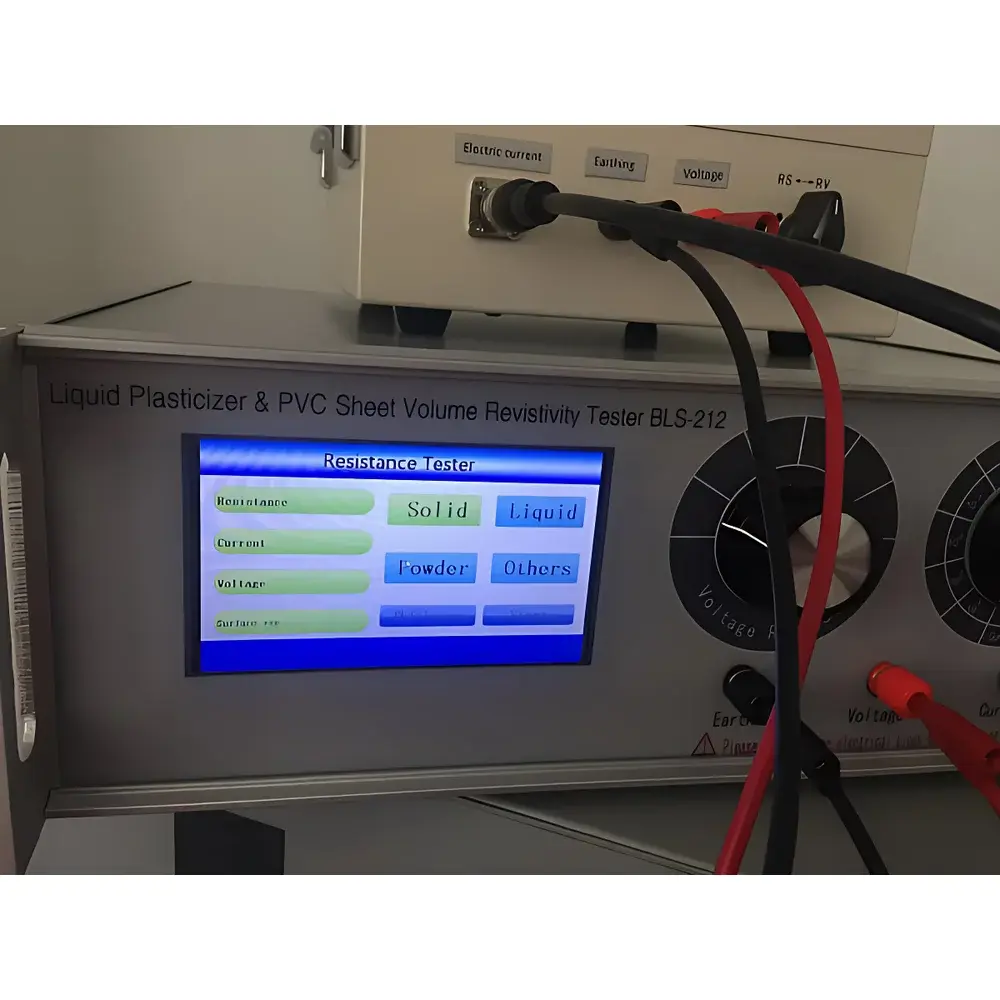
All Precision Instrument BEST-212 Surface & Volume Resistivity Tester
| Brand | All Precision Instrument |
|---|---|
| Origin | Beijing, China |
| Manufacturer Type | Direct Manufacturer |
| Model | BEST-212 |
| Resistance Range | 0.01×10⁴ Ω to 1×10¹⁸ Ω |
| Current Range | 2×10⁻⁴ A to 1×10⁻¹⁶ A |
| Test Voltages | 10 V, 50 V, 100 V, 250 V, 500 V, 1000 V (selectable) |
| Basic Accuracy | ≤1% |
| Display | Dual LCD (resistance and current simultaneously) |
| Operating Environment | 0–40 °C, RH <80% |
| Power Supply | AC 220 V, 50 Hz, ~5 W |
| Compliance | GB/T 1410–2006, GB 12014, GB/T 20991–2007, GB 4385–1995, GB 12158–2006, GB 4655–2003, GB/T 12703.4–2010, GB/T 12703.6–2010, GB 13348–2009, GB/T 15738–2008, GB/T 18044–2008, GB/T 18864–2002, GB/T 22042–2008, GB/T 22043–2008, GB/T 24249–2009, GB 26539–2011, GB/T 26825–2011, GB 50515–2010, GB 50611–2010, GJB 105–1998-Z, GJB 3007A–2009, GJB 5104–2004 |
Overview
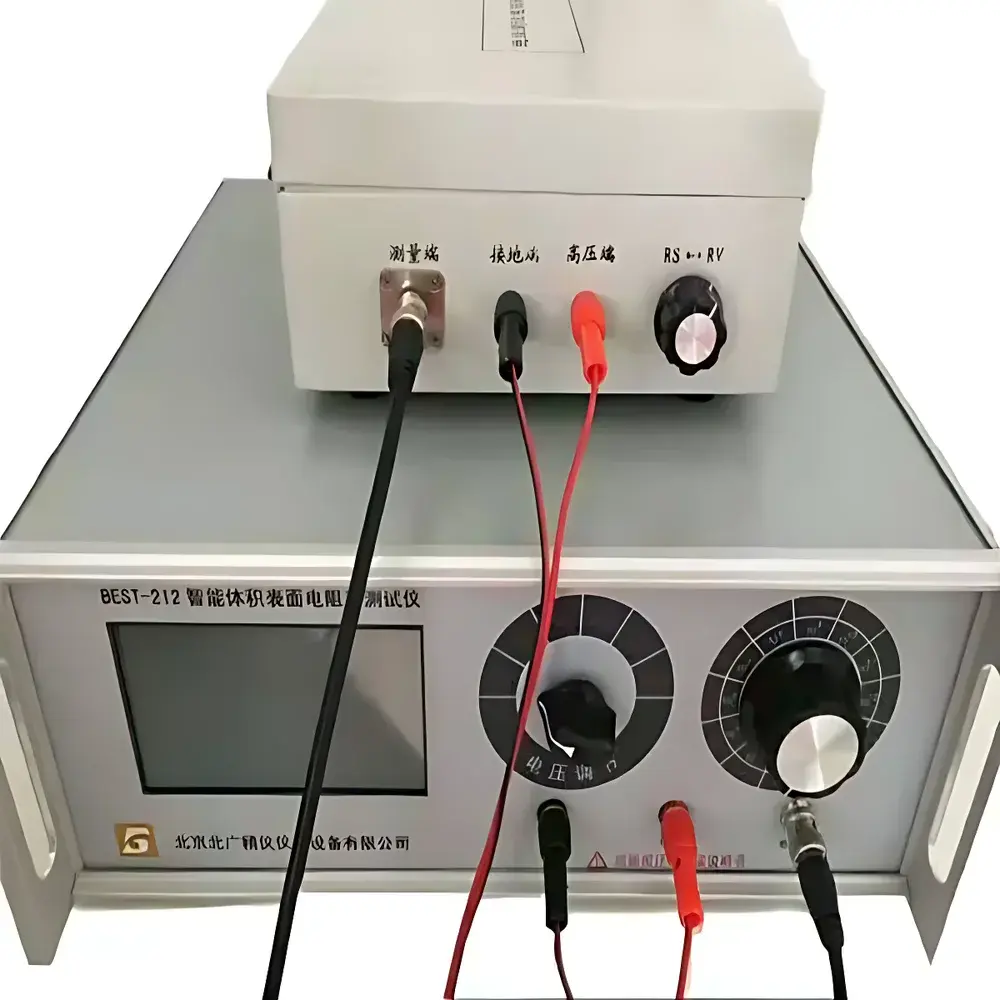
The All Precision Instrument BEST-212 Surface & Volume Resistivity Tester is a precision electrometric instrument engineered for the standardized measurement of electrical resistivity in solid insulating materials—specifically surface resistivity (ρs) and volume resistivity (ρv). It operates on the fundamental principle of Ohm’s Law (R = V/I), employing simultaneous high-resolution digital sampling of applied DC test voltage and resulting leakage current via a low-noise, high-input-impedance electrometer architecture. Unlike conventional analog high-resistance meters with nonlinear scales and voltage-dependent accuracy drift, the BEST-212 integrates a custom ASIC-based signal processing chain that performs real-time V/I computation and digitizes results with fixed-point A/D conversion—ensuring linearity, repeatability, and immunity to supply fluctuations across its full 14-decade resistance range (10⁴–10¹⁸ Ω). Designed for compliance-driven quality control and R&D laboratories, it supports both two-terminal and guarded three-electrode configurations per IEC 62631-3-1 and ASTM D257, enabling unambiguous separation of surface conduction from bulk conduction pathways.
Key Features
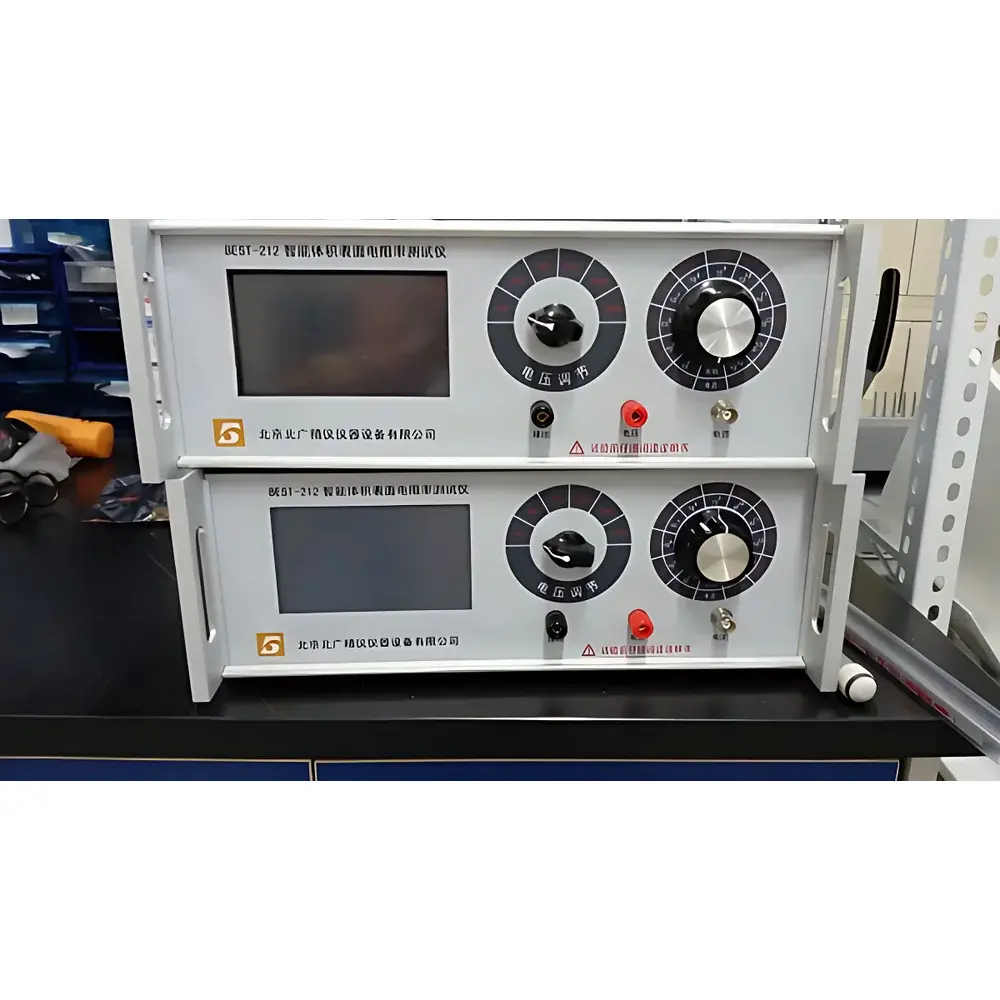
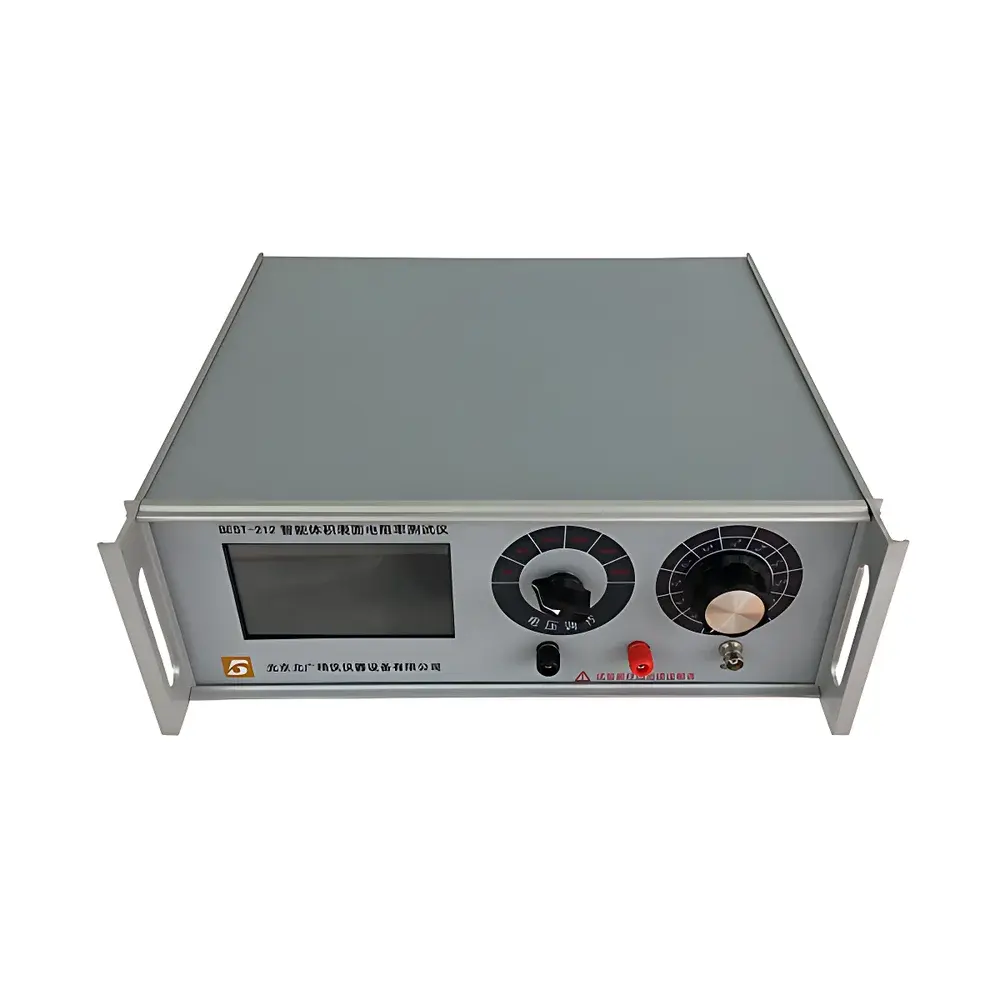
- Simultaneous dual-parameter display: real-time resistance (Ω) and current (A) on a backlit LCD—eliminating manual calculation and reducing operator error.
- Programmable DC test voltages: six discrete levels (10 V, 50 V, 100 V, 250 V, 500 V, 1000 V), each selectable via front-panel toggle—enabling adherence to material-specific test protocols (e.g., 500 V per GB/T 1692–2008 for vulcanized rubber).
- Three-electrode system compatibility: supports standardized concentric electrode geometry (50 mm central disc, 60–80 mm guard ring, 100 mm base plate) for accurate surface and volume resistivity discrimination under GB/T 1410–2006 and ASTM D257 Annex A3.
- Auto-ranging current measurement: covers 14 orders of magnitude (2×10⁻⁴ A to 1×10⁻¹⁶ A) with automatic gain switching and 1-second stabilization delay—optimized for high-impedance dielectrics including ceramics, polymers, and antistatic composites.
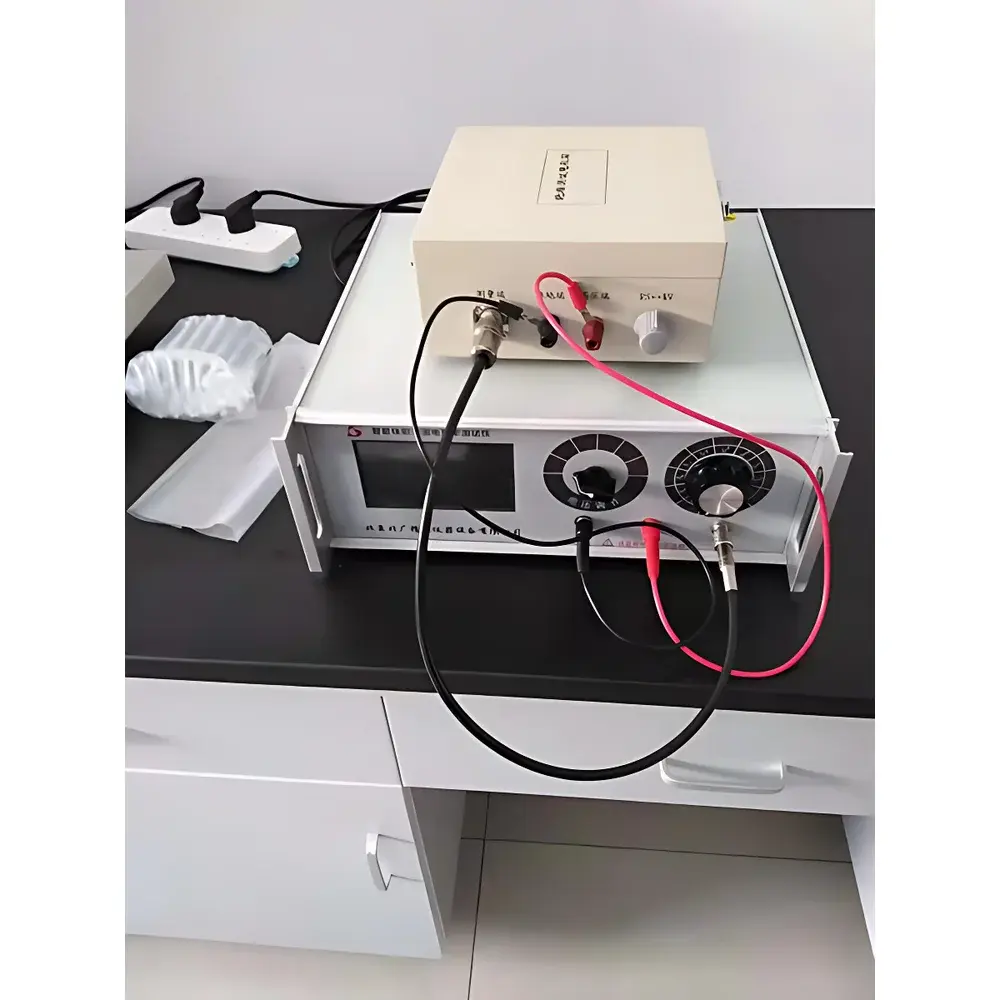
- Integrated electromagnetic shielding: includes a grounded metal test enclosure (supplied) to suppress stray capacitance and environmental EMI—critical for sub-picoampere current integrity at >10¹⁵ Ω measurements.
- Fail-safe power sequencing logic: hardware-enforced shutdown protocol requiring return to 10⁴ Ω range and 10 V output prior to power-off—preventing residual capacitor discharge damage to the microcurrent amplifier stage.
Sample Compatibility & Compliance
The BEST-212 is validated for use with rigid and semi-rigid solid dielectrics—including plastics, elastomers, laminates, textiles, flooring materials, and ceramic substrates—provided specimens meet dimensional and surface flatness requirements defined in GB/T 1410–2006. Its three-electrode interface enables unambiguous separation of surface and volume conduction mechanisms, essential for evaluating antistatic performance in protective garments (GB 12014), footwear (GB 4385–1995), cleanroom fabrics (GB/T 24249–2009), and electrostatic-sensitive electronics workspaces (GB 50611–2010, GJB 3007A–2009). The instrument conforms to national and industry standards governing static control in petrochemical (GB 13348–2009), rubber (GB 4655–2003), textile (GB/T 12703.4–2010), and semiconductor (GJB 105–1998-Z) applications. While not FDA 21 CFR Part 11 certified out-of-the-box, its deterministic measurement workflow and manual audit trail (via printed calibration records and test logs) support GLP-compliant documentation when integrated into controlled laboratory procedures.
Software & Data Management
The BEST-212 operates as a standalone benchtop instrument with no embedded firmware or proprietary software dependency. All measurement parameters are configured manually via tactile switches and rotary dials—ensuring operational transparency, long-term maintainability, and immunity to OS obsolescence. Test data (resistance value, current reading, applied voltage, test duration) are displayed in real time and recorded manually or via external logging systems. For traceability, each unit ships with a factory calibration certificate (NIST-traceable reference resistors), ISO/IEC 17025–accredited calibration report option, and full documentation set (user manual, GB/T 1410–2006 implementation guide, electrode geometry schematics). Optional RS-232 or USB-to-serial adapters enable ASCII-formatted data streaming to spreadsheet or LIMS platforms—supporting basic electronic record retention per ALCOA+ principles.
Applications
- Quality assurance of ESD-safe packaging films and trays in electronics manufacturing.
- Validation of volume resistivity in high-voltage insulators (e.g., porcelain bushings, polymer-housed arresters) per GB/T 1692–2008.
- Surface resistivity mapping of conductive flooring and wall coatings in pharmaceutical cleanrooms (GB 50515–2010).
- R&D screening of nanocomposite polymers for aerospace static-dissipative components (GJB 5104–2004).
- Compliance testing of antistatic workwear per GB/T 22042–2008 and EN 1149–1.
- Material qualification for battery separator films, where ionic vs. electronic conduction pathways must be isolated.
FAQ
Why is the three-electrode configuration required for volume resistivity testing?
The guard ring (intermediate electrode) diverts surface leakage current away from the measurement path, ensuring only bulk current through the specimen thickness contributes to the calculated ρv. This eliminates errors caused by humidity-induced surface conduction.
What environmental conditions must be controlled during testing?
Per GB/T 10580–2003 and IEC 60260, temperature (23 ±2 °C) and relative humidity (50 ±5% RH) must be stabilized for ≥48 h prior to measurement. Volume resistivity exhibits exponential dependence on moisture absorption; deviations invalidate comparative analysis.
How does the instrument achieve ≤1% basic accuracy across 14 decades?
Through precision-matched feedback resistors, auto-zeroing electrometer topology, and temperature-compensated voltage references—calibrated against 10⁴–10¹⁶ Ω standard resistors traceable to NIM (National Institute of Metrology, China).
Can the BEST-212 measure resistivity of liquids or powders?
No. It is designed exclusively for solid, planar dielectric specimens ≥1 mm thick with parallel, polished surfaces. Liquid or granular samples require dedicated conductivity cells or powder resistivity fixtures.
Is periodic recalibration mandatory?
Yes. Annual recalibration against certified reference standards is recommended per ISO/IEC 17025. Calibration intervals may be extended to 2 years if internal verification checks (using supplied 10⁹ Ω and 10¹² Ω check resistors) demonstrate ongoing stability within tolerance limits.



