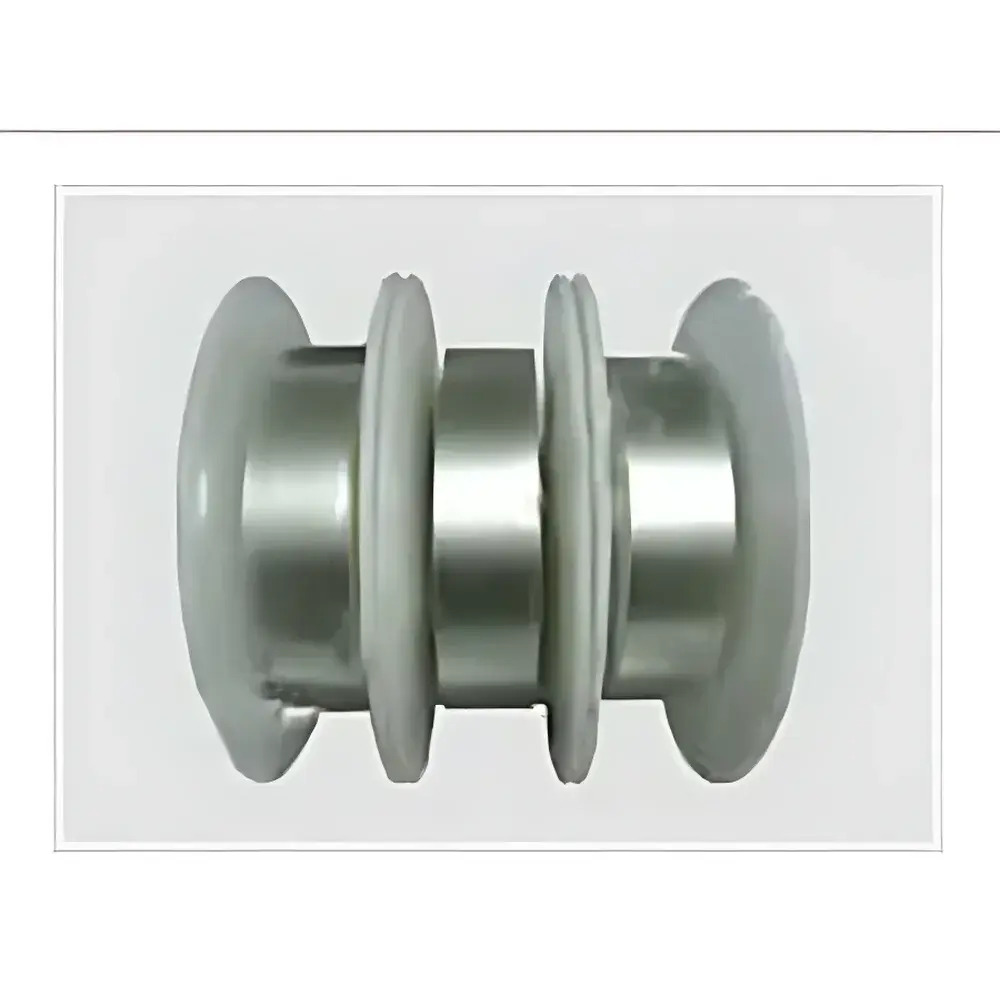
Lithium Foil (Li Foil) –合肥科晶 Model Li Foil
| Brand | Hefei Kejing |
|---|---|
| Origin | USA |
| Manufacturer Type | Authorized Distributor |
| Origin Category | Imported |
| Model | Li Foil |
| Pricing | Upon Request |
| Color | Silvery-white metallic |
| Melting Point | 180.5 °C |
| Density | 0.534 g/cm³ |
| Atomic Weight | 6.94 g/mol |
| Surface Quality | Flat, bright, oil-free, free of visible oxides and nitrides |
| Dimensions | 35 mm × 30 m × 0.17 mm |
| Packaging | Argon-flushed, moisture-barrier aluminum-laminated pouch |
Overview
Lithium foil (Li foil) is a high-purity, ultra-thin metallic sheet engineered for use as an active electrode material, reference electrode, or lithium source in electrochemical research and battery development. Manufactured under controlled inert-atmosphere conditions, this product adheres to stringent purity and dimensional tolerances required for reproducible cell assembly in laboratory-scale lithium-metal and solid-state battery prototyping. The foil operates on fundamental electrochemical principles—its low density (0.534 g/cm³), low melting point (180.5 °C), and high specific capacity (3860 mAh/g) make it indispensable for studies involving lithium plating/stripping kinetics, interfacial stability with solid electrolytes, and dendrite suppression mechanisms. As a critical consumable in half-cell and symmetric-cell configurations, it enables quantitative evaluation of coulombic efficiency, overpotential evolution, and cycle-life degradation under standardized test protocols.
Key Features
- High-purity lithium metal (≥99.9% trace-metal basis), certified per ASTM E1019 for elemental analysis
- Precise thickness tolerance of ±0.005 mm (0.17 mm nominal), verified via calibrated micrometer and eddy-current profiling
- Optically flat, mirror-bright surface with no visible oxide films, oil residues, or particulate contamination—validated by optical microscopy (ISO 14644-1 Class 5 cleanroom handling)
- Consistent mechanical integrity across full roll length (30 m), enabling automated electrode transfer and slitting without edge delamination
- Stabilized metallurgical microstructure achieved through cold-rolling and annealing under ultra-high-purity argon (O₂ < 0.1 ppm, H₂O < 0.5 ppm)
- Dimensionally stable packaging: double-sealed aluminum-laminated pouch with integrated desiccant and residual O₂ indicator strip
Sample Compatibility & Compliance
This lithium foil is compatible with standard glovebox environments (O₂/H₂O < 0.1 ppm) used in battery R&D labs compliant with IEEE 1625 and IEC 62660-1 safety guidelines. It meets material specifications referenced in DOE Vehicle Technologies Office (VTO) Battery Materials Roadmap and supports GLP-aligned documentation for preclinical battery testing. While not a finished instrument, its use conforms to ISO/IEC 17025 requirements for certified reference materials when deployed in accredited laboratories performing QC/QA on lithium-ion and lithium-metal cell components. Storage at −20 °C under argon extends chemical stability beyond the stated 6-month shelf life, consistent with USP recommendations for reactive metallic standards.
Software & Data Management
As a physical consumable—not an electronic instrument—this lithium foil does not incorporate embedded firmware or software interfaces. However, its traceability is fully integrated into laboratory information management systems (LIMS) via batch-specific QR-coded labels. Each roll includes a Certificate of Analysis (CoA) with lot number, manufacturing date, inert-gas purge log, and surface resistivity verification data (measured per ASTM F1711). Digital CoA files are compatible with 21 CFR Part 11–compliant LIMS platforms, supporting audit-ready records for GMP-aligned battery material qualification workflows.
Applications
- Reference electrode fabrication in three-electrode electrochemical cells for cyclic voltammetry and galvanostatic intermittent titration technique (GITT)
- Anode substrate for solid-state electrolyte interphase (SEI) formation studies using in situ XRD and XPS
- Lithium reservoir in Li|solid-electrolyte|Li symmetric cells for impedance monitoring and critical current density (CCD) determination
- Calibration standard for thermal gravimetric analysis (TGA) and differential scanning calorimetry (DSC) of lithium-reactive composites
- Source material for vacuum thermal evaporation of Li thin films in thin-film battery and microbattery fabrication
- Controlled lithium insertion into cathode precursors during pre-lithiation experiments (e.g., NMC, LFP, Sb-based anodes)
FAQ
What inert atmosphere specifications are required for safe handling?
Handling must occur in an argon- or nitrogen-purged glovebox with O₂ and H₂O levels maintained below 0.1 ppm. Residual moisture exposure >10 ppm induces rapid surface passivation and compromises electrochemical reversibility.
Can this foil be cut with standard laboratory shears?
Yes—however, stainless-steel precision cutting tools pre-cleaned with anhydrous ethanol and dried under inert gas are recommended to prevent edge oxidation and mechanical deformation.
Is the 0.17 mm thickness suitable for coin-cell assembly?
Yes. This thickness balances mechanical robustness during stacking with sufficient lithium inventory for ≥100-cycle testing in CR2032-format half-cells using common cathode loadings (e.g., 2–3 mg/cm² NMC622).
How is batch-to-batch consistency ensured?
Each production lot undergoes surface oxide quantification via angle-resolved XPS (AR-XPS), thickness mapping across 10 random locations, and electrochemical benchmarking against NIST-traceable Li reference foils.
Does the packaging meet UN transport regulations for Class 4.3 dangerous goods?
Yes. The argon-sealed laminated pouch complies with UN 3090 (Lithium Metal Batteries) packaging instructions P903 and is certified for ground and air shipment under IATA Dangerous Goods Regulations, Section II.