
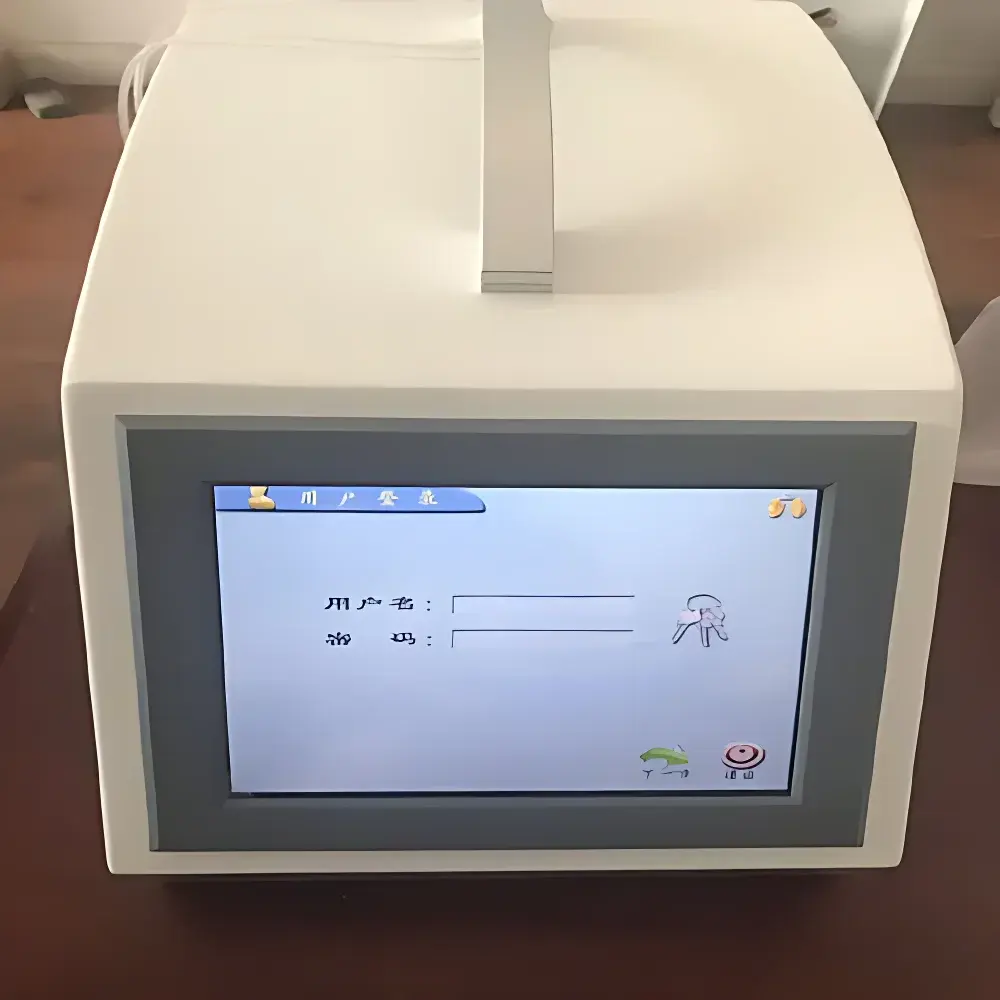
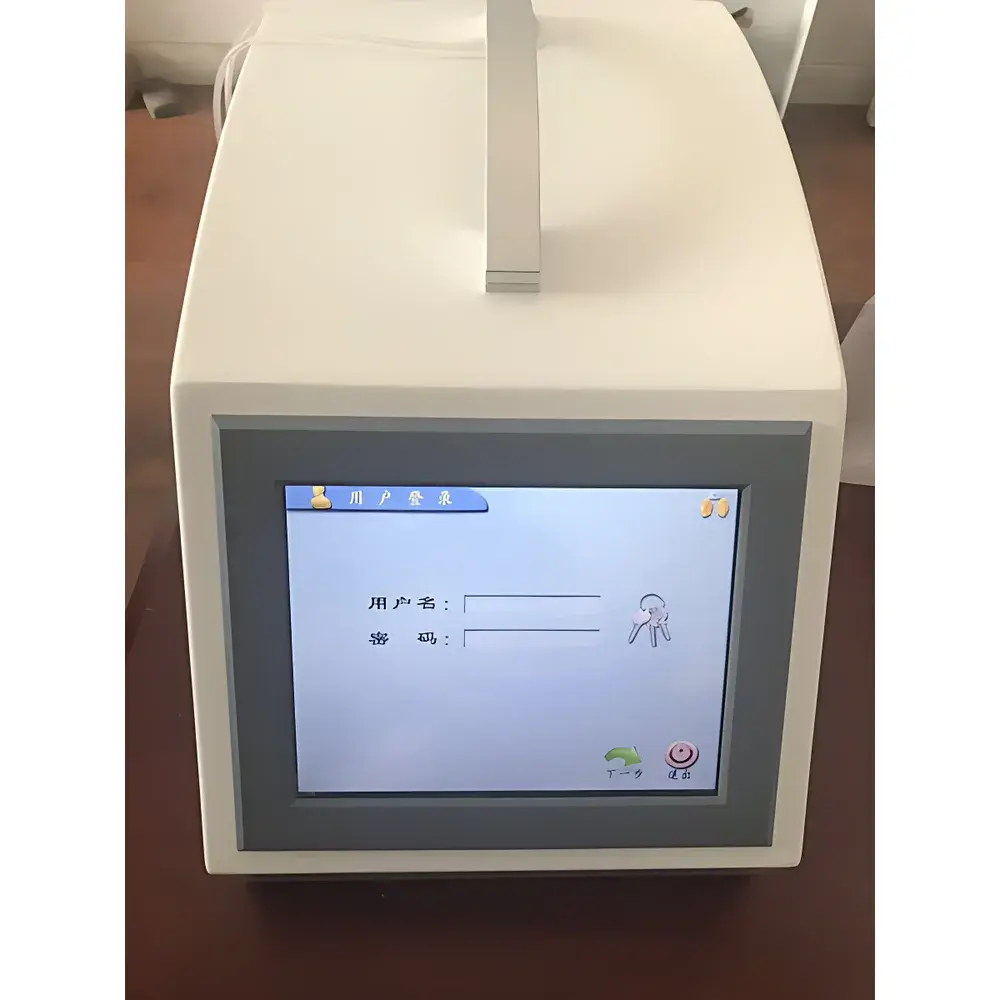
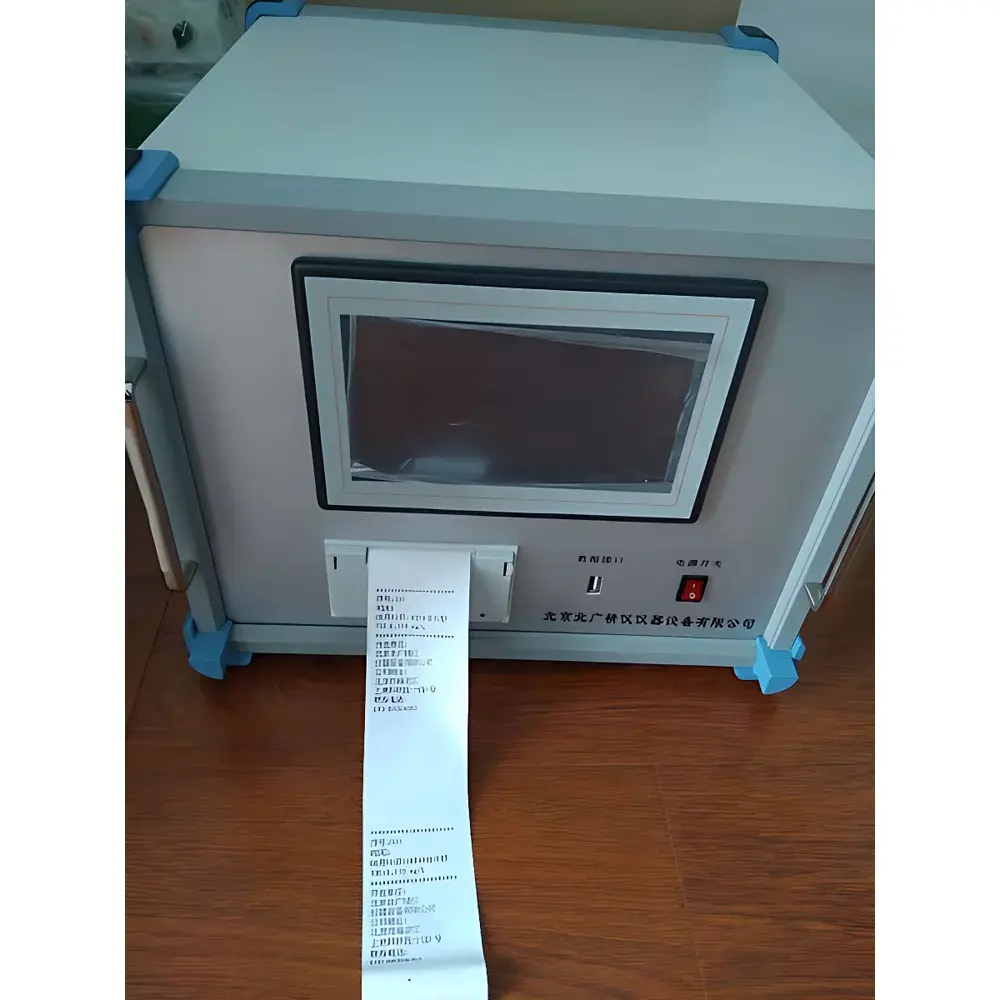
North Guang Precision Instrument BC-30A Total Organic Carbon (TOC) Analyzer
| Brand | North Guang Precision Instrument |
|---|---|
| Origin | Beijing, China |
| Manufacturer Type | Direct Manufacturer |
| Product Category | Domestic Laboratory TOC Analyzer |
| Model | BC-30A |
| Instrument Type | Laboratory & Online Capable TOC Analyzer |
| Detection Principle | Direct Conductivity Detection |
| Oxidation Method | UV/Persulfate Oxidation |
| Measurement Range | 1 µg/L to 1500 µg/L |
| Accuracy | ±4% |
| Resolution | 1 µg/L |
| Detection Limit | 1 µg/L |
| Repeatability | ≤3% |
| Sample Temperature Range | 1–95 °C |
| Response Time | <5 min |
| Data Storage Capacity | High-capacity internal memory |
| Display | Color Touchscreen Interface |
| Power Supply | 220 V AC |
| Compliance | Meets Chinese Pharmacopoeia (2020 Ed.), GMP, and FDA 21 CFR Part 11 requirements for electronic records and signatures |
Overview
The North Guang Precision Instrument BC-30A Total Organic Carbon (TOC) Analyzer is a laboratory-grade and online-deployable instrument engineered for high-reliability, real-time monitoring of organic carbon contamination in ultrapure water systems. It employs direct conductivity detection following UV/persulfate oxidation—a robust, reagent-free methodology widely adopted in regulated pharmaceutical and biotechnology environments. Unlike combustion-based TOC analyzers, the BC-30A eliminates the need for carrier gases, high-temperature furnaces, or consumable catalysts, resulting in inherently lower operational complexity and long-term cost of ownership. Its design prioritizes continuous operation in critical water loops—including Water for Injection (WFI), Purified Water (PW), and Ultra-Pure Water (UPW)—with compliance-driven architecture supporting full traceability, user access control, and audit-ready data management.
Key Features
- Reagent-free UV/persulfate oxidation system with no gas cylinders, ceramic peristaltic pump, and zero moving parts requiring routine replacement—minimizing downtime and maintenance overhead.
- Direct conductivity detection with 1 µg/L resolution and sub-5-minute system response time, enabling rapid feedback for process control and alarm-triggered interventions.
- Integrated color touchscreen interface with intuitive Chinese-language navigation—designed for ease of use in GMP-compliant manufacturing facilities without requiring specialized operator training.
- Onboard high-capacity non-volatile memory for secure storage of raw measurement data, calibration logs, user actions, and alarm events—retained with timestamping and immutable record integrity.
- Configurable threshold-based alarms with relay outputs for integration into facility SCADA or PLC systems—supporting automated shutdown or diversion protocols upon TOC excursion.
- Multi-level user authentication with role-based permissions (e.g., Operator, Supervisor, Administrator) and built-in electronic signature capability compliant with 21 CFR Part 11 Subpart B requirements.
- Full audit trail functionality including date/time-stamped entries for all critical operations: method changes, calibration, sample analysis, data export, and user logins—ensuring ALCOA+ data integrity principles.
Sample Compatibility & Compliance
The BC-30A is validated for direct, unmodified analysis of low-conductivity aqueous matrices typical of pharmaceutical water systems: WFI, PW, UPW, and deionized water. It operates across a temperature range of 1–95 °C, accommodating both ambient-loop and thermally sanitized distribution systems. The analyzer meets the performance criteria specified in the Chinese Pharmacopoeia (2020 Edition) General Chapter 0682 “Total Organic Carbon”, aligning with USP and EP 2.2.44 methodologies where applicable. Its software architecture supports IQ/OQ/PQ documentation packages and includes configurable validation templates for installation, operational, and performance qualification under GMP Annex 15 and ISO/IEC 17025 frameworks.
Software & Data Management
Firmware-integrated software provides full lifecycle data governance: automatic generation of electronic records with embedded metadata (operator ID, method ID, instrument serial number, environmental conditions), cryptographic hash protection of stored datasets, and export capabilities via USB or Ethernet to LIMS or ELN platforms. All data modifications are prohibited post-acquisition; only append-only logging is permitted. Audit trail reports can be exported in PDF or CSV format with digital signature verification. System security conforms to NIST SP 800-53 controls for authentication, authorization, and confidentiality—ensuring readiness for regulatory inspections by NMPA, FDA, or EMA.
Applications
- Real-time TOC monitoring in pharmaceutical water-for-injection (WFI) distribution loops.
- Validation and routine surveillance of purified water systems per EU GMP Annex 1 and WHO TRS 970.
- Supporting risk-based quality assurance programs for biologics and sterile product manufacturing.
- Environmental release monitoring where low-level organic carbon quantification is required in effluent streams.
- Research and development laboratories evaluating membrane fouling, resin degradation, or cleaning validation efficiency.
FAQ
Does the BC-30A require external gases or chemical reagents for daily operation?
No. It uses UV light combined with sodium persulfate for oxidation and measures conductivity change directly—no carrier gas, catalyst, or acid reagents are needed.
Can the instrument be integrated into an existing SCADA or DCS infrastructure?
Yes. It provides dry-contact relay outputs and Modbus TCP communication for seamless integration with industrial control systems.
Is the BC-30A suitable for use in cleanroom environments?
Yes. Its compact footprint, fanless thermal design, and IP54-rated enclosure meet requirements for Grade A/B/C classified areas when installed in appropriate utility corridors or monitoring cabinets.
What validation support is provided for GMP compliance?
North Guang Precision Instrument supplies comprehensive IQ/OQ/PQ documentation kits, including protocol templates, test scripts, acceptance criteria, and electronic signature implementation guidance aligned with FDA and NMPA expectations.
How is data integrity ensured during power loss or system reboot?
All measurements and system events are written to write-protected flash memory with journaling logic—guaranteeing zero data loss and consistent state recovery after unexpected interruptions.
Related Products







