
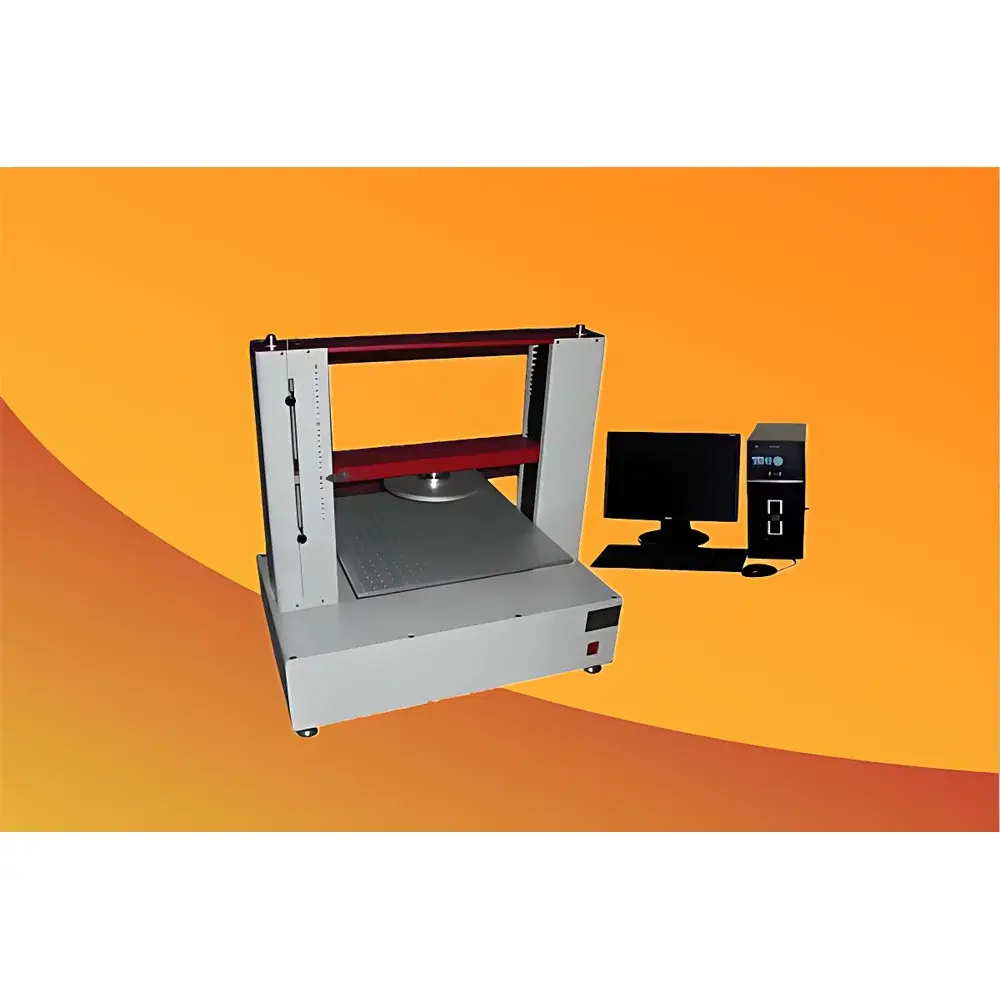
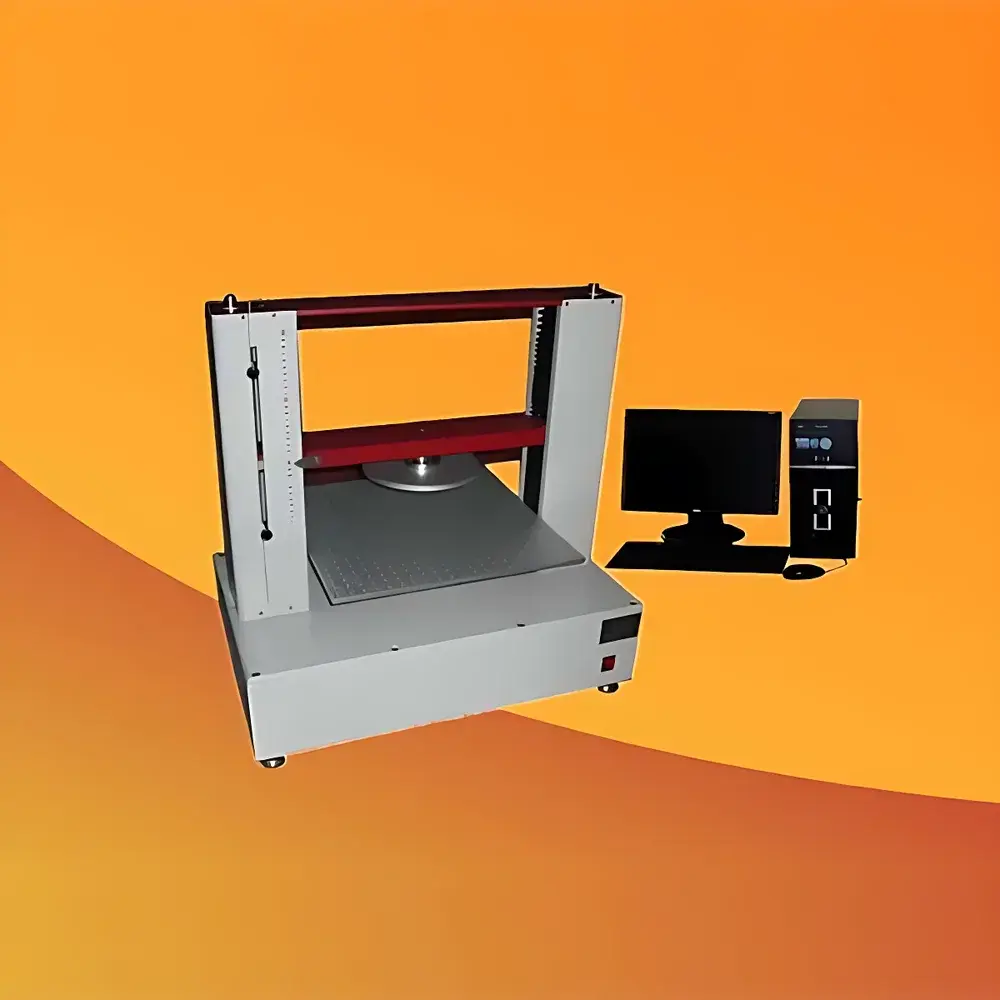
Beijing North Guang Precision Instruments HMYX-2000 Foam Indentation Hardness Tester
| Brand | Beijing North Guang Precision Instruments |
|---|---|
| Origin | Beijing, China |
| Manufacturer Type | Direct Manufacturer |
| Country of Origin | China |
| Model | HMYX-2000 |
| Test Speed | 100 mm/min ±20 mm |
| Force Range | 0–2000.0 N |
| Force Resolution | 0.25 N |
| Measurement Accuracy | <1% FS |
| Maximum Stroke | 3500 mm (customizable) |
| Indenter Diameter | 200 mm |
| Test Platform Dimensions | 500 × 600 mm |
| Vent Hole Array Diameter | 250 × 250 mm |
| Overall Dimensions | 500 × 600 × 800 mm |
| Power Supply | 220 V / 50 Hz |
| Compliance Standards | GB/T 10807–2006, GB/T 10802 |
Overview
The HMYX-2000 Foam Indentation Hardness Tester is an electromechanical testing system engineered for the precise quantification of indentation hardness in flexible polymeric foams—primarily soft polyurethane (PU) and viscoelastic foam materials. It operates on the principle of controlled quasi-static compression, where a standardized cylindrical indenter applies a defined displacement rate to a conditioned foam specimen under ASTM D3574, ISO 3385, and GB/T 10807–2006 compliant test configurations. The instrument implements three standardized indentation methods (Method A: 25% indentation; Method B: 40% indentation; Method C: 65% indentation), enabling comparative evaluation of load-deflection behavior across material batches, formulations, or production lots. Designed for laboratory and quality control environments, the HMYX-2000 integrates a high-precision load cell, precision ball-screw actuation, and embedded microcontroller-based motion control to ensure repeatable force-displacement profiling with traceable metrology.
Key Features
- Triple-standard compliance: Fully supports Method A (25% deflection), Method B (40% deflection), and Method C (65% deflection) per GB/T 10807–2006 and ISO 3385.
- Programmable test speed: Default 100 mm/min, adjustable within ±20 mm/min tolerance for method-specific or R&D-driven protocols.
- High-fidelity force measurement: 2000 N capacity load cell with 0.25 N resolution and <1% full-scale accuracy, calibrated traceably to national standards.
- Integrated displacement control: Timer-circuit-regulated indentation depth ensures exact compliance with prescribed % deflection targets—critical for inter-laboratory reproducibility.
- Dual-mode operation: Supports both force-controlled and displacement-controlled test profiles; auto-return to initial position post-test.
- Real-time dynamic visualization: Simultaneous graphical display of time vs. force vs. penetration depth during active testing.
- Embedded CPU architecture: Eliminates external PC dependency for basic operation; optional Windows-based software enables advanced curve analysis, report generation, and audit-ready data export.
- Mechanical and programmable dual-limit protection: Prevents over-travel and sensor overload during routine or misconfigured operation.
Sample Compatibility & Compliance
The HMYX-2000 accommodates standard test specimens measuring 380 mm × 380 mm × 50 mm (or custom dimensions up to 500 × 600 mm platform limits), including irregular geometries such as automotive seat cushions and mattress sections. Its 200 mm diameter flat-faced indenter and 250 × 250 mm vent-hole array ensure uniform air escape during compression—minimizing pneumatic resistance artifacts in low-density foams. The system meets essential regulatory and industry requirements: GB/T 10807–2006 (Chinese National Standard for Flexible Foam Indentation Hardness), ISO 3385:2014 (Flexible Cellular Polymeric Materials — Determination of Compression Set), and ASTM D3574–22 (Standard Test Methods for Flexible Cellular Materials — Slab, Bonded, and Molded Urethane Foams). While not inherently 21 CFR Part 11 compliant, raw data files (CSV, XML) and test logs are structured to support GLP/GMP-aligned validation when deployed with validated software and documented SOPs.
Software & Data Management
The system ships with embedded firmware for standalone operation and an optional Windows-based application supporting multi-user access, test method library management, and automated report generation (PDF/Excel). All test sessions are timestamped and include operator ID, environmental notes, calibration status, and raw force/displacement arrays. Curve overlays enable comparative analysis across batches or formulations. Exported datasets preserve metadata required for internal QA audits or third-party certification submissions. Audit trails—including parameter changes, calibration events, and user logins—are retained locally and exportable for FDA or CNAS inspection readiness. Data integrity is maintained via checksum-verified storage and non-editable binary archive options.
Applications
- Quality assurance of PU, latex, memory foam, and rebonded foam products in furniture, bedding, and automotive seating manufacturing.
- R&D evaluation of foam formulation modifications—e.g., catalyst concentration, polymer molecular weight, or filler content—on load-bearing performance.
- Compliance verification for OEM specifications requiring hardness thresholds at 25%, 40%, or 65% indentation.
- Stability assessment of aged or thermally cycled foam samples via longitudinal indentation hardness tracking.
- Validation of foam cutting or laminating processes where compressive resilience affects downstream assembly tolerances.
FAQ
What test standards does the HMYX-2000 support?
It fully complies with GB/T 10807–2006, ISO 3385:2014, and ASTM D3574–22 for indentation hardness testing of flexible cellular polymeric materials.
Can the instrument test non-standard or irregular-shaped foam parts?
Yes—the open-platform design (500 × 600 mm) and programmable indenter positioning allow testing of seat backs, contoured cushions, and cut-to-size components without fixture adaptation.
Is force calibration traceable to national metrology institutes?
The load cell is factory-calibrated against certified reference standards; users may perform in-house verification using NIST-traceable deadweight kits or third-party accredited calibration services.
Does the system support automated pass/fail judgment based on hardness thresholds?
Yes—user-defined upper/lower limits can be configured per test method; results trigger visual alerts and are flagged in exported reports.
What maintenance is required for long-term accuracy?
Annual verification of force transducer linearity, mechanical alignment of the ball-screw drive, and cleaning of vent holes and platform surfaces are recommended per the maintenance schedule provided in the technical manual.



