
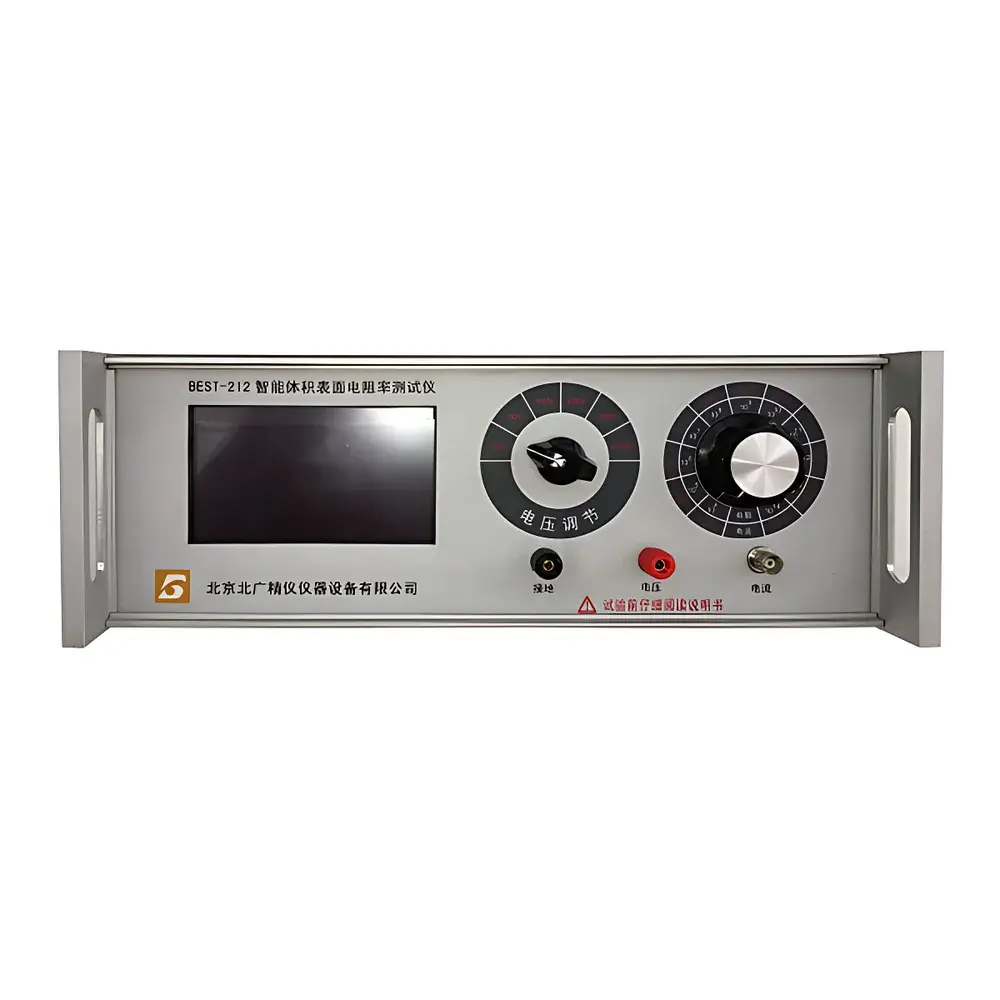
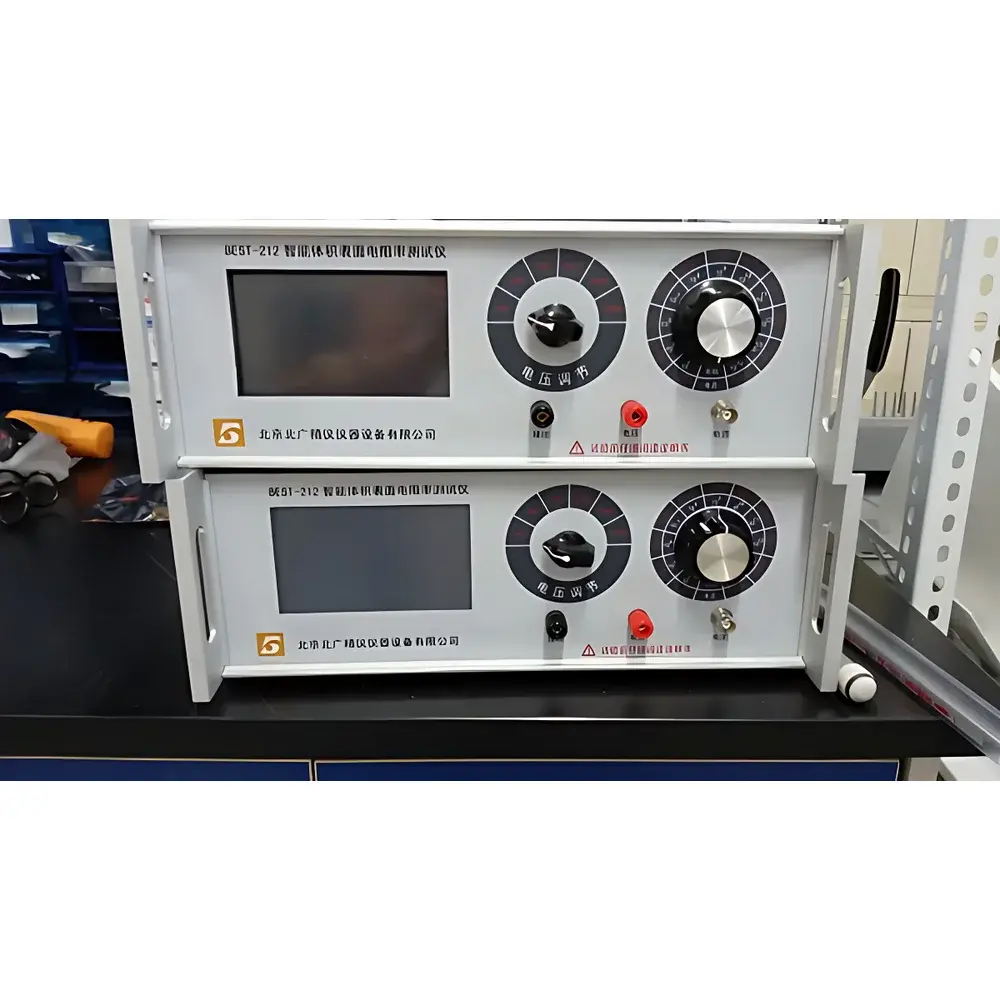
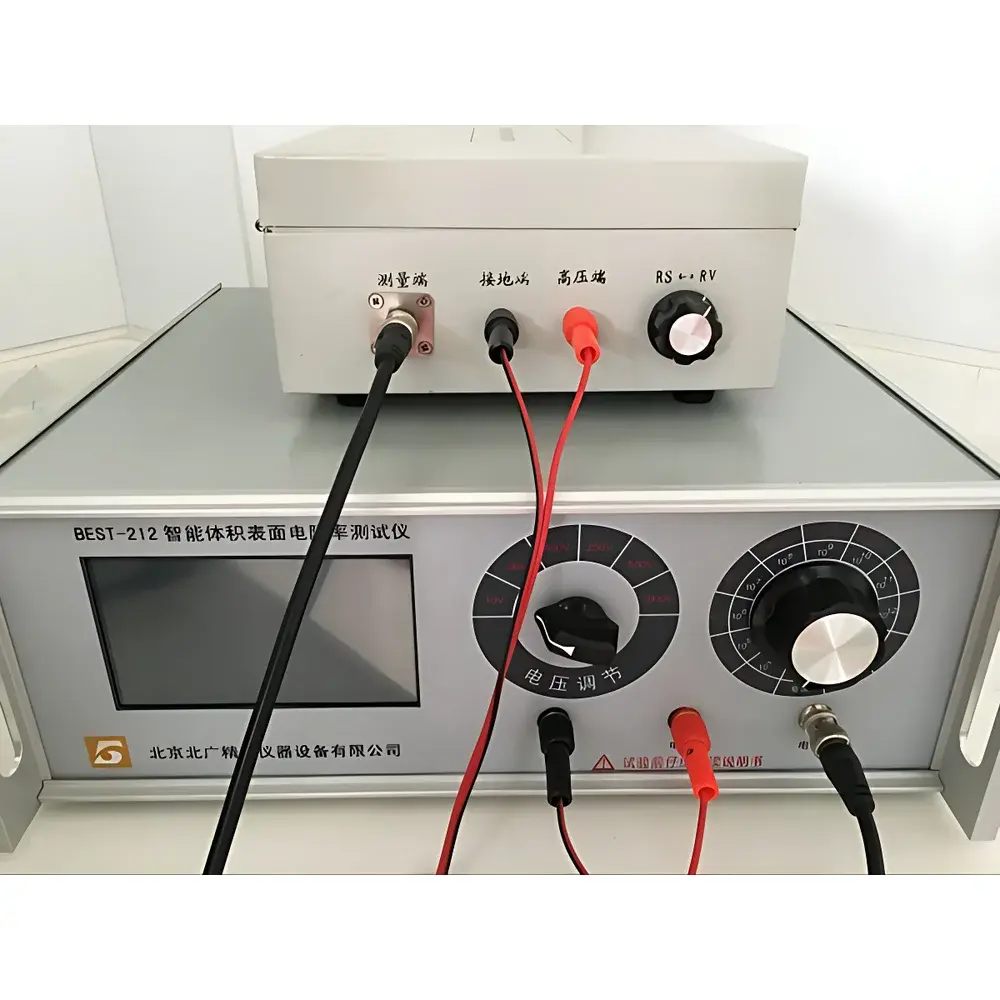
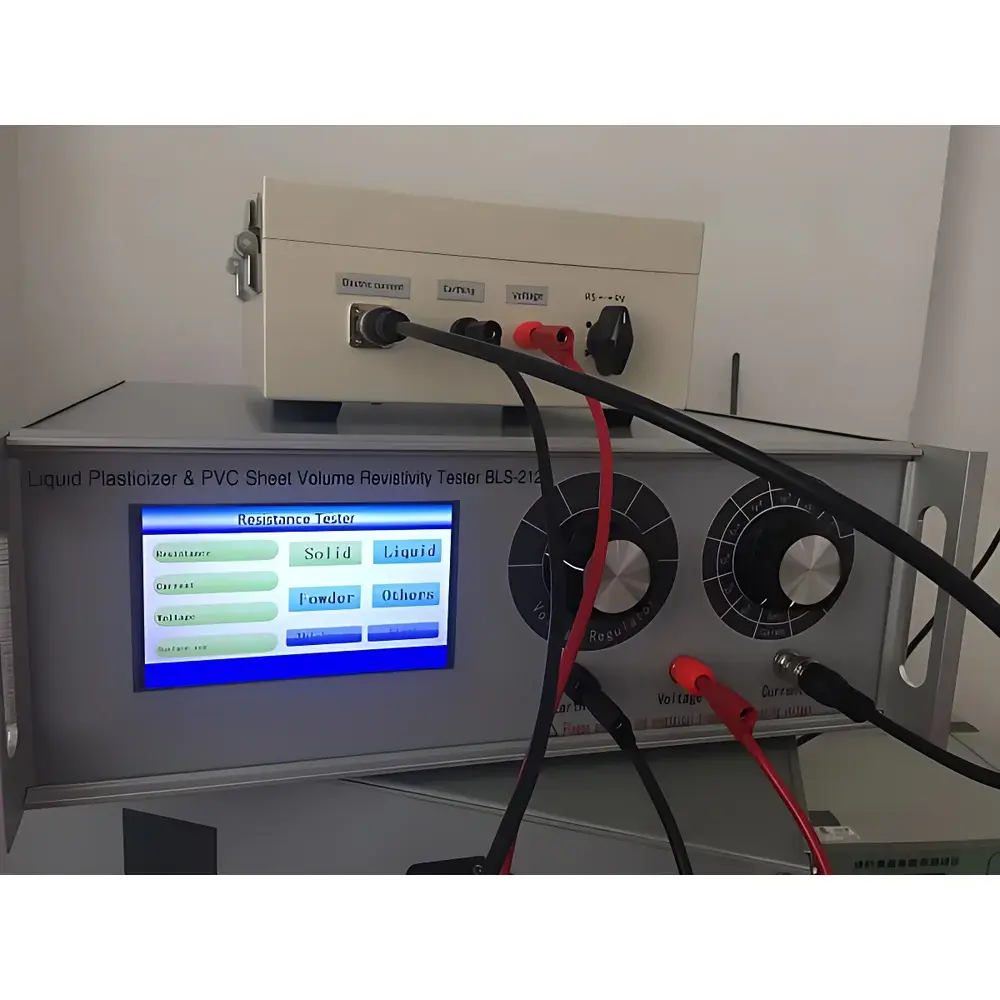
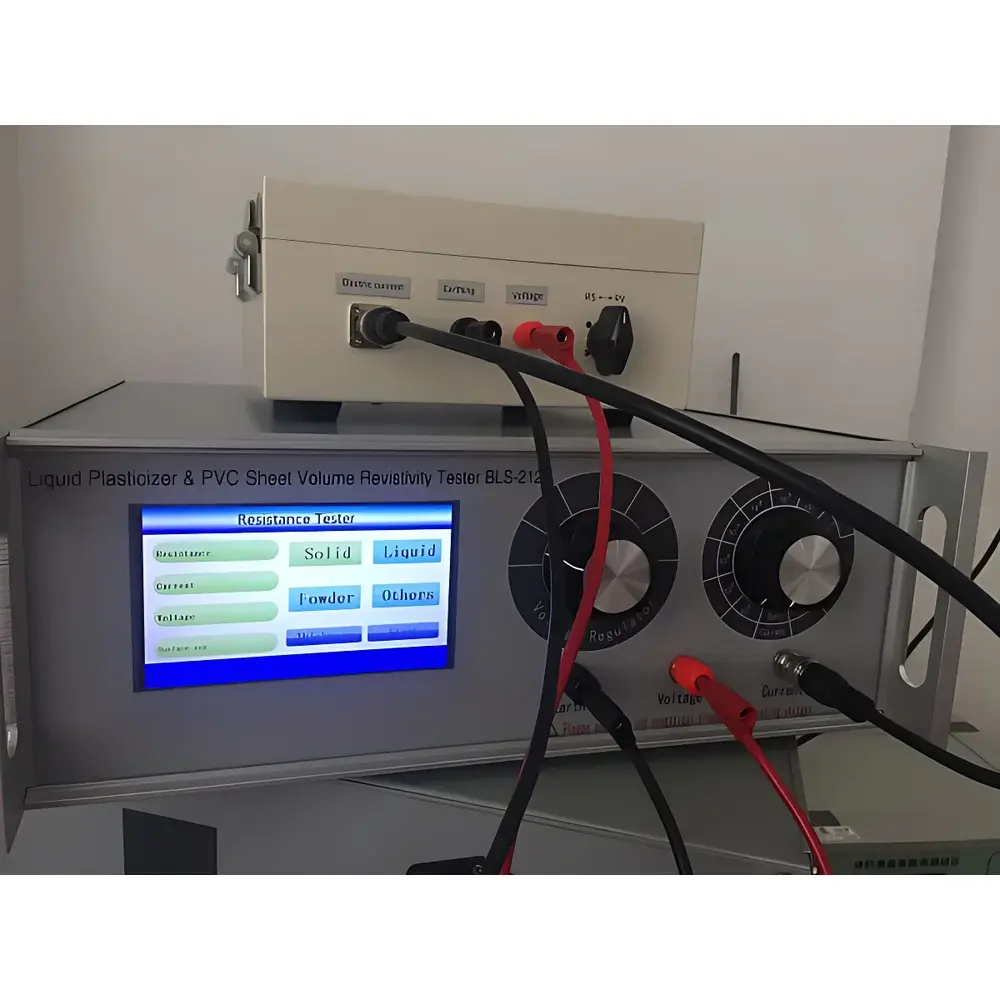
North Guang Precision Instrument BEST-212 High-Resistance Meter for Volume and Surface Resistivity Measurement of Insulating Materials
| Brand | North Guang Precision Instrument / All Precision Instrument |
|---|---|
| Origin | Beijing, China |
| Manufacturer Type | Direct Manufacturer |
| Product Origin | Domestic (China) |
| Model | BEST-212 |
| Pricing | Upon Request |
Overview
The North Guang Precision Instrument BEST-212 High-Resistance Meter is a precision digital instrument engineered for the accurate measurement of volume resistivity (ρv) and surface resistivity (ρs) of solid, powdered, and liquid insulating materials. It operates on the fundamental principle of Ohm’s Law (R = V/I), employing simultaneous high-precision analog-to-digital acquisition of applied DC test voltage (100 V to 1000 V) and resulting current (2 × 10⁻⁴ A to 1 × 10⁻¹⁶ A). Unlike conventional electrometer-based high-resistance meters relying on fixed-voltage or analog-scale methods, the BEST-212 uses real-time V/I ratio computation via integrated high-stability operational amplifiers and low-noise current-sensing circuitry—ensuring linearity, repeatability, and immunity to source voltage drift or load-dependent nonlinearity. Its measurement range spans 1 × 10⁴ Ω to 1 × 10¹⁸ Ω with a basic accuracy of ±1% (at 23 °C ±5 °C, RH ≤70%, after 30-min warm-up), making it suitable for characterizing ultra-high-resistivity polymers, elastomers, ceramics, composites, and antistatic coatings used in electronics, aerospace, energy, and cleanroom environments.
Key Features
- Dual-parameter digital display: Simultaneous LED readout of resistance (Ω) and current (A) on a 3½-digit display, eliminating manual scaling or coefficient correction.
- Programmable DC test voltages: Four selectable levels (100 V, 250 V, 500 V, 1000 V) compliant with ASTM D257 and GB/T 1410 test protocols; voltage selection is hardware-latched to prevent accidental change during measurement.
- Ultra-low current detection architecture: Optimized guarded-input electrometer stage with <1 fA input bias current and <0.5 fA RMS noise floor, enabling stable sub-picoampere measurements under shielded conditions.
- Integrated guarding and shielding design: Includes a conductive Faraday cage (shielding box) and triaxial cabling interface to suppress surface leakage and electromagnetic interference—critical for reliable >1012 Ω measurements.
- Thermal and humidity compensation awareness: Built-in environmental monitoring interface (optional external sensor) supports post-test correction per ISO 291 and ASTM D257 Annex A1 guidelines for temperature/humidity effects on resistivity.
- Robust mechanical construction: Compact desktop form factor (285 × 245 × 120 mm), aluminum chassis with EMI gasketing, and 2.5 kg mass for vibration damping in lab environments.
Sample Compatibility & Compliance
The BEST-212 supports standardized electrode configurations—including concentric ring (for surface resistivity per ASTM D257 Section 11), guarded two-terminal (for volume resistivity per ASTM D257 Section 10), and parallel plate (for thin films and sheets per GB/T 1410)—via interchangeable electrode kits. It accommodates solids (e.g., rubber sheets, polymer plaques), powders (in compression cells), and liquids (using immersion electrodes). All measurements adhere to international standards including ASTM D257-99 (Standard Test Methods for DC Resistance or Conductance of Insulating Materials), GB/T 1410-2006, GB/T 2439-2001, GB/T 10581-2006, GB/T 1692-2008, GB/T 12703.4-2010, and GB/T 10064-2006. The instrument’s traceable calibration protocol aligns with ISO/IEC 17025 requirements, and its electrical safety design conforms to IEC 61010-1:2010 (Measurement Category II, Pollution Degree 2).
Software & Data Management
While the BEST-212 operates as a standalone benchtop instrument, its analog output (0–2 V proportional to log10(R)) and RS-232 serial interface enable integration with laboratory data acquisition systems (e.g., LabVIEW, MATLAB, or custom Python scripts) for automated logging, statistical process control (SPC), and audit-ready reporting. When paired with compliant software, the system supports electronic signatures, user access levels, and full 21 CFR Part 11-compliant audit trails—including timestamped operator ID, test voltage, dwell time, and raw V/I pairs—for GLP/GMP-regulated environments. All stored calibration constants and configuration parameters are retained in non-volatile memory with battery backup.
Applications
- Quality control of insulating polymers and elastomers (e.g., silicone rubber, EPDM, PTFE) for power transmission components and medical device housings.
- Evaluation of antistatic additives in plastics and fibers per ISO 6359 and IEC 61340-2-3.
- Resistivity mapping of semiconductor packaging substrates and printed circuit board laminates.
- Characterization of dielectric layers in capacitors, batteries, and fuel cells.
- Research into charge transport mechanisms in organic semiconductors, perovskites, and nanocomposites.
- Validation of electrostatic discharge (ESD) protective flooring, footwear, and work surfaces per ANSI/ESD S20.20 and IEC 61340-4-1.
- Dark current measurement in photodiodes and avalanche photodetectors.
FAQ
What is the difference between volume resistivity and surface resistivity?
Volume resistivity quantifies bulk conduction through the material cross-section (unit: Ω·m); surface resistivity measures lateral conduction along the material interface (unit: Ω/sq). Surface values are highly sensitive to contamination, moisture adsorption, and surface topology.
Why is guarding essential for measurements above 1012 Ω?
Guarding diverts surface leakage currents away from the measurement path using an equipotential conductor surrounding the active electrode—reducing error from stray capacitance and humidity-induced surface conduction.
Does the instrument support automatic polarization correction?
No. The BEST-212 performs static DC measurements only. For materials exhibiting strong dielectric absorption or conductivity relaxation (e.g., aged polymers), users must apply standardized charge time protocols (e.g., 60 s per ASTM D257) and manually record stabilized readings.
Can it measure conductivity directly?
Yes—conductivity (σ) is derived as σ = 1/ρ. Users calculate volume conductivity (S/m) from measured volume resistivity (Ω·m), and surface conductivity (S/sq) from surface resistivity (Ω/sq), both referenced to 23 °C unless corrected.
Is calibration traceable to national standards?
Yes. Factory calibration uses NIST-traceable high-value resistors (106–1014 Ω) and picoammeter standards. Certificate of Calibration includes uncertainty budgets per ISO/IEC 17025 Annex A.
Related Products



