
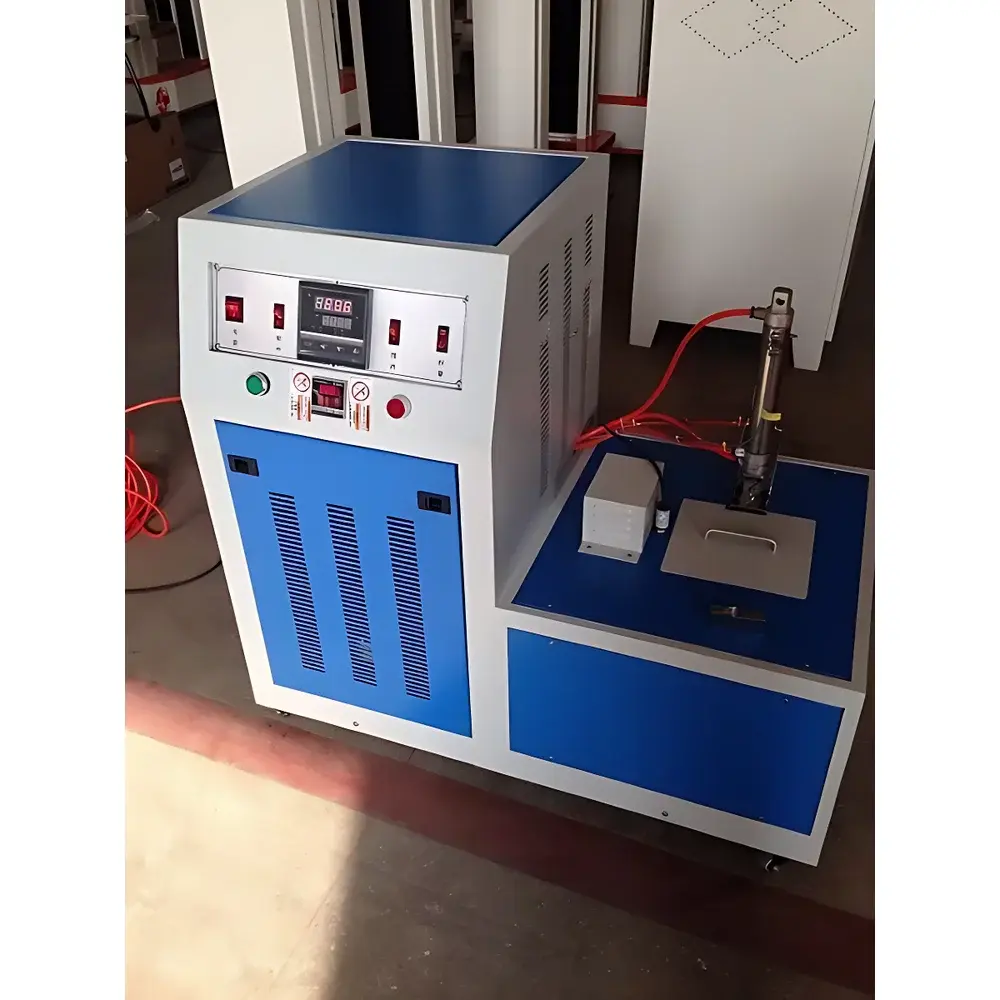
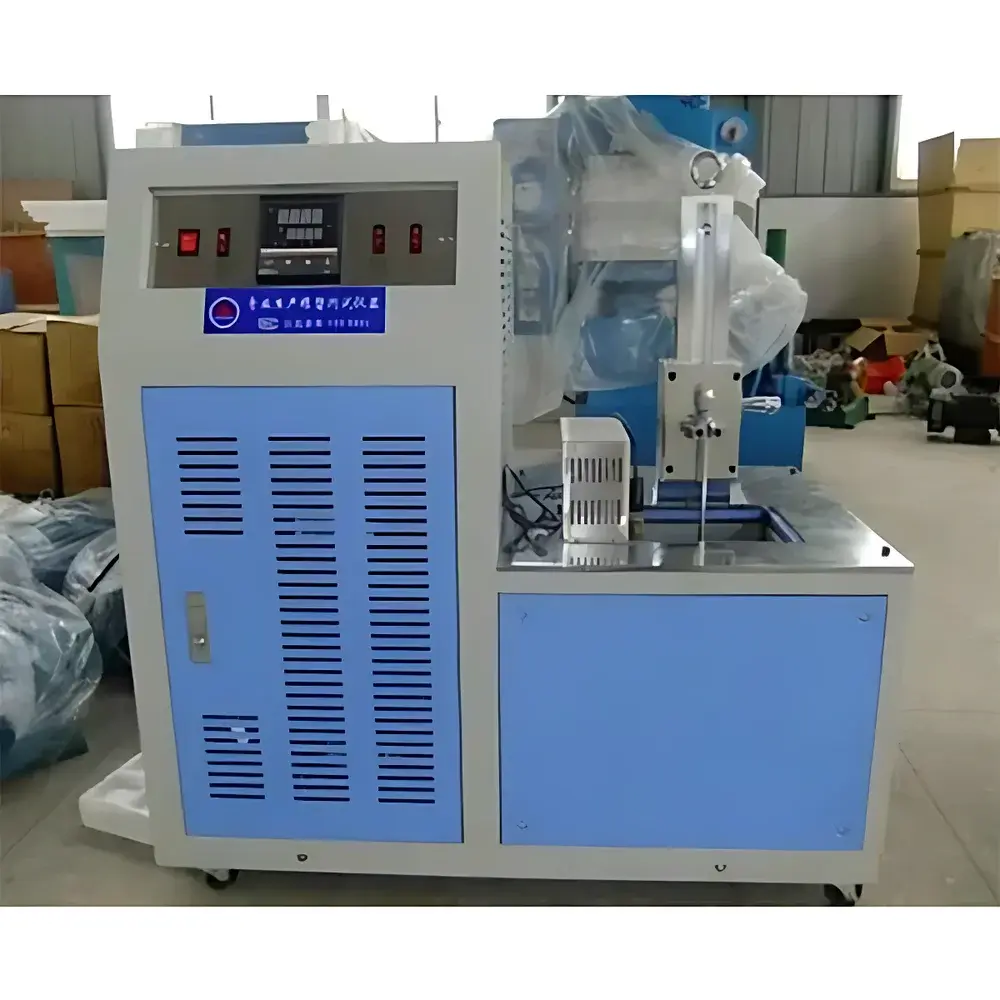
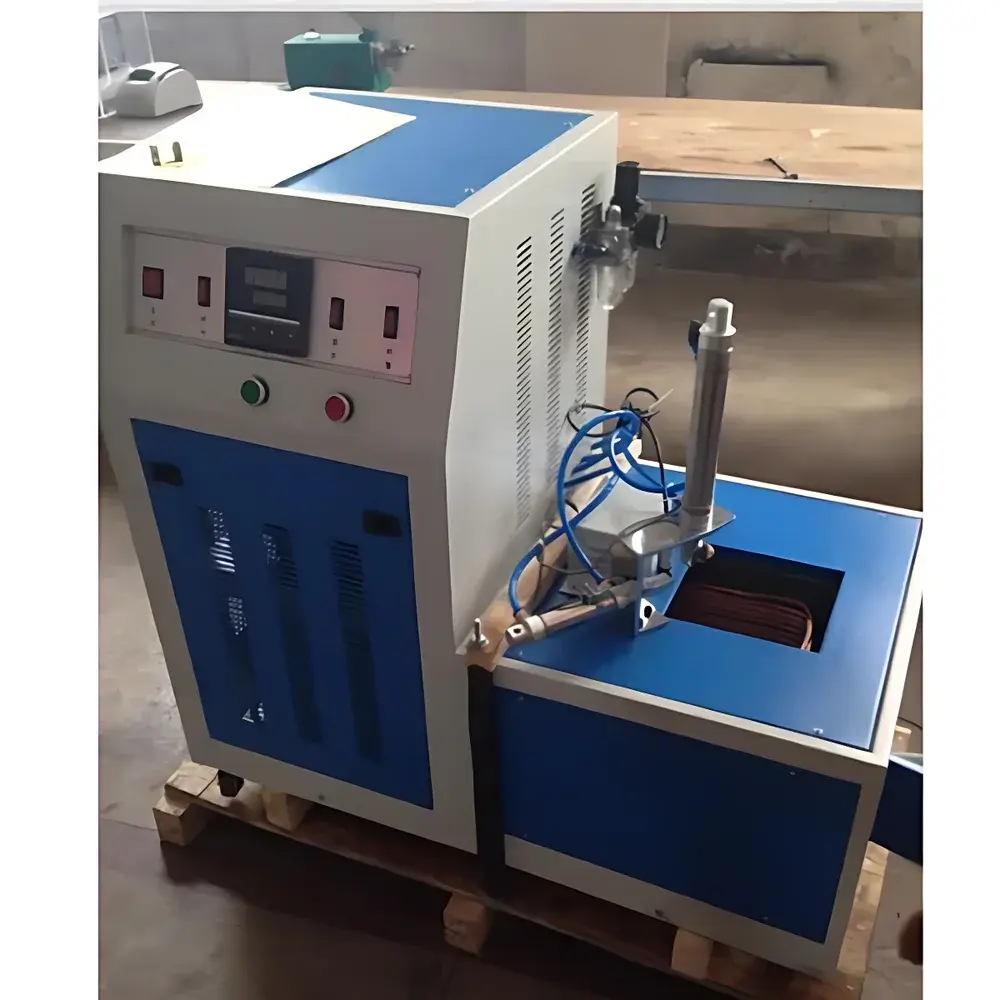
All Precision Instrument BWD-C Heavy-Duty Hammer-Type Low-Temperature Brittleness Tester for Rubber and Plastics
| Key | Brand: All Precision Instrument |
|---|---|
| Model | BWD-C |
| Origin | Beijing, China |
| Manufacturer Type | Direct Manufacturer |
| Compliance | GB 1682, GB 5470–2008, HG 2-162–1965 |
| Temperature Range | Ambient to –70 °C (ambient ≤25 °C) |
| Temperature Stability | ±0.3 °C |
| Cooling Rate | ~2.5 °C/min (0 to –30 °C), ~2.5 °C/min (–30 to –40 °C), ~2.0 °C/min (–40 to –70 °C) |
| Internal Chamber Dimensions | 280 × 170 × 120 mm (L×W×H) |
| External Dimensions | 900 × 500 × 800 mm (L×W×H) |
| Sample Capacity | 1 test fixture (4 rubber or 15 plastic specimens per cycle) |
| Timer Range | 0–99 min, 1 s resolution |
| Impact Head Radius | 1.6 ± 0.1 mm |
| Impact Gap | 6.4 ± 0.3 mm |
| Centerline Offset | 8 ± 0.3 mm |
| Cooling Medium | Industrial ethanol or non-freezing liquid |
| Circulation Motor | 8 W |
| Power Supply | 220–240 V AC, 50 Hz, 1.5 kW |
| Operating Ambient | ≤25 °C |
| Cooling System | Compressor-based with proportional heating compensation |
| Stirring | Continuous circulation for thermal uniformity |
| Safety | Integrated over-temperature and low-coolant-level alarm |
Overview
The All Precision Instrument BWD-C Heavy-Duty Hammer-Type Low-Temperature Brittleness Tester is a precision-engineered laboratory instrument designed to determine the brittle temperature (Tb) of elastomeric and thermoplastic materials in accordance with internationally recognized standards—including GB 1682, GB 5470–2008, and HG 2-162–1965. It operates on the principle of impact-induced fracture under controlled cryogenic conditions: specimens are preconditioned at progressively decreasing temperatures in a thermally stabilized ethanol bath, then subjected to a standardized mechanical impact from a calibrated hammer. The highest temperature at which brittle fracture occurs—defined as visible cracking or splitting upon bending to 180° post-impact—is recorded as the material’s brittle point. This method provides a reproducible, comparative metric for low-temperature performance, essential for qualifying materials used in automotive sealing systems, wire & cable insulation, aerospace gaskets, and cold-climate infrastructure components.
Key Features
- Compressor-driven refrigeration system with proportional heating compensation ensures stable thermal control within ±0.3 °C across the full operating range (ambient to –70 °C), critical for ASTM D746 and ISO 974 compliance pathways.
- Dual-mode specimen holder accommodates either four rubber test strips (per ASTM D2137) or fifteen plastic specimens (per GB 5470), enabling efficient batch evaluation without fixture interchange.
- Calibrated impact assembly features a hardened steel hammer head with radius 1.6 ± 0.1 mm, fixed gap (6.4 ± 0.3 mm) and centerline offset (8 ± 0.3 mm) to meet dimensional tolerances specified in national and industry test methods.
- Integrated digital timer (0–99 min, 1 s resolution) synchronized with lift-and-drop actuation enables precise adherence to mandatory preconditioning durations (e.g., 3.0 ± 0.5 min per GB 1682).
- Continuous cooling-medium circulation via 8 W stirring motor guarantees homogeneous temperature distribution throughout the 280 × 170 × 120 mm test chamber—eliminating thermal stratification that could compromise result repeatability.
- Real-time monitoring includes audible/visual alarms for coolant level depletion, compressor fault, or temperature deviation exceeding ±1 °C during freezing cycles—supporting GLP-compliant operation.
Sample Compatibility & Compliance
The BWD-C supports standard dumbbell- or strip-shaped specimens per ISO 37, ASTM D412, GB/T 528, and GB/T 1040. It is validated for vulcanized rubbers (NR, SBR, EPDM, CR), thermoplastic elastomers (TPE, TPU), rigid PVC, ABS, and polyolefin compounds. All mechanical and thermal parameters align with requirements for regulatory submission in automotive OEM specifications (e.g., VW TL 52398, GMW 15635) and electrical insulation qualification (IEC 60811-504). The system’s documented thermal stability, impact energy consistency, and traceable calibration protocol support audit readiness under ISO/IEC 17025 and FDA 21 CFR Part 11–enabled data integrity frameworks when paired with validated external logging software.
Software & Data Management
While the BWD-C operates via embedded microcontroller with front-panel LED interface (no proprietary software required), it is fully compatible with third-party LIMS and ELN platforms via RS-232 or optional USB-to-serial adapter. Raw temperature logs, timer stamps, and pass/fail outcomes per test cycle can be exported in CSV format for traceability. When integrated into a validated QA/QC environment, users may implement electronic signatures, audit trails, and version-controlled test method templates—meeting ALCOA+ principles for data reliability. Calibration certificates for temperature sensors (PT100 class A) and impact geometry gauges are provided with each unit, with recommended recalibration intervals of 12 months or per internal SOP.
Applications
This tester serves critical roles in R&D formulation screening, incoming raw material verification, in-process quality control, and final product release testing. Typical use cases include: evaluating low-temperature flexibility of EPDM roof membranes per ASTM D6389; validating cold-weather performance of silicone O-rings in medical devices; assessing brittleness onset in halogen-free flame-retardant cables (IEC 60811-504); comparing batch-to-batch consistency of nitrile glove compounds; and supporting failure analysis of polymer components recovered from field returns in sub-zero environments. Its robust architecture and deterministic mechanical actuation make it suitable for ISO 17025-accredited laboratories requiring ≥95% inter-laboratory reproducibility in brittle point determination.
FAQ
What cooling medium is recommended for optimal performance?
Industrial-grade anhydrous ethanol is the default medium specified in GB 1682 and ASTM D746. Alternatives such as propylene glycol–water mixtures may be used if compatibility with specimen chemistry is confirmed—but viscosity and thermal conductivity must remain within ±10% of ethanol’s baseline values to maintain prescribed cooling rates.
Can the BWD-C be operated continuously for extended qualification campaigns?
Yes—the compressor and circulation system are rated for uninterrupted duty cycles up to 8 hours, provided ambient temperature remains ≤25 °C and ventilation clearance (≥150 mm rear/side) is maintained per IEC 61000-3-2 harmonic emission guidelines.
Is operator training required for GLP-compliant usage?
While basic operation requires minimal instruction, formal training covering calibration verification, preventive maintenance logs, deviation reporting, and raw data transcription is strongly advised for laboratories operating under GLP, GMP, or ISO 17025 mandates.
How is thermal uniformity verified across the test chamber?
Uniformity is validated using NIST-traceable multi-point thermocouple mapping (≥9 spatial locations) per ISO/IEC 17025 clause 6.4.2; results must demonstrate ≤0.5 °C maximum deviation at any setpoint between –20 °C and –70 °C.
Does the system support automated temperature ramping protocols?
No—the BWD-C implements manual stepwise temperature adjustment per standard test methods. However, its stable thermal inertia and precise timer enable highly repeatable sequential testing across discrete setpoints (e.g., –30 °C → –35 °C → –40 °C) with minimal operator intervention.



