
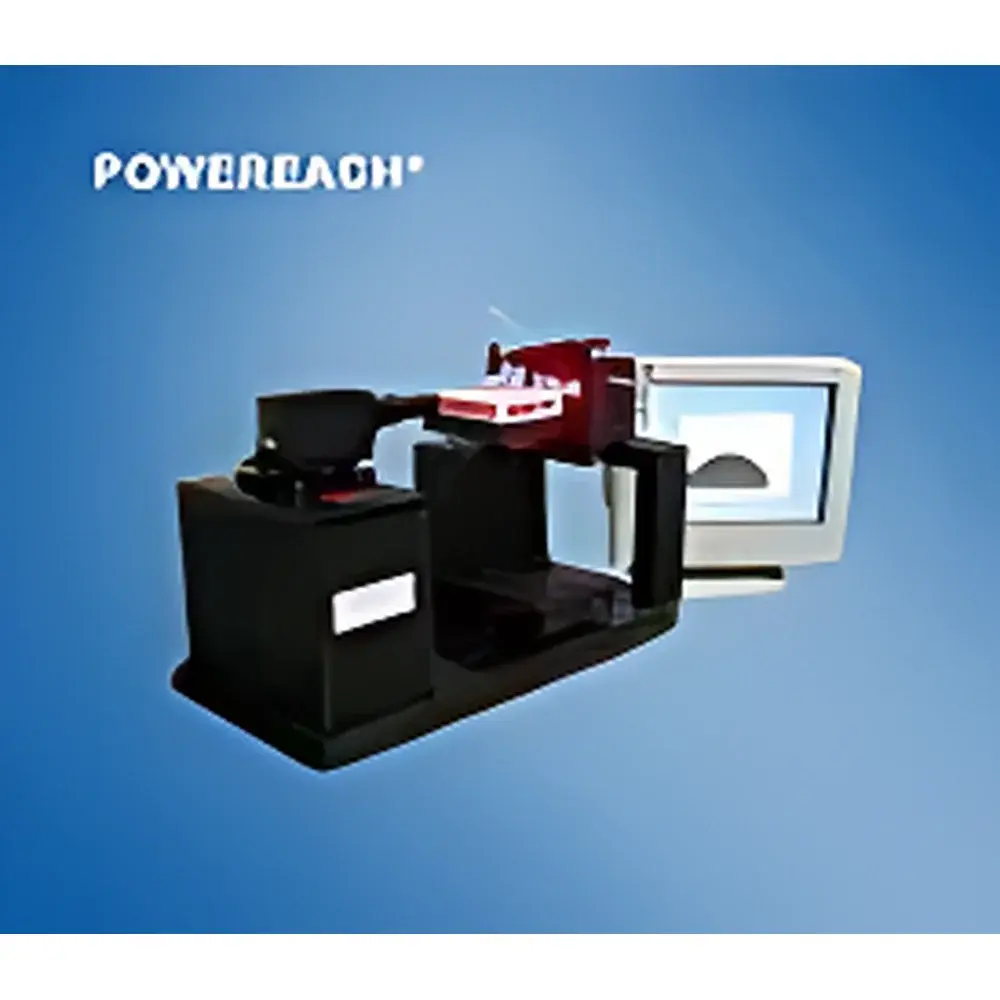
JC2000C Contact Angle Meter
| Origin | Guangdong, China |
|---|---|
| Manufacturer Type | Authorized Distributor |
| Origin Category | Domestic (PRC) |
| Model | JC2000C |
| Pricing | Available Upon Request |
| Stage Platform | 100 × 100 mm |
| Motion Control | Manual or Motorized 3-Axis Translation Stage |
| Dispensing System | Manual or Automated Syringe Pump |
| Imaging | Digital CCD Camera (25 fps) |
| Tilt Capability | Adjustable CCD Mount |
| Optical Lens | Continuous Zoom Lens (0.7×–4.5×), Domestic or Imported |
| Optional Heating Stage | Ambient to 100 °C |
| Optional Sample Oscillation Stage | ±15° |
| Optional Accessories | Fiber Holder, Fabric Tension Frame, Plate Insertion Module, Pendant Drop Module |
Overview
The JC2000C Contact Angle Meter is a precision optical instrument engineered for quantitative characterization of solid–liquid–gas interfacial interactions via static and dynamic contact angle measurement. Based on the fundamental principle of sessile drop analysis—where a precisely dispensed liquid droplet rests on a solid substrate—the system captures high-resolution side-view images to determine the tangent angle formed between the liquid–vapor interface and the solid surface at the three-phase contact line. This geometric parameter directly reflects the wettability and surface energy state of the material, making the JC2000C indispensable in nanomaterial surface functionalization, thin-film coating development, biomaterial compatibility assessment, and quality control of hydrophobic/hydrophilic treatments. The instrument operates under ambient laboratory conditions and supports optional thermal, rotational, and oscillatory sample manipulation to simulate real-world service environments—including temperature-dependent wetting transitions and anisotropic surface behavior.
Key Features
- Modular mechanical architecture with interchangeable motion modules: manual or motorized 3-axis translation stage (X/Y/Z) for precise sample positioning and repeatable alignment.
- High-stability optical path incorporating a continuous zoom lens (0.7×–4.5×) with calibrated magnification scaling—available in domestic or imported configurations to meet resolution and aberration tolerance requirements.
- Digital CCD imaging system operating at 25 frames per second, enabling time-resolved capture of dynamic wetting processes such as advancing/receding contact angle evolution, drop spreading kinetics, and absorption dynamics.
- Adjustable CCD tilt mount for optimized image geometry across non-planar or textured surfaces, minimizing parallax error during contact line detection.
- Optional auxiliary hardware: heated stage (ambient to 100 °C) for thermally activated surface energy studies; ±15° oscillating stage for hysteresis quantification; dual-axis (vertical/horizontal) 360° rotation stages for directional wettability mapping; fiber holder and fabric tension frame for textile and fibrous substrates.
- Integrated pendant drop module for independent surface tension determination of pure liquids or formulations, supporting method validation and interfacial property cross-correlation.
Sample Compatibility & Compliance
The JC2000C accommodates a broad spectrum of solid substrates without requiring vacuum or conductive coating: rigid solids (metals, ceramics, polymers), flexible films, woven/nonwoven textiles, pressed powder compacts, and microstructured surfaces. Its open-stage design permits rapid sample exchange and in situ environmental adaptation. While not certified to ISO 19403 or ASTM D7334 by default, the system’s measurement methodology aligns with these standards’ core principles for contact angle determination. When configured with audit-trail-enabled software and electronic signature support, it can be validated for GLP-compliant laboratories and integrated into FDA 21 CFR Part 11–aligned quality management systems. Calibration verification is performed using standard reference surfaces (e.g., PTFE, silicon wafer) traceable to NIST-maintained protocols.
Software & Data Management
The proprietary acquisition and analysis suite provides full instrument control, synchronized video capture, and multi-method contact angle computation. Supported algorithms include: tangent-based angle measurement (manual and automated), height-based calculation for curved or tilted substrates, five-point polynomial fitting for advancing, receding, and roll-off angles, and image segmentation–driven edge detection for heterogeneous surfaces. Additional capabilities include pendant drop shape analysis (Young–Laplace fitting) for surface/interfacial tension, automated sequential imaging with user-defined time intervals, high-speed frame buffering during dispensing, and multi-liquid surface energy estimation (Owens–Wendt, Wu, van Oss–Chaudhury–Good models). All raw images, metadata, and processed results are stored in a relational database with export to CSV, PNG, and PDF formats. Version-controlled software updates ensure long-term reproducibility and regulatory traceability.
Applications
- Surface modification R&D: evaluation of plasma treatment, silanization, grafting efficiency, and self-assembled monolayer formation.
- Coating & ink formulation: optimization of adhesion, leveling, and substrate penetration behavior across automotive, packaging, and printed electronics sectors.
- Biomedical materials: assessment of cell-adhesive surfaces, antifouling polymer coatings, and drug-eluting stent wettability profiles.
- Petroleum & mineral processing: characterization of rock wettability alteration in enhanced oil recovery (EOR) studies and flotation reagent screening.
- Textile engineering: quantification of water-repellency (DWR), oil repellency, and moisture management performance in technical fabrics.
- Academic instruction: hands-on training in interfacial thermodynamics, capillary phenomena, and surface energy theory within undergraduate and graduate physical chemistry or materials science curricula.
FAQ
What types of samples can be measured with the JC2000C?
Solid substrates including flat plates, powders (after compression into pellets), fibers, fabrics, and irregularly shaped objects—provided they fit within the 100 × 100 mm stage and maintain mechanical stability during imaging.
Does the system support dynamic contact angle measurements?
Yes—advancing and receding angles are determined through sequential automated dispensing and retraction cycles, with real-time video capture and frame-by-frame analysis.
Can surface energy be calculated from contact angle data?
Yes—the software implements multiple surface energy models (Owens–Wendt, Wu, van Oss–Chaudhury–Good) using contact angle inputs from at least two probe liquids with known polar and dispersive components.
Is calibration required before each measurement?
While routine calibration is not mandatory for every test, periodic verification using certified reference surfaces and standardized droplet volumes is recommended to maintain measurement integrity over extended operation.
What file formats are supported for data export?
CSV (numerical results), PNG (annotated images), and PDF (formatted reports with metadata and statistical summaries) are natively supported for documentation and regulatory submission purposes.
Related Products



