
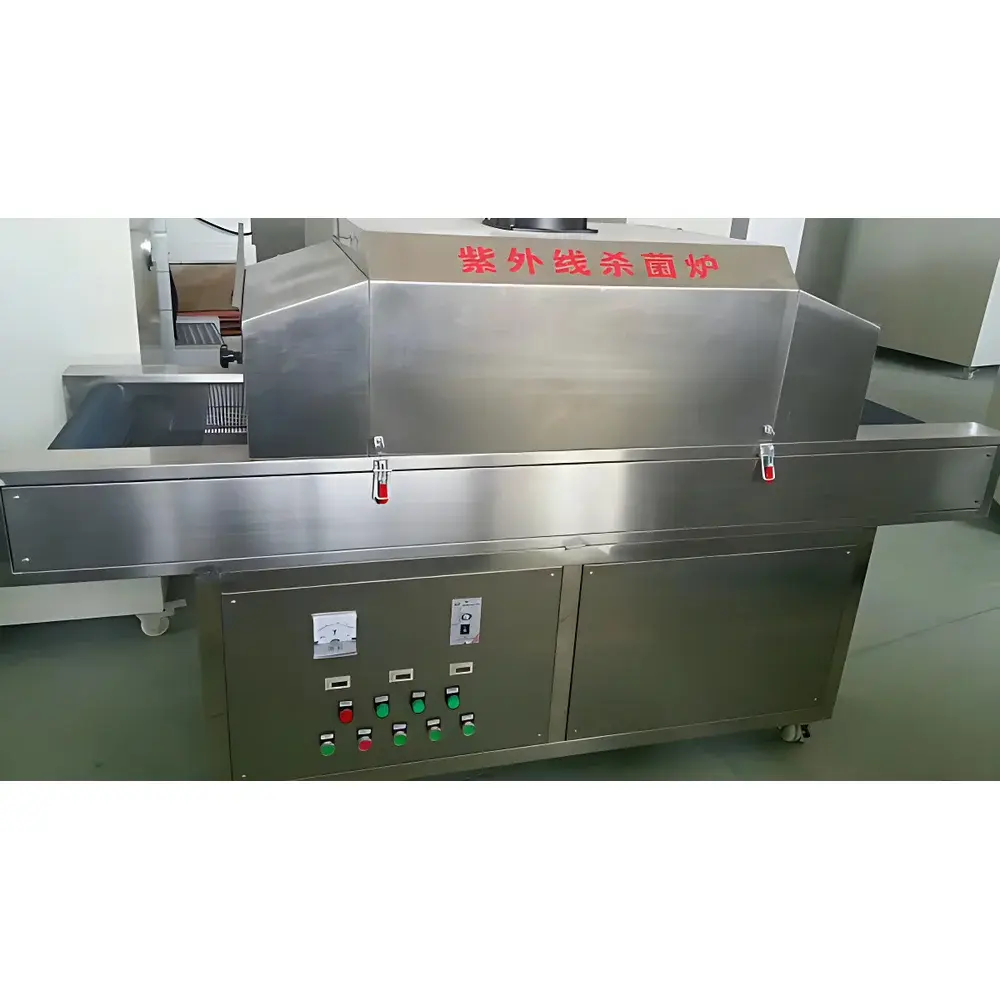
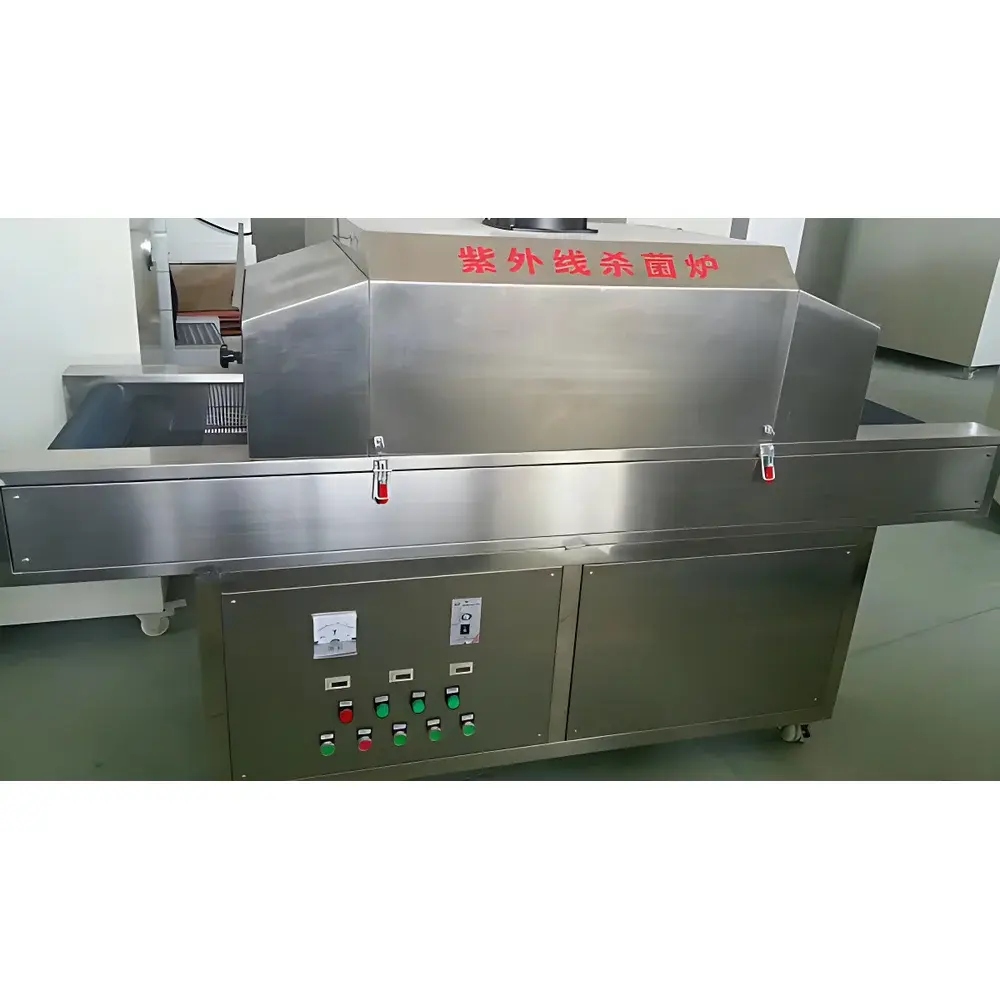
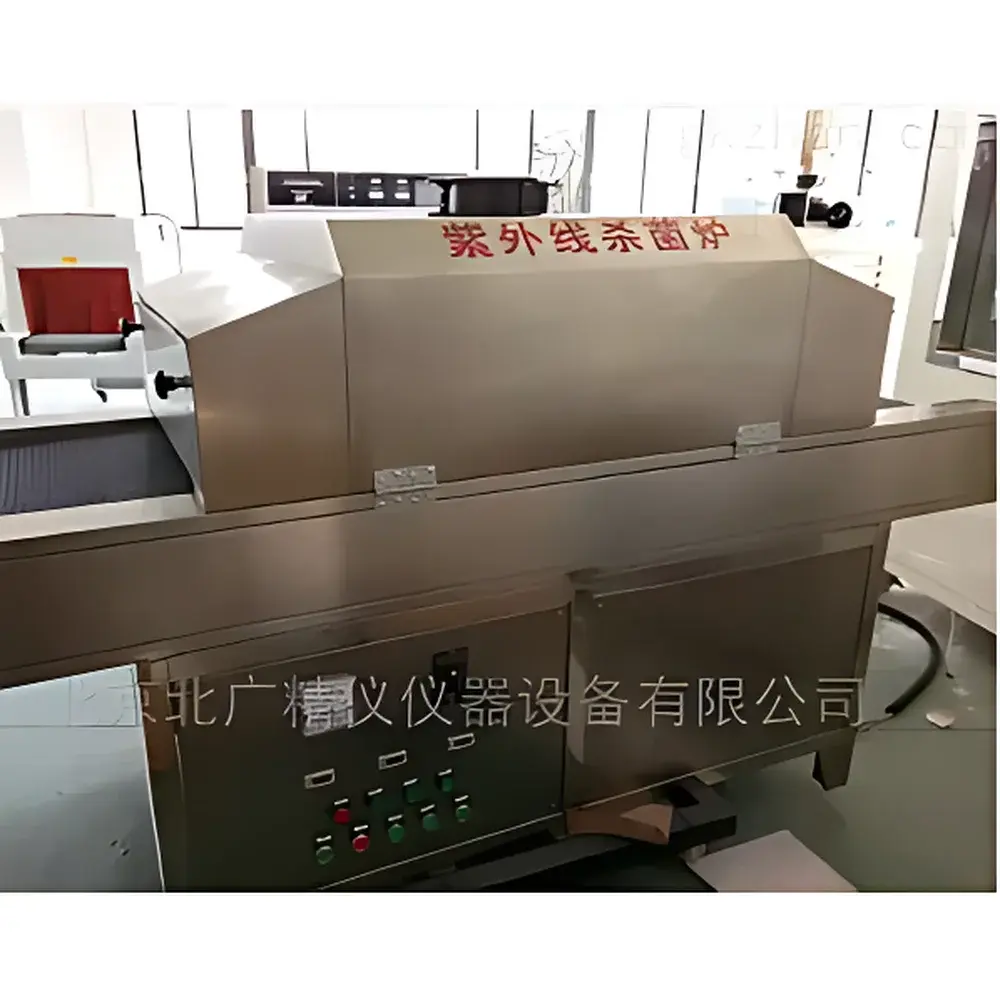
All Precision Instrument BU-800A UV Tunnel Sterilizer for Masks and Surface Disinfection
| Brand | All Precision Instrument |
|---|---|
| Model | BU-800A |
| Origin | Beijing, China |
| Manufacturer Type | OEM/ODM Producer |
| Power Supply | 220 V ±5%, 50 Hz, 2 kW |
| UV Lamp Configuration | 16 × 20 W low-pressure mercury lamps (253.7 nm peak output) |
| Conveyor Speed | 0–5 m/min (infinitely variable, digital display) |
| Tunnel Dimensions | 2000 mm (L) × 500 mm (W) × 200–300 mm (H, adjustable inlet/outlet height) |
| UV Exposure Zone | 1000 mm |
| Construction Material | 304 stainless steel (outer shell: 1.2 mm |
| inner reflective chamber | 1.0 mm mirror-finish #2B) |
| Conveyor Belt | Black PTFE-coated mesh belt |
| Safety Features | Light-shielded entry/exit zones with adjustable baffles, overvoltage/overcurrent protection, real-time lamp hour counter, fault alarm indication |
Overview
The All Precision Instrument BU-800A UV Tunnel Sterilizer is an industrial-grade, non-chemical surface disinfection system engineered for continuous batch processing of masks, medical devices, packaging materials, and other heat-sensitive consumables. It operates on the well-established principle of germicidal ultraviolet irradiation—specifically utilizing monochromatic UVC light at 253.7 nm, the wavelength of maximum DNA/RNA absorption in microorganisms. When microbial cells are exposed to this spectral band, photonic energy induces thymine dimer formation and strand breaks in nucleic acids, irreversibly disrupting replication and metabolic function. Unlike thermal or chemical methods, this physical inactivation mechanism leaves no residue, requires no dwell time for ventilation or neutralization, and avoids material degradation associated with oxidative agents. The BU-800A is designed for integration into cleanroom-adjacent production lines, meeting baseline hygiene requirements for ISO Class 7–8 environments and supporting compliance with national microbiological standards for disinfected personal protective equipment (PPE).
Key Features
- Germicidal efficiency validated against ISO 15714:2019 (UV dose delivery assessment) and aligned with USP environmental control guidance for non-sterile compounding areas.
- Optimized optical architecture: 16 high-output 20 W UVC lamps arranged in symmetrical upper/lower (5 each) and lateral (3 each) arrays, combined with mirror-polished 304 stainless steel interior surfaces (>90% UV reflectivity) to maximize photon utilization across the 1000 mm exposure zone.
- Adjustable conveyor system featuring a PTFE-coated stainless steel mesh belt, driven by a Taiwan-made Yonkun 120 W infinitely variable-speed motor with digital speed readout (0–5 m/min), precision tensioning rollers, and anti-tracking drag plates.
- Modular safety enclosure with light-tight entry/exit zones, manually adjustable shielding baffles, and interlocked door sensors to prevent operator exposure during operation.
- Integrated lamp life monitoring: Real-time hour counter per lamp group, independent on/off control for maintenance flexibility, and angle-adjustable lamp mounts to accommodate belt height variations.
- Robust mechanical construction: Structural frame fabricated from 2″ square carbon steel tubing; thermal insulation comprising dual-layer vacuum-formulated silica-alumina + glass wool (60 kg/m³ density); four locking casters for repositioning within controlled environments.
Sample Compatibility & Compliance
The BU-800A accommodates flat or semi-rigid objects up to 500 mm wide and 200 mm tall—including surgical masks, N95 respirators, gowns, trays, blister packs, and food-grade containers. Its open-tunnel design permits uninterrupted throughput without upstream sterilization bottlenecks. Microbiological validation data (per GB 4789.2–4789.5 series) confirms log3–log5 reductions in common pathogens—including Escherichia coli, Staphylococcus aureus, Salmonella spp., influenza virus, and hepatitis B virus—within defined residence times. While not intended for terminal sterilization per ISO 11137, the system supports supplemental decontamination workflows compliant with GLP/GMP Annex 1 (2022) provisions for environmental bioburden control. All electrical components conform to IEC 61000-6-3 (EMC) and IEC 61000-6-4 (immunity) standards.
Software & Data Management
The BU-800A operates as a standalone electromechanical unit with no embedded software or network interface. Critical operational parameters—including total lamp runtime, conveyor speed, and fault status—are displayed via analog meters and LED indicators. For regulated environments requiring auditability, users may integrate external PLC-based logging systems using standard 4–20 mA or dry-contact outputs (available upon request). Lamp usage data supports predictive maintenance scheduling in accordance with FDA 21 CFR Part 11 principles when paired with validated electronic record systems. Calibration certificates for UV intensity meters (e.g., ILT950) and traceable radiometric reports can be provided separately for IQ/OQ documentation.
Applications
- Hospital central supply departments: Pre-use disinfection of reusable cloth masks and face shields.
- Pharmaceutical and biotech manufacturing: Surface decontamination of primary packaging components prior to filling operations.
- Food and beverage facilities: Treatment of plastic trays, caps, and flexible packaging before sterile filling or ambient storage.
- Cosmetic and personal care production: Reduction of microbial load on applicators, spatulas, and secondary packaging.
- Research laboratories: Rapid decontamination of lab notebooks, goggles, and non-autoclavable tools between user sessions.
- Public health infrastructure: High-throughput processing of community-donated masks during pandemic response scenarios.
FAQ
Does the BU-800A achieve sterilization-level microbial reduction?
No—it delivers disinfection-level reduction (typically ≥99.9% kill rate for vegetative bacteria and enveloped viruses under validated conditions), not sterility assurance level (SAL) 10−6 required for sterilization. It is classified as a high-level disinfectant per EN 14885 definitions.
Can the system be validated for specific pathogen inactivation?
Yes. Users may conduct in-house validation studies using bioindicators (e.g., Bacillus atrophaeus spores) placed on representative substrates, following ASTM E2197 or ISO 15714 protocols. Dose mapping reports are available upon request.
What maintenance is required for sustained performance?
Lamp replacement every 8,000–9,000 hours (or annually under typical shift use); quarterly cleaning of reflective surfaces with isopropyl alcohol; biannual verification of belt tracking and motor alignment.
Is ozone generation a concern with this system?
No. The lamps emit predominantly 253.7 nm radiation; minimal 185 nm emission (<0.1% of total output) ensures negligible ozone production—confirmed by OSHA PEL-compliant air sampling during continuous operation.
Does the unit comply with CE or UL certification requirements?
The BU-800A meets general safety requirements of IEC 61010-1 and carries CCC mark for domestic China distribution. CE/UL certification is available for export configurations upon customer-specified conformity assessment pathways.



