
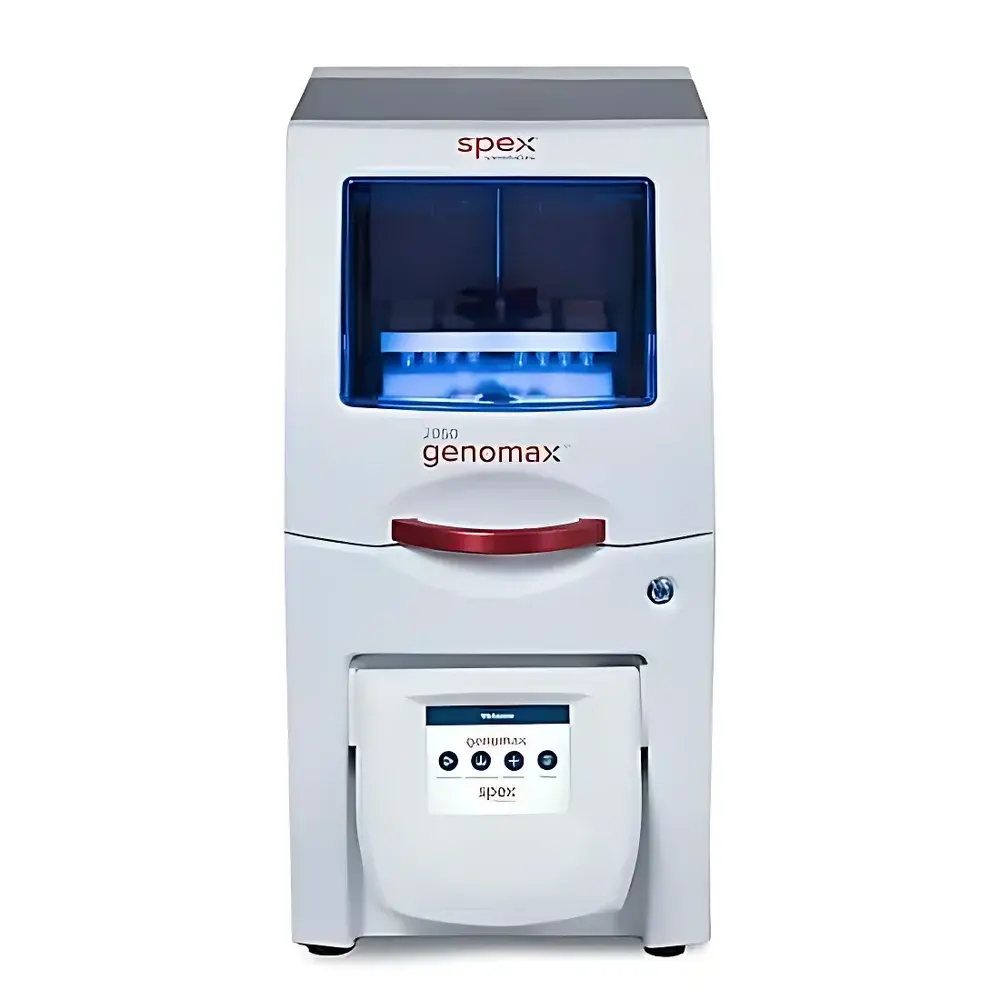
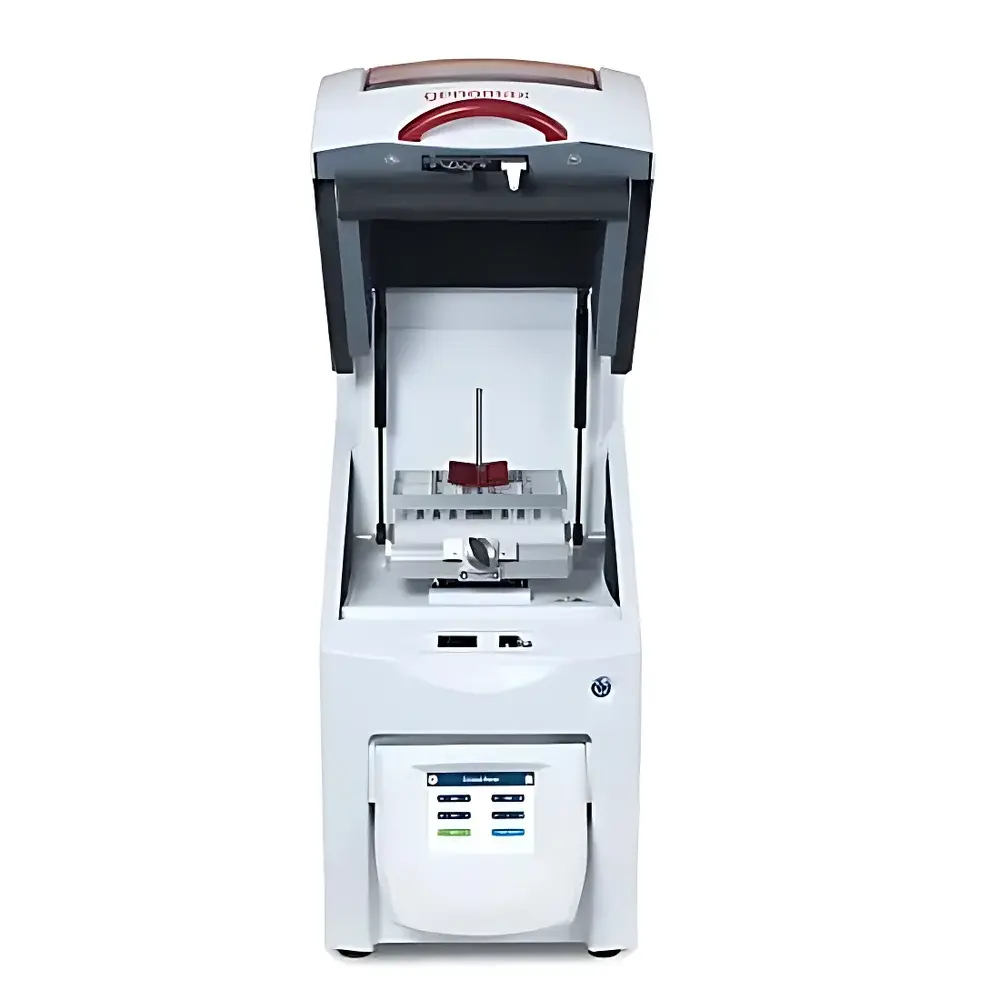
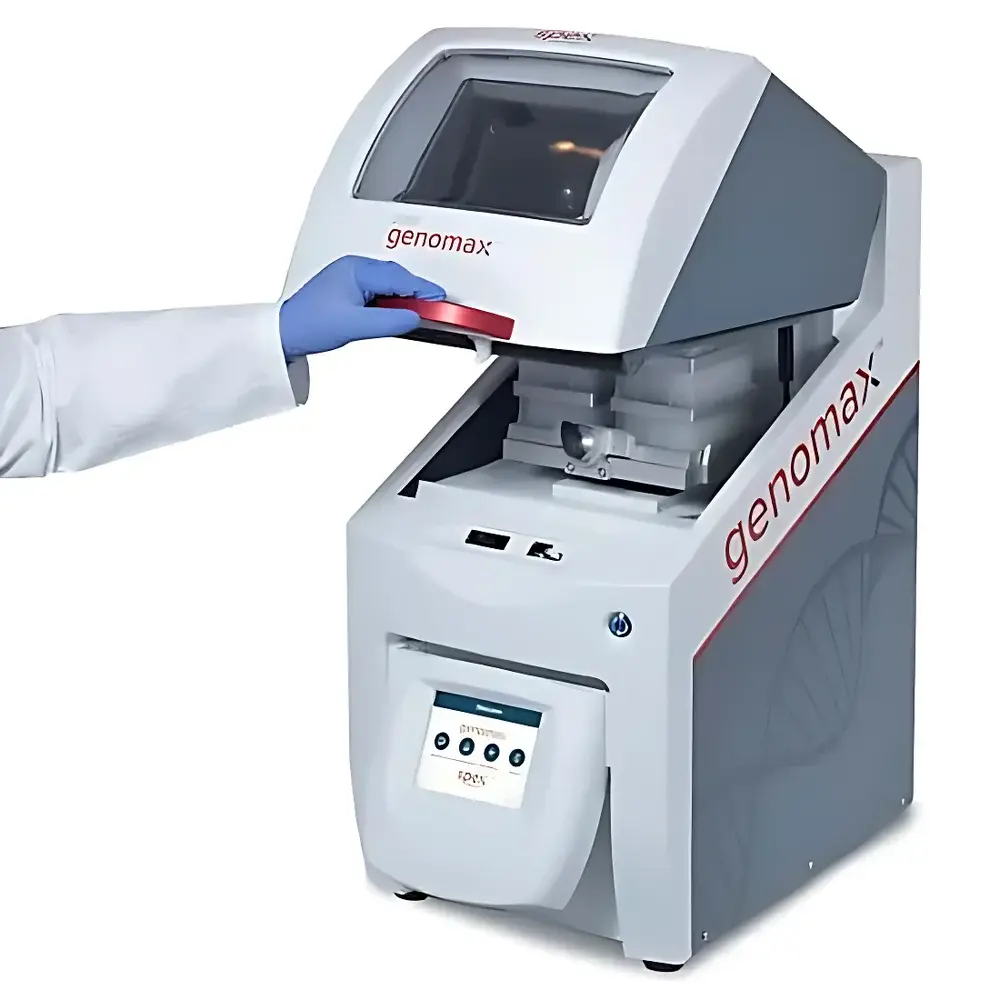
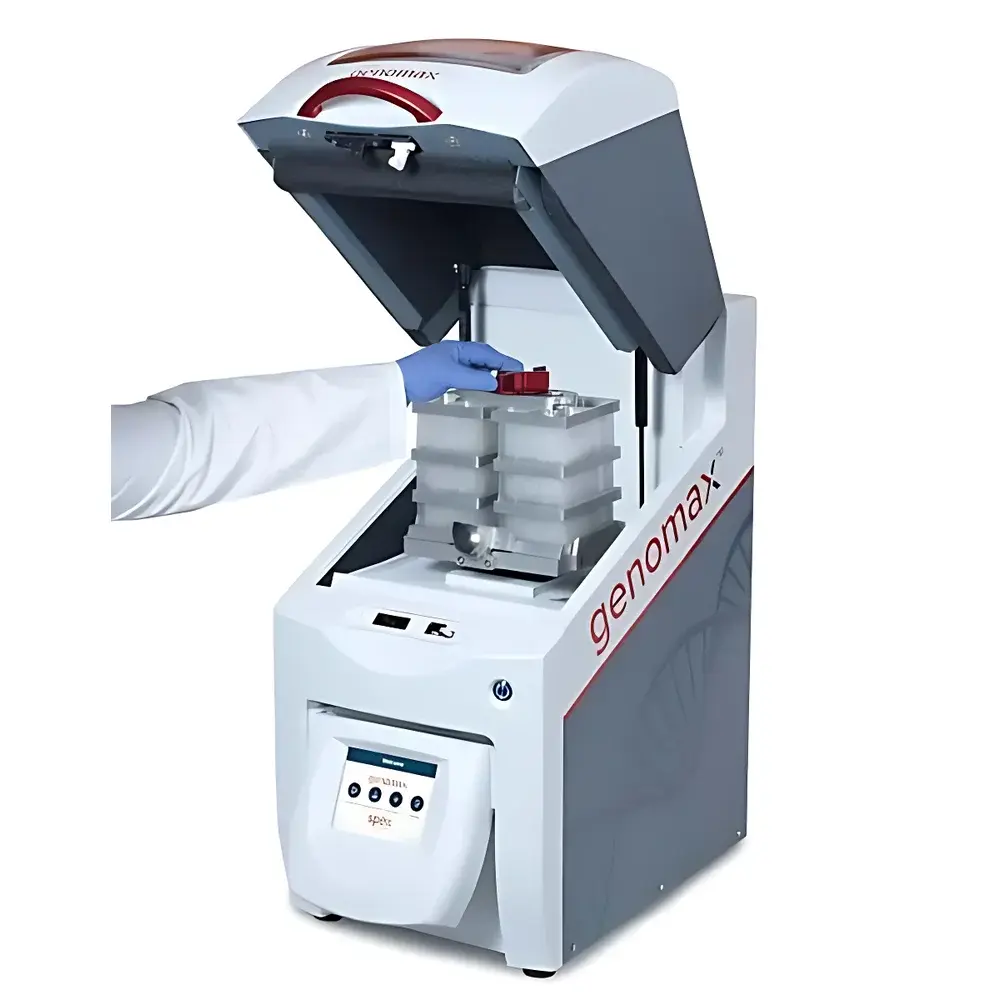
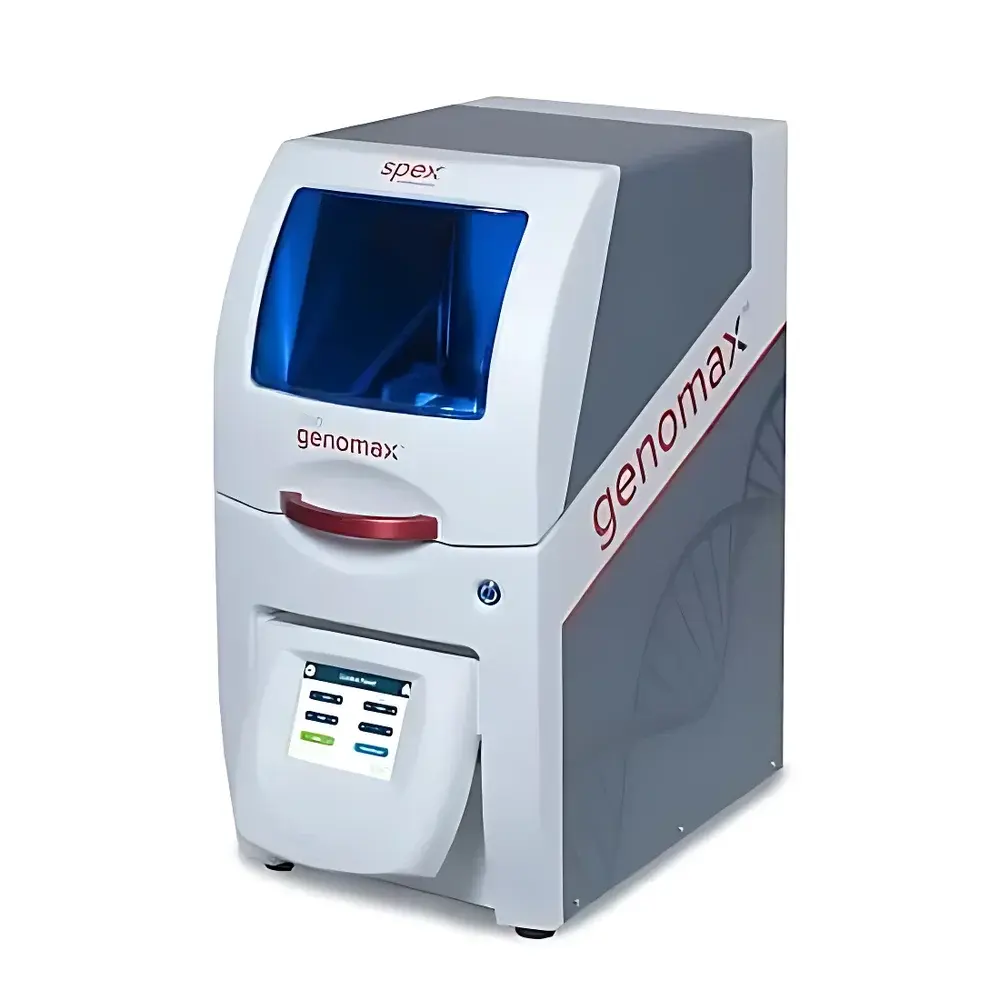
Spex SamplePrep 2050-230 Genomax High-Throughput Tissue Grinder
| Brand | SPEX SamplePrep |
|---|---|
| Origin | USA |
| Model | 2050-230 |
| Voltage | 230 V / 50 Hz |
| Clamp Stroke | 3.2 cm |
| Speed Range | 500–1750 cycles/min |
| Timer | Digital, 00:01–20:00 (min:sec) |
| Dimensions (W×D×H) | 135.6 × 57.2 × 71.1 cm |
| Net Weight | 45.5 kg |
| Motor | 0.5 HP |
| Compatible Fixtures | 2051 Universal Bottle Clamp, 2052 Deep-Well Plate Clamp, 2205-50 Reinforced Deep-Well Plates, 2206-50 Sealing Plate Covers |
| Compliance | Designed for GLP/GMP-aligned workflows |
Overview
The Spex SamplePrep 2050-230 Genomax is a high-throughput, programmable tissue grinder engineered for reproducible mechanical lysis of biological samples via bead-based homogenization. Operating on the principle of high-frequency horizontal oscillation—where sample tubes or microplates are subjected to rapid, controlled reciprocating motion against grinding beads—the instrument delivers consistent shear forces essential for efficient cellular disruption. Unlike rotor-stator or probe-based systems, the Genomax’s clamp-driven architecture eliminates cross-contamination risk and ensures uniform energy transfer across heterogeneous sample types. Its design prioritizes thermal management and process integrity: optional Kryo-Tech® cryogenic accessories enable sub-zero operation (–80 °C), preserving labile nucleic acids and native protein conformations during lysis. The system is validated for use in regulated environments where traceability and procedural consistency are critical—including clinical diagnostics laboratories, pharmaceutical R&D, and academic core facilities performing multi-omics sample preparation.
Key Features
- Programmable touch-screen interface with password-protected access and user-defined protocol storage (up to 99 methods)
- Dual-mode timing control: precise digital timer (00:01–20:00 min:sec) with configurable pause intervals between cycles
- Adjustable oscillation frequency (500–1750 cycles/min) and fixed 3.2 cm stroke length for optimized energy delivery
- Modular fixture system: standard 2051 universal clamp accommodates 1 mL microtubes to 750 mL wide-mouth bottles; 2052 deep-well plate clamp secures up to six 96-well or 24-well plates simultaneously
- Enhanced consumables compatibility: reinforced 2205-50 deep-well plates and 2206-50 sealing covers rated for high-intensity bead-beating without leakage or deformation
- Integrated USB port for exporting run logs—including timestamp, speed, duration, user ID, and error codes—to external drives for LIMS integration or regulatory review
- Robust 0.5 HP brushless motor with thermal overload protection and low-vibration mounting for extended operational stability
Sample Compatibility & Compliance
The Genomax processes diverse biological matrices—including fibrous plant tissues (e.g., leaf, root, seed), soft and fatty animal tissues (liver, brain, adipose), cultured mammalian and insect cells, yeast, bacteria, and fungal mycelia—without requiring pre-chopping or enzymatic pretreatment. Its mechanical lysis efficiency has been benchmarked against ISO 18593:2018 (microbiological methods) and ASTM D7213-21 (nucleic acid extraction from environmental samples) protocols. For GxP applications, the instrument supports ALCOA+ data integrity principles: all parameter changes are logged with operator ID and timestamp; exported USB files retain immutable metadata suitable for FDA 21 CFR Part 11-compliant archival. Routine maintenance records and calibration verification templates are provided per ISO/IEC 17025:2017 guidelines.
Software & Data Management
No proprietary software installation is required. The embedded firmware enables full method configuration, real-time monitoring, and event logging directly via the front-panel interface. All operational data—including start/stop times, cycle counts, speed deviations >±2%, and thermal fault alerts—are stored in CSV format upon USB export. Logs are structured to align with laboratory information management systems (LIMS) and electronic lab notebooks (ELN), supporting automated ingestion into platforms such as LabVantage or Benchling. Audit trails include cryptographic hash verification for file integrity validation. Optional firmware updates are distributed through Spex SamplePrep’s secure customer portal, accompanied by version-controlled release notes compliant with ICH Q5A(R2) change control standards.
Applications
- High-yield genomic DNA isolation from blood, buccal swabs, and formalin-fixed paraffin-embedded (FFPE) tissues
- RNA extraction for RT-qPCR and RNA-seq library prep, with minimized degradation in RNase-rich samples
- Proteome-wide solubilization of membrane proteins and nuclear complexes for LC-MS/MS analysis
- Microbiome sample homogenization prior to 16S rRNA gene sequencing or metagenomic shotgun sequencing
- Pharmaceutical QC testing: uniform dispersion of botanical extracts or lyophilized cell pellets for potency assay
- Clinical trial biobanking: standardized processing of longitudinal biospecimens under SOP-driven workflows
FAQ
What types of grinding beads are compatible with the Genomax?
Standard stainless steel, zirconium oxide, and ceramic beads (0.1–4.0 mm diameter) are supported; bead selection must match sample type and downstream application per Spex’s validated bead matrix guide.
Can the Genomax be integrated into automated liquid handling workflows?
Yes—its footprint and height allow placement beneath robotic arms; fixture alignment tolerances (±0.3 mm) comply with ANSI SLAS standards for deck integration.
Is Kryo-Tech® cooling mandatory for RNA work?
Not mandatory, but strongly recommended for samples >50 mg or high-RNase content (e.g., pancreas); dry ice or liquid nitrogen-cooled fixtures reduce thermal denaturation by >90% versus ambient runs.
How often does the motor require servicing?
The brushless motor is rated for 20,000 hours MTBF; routine inspection of clamp bushings and belt tension is advised every 6 months or 500 operating hours.
Does the Genomax support remote monitoring or network connectivity?
No Ethernet or Wi-Fi interface is built-in; however, USB-exported logs can be ingested by enterprise SCADA or LabOps platforms via scheduled batch scripts.



