
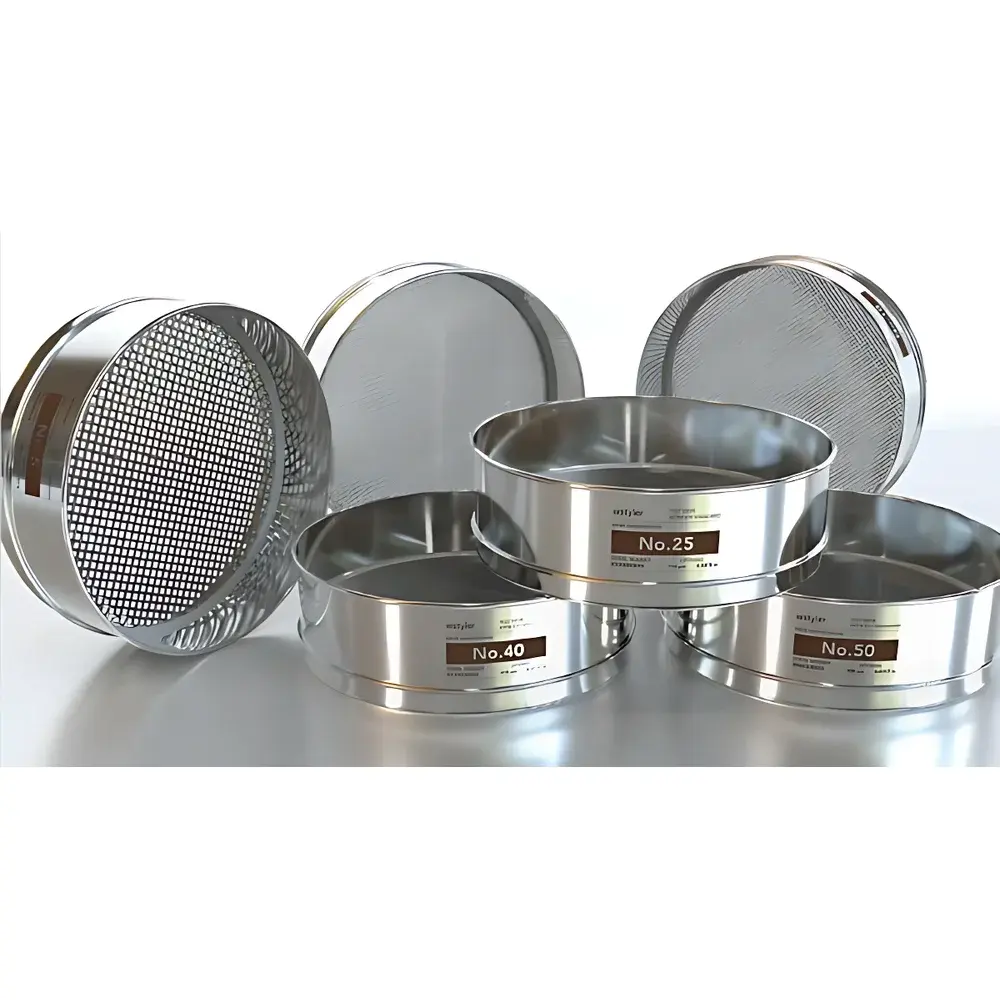
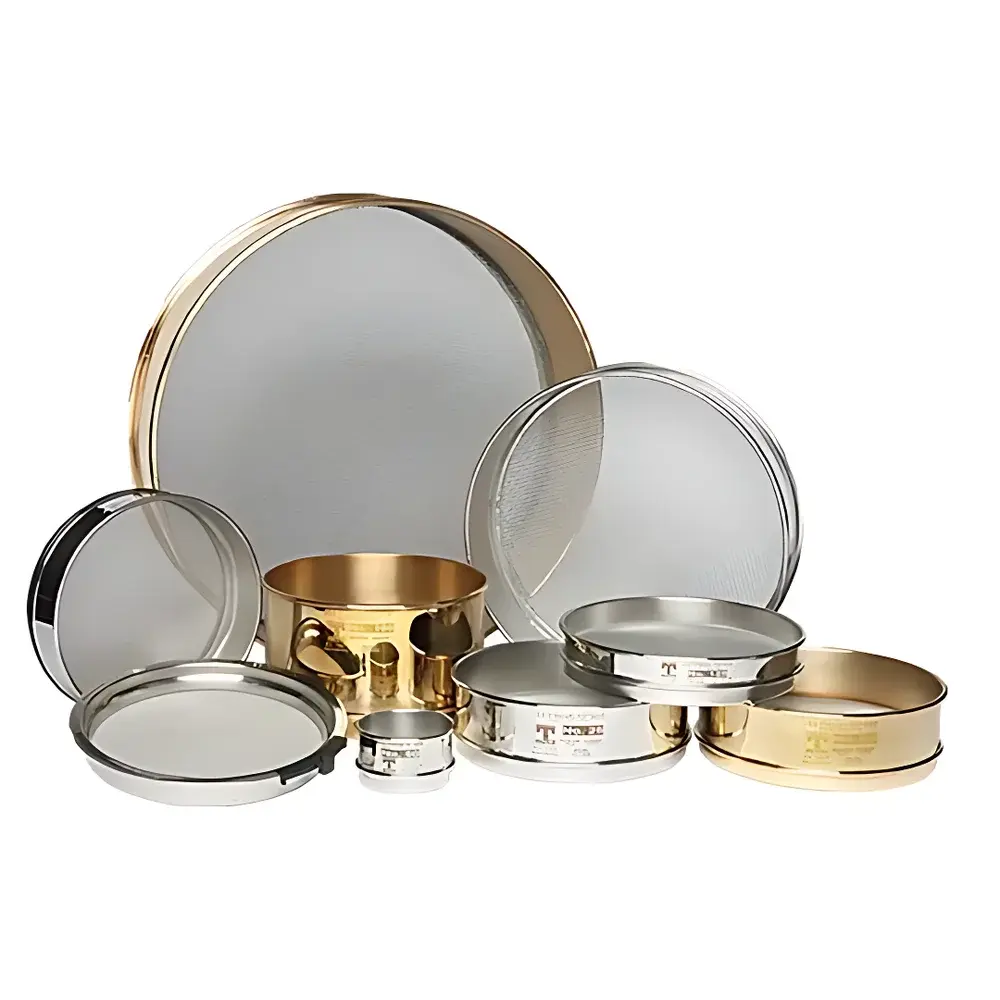
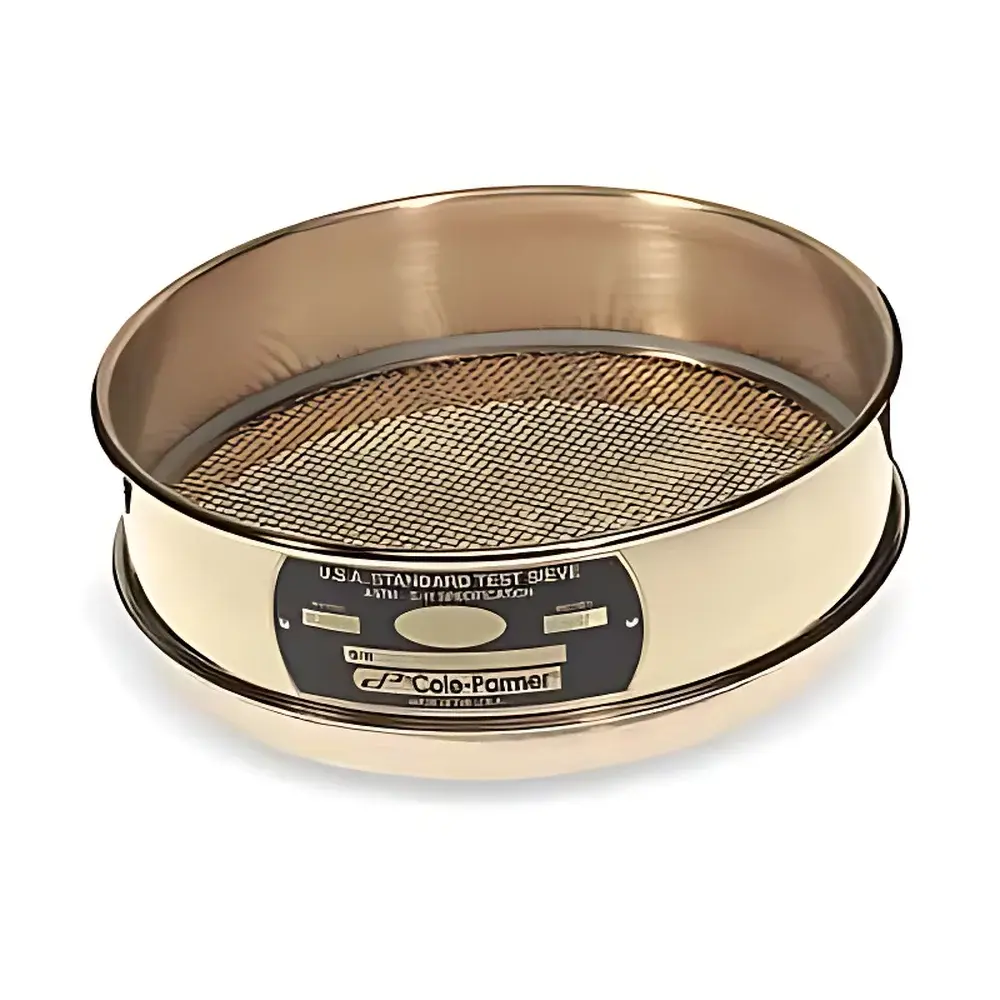
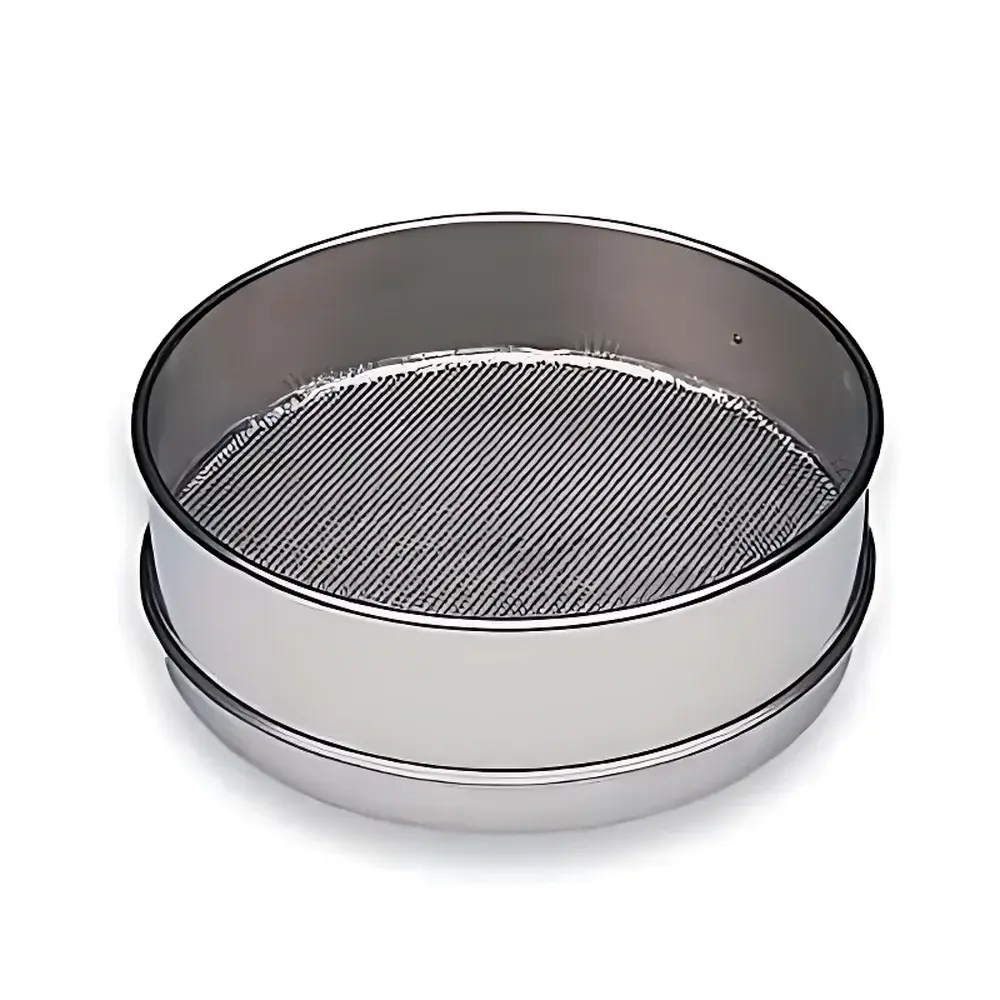
Tyler 200 mm Stainless Steel & Brass Test Sieve
| Brand | Tyler |
|---|---|
| Origin | USA |
| Model | 7258 |
| Compliance | ISO 3310-1, BS 410 |
| Frame Material | Stainless steel or brass |
| Mesh Material | Stainless steel wire |
| Diameter | 200 mm |
| Height | 37.5 mm (full-height) / 19.0 mm (half-height) |
| Available Aperture Ranges | 37.5 mm – 63 µm (U.S. Standard Sieve Series No. 4 to No. 230) |
Overview
The Tyler 200 mm Stainless Steel & Brass Test Sieve is a precision-engineered mechanical sieving component designed for standardized particle size distribution analysis in laboratory and quality control environments. Based on the Couette-type dry sieving principle, it functions as a critical physical interface in sieve shaker systems—where vibrational energy induces stratification and separation of particulate matter according to nominal aperture dimensions. Manufactured under strict adherence to ISO 3310-1 (Test sieves — Technical requirements and testing — Part 1: Test sieves of metal wire cloth) and BS 410 (Specification for test sieves), this 200 mm diameter sieve ensures metrological traceability and inter-laboratory comparability in granulometric measurements across pharmaceutical, mineralogical, chemical, and construction materials testing.
Key Features
- Precision-woven stainless steel mesh mounted on either corrosion-resistant stainless steel or high-conductivity brass frames—optimized for durability, dimensional stability, and minimal mass loss during repeated agitation.
- Full-height (37.5 mm) and half-height (19.0 mm) configurations available to accommodate different sieve stack geometries and shaker platform designs—including Ro-Tap®, electromagnetic, and sonic sieving instruments.
- Calibrated aperture tolerances per ISO 3310-1 Annex A: nominal openings from 37.5 mm down to 63 µm (U.S. Standard Sieve Series No. 4 through No. 230), with permissible deviations defined by mesh count and wire diameter.
- Laser-etched model number (e.g., “7258”) and aperture designation permanently marked on the frame for unambiguous identification and audit trail integrity.
- Zero-drift design: rigid frame geometry prevents warping under centrifugal load; mesh tension maintained within ±2% over 10,000 operational cycles when used within recommended amplitude and frequency parameters.
Sample Compatibility & Compliance
This sieve is compatible with free-flowing, non-agglomerating dry powders and granules exhibiting bulk densities between 0.2–2.5 g/cm³ and particle sphericity >0.6. It is not intended for wet sieving, fibrous materials, or cohesive fine particles requiring dispersants. All Tyler 200 mm sieves are supplied with a Certificate of Conformance referencing ISO/IEC 17025-accredited calibration procedures performed at Tyler’s U.S.-based metrology lab. Documentation includes aperture verification reports, wire diameter measurements, and frame flatness certification—fully compliant with GLP, GMP, and FDA 21 CFR Part 11 data integrity requirements when integrated into validated sieve analysis workflows.
Software & Data Management
While the sieve itself is a passive mechanical component, its use is integral to digital sieve analysis protocols. When deployed in conjunction with automated sieve shakers equipped with digital timers, amplitude controllers, and weight-based feed systems, raw mass-on-sieve data can be exported via RS-232 or USB to LIMS-compatible platforms (e.g., LabWare, STARLIMS). Tyler provides ASTM E11-compliant reporting templates and supports integration with ISO 13320-aligned particle size distribution software packages—including Malvern Panalytical’s Mastersizer export modules and HORIBA’s LaVision suite—for cross-platform histogram normalization and D10/D50/D90 statistical derivation.
Applications
- Pharmaceutical excipient grading per USP and EP 2.9.31 for tablet formulation consistency.
- Aggregate gradation testing in asphalt and concrete QC per ASTM C136/C136M and EN 933-1.
- Catalyst support particle sizing in petrochemical R&D to ensure optimal pressure drop and surface area exposure.
- Food-grade flour and spice classification under Codex Alimentarius standards for texture and dissolution behavior.
- Recycled battery cathode material screening prior to hydrometallurgical leaching—ensuring uniform particle residence time in reactors.
FAQ
Is this sieve suitable for wet sieving applications?
No. The Tyler 200 mm stainless steel and brass test sieve is designed exclusively for dry mechanical sieving. Wet sieving requires specialized frames with drainage ports and polymer-coated meshes not offered in this series.
How often should I recalibrate or verify aperture accuracy?
Per ISO 3310-1 Section 8.2, verification is recommended after every 500 operating hours or prior to critical batch release testing. Tyler offers certified recalibration services with NIST-traceable reference standards.
Can I stack this sieve with non-Tyler 200 mm sieves?
Mechanical compatibility depends on height tolerance and rim geometry. While dimensionally aligned per ISO 3310-1, stacking with non-Tyler sieves may compromise seal integrity and cause lateral misalignment during vibration—potentially skewing mass retention values by up to ±3.5%.
What is the maximum recommended operating temperature?
Stainless steel frame variants are rated to 200 °C continuously; brass frames are limited to 120 °C due to annealing risk above this threshold.
Does Tyler provide validation documentation for regulated industries?
Yes. Upon request, Tyler supplies IQ/OQ documentation packages—including installation checklists, operational performance tests, and traceable measurement uncertainty budgets—for compliance with FDA, EMA, and PMDA regulatory submissions.



