
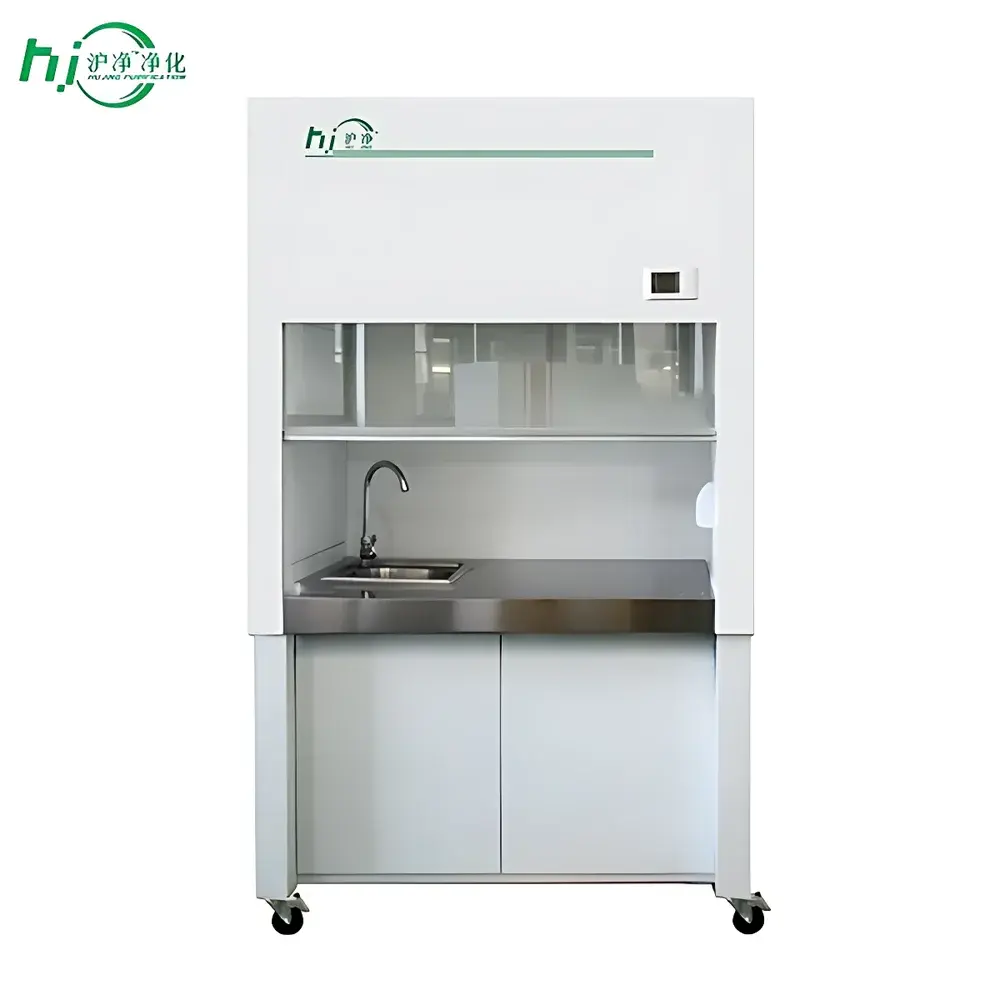
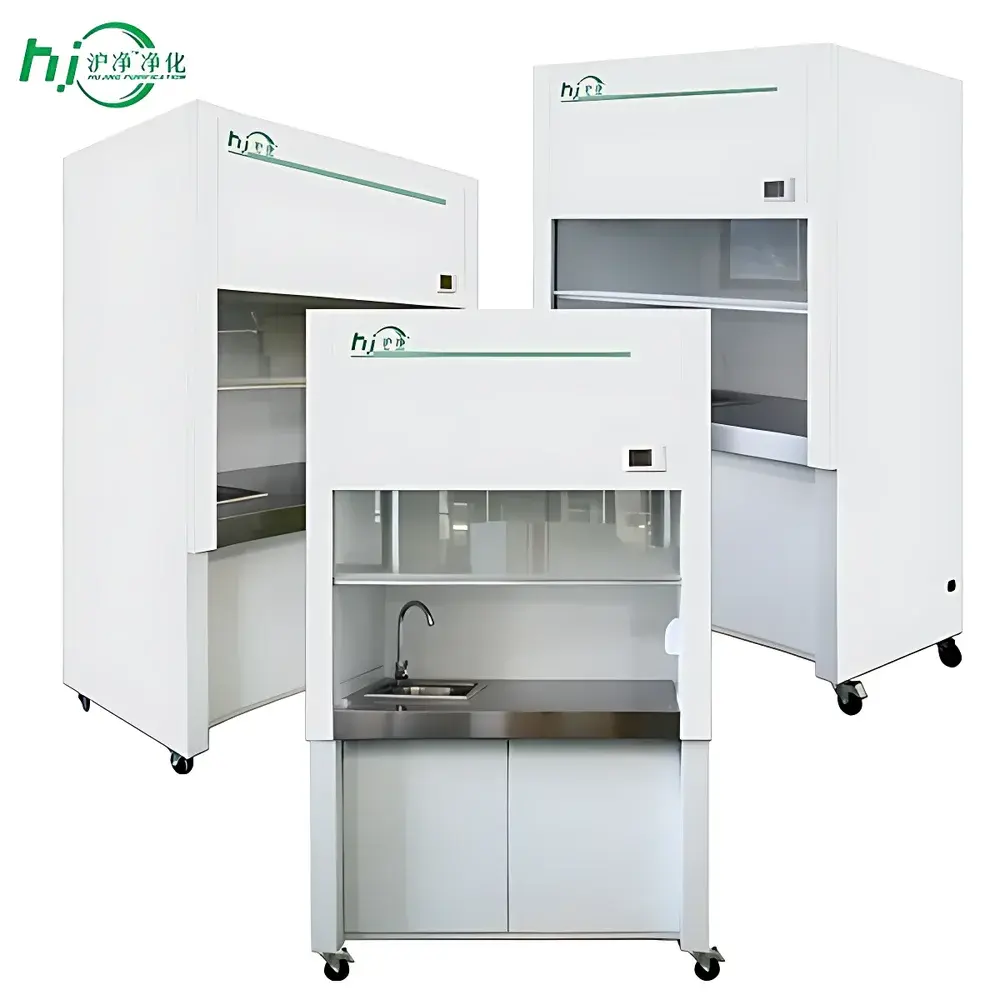
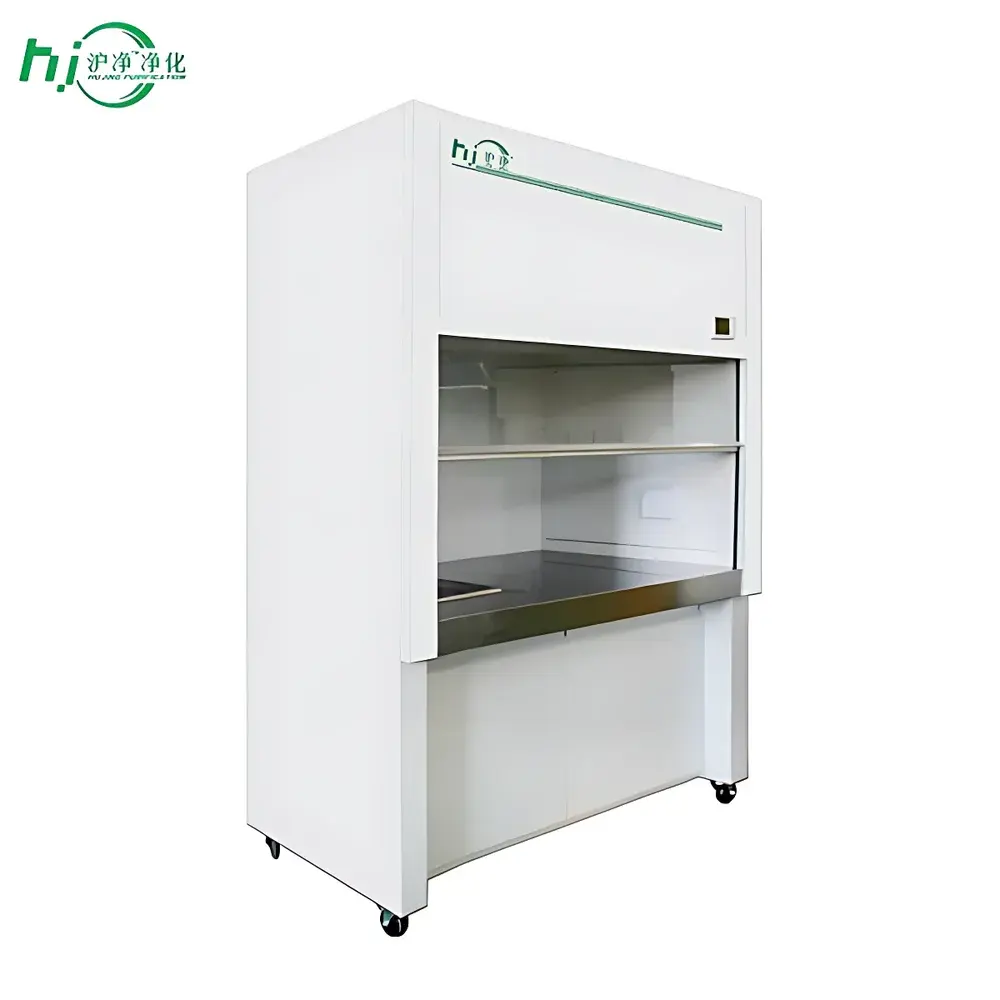
Hujing Purification Full-Steel Fume Hood FX-FH1800
| Brand | Hujing Purification (HJ) |
|---|---|
| Origin | Shanghai, China |
| Manufacturer Type | Direct Manufacturer |
| Country of Origin | China |
| Model | FX-FH1800 |
| Construction Material | Fully Steel Enclosure |
| Configuration | Single-Face Operable Fume Hood |
| Face Velocity Range | 0.25–0.45 m/s (adjustable) |
| Inlet Water Pressure Requirement | >0.5 bar |
| Electrical Supply | AC 220 V / 50 Hz |
| Max Power Consumption | 1000 W |
| Net Weight | 330 kg |
| Work Area Dimensions (W×D×H) | 1600 × 660 × 680 mm |
| Overall Dimensions (W×D×H) | 1760 × 740 × 1950 mm |
| Lighting | One 40 W fluorescent lamp |
Overview
The Hujing Purification Full-Steel Fume Hood FX-FH1800 is an engineered containment system designed for safe handling of volatile, toxic, or odorous substances in chemical, pharmaceutical, and academic laboratories. It operates on the principle of directional airflow management—drawing ambient air through the sash opening at a controlled face velocity (0.25–0.45 m/s), transporting contaminants across the work surface, and expelling them via a dedicated ducted exhaust system. This design conforms to fundamental performance criteria outlined in ANSI/ASHRAE Standard 110-2016 and EN 14175-3:2021 for fume hood containment efficiency and operator protection. The unit is not a recirculating (ductless) device; it requires connection to an external exhaust network with appropriate static pressure compensation and airflow balancing.
Key Features
- Fully welded cold-rolled steel chassis provides structural integrity and resistance to mechanical deformation under long-term operational load.
- Work surface clad with 304 stainless steel sheet—corrosion-resistant, non-porous, and compatible with routine decontamination using ethanol, diluted acids, or sodium hypochlorite solutions.
- Vertically sliding sash constructed from tempered safety glass, offering unobstructed visibility and adjustable height control to optimize face velocity and user ergonomics.
- Integrated utility panel includes multiple grounded electrical outlets (IEC 60320 C13/C14 compliant), quick-connect water valves rated for ≥0.5 bar inlet pressure, and standardized gas line ports (BSPP 1/4″) for auxiliary instrumentation.
- Top-mounted axial exhaust fan with thermally protected motor delivers consistent volumetric flow across the full sash travel range; fan speed is not variable but calibrated to maintain nominal face velocity within specified tolerance when duct static pressure remains within design envelope.
- Electrostatic powder-coated exterior finish (epoxy-polyester hybrid) ensures uniform surface hardness (≥2H pencil hardness), UV stability, and compliance with ISO 2808 film thickness specifications (60–80 µm).
Sample Compatibility & Compliance
The FX-FH1800 supports standard bench-scale manipulations involving liquid reagents, powdered solids, and low-volatility solvents. Its geometry accommodates common laboratory apparatus—including magnetic stirrers, hot plates, separatory funnels, and distillation setups—within the defined work area (1600 × 660 × 680 mm). While not certified to UL 1805 or EN 14175-5 for radioactive or high-hazard applications (e.g., perchloric acid digestion), the unit meets baseline requirements for general-purpose chemical containment under ISO 15195:2018 (laboratory ventilation systems) and aligns with national occupational exposure limits (OELs) as referenced in GB/T 16758-2008 (Chinese standard for local exhaust ventilation). Optional accessories include a stainless steel sink (304 grade, 350 × 250 × 200 mm) with integrated drain trap and P-trap assembly for aqueous waste routing.
Software & Data Management
This fume hood does not incorporate embedded digital controllers, IoT connectivity, or real-time airflow monitoring firmware. Its operational parameters are mechanically and physically set during installation: face velocity is verified using a calibrated thermal anemometer (traceable to NIM, China); static pressure drop across the duct run is measured with a manometer; and electrical continuity is confirmed per GB 50303-2015 (Code for acceptance of building electrical installation). For laboratories operating under GLP or GMP frameworks, manual logbooks or LIMS-integrated checklists may be used to document daily sash position verification, airflow validation (per ASTM D6177), and preventive maintenance records—ensuring audit readiness without proprietary software dependencies.
Applications
- General chemistry teaching labs requiring reliable vapor containment during titration, dilution, or synthesis procedures.
- Quality control laboratories performing solvent-based extractions or residual solvent analysis (e.g., ICH Q3C-compliant workflows).
- Environmental testing facilities conducting VOC sampling preparation and standard solution dispensing.
- Materials science labs handling metal-organic precursors or catalyst slurries where particulate generation and off-gassing co-occur.
- Institutional facilities seeking cost-effective, field-serviceable containment units with minimal electronic complexity and extended service life (>15 years with routine maintenance).
FAQ
Is this fume hood certified to international safety standards such as EN 14175 or ANSI/ASHRAE 110?
It is engineered to meet the functional performance benchmarks of EN 14175-3:2021 and ANSI/ASHRAE 110-2016; however, formal third-party type certification is not included in the base configuration. Certification documentation can be arranged upon request through authorized Hujing technical partners.
Can the unit be installed without external ductwork?
No—it is a ducted-only system requiring connection to a central or dedicated exhaust stack. Recirculation or carbon-filter retrofitting is not supported due to structural and airflow design constraints.
What maintenance intervals are recommended for optimal performance?
Biannual inspection of sash counterbalance mechanism, quarterly verification of face velocity with calibrated instrumentation, and annual cleaning of internal baffle slots and exhaust plenum are advised per manufacturer guidelines.
Does the electrical system support 110 V / 60 Hz operation?
No—the unit is configured exclusively for AC 220 V / 50 Hz input. Voltage conversion or frequency adaptation requires external transformers and must be validated by qualified electrical engineers prior to commissioning.
Is the stainless steel work surface electropolished or passivated?
The 304 stainless steel cladding undergoes standard mill-passivation (ASTM A967 Method A) but does not include electropolishing. Surface roughness (Ra) is maintained at ≤0.8 µm to facilitate cleaning and minimize microbial adhesion.



