
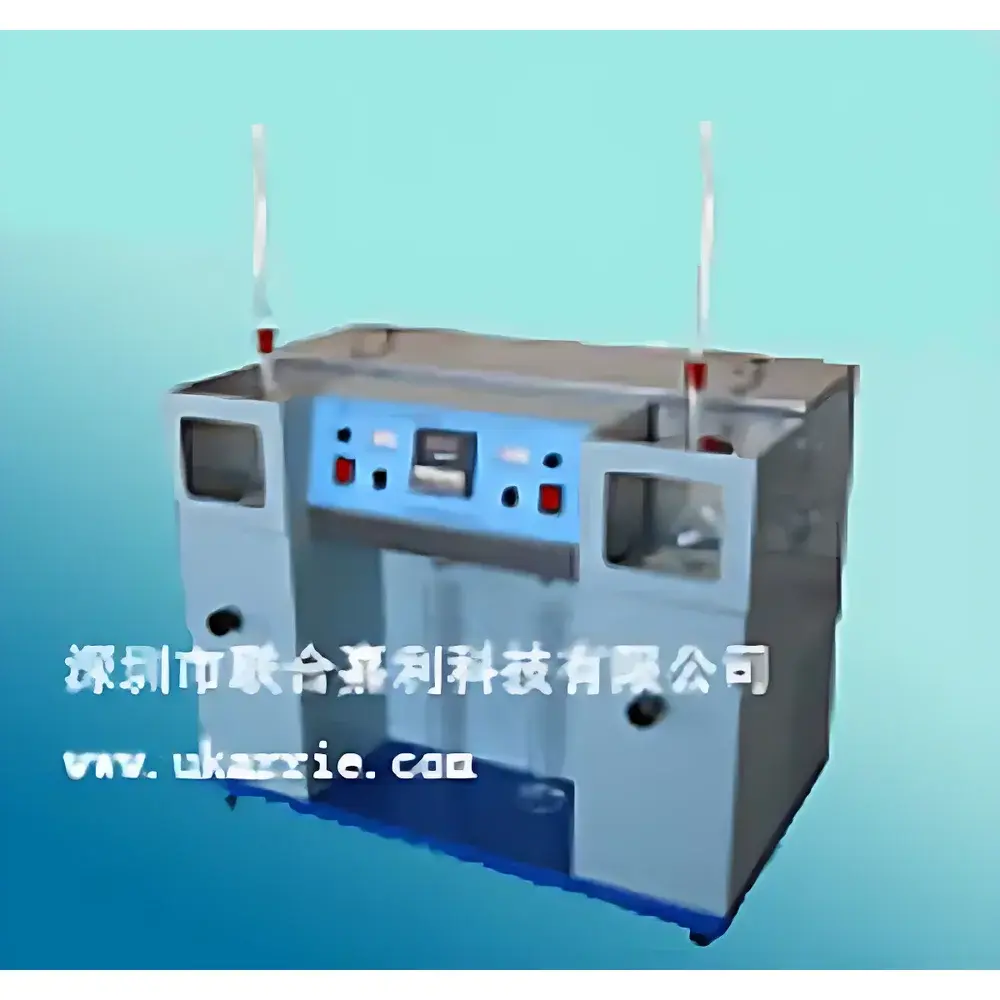
Karrie KA-103C Petroleum Distillation Apparatus Compliant with GB/T 6536 and ASTM D86
| Brand | Karrie |
|---|---|
| Model | KA-103C |
| Standard Compliance | GB/T 6536, ASTM D86 |
| Heating Power | 0–1000 W (continuously adjustable) |
| Bath Temperature Range | 0–60 °C |
| Temperature Control Accuracy | ±0.5 °C |
| Cooling System | Integrated Imported Compressor |
| Distillation Tube Configuration | Dual Bent-Tube Assembly |
| Condensate Collection | 100 mL Graduated Cylinder |
| Power Supply | AC 220 V ±10%, 50 Hz |
| Dimensions | 572 × 486 × 507 mm |
| Weight | ~48 kg |
Overview
The Karrie KA-103C Petroleum Distillation Apparatus is a precision-engineered dual-bent-tube distillation system designed for standardized boiling point distribution analysis of volatile petroleum fractions. It operates in strict accordance with the internationally recognized test methods GB/T 6536 (Chinese National Standard) and ASTM D86 (Standard Test Method for Distillation of Petroleum Products at Atmospheric Pressure). The instrument implements a controlled atmospheric-pressure distillation process wherein sample vaporization, condensation, and volumetric collection are performed under defined thermal and mechanical conditions to determine initial boiling point (IBP), final boiling point (FBP), and recovery percentages at specified temperature intervals. Its core architecture integrates quartz-sheathed heating elements, a thermostatically regulated stainless-steel coolant bath, and mechanically synchronized dual condensation pathways—enabling concurrent or sequential analysis of two samples while maintaining inter-run reproducibility required for QC/QA laboratories in refineries, fuel testing centers, and independent petrochemical certification facilities.
Key Features
- Quartz-sheathed electric furnace: Provides uniform radiant heating, high thermal stability, oxidation resistance, and inherent protection against oil splashing during rapid vaporization phases.
- Manually adjustable vertical lift mechanism: Enables precise positioning of the heating assembly relative to the distillation flask and condenser inlet—critical for optimizing heat transfer efficiency and minimizing superheating artifacts.
- Dual bent-tube condensation system: Facilitates parallel or staggered operation; each tube features standardized ASTM D86 geometry (including specified bend radius and immersion depth), ensuring compliance with condensate trajectory and cooling surface area requirements.
- Compressor-integrated refrigeration unit: Delivers stable bath temperature control from 0 °C to 60 °C with ±0.5 °C accuracy; uses high-efficiency imported rotary compressor and forced-circulation stainless-steel bath with integrated impeller-driven agitation for uniform thermal distribution.
- Continuous power regulation via solid-state voltage controller: Enables fine-grained, stepless adjustment of heating power (0–1000 W), supporting method-specific ramp profiles without thermal overshoot or hysteresis.
- Front-panel analog voltmeter and tactile potentiometer interface: Offers direct operator feedback and intuitive manual control—designed for environments where electromagnetic interference or network connectivity limitations preclude digital interfaces.
Sample Compatibility & Compliance
The KA-103C is validated for use with a broad spectrum of light-to-medium distillates, including but not limited to: natural gasoline, automotive gasoline (including oxygenated blends), aviation gasoline (Avgas), jet fuels (Jet A, Jet A-1), naphthas, petroleum solvent naphthas (e.g., VM&P naphtha), kerosene, diesel fuel (EN 590, ASTM D975), gas oil, and other hydrocarbon mixtures exhibiting boiling ranges between approximately 30 °C and 400 °C. All operational parameters—including bath temperature setpoint, heating rate, and condensate collection timing—are traceable to the procedural constraints defined in GB/T 6536 and ASTM D86. The apparatus meets essential mechanical and thermal design criteria stipulated in Annex A1 of ASTM D86, particularly regarding condenser geometry, thermometer placement tolerance (±1 mm), and flask support rigidity. It supports GLP-aligned documentation practices when paired with external lab notebooks or LIMS-integrated observation logs.
Software & Data Management
The KA-103C is a manually operated, hardware-centric distillation platform with no embedded microprocessor or digital data logging capability. Temperature monitoring, volume recording, and time-stamped observations are performed externally by the analyst per standard test procedure requirements. This architecture ensures full transparency, eliminates firmware-related calibration drift, and simplifies regulatory validation in settings governed by ISO/IEC 17025, API RP 42, or refinery internal QA protocols. For laboratories requiring electronic data capture, the instrument is compatible with third-party digital thermometers (e.g., ASTM-certified platinum resistance thermometers with 0.1 °C resolution) and automated graduated cylinder readers that interface with validated LIMS or ELN systems. All physical controls and indicators comply with IEC 61000-6-2/6-3 immunity and emission standards for industrial laboratory environments.
Applications
- Quality conformance testing of finished gasoline and diesel batches against national and international specifications (e.g., GB 17930, EN 228, ASTM D4814).
- Refinery process optimization through real-time monitoring of fractionator overhead cuts and side-draw volatility profiles.
- Fuel formulation R&D, including evaluation of volatility impact on engine startability, vapor lock propensity, and evaporative emissions (e.g., Reid Vapor Pressure correlation).
- Independent verification of supplier certificates of analysis (CoA) for jet fuel and military-grade distillates (e.g., DEF STAN 91-91, MIL-DTL-5624).
- Educational demonstration of fractional distillation principles in university-level petroleum engineering and analytical chemistry curricula.
FAQ
Does the KA-103C support automated data acquisition or USB/RS232 output?
No. The KA-103C is a manually operated, analog-control distillation apparatus. All measurements—including temperature, recovered volume, and time—are recorded externally by the operator in accordance with ASTM D86 Section 9.
Is the instrument suitable for testing ethanol-blended gasoline (E10, E15)?
Yes, provided the sample is homogenized prior to loading and the test is conducted within the ambient humidity and temperature limits specified (20–30 °C, ≤85% RH) to prevent phase separation artifacts during distillation.
What maintenance is required for the integrated compressor cooling system?
Annual inspection of refrigerant charge level and condenser coil cleanliness is recommended; compressor oil does not require replacement under normal operation due to sealed rotary design.
Can the bath temperature be stabilized below 0 °C?
No. The system’s specified operating range is 0–60 °C. Sub-ambient operation is not supported by design.
Are replacement ASTM D86-compliant thermometers and 100 mL graduated cylinders supplied with the unit?
The apparatus includes one 100 mL graduated cylinder conforming to ASTM E200 specifications; thermometers must be procured separately and calibrated per ASTM E77 and ASTM D86 Annex A3 requirements.




