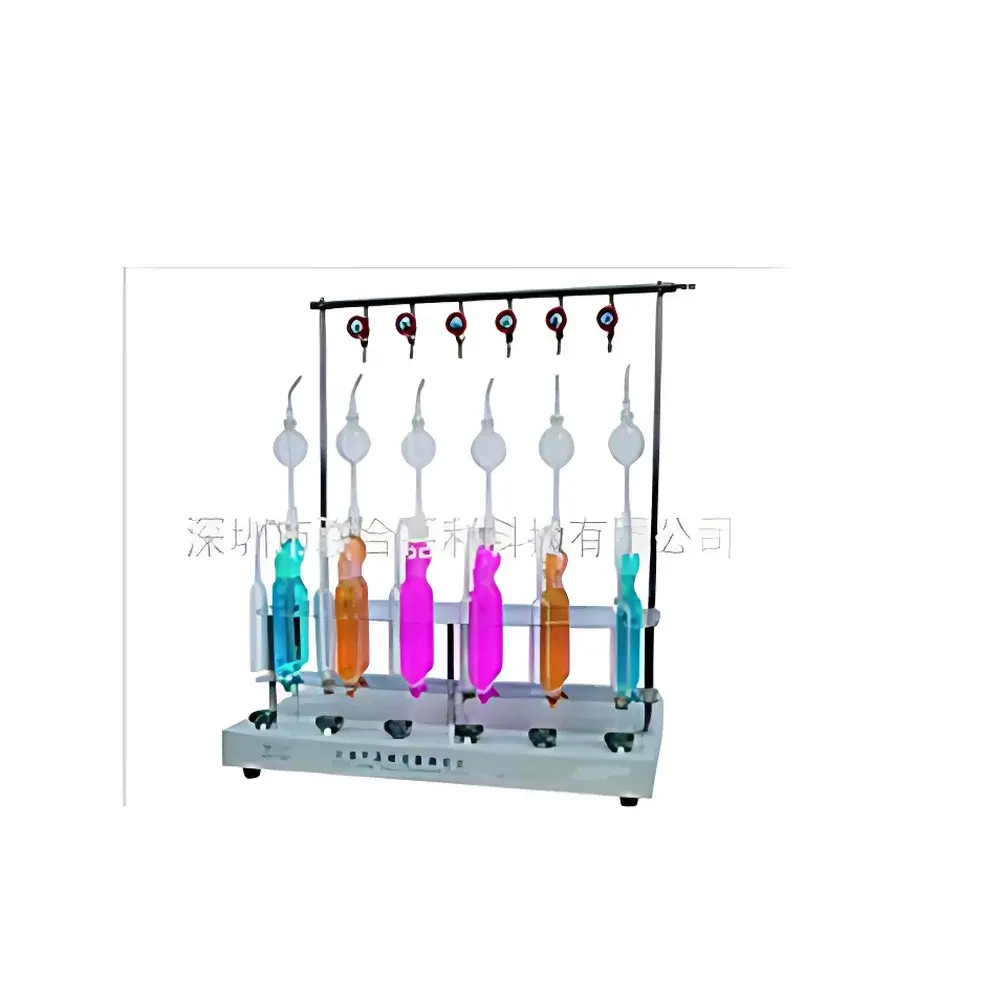
KA-123 Karrie ASTM-Compliant Lamp Method Sulfur Analyzer for Light Petroleum Products
| Brand | Karrie (KARRIE) |
|---|---|
| Origin | Shenzhen, China |
| Model | KA-123 |
| Compliance | GB/T 380 |
| Application Scope | Gasoline, Kerosene, Diesel (RVP ≤ 600 mmHg) |
| Design | Manual lamp-height adjustment, rigid support base, integrated combustion assembly |
| Configuration | Complete test unit including sulfur analyzer body, height-adjustable lamp holder with locking nut and supporting stand |
Overview
The KA-123 Karrie Lamp Method Sulfur Analyzer is a precision-engineered laboratory instrument designed strictly in accordance with the Chinese national standard GB/T 380—“Standard Test Method for Sulfur Content in Petroleum Products—Lamp Method.” This gravimetric analytical system implements the classical combustion–absorption–titration principle: a precisely weighed sample is combusted in a calibrated wick-fed lamp under controlled airflow; sulfur oxides generated during combustion are absorbed quantitatively in a standardized sodium carbonate solution; the resulting sulfate is then titrated with standard hydrochloric acid using methyl orange as indicator. The method delivers trace-level sulfur quantification (typically reported as mass % or g/kg) for light distillate fractions where volatility and low boiling point preclude alternative high-temperature combustion techniques. It remains a widely accepted reference method for routine quality control in refineries, fuel testing laboratories, and third-party certification bodies—particularly where regulatory alignment with legacy specifications (e.g., GB 17930, GB 18351, or equivalent regional fuel standards) is required.
Key Features
- Full compliance with GB/T 380 operational parameters—including specified lamp geometry, wick diameter (3.2 ± 0.2 mm), combustion chamber dimensions, absorption train configuration, and titration endpoint criteria.
- Height-adjustable lamp holder featuring a precision-machined brass support column and locking nut mechanism—enabling reproducible flame positioning relative to the absorption funnel inlet, critical for consistent SO2 capture efficiency.
- Robust all-metal construction (stainless steel frame and anodized aluminum components) ensuring long-term dimensional stability and resistance to corrosive combustion byproducts.
- Modular design with detachable absorption train (glass U-tube or dual-funnel absorber) facilitating rapid cleaning, calibration verification, and method validation per GLP requirements.
- No electronic controllers or software dependencies—minimizing maintenance overhead and eliminating firmware-related drift or calibration uncertainty associated with automated systems.
Sample Compatibility & Compliance
The KA-123 is validated for use with light petroleum products exhibiting Reid Vapor Pressure (RVP) ≤ 600 mmHg at 37.8 °C, including but not limited to automotive gasoline (GB 17930), aviation gasoline (GB 6537), lamp kerosene (GB 253), diesel fuel (GB 19147), and related distillate fractions. Samples must be free of suspended water, particulates, or heavy aromatic residues that may impede complete combustion or foul the wick. The instrument does not support viscous fuels (e.g., residual fuel oils), oxygenated blends exceeding 10 vol% ethanol/methanol, or samples containing halogenated additives—such matrices require ASTM D129, D2622, or ISO 8754 alternatives. All test procedures performed on the KA-123 satisfy documentation requirements for ISO/IEC 17025-accredited laboratories when executed within defined uncertainty budgets and supported by certified reference materials (e.g., NIST SRM 1634c or equivalent).
Software & Data Management
The KA-123 operates as a manual, analog test platform with no embedded microprocessor, display, or digital data output. All measurements are recorded manually in laboratory notebooks or LIMS-integrated worksheets. Users are responsible for performing stoichiometric calculations per GB/T 380 Annex A: Sulfur (%) = [(V1 − V2) × N × 0.008 × 100] / m, where V1 and V2 are titrant volumes (mL), N is normality of HCl, and m is sample mass (g). For regulated environments, laboratories implementing this method must maintain full audit trails—including raw titration records, balance calibration logs, reagent lot traceability, and analyst sign-offs—as required under GLP (OECD Principles) and internal QA protocols. Digital integration is achieved externally via scanned SOPs, PDF-based test reports, or LIMS data entry following validated manual transcription procedures.
Applications
- Final product release testing of gasoline and diesel batches prior to distribution.
- Supplier qualification and incoming inspection of refinery feedstocks and blending components.
- Method correlation studies between lamp method results and instrumental techniques (e.g., UV fluorescence per ASTM D5453).
- Educational demonstrations of classical gravimetric combustion analysis in university chemistry and petroleum engineering labs.
- Regulatory compliance verification for national fuel specifications mandating GB/T 380 as the definitive test method.
FAQ
Is the KA-123 compliant with international standards such as ASTM D129 or ISO 8754?
No—the KA-123 is engineered exclusively for GB/T 380. While conceptually similar to ASTM D129 (which also uses lamp combustion), procedural differences in absorption medium, titration protocol, and calculation basis prevent direct equivalency. Cross-method validation is required for comparative reporting.
Can the instrument be used for biodiesel or ethanol-gasoline blends?
Not without prior method validation. High oxygen content or ester functionality may alter combustion stoichiometry and sulfate recovery. GB/T 380 explicitly excludes oxygenated fuels; alternative methods like ASTM D5453 are recommended.
What maintenance is required for long-term accuracy?
Routine cleaning of glassware with dilute HCl followed by deionized water rinsing; periodic verification of wick dimensions and lamp alignment; annual recalibration of analytical balances used for sample weighing and titrant standardization.
Does the system include certified reference materials or calibration standards?
No—CRM procurement (e.g., NIST SRM 1634c) and standard solution preparation (0.05N HCl, 0.3% Na2CO3) are the responsibility of the end-user laboratory per GB/T 380 Section 6.
Is operator training included with purchase?
Basic operation training is provided via bilingual (English/Chinese) printed SOPs and video demonstration files. Advanced method validation support requires engagement with Karrie’s technical applications team under separate service agreement.