
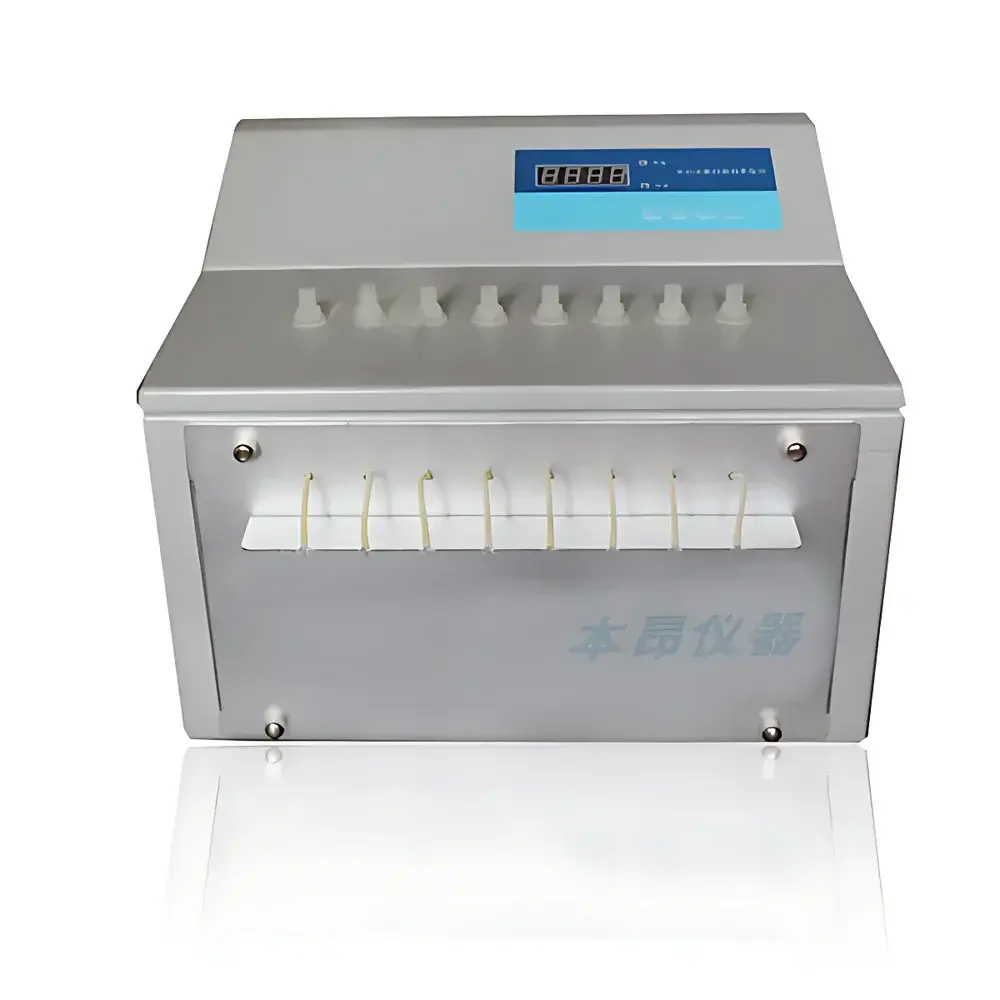
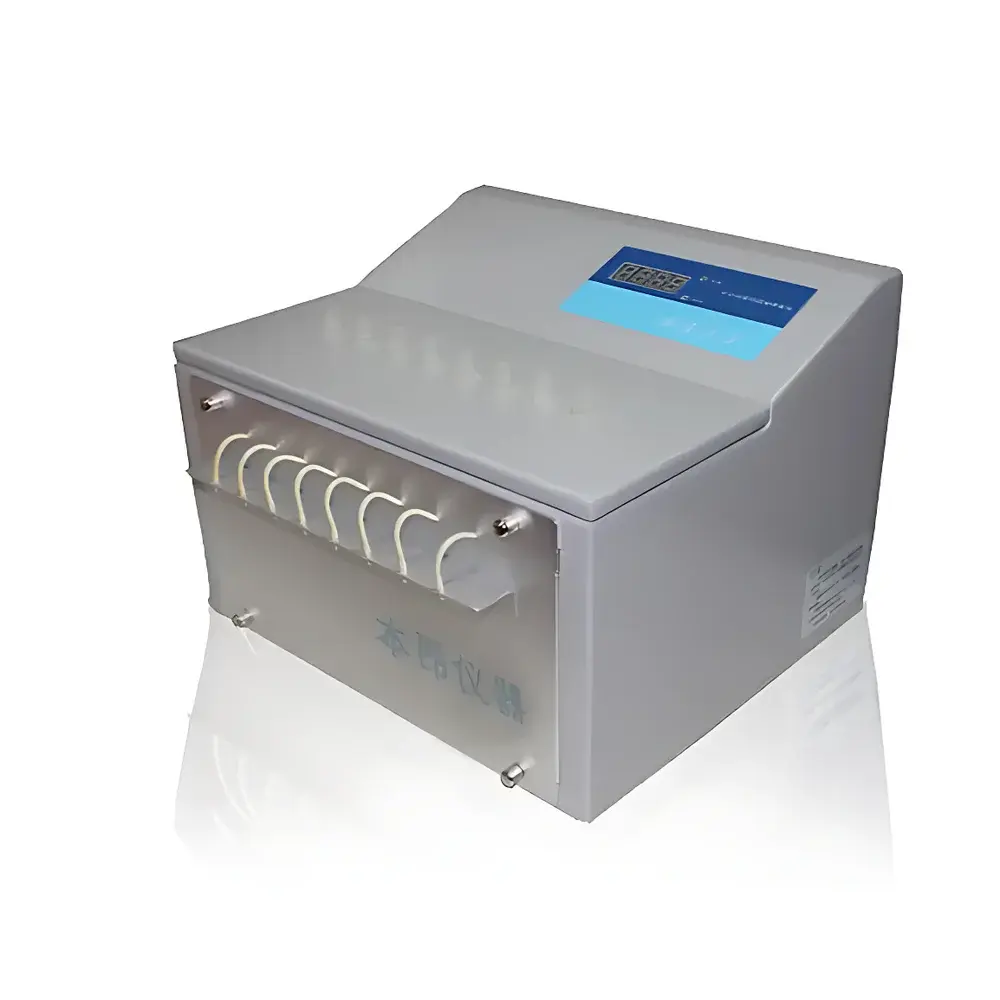
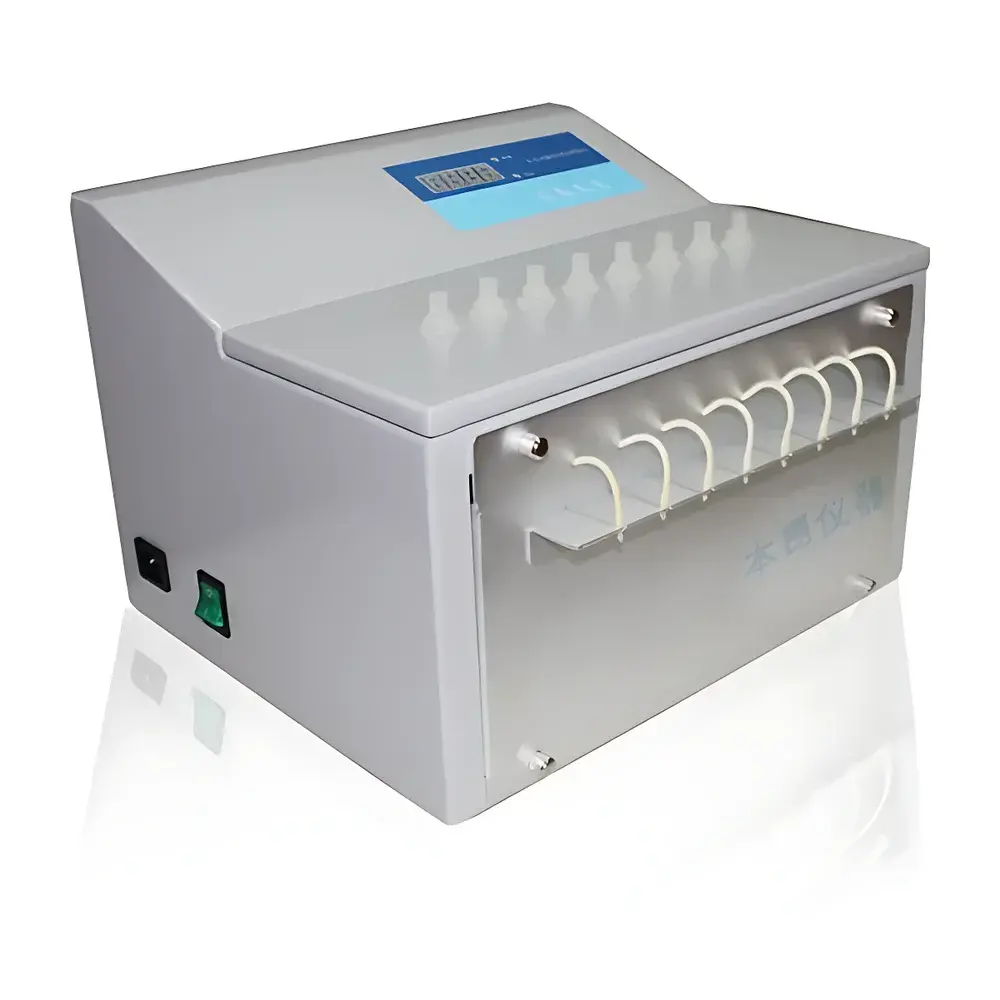
BenAng SPE-8 Fully Automated Solid Phase Extraction System
| Brand | BenAng |
|---|---|
| Origin | Shanghai, China |
| Manufacturer Type | Authorized Distributor |
| Origin Category | Domestic (China) |
| Model | SPE-8 |
| Price | USD 4,200 (approx.) |
| Automation Level | Fully Automated |
| Channel Count | 8 Parallel Channels |
| Extraction Format | Cartridge-Based SPE |
| Flow Rate Control | 0.01–7 mL/min (0.6–420 mL/h) |
| Solvent Types | Up to 5 Independent Solvent Reservoirs |
| Sample Capacity | 1–8 Samples Simultaneously |
| Sample Loading Volume | Up to 6 mL per Channel |
| Wetted Materials | Borosilicate Glass, Chemically Resistant PTFE & ETFE Tubing, US-Sourced Long-Life Pump Tubing |
Overview
The BenAng SPE-8 Fully Automated Solid Phase Extraction System is an engineered solution for high-throughput, reproducible sample preparation in analytical laboratories performing residue analysis, environmental monitoring, food safety testing, and pharmaceutical quality control. Built upon precise positive-displacement peristaltic pumping technology, the SPE-8 delivers gravimetrically consistent flow rates across all eight independent channels—enabling simultaneous conditioning, loading, washing, and elution of solid-phase extraction cartridges. Its core architecture follows the fundamental principles of adsorption chromatography, where analytes are selectively retained on sorbent-packed cartridges (e.g., C18, silica, Florisil, SCX, SAX) under controlled solvent polarity and flow dynamics. This ensures minimal breakthrough, optimal matrix removal, and maximal analyte recovery—critical for trace-level quantification by downstream techniques such as GC-MS, LC-MS/MS, and HPLC-UV.
Key Features
- Fully automated 8-channel operation with independent flow control per channel—eliminating cross-contamination and enabling method flexibility across diverse sample matrices.
- High-precision US-sourced peristaltic pump system with digital speed regulation (0.1–100 rpm), delivering flow rates from 0.01 to 7 mL/min (0.6–420 mL/h) with ±0.1% volumetric accuracy and linearity coefficient ≥0.999.
- Chemically inert fluid path: borosilicate glass manifolds, PTFE/ETFE tubing, and solvent-resistant pump tubing compatible with aggressive solvents—including acetonitrile, methanol, dichloromethane, ethyl acetate, and dilute acids/bases.
- Modular mechanical design: separable extraction manifold and solvent reservoir rack facilitate cleaning, maintenance, and reconfiguration without system downtime.
- Digital interface with real-time flow rate display, programmable timing (up to 100 minutes per step), and non-volatile method storage for GLP-compliant workflow repeatability.
- Universal cartridge compatibility: accepts standard 1 mL, 3 mL, 6 mL, and 12 mL SPE cartridges from major global suppliers (e.g., Waters, Agilent, Thermo Fisher, Phenomenex), supporting method transfer and vendor neutrality.
Sample Compatibility & Compliance
The SPE-8 is validated for use in multi-residue analytical workflows compliant with over 20 Chinese national standards (GB/T) and agricultural ministry announcements (NY/T, YC/T, Ministry Announcement No. 1025), including GB/T 19648-2006 (pesticides in fruits/vegetables), GB/T 23204-2008 (tea), GB/T 22388-2008 (melamine in dairy), and GB/T 20755-2006 (penicillins in poultry). While not certified to ISO/IEC 17025 or FDA 21 CFR Part 11 out-of-the-box, its deterministic timing, fixed flow calibration, and audit-ready parameter logging support integration into ISO 17025-accredited laboratories when paired with documented SOPs and periodic verification protocols. All wetted components meet USP Class VI biocompatibility requirements for extractables profiling.
Software & Data Management
The SPE-8 operates via an embedded microcontroller with local parameter programming—no PC dependency required. Method files store stepwise parameters (flow rate, duration, solvent selection) with timestamped execution logs accessible via USB export. For laboratories requiring electronic records, the system supports manual logbook synchronization with LIMS or ELN platforms through CSV-formatted output. Though lacking native 21 CFR Part 11 electronic signature capability, its deterministic hardware-based control architecture provides inherent traceability: every run generates a unique ID, start/end timestamps, actual vs. setpoint flow deviations (<±0.5%), and solvent usage tracking—enabling full retrospective auditability under GLP/GMP frameworks.
Applications
- Multi-class pesticide residue analysis in food commodities (fruits, vegetables, tea, honey, milk, meat, aquatic products).
- Pharmaceutical impurity isolation and cleanup prior to LC-MS quantification.
- Environmental water and soil extract cleanup for PAHs, PCBs, and endocrine disruptors.
- Biological matrix processing (plasma, urine, tissue homogenates) for veterinary drug monitoring and doping control.
- Forensic toxicology sample prep involving opioids, benzodiazepines, and stimulants.
FAQ
What cartridge formats does the SPE-8 support?
The system accommodates standard 1 mL, 3 mL, 6 mL, and 12 mL SPE cartridges from all major vendors—no adapters or proprietary consumables required.
Can the SPE-8 be integrated into a robotic sample preparation line?
Yes—the unit features TTL-compatible I/O ports for external trigger input and status output, enabling synchronization with autosamplers and fraction collectors.
Is method validation data available for regulatory submissions?
BenAng provides instrument qualification documentation (IQ/OQ templates) and application notes aligned with GB/T and NY/T methods; full validation kits (including recovery studies and precision data) are available upon request.
What maintenance is required for long-term reliability?
Routine maintenance includes monthly inspection of pump tubing tension, quarterly replacement of peristaltic tubing (rated for >1,000 hours), and annual calibration verification using gravimetric flow checks.
Does the system support gradient elution?
No—the SPE-8 uses discrete solvent selection per step; however, sequential elution with up to five solvents enables effective polarity ramping for complex matrices.



