
Photonic Lattice PI-300 Polarization Imaging Camera
| Brand | Photonic Lattice |
|---|---|
| Origin | Japan |
| Model | PI-300 |
| Sensor Format | 1/2″ monochrome CCD |
| Bit Depth | 8-bit |
| Frame Rate | 20 fps |
| Polarization Image Resolution | 1120 × 868 pixels |
| Evaluation Wavelength | 520 nm |
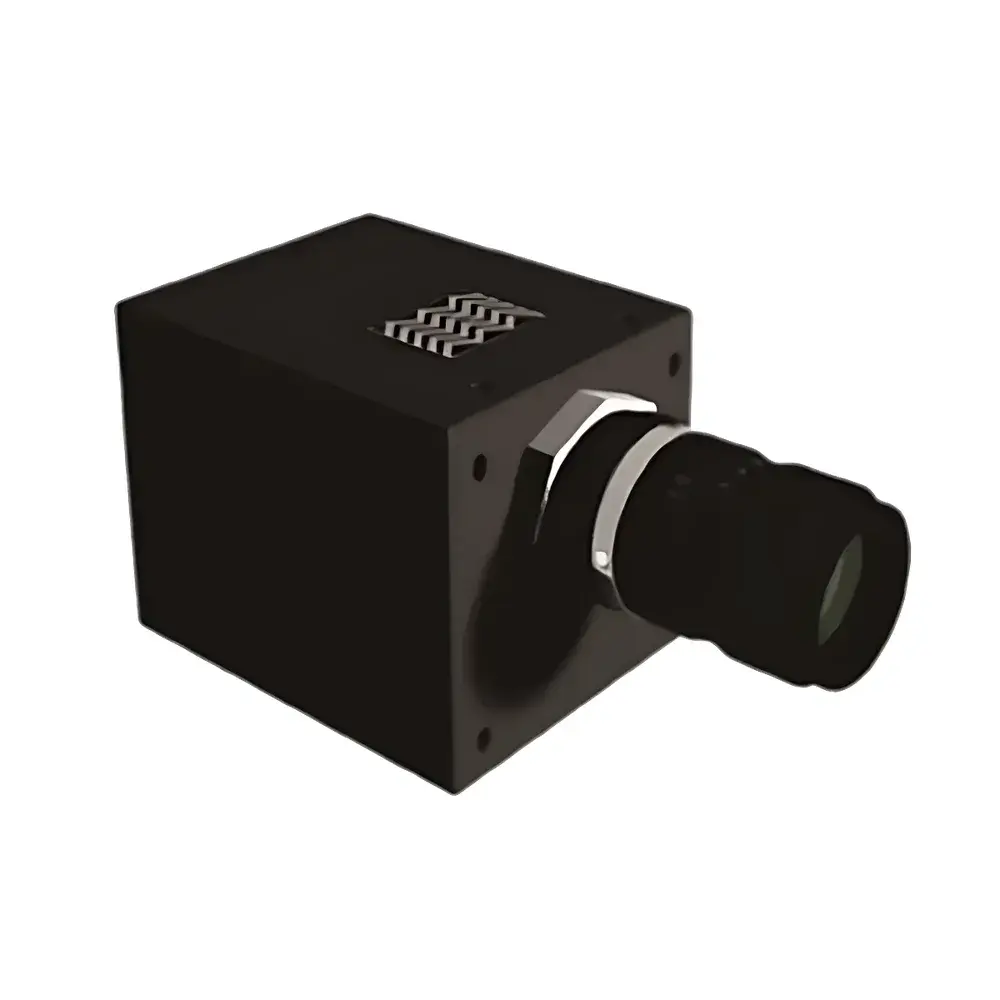
| Dimensions | 33 × 45.7 × 58.6 mm |
| Weight | 0.1 kg |
| Lens Mount | C-mount |
| Interface | Gigabit Ethernet (video), RS-232 (control) |
| Power Supply | DC +12 V (or AC 100–200 V via adapter) |
| Included | Operation manual, software CD |
Overview
The Photonic Lattice PI-300 Polarization Imaging Camera is a compact, high-speed scientific imaging system engineered for real-time quantitative polarization analysis. Based on integrated micropolarizer array technology fabricated using proprietary photonic crystal fabrication processes developed at Tohoku University, the PI-300 captures full-Stokes or linear polarization parameters—intensity, degree of linear polarization (DoLP), and angle of polarization (AoP)—in a single snapshot without mechanical moving parts. Unlike conventional rotating polarizer systems or division-of-focal-plane (DoFP) sensors with reduced spatial resolution, the PI-300 maintains native 1120 × 868 pixel resolution across all polarization channels through its monolithic 2 × 2 micropolarizer mosaic aligned directly onto an 8-bit monochrome CCD sensor. Designed for laboratory and industrial environments where subtle birefringence, surface stress, material anisotropy, or laser beam polarization state must be monitored dynamically, the camera operates at a stable 20 fps with calibrated spectral response centered at 520 nm—optimized for visible-light applications including optical component characterization, biomedical tissue imaging, and laser diagnostics.
Key Features
- Single-shot linear polarization imaging with simultaneous acquisition of intensity, DoLP, and AoP maps
- Integrated 2 × 2 micropolarizer array on 1/2″ monochrome CCD sensor—no moving optics or external retarders required
- Gigabit Ethernet interface enabling low-latency streaming of raw polarization frames (16-bit packed format) and metadata
- RS-232 serial port for hardware synchronization, trigger input/output, and remote configuration
- Compact form factor (33 × 45.7 × 58.6 mm) and lightweight design (0.1 kg) suitable for integration into optical benches, endoscopes, or embedded inspection systems
- C-mount lens compatibility supporting standard off-the-shelf lenses for flexible working distance and magnification control
- Factory-calibrated polarization response traceable to NIST-traceable reference standards at 520 nm
Sample Compatibility & Compliance
The PI-300 is compatible with static and dynamic samples exhibiting linear birefringence, dichroism, or surface reflection-induced polarization modulation—including polymer films, tempered glass, crystalline wafers, biological tissues, and collimated laser beams. Its fixed 520 nm spectral calibration ensures reproducible measurements under controlled illumination; broadband operation requires external bandpass filtering to maintain accuracy. The device conforms to IEC 61326-1:2013 for electromagnetic compatibility in laboratory environments and meets CE marking requirements for safety and EMC. While not intrinsically compliant with FDA 21 CFR Part 11 or ISO 13485, the system supports audit-ready data export (CSV, TIFF, HDF5) and time-stamped metadata logging—enabling integration into GLP/GMP workflows when paired with validated host software and procedural controls.
Software & Data Management
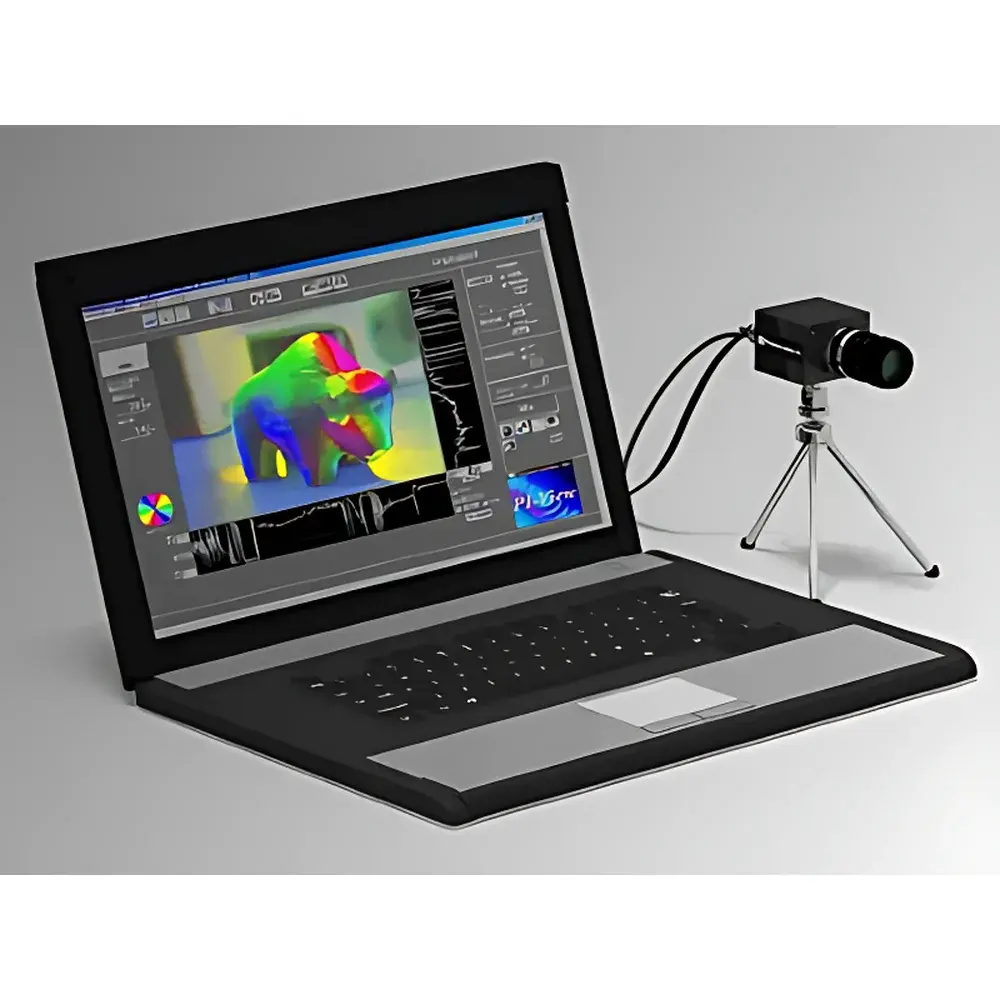
The included PC-based application provides real-time visualization of intensity, DoLP, and AoP pseudocolor maps, with adjustable scaling, ROI-based statistics, and vector field overlays. Raw frame data is accessible via TCP/IP socket API (C/C++, Python, MATLAB bindings provided), allowing custom algorithm development for stress mapping, defect detection, or polarization tomography. All exported datasets include embedded EXIF-like metadata: timestamp, exposure time, gain setting, firmware version, and calibration ID. Export formats support interoperability with common scientific platforms: CSV (tabular polarization metrics), 16-bit TIFF (georeferenced AoP/DoLP layers), and HDF5 (multi-dimensional time-series stacks with metadata hierarchy). No cloud dependency or subscription licensing—software remains fully functional offline with local license activation.
Applications
- Non-contact stress evaluation in transparent materials (e.g., automotive glass, optical lenses, plastic enclosures)
- Real-time monitoring of laser polarization stability in ultrafast amplifier chains and fiber delivery systems
- Quantitative assessment of collagen alignment and birefringence in histological sections and ex vivo tissue specimens
- Surface quality inspection of coated substrates, LCD panels, and anti-reflective films
- Development and validation of polarization-sensitive optical designs, including metasurfaces and chiral photonic devices
- Education and research in polarization optics, physical optics laboratories, and undergraduate photonics curricula
FAQ
What polarization parameters does the PI-300 output?
The camera outputs per-pixel linear polarization data: normalized intensity (I), degree of linear polarization (DoLP ∈ [0,1]), and angle of polarization (AoP ∈ [0°, 180°)). Stokes vector reconstruction (S₀, S₁, S₂) is supported via SDK.
Is the PI-300 suitable for measuring circular polarization?
No—the PI-300 is optimized for linear polarization analysis only. Circular or elliptical polarization measurement requires additional quarter-wave retardation optics and multi-acquisition protocols not natively supported.
Can the PI-300 be synchronized with external equipment?
Yes—via RS-232 TTL-level trigger input (exposure start) and output (frame valid pulse), enabling precise timing with lasers, shutters, or motion stages.
Does the system require regular recalibration?
Factory calibration is stable over time and temperature (±0.5°C operating range); annual verification against a known polarized source is recommended for metrology-critical applications.
Is SDK documentation available in English?
Yes—comprehensive English-language API reference, code examples, and protocol specifications are included with the software CD and updated online repository.




