
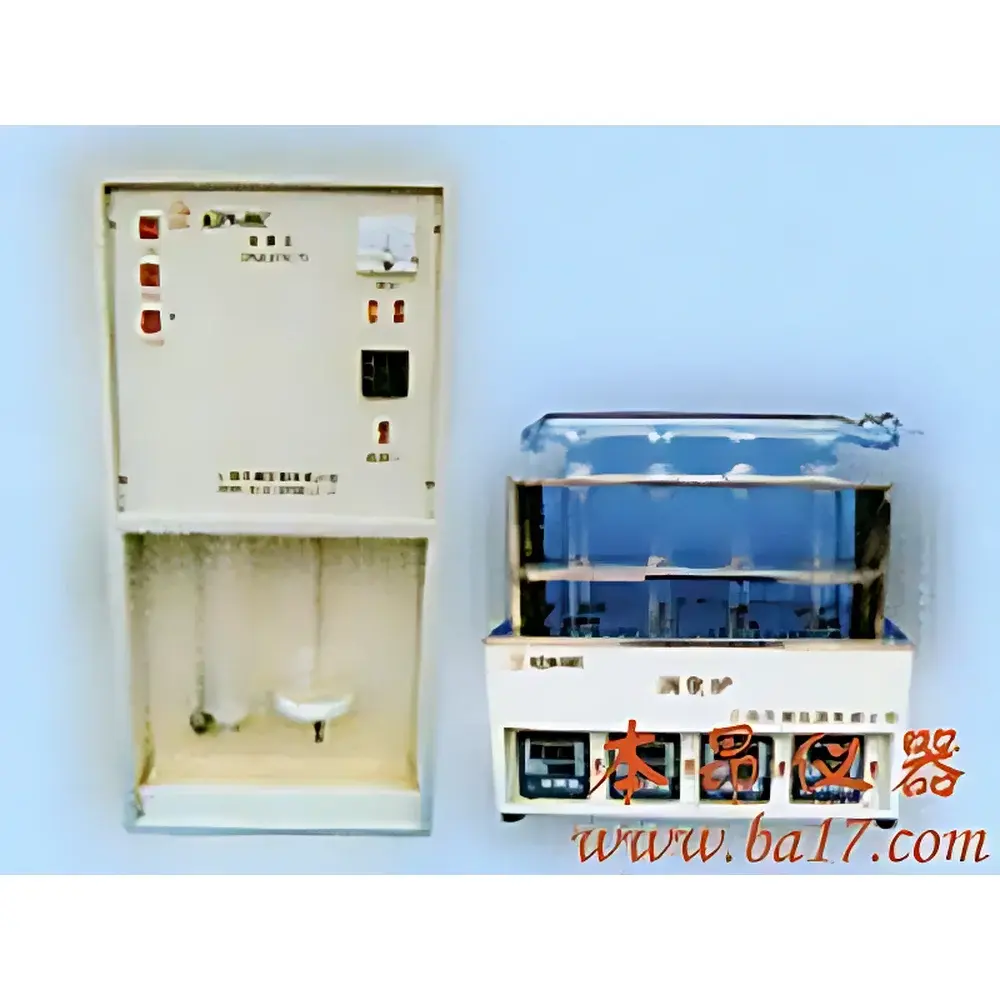
BenAng KDN-04C Kjeldahl Nitrogen Determinator
| Brand | BenAng |
|---|---|
| Origin | Shanghai, China |
| Manufacturer Type | Authorized Distributor |
| Country of Origin | China |
| Model | KDN-04C |
| Price | USD 1,150 (FOB Shanghai) |
| Heating Power | Digestion Unit 1200 W (4-position), Distillation Unit 800 W |
| Voltage/Frequency | AC 220 V, 50 Hz |
| Dimensions | Digestion Unit 650 × 220 × 150 mm |
| Nitrogen Range | 0.02–95% (or 0.1–200 mg N per sample) |
| Sample Types | Cereals, foodstuffs, feed, dairy products, beverages, soils, water, pharmaceuticals, sediments, and chemical reagents |
| Digestion Time | ~40 min (typical for standard organic matrices) |
| Steam Generation | Automatic tap-water heating with level-sensing refill system |
| Condensate Base Material | Corrosion-resistant ABS |
| Control Interface | Digital temperature display (digestion unit) |
| Exhaust Management | Integrated SO₂ scrubbing via water-trap suction system |
Overview
The BenAng KDN-04C Kjeldahl Nitrogen Determinator is a benchtop dual-unit system engineered for reliable, standardized total nitrogen quantification in accordance with AOAC 984.27, ISO 8968-1, and ASTM D1122 methodologies. It implements the classical Kjeldahl principle: organic nitrogen is mineralized to ammonium sulfate via sulfuric acid digestion at elevated temperature (typically 360–420 °C), followed by alkaline distillation to liberate ammonia, which is subsequently trapped in boric acid and titrated to determine nitrogen content. The system comprises two functionally independent modules — a 4-position digital temperature-controlled digestion furnace and an automated steam distillation unit — both designed for reproducible operation under routine laboratory conditions without requirement for fume hood integration.
Key Features
- Four-hole digestion furnace with well-type electric heating architecture, maximizing thermal contact area between heating element and digestion tubes for uniform heat transfer and accelerated decomposition kinetics (typical digestion completion within 40 minutes for cereal or feed samples).
- Digital temperature controller with LED display (range: ambient to 450 °C, ±2 °C accuracy), enabling precise ramp-and-hold programming and real-time monitoring of digestion progress.
- Integrated SO₂ exhaust management: digestion gases pass through a water-sealed suction trap connected to a dedicated pump, neutralizing acidic vapors and preventing ambient release — eliminating dependency on external ducted ventilation.
- Distillation unit equipped with automatic tap-water feed system and level-sensing heater activation, ensuring consistent steam generation without manual intervention or risk of dry-heating damage.
- Programmable distillation timer (0–99 min, 1-min increments) for method-defined reaction duration control, supporting both macro- and semi-micro Kjeldahl protocols.
- Corrosion-resistant ABS base plate for long-term resistance to alkali splashes and condensate exposure during prolonged operation.
Sample Compatibility & Compliance
The KDN-04C supports solid, semi-solid, and liquid matrices across regulated and non-regulated sectors. Validated applications include cereal grain protein estimation (per AACC Method 46-13), dairy product crude protein certification (ISO 8968-1), animal feed formulation (AOAC 984.13), soil total nitrogen profiling (EPA Method 9060A), and pharmaceutical excipient testing (USP <281>). All operational parameters align with GLP documentation requirements: temperature logs (digestion), timer records (distillation), and visual verification points (digestion color transition, distillate volume) are traceable. While the instrument itself does not embed electronic audit trails, its mechanical-digital interface enables full procedural documentation for FDA 21 CFR Part 11-compliant workflows when paired with validated LIMS or paper-based SOPs.
Software & Data Management
The KDN-04C operates as a standalone hardware platform with no embedded microprocessor or proprietary software. Temperature setpoints and distillation durations are configured manually via front-panel controls. Data acquisition relies on external titration systems (e.g., automatic burettes or pH-stat titrators) or manual volumetric titration. Users are advised to record digestion start/end times, distillation duration, titrant consumption, and blank correction values in laboratory notebooks or ELN platforms. For laboratories implementing digital quality systems, the unit’s deterministic mechanical behavior — fixed heating rates, repeatable steam output, and stable condensation geometry — ensures high inter-operator reproducibility (RSD <2% for triplicate wheat flour analysis, n=15).
Applications
- Quality control laboratories in food processing facilities performing routine crude protein assays on raw materials and finished products.
- Agricultural extension services conducting soil fertility assessments and fertilizer efficacy trials.
- Feed mills verifying compliance with guaranteed analysis statements for commercial livestock rations.
- Environmental testing labs quantifying nitrogen load in wastewater sludge or sediment cores.
- Pharmaceutical R&D groups screening nitrogen-containing excipients or validating nitrogen recovery in dissolution studies.
- Educational institutions teaching classical wet-chemistry analytical techniques with emphasis on method validation and error source identification.
FAQ
Does the KDN-04C meet ISO/IEC 17025 accreditation requirements for nitrogen testing?
Yes — when operated within documented SOPs, with calibrated glassware and titrants, and supported by environmental monitoring (e.g., ambient temperature/humidity logs), the system fulfills technical competence criteria for accredited nitrogen determination under ISO/IEC 17025:2017 Clause 7.2.
Can deionized water be used instead of tap water in the distillation unit?
Tap water is specified due to its mineral content, which enhances thermal conductivity and stabilizes heater surface temperature. Deionized water may cause erratic boiling behavior and premature scaling; it is not recommended.
Is digestion tube cleaning included in the standard protocol?
No — post-digestion tube cleaning requires separate acid-washing (e.g., 10% HNO₃ soak) and thorough rinsing. Optional accessories include a dedicated digestion tube brush kit and ceramic-coated replacement tubes for extended service life.
What safety certifications apply to the KDN-04C?
The unit complies with IEC 61010-1:2010 for electrical safety in laboratory equipment and carries CE marking per EU Directive 2014/30/EU (EMC) and 2014/35/EU (LVD). Full test reports are available upon request from BenAng’s technical support team.
How often should the water trap be serviced?
The water trap must be emptied and refilled with fresh tap water before each batch of digestions. For high-throughput labs (>20 samples/day), daily inspection and weekly replacement of the suction tubing are recommended to maintain flow integrity and corrosion resistance.
Related Products





