
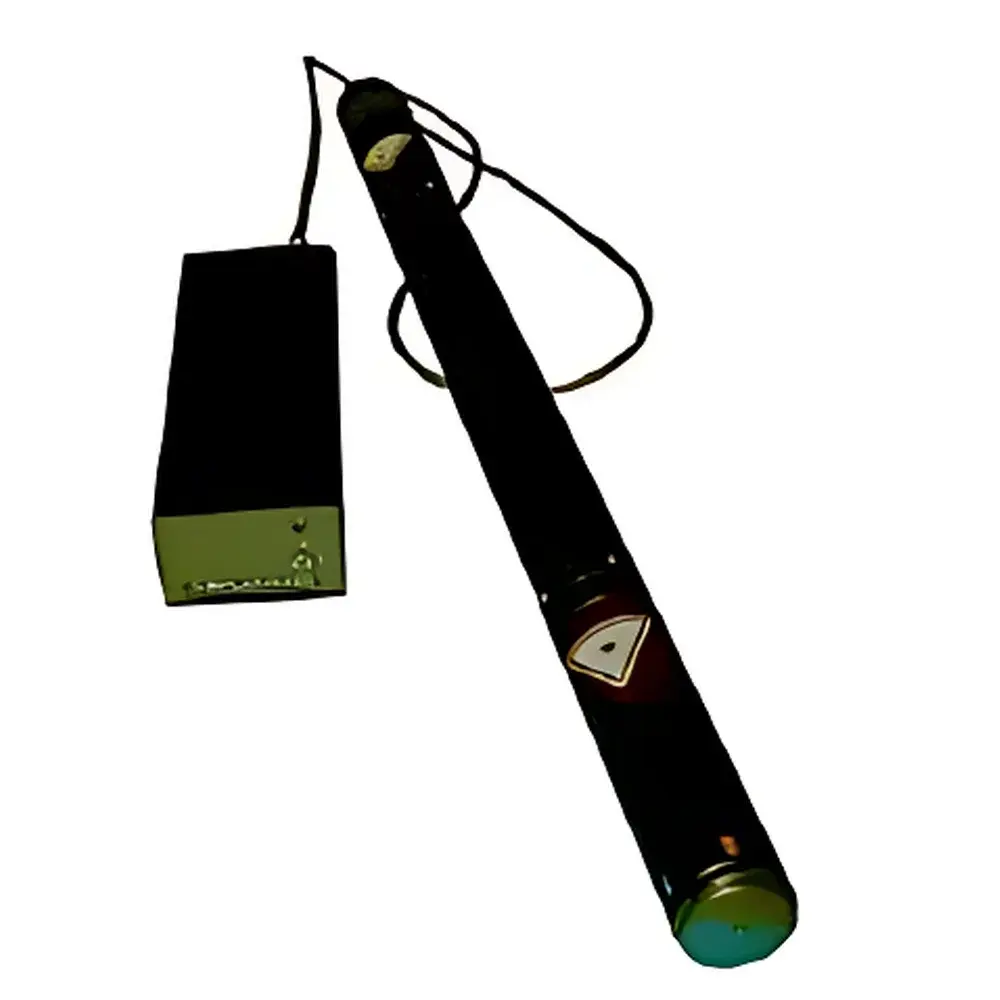
PLASMA GNIK-3-4 Infrared and Multi-Wavelength Helium-Neon Laser System
| Brand | PLASMA |
|---|---|
| Origin | Russia |
| Manufacturer Type | Authorized Distributor |
| Origin Category | Imported |
| Model | GNIK-3-4 |
| Pricing | Available Upon Request |
Overview
The PLASMA GNIK-3-4 is a precision-engineered helium-neon (HeNe) laser system designed for stable, continuous-wave (CW) emission across multiple discrete wavelengths—including the standard visible 632.8 nm line and specialized infrared (IR) transitions at 1.152 µm and 3.391 µm. Unlike broadband or tunable sources, this instrument leverages the intrinsic energy-level structure of the HeNe gas discharge medium to deliver spectrally pure, narrow-linewidth ( 20 cm). Its dual-wavelength capability enables comparative interferometric calibration, wavelength-dependent absorption studies, and alignment validation across heterogeneous optical paths—particularly valuable in metrology labs, quantum optics testbeds, and IR sensor characterization workflows. The system operates under sealed-tube architecture with thermally stabilized bore geometry, ensuring long-term power stability (< ±1.5% over 8 hours) and minimal mode-hopping under ambient laboratory conditions.
Key Features
- Simultaneous or selectable emission at 632.8 nm (visible red), 1152.3 nm (near-infrared), and 3391.3 nm (mid-infrared) via internal cavity mirror optimization
- Output power range: 0.5–2.5 mW per line (dependent on operating wavelength and tube aging), with built-in analog modulation input (0–5 V, 10 kHz bandwidth)
- Beam divergence < 1.2 mrad (full angle), M² 500:1 (linear, TEM₀₀ dominant)
- Integrated thermoelectric cooler (TEC) and PID-controlled thermal management for ±0.02 °C temperature regulation of discharge tube
- Compliant with IEC 60825-1:2014 Class 3R safety classification; includes interlock-ready connector and key-switch enable circuit
- Ruggedized aluminum housing with standardized kinematic mounting interface (M4 threaded holes, ISO 17065-compliant mechanical reference plane)
Sample Compatibility & Compliance
The GNIK-3-4 is not a sample-based instrument but functions as a primary optical reference source. It interfaces directly with interferometers (e.g., Michelson, Fabry–Pérot), spectroscopic detectors (InGaAs, HgCdTe), and alignment targets requiring traceable wavelength standards. Its spectral lines are referenced to NIST-traceable atomic transitions (⁴He/²⁰Ne isotopic shifts), supporting calibration protocols aligned with ISO/IEC 17025:2017 requirements for metrological traceability. The system conforms to electromagnetic compatibility (EMC) directives per CISPR 11 Group 1, Class B, and meets RoHS 2011/65/EU material restrictions. No user-replaceable consumables or gas refills are required; operational lifetime exceeds 20,000 hours under recommended duty cycles.
Software & Data Management
While the GNIK-3-4 operates as a standalone analog device, it supports integration into automated test environments via TTL-compatible status monitoring (laser-on, fault, warm-up complete) and analog voltage output proportional to tube current (0–10 V = 0–10 mA). Optional USB-to-serial adapter kits (sold separately) enable RS-232 command control (SCPI subset) for remote power cycling, wavelength selection, and diagnostic readout (tube voltage, TEC current, head temperature). All firmware adheres to FDA 21 CFR Part 11 principles for audit trail generation when used in regulated QC/QA settings—though no embedded data storage is present. Configuration logs and calibration certificates are delivered in PDF/A-1b format compliant with ISO 19005-1.
Applications
- Primary wavelength standard for calibrating FTIR spectrometers and monochromator grating positions
- Dual-wavelength interferometry for simultaneous measurement of refractive index dispersion in optical materials
- Alignment and beam profiling of CO₂ laser systems (10.6 µm) using 3.39 µm as a visible surrogate
- Fundamental physics experiments involving Doppler-free saturation spectroscopy and Lamb dip measurements
- Validation of photodetector responsivity curves across NIR–MIR spectral bands
- Training platforms in university optics laboratories for teaching laser cavity modes, gain competition, and Zeeman splitting
FAQ
Does the GNIK-3-4 require external water cooling?
No—thermal management is fully handled by integrated solid-state TEC modules and passive heatsinking.
Can the three wavelengths be emitted simultaneously?
No; wavelength selection is achieved mechanically via rotating cavity mirrors—only one line is active per configuration.
Is factory recalibration available after 5 years of operation?
Yes—PLASMA-certified service centers offer traceable recalibration against primary standards, including spectral purity verification and power linearity assessment.
What is the maximum permissible back-reflection level?
< –30 dB relative to output power; exceeding this may induce frequency instability or mode hopping.
Are OEM integration options supported?
Yes—custom mounting brackets, fiber-coupled output variants (FC/PC, SMA905), and OEM firmware APIs are available under NDA.




