
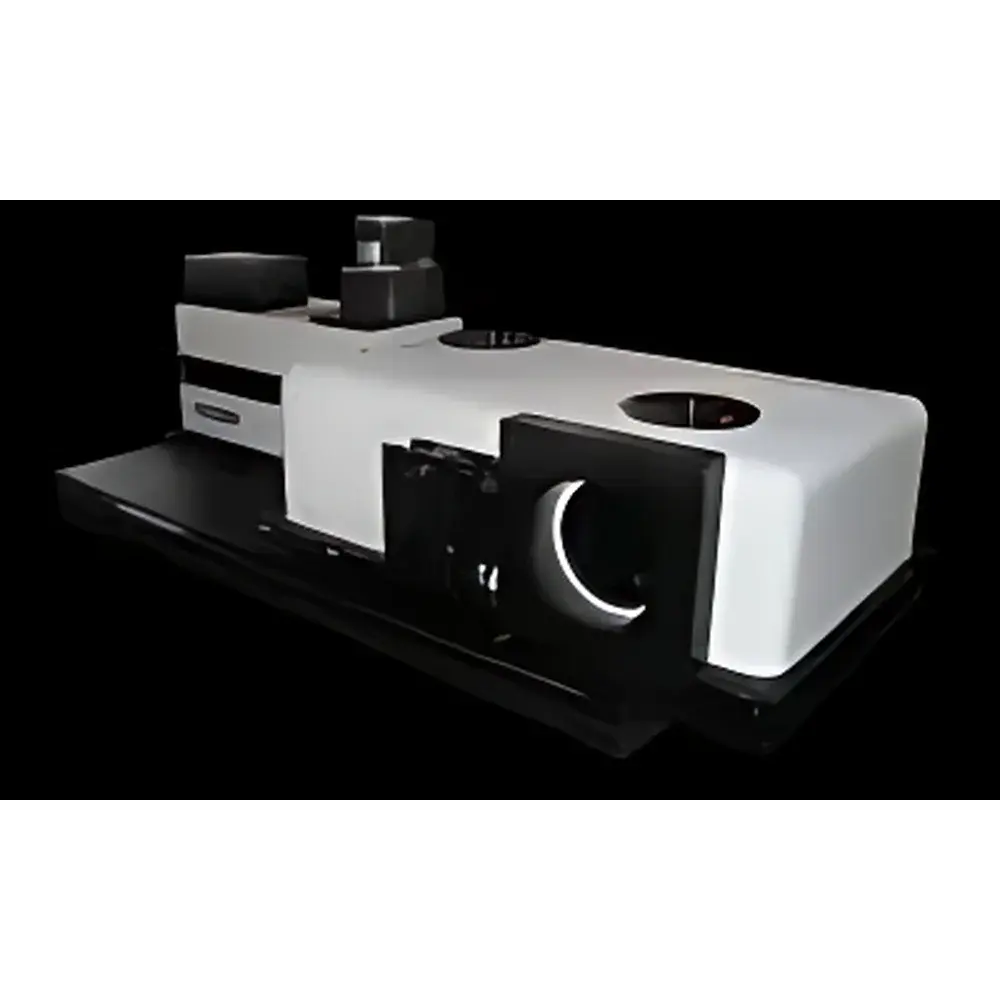
Sciencetech SS1.0KW AAA-Class Full-Reflection Solar Simulator
| Brand | Sciencetech |
|---|---|
| Origin | Canada |
| Model | SS1.0KW |
| Light Source Type | 1.0 kW Xenon Arc Lamp (Ozone-Free) |
| Cooling Method | Air-Cooled Lamp Tower |
| Filter Mount Size | 76 mm × 76 mm (3" × 3") Standard, Compatible with Custom Filters |
| Beam Orientation | Horizontal or Vertical (User-Specified at Order) |
| Classification | AAA Spectral Match, Spatial Uniformity ≤ ±2%, Temporal Stability ≤ ±1% (IEC 60904-9 Ed. 3, ASTM E927-22) |
| Compliance | IEC 60904-9, ASTM E927, JIS C 8912 |
Overview
The Sciencetech SS1.0KW AAA-Class Full-Reflection Solar Simulator is an engineered optical system designed to replicate terrestrial and extraterrestrial solar irradiance with high fidelity under controlled laboratory conditions. Unlike conventional collimated or refractive solar simulators that rely on diffusers, condenser lenses, or beam-splitting optics—introducing scattering losses, spectral distortion, and spatial non-uniformity—this system employs a precision-engineered all-reflective optical architecture. Light emitted from a stabilized 1.0 kW ozone-free xenon arc lamp is directed exclusively via high-reflectivity aluminum-coated mirrors, eliminating chromatic aberration and preserving spectral integrity across the full AM0 (1366 W/m²) and AM1.5G (1000 W/m²) spectral ranges. The absence of transmissive optics ensures long-term radiometric stability, minimal thermal load on target samples, and consistent irradiance distribution over defined test planes (e.g., 2″ × 2″, 4″ × 4″, or custom apertures). This design conforms strictly to IEC 60904-9 Ed. 3 and ASTM E927-22 requirements for Class AAA performance—achieving spectral match (A), spatial uniformity (A), and temporal stability (A) simultaneously.
Key Features
- Full-reflection optical path utilizing parabolic and elliptical mirrors for zero chromatic error and minimal photon loss
- Stabilized 1.0 kW high-pressure xenon arc lamp with integrated igniter and air-cooled lamp tower for continuous-duty operation
- Modular filter mount accommodating standard 76 mm × 76 mm optical filters (e.g., AM0, AM1.5G, UV-cut, IR-cut, custom bandpass) with optional adapter plates for non-standard dimensions
- Configurable beam orientation: factory-set horizontal (side-emitting) or vertical (downward-emitting) output; field-installable 90° folding mirror enables directional reorientation (up/down/left/right) without realignment
- Digital LED power display with real-time lamp voltage, current, and operating hours; integrated safety interlocks for lamp enclosure and cooling airflow monitoring
- Robust mechanical chassis with vibration-damped baseplate and precision kinematic mounts for repeatable alignment in photovoltaic calibration, material degradation testing, and optoelectronic characterization
Sample Compatibility & Compliance
The SS1.0KW supports a broad range of sample geometries and mounting configurations, including standard PV cell coupons (2 cm × 2 cm to 15 cm × 15 cm), thin-film substrates, perovskite layers, organic photovoltaics (OPV), and concentrator photovoltaic (CPV) receivers. Its uniform irradiance field (≤ ±2% spatial non-uniformity over defined test area) meets IEC 60904-9 Class A requirements for reference cell calibration and module power rating. The system is fully compatible with ISO/IEC 17025-accredited laboratories performing photovoltaic device testing under GLP-compliant workflows. Optional NIST-traceable radiometric calibration certificates (spectral irradiance per nm, total irradiance in W/m²) are available upon request. All optical components comply with RoHS directives, and mechanical housing meets IP20 environmental protection standards for indoor laboratory use.
Software & Data Management
While the SS1.0KW operates as a standalone analog-controlled simulator, it integrates seamlessly with third-party data acquisition systems via 0–10 V analog control inputs (lamp intensity modulation) and TTL-compatible status outputs (lamp-on, fault, interlock open). For traceable, audit-ready operation in regulated environments, users may connect the unit to LabVIEW, Python-based PyVISA frameworks, or SCADA platforms supporting Modbus RTU over RS-485 (via optional interface module). All operational parameters—including lamp runtime, cumulative exposure dose (J/cm²), and filter usage logs—can be timestamped and exported in CSV or XML format. When deployed in FDA-regulated R&D settings, the system supports 21 CFR Part 11-compliant electronic records when paired with validated software environments featuring user access controls, electronic signatures, and immutable audit trails.
Applications
- Primary and secondary calibration of reference solar cells and pyranometers against SI-traceable standards
- Photovoltaic module power rating and performance mapping (I-V curve tracing) under standardized illumination conditions
- Accelerated aging studies of encapsulants, anti-reflective coatings, and transparent conductive oxides under controlled UV-rich spectra
- Quantum efficiency (QE) and external quantum efficiency (EQE) measurements requiring spectrally stable, spatially uniform illumination
- Spacecraft solar array qualification testing under AM0 spectrum simulation for LEO, GEO, and deep-space mission profiles
- Photoelectrochemical cell evaluation, photocatalyst screening, and solar fuel synthesis reactor development
FAQ
What spectral classes does the SS1.0KW meet according to IEC 60904-9?
It achieves Class AAA rating: Spectral match Class A (±12.5% deviation in 300–400 nm, ±5% in 400–1100 nm, ±10% in 1100–1800 nm), spatial uniformity Class A (≤ ±2%), and temporal stability Class A (≤ ±1% over 10 s).
Can the system be upgraded to higher power levels?
Yes—Sciencetech offers scalable platform variants: SS0.5KW, SS1.6KW, and SS2.5KW, sharing identical optical architecture and filter compatibility for seamless power scaling.
Is NIST-traceable calibration included by default?
No—calibration is optional and provided as a certified service with documented uncertainty budgets per ISO/IEC 17025. Users specify measurement wavelength intervals and aperture size during order placement.
Does the air-cooling system require external ducting or compressed air?
No—the integrated axial fan and heat-sink assembly operate passively with ambient room air exchange; no external HVAC integration or compressed gas supply is needed.
What safety certifications apply to the SS1.0KW?
The unit complies with IEC 61000-6-3 (EMC emissions), IEC 61000-6-1 (EMC immunity), and CSA C22.2 No. 61010-1 (safety for electrical equipment for measurement, control, and laboratory use).






