
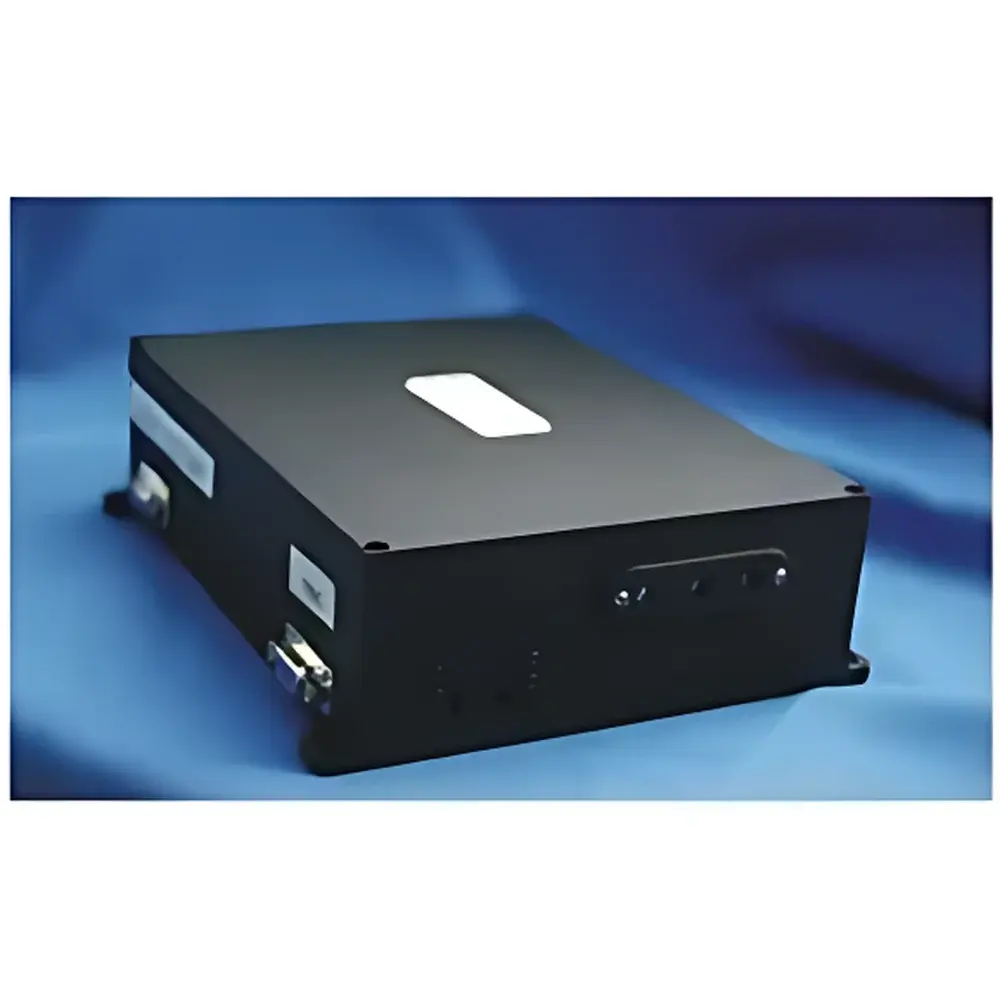
HCP OPO Mixer Mid-Infrared Tunable Laser Source
| Brand | HCP |
|---|---|
| Origin | Taiwan |
| Manufacturer Type | Authorized Distributor |
| Product Category | Light Source Component |
| Model | OPO Mixer |
| Wavelength Range | 1400–4200 nm |
| Output Power | Up to 150 mW (free-space) |
| Tuning Mechanism | Temperature-controlled & PP-chip channel selection |
| Tuning Mode | Mode-hop-free (MHF) via HCP-optimized algorithm, calibrated with reference interferometer and piezoelectric actuation |
| Operational Stability | Single-frequency, narrow-linewidth output |
| Maintenance | Maintenance-free design |
Overview
The HCP OPO Mixer Mid-Infrared Tunable Laser Source is an engineered optical component designed for precision spectroscopic applications requiring stable, narrow-linewidth radiation across the technologically critical mid-infrared (MIR) spectral region (1400–4200 nm). Unlike broadband thermal emitters or quantum cascade lasers with fixed emission lines, this source employs optical parametric oscillation (OPO) in a temperature- and chip-selectively tuned nonlinear crystal configuration. The core architecture integrates a pump laser (typically Nd:YAG or fiber-based at 1064 nm or 1550 nm), a periodically poled lithium niobate (PPLN) or orientation-patterned gallium arsenide (OP-GaAs) gain medium, and a resonant cavity optimized for signal-idler generation. By thermally tuning the phase-matching condition or switching between discrete quasi-phase-matched (QPM) grating periods encoded in PP-chips, the device achieves continuous, mode-hop-free wavelength scanning—enabling high-resolution absorption spectroscopy without spectral discontinuities.
Key Features
- Mode-hop-free tuning over >2800 nm spectral bandwidth (1400–4200 nm), realized through coordinated thermal control and multi-channel PP-chip selection
- Single-frequency operation with linewidth <100 MHz (typical), supporting Doppler-limited gas detection and high-fidelity heterodyne measurements
- Free-space collimated output delivering up to 150 mW average power, compatible with standard MIR optics (ZnSe, CaF2, Ge-coated mirrors)
- HCP-optimized digital control algorithm, integrating real-time interferometric calibration and piezoelectric cavity fine-tuning for sub-picometer wavelength repeatability
- Passively stabilized mechanical platform with low-drift thermal management; no active cooling required under ambient laboratory conditions
- Maintenance-free solid-state design with >10,000 hours MTBF; no consumables, no gas refills, no alignment adjustments post-installation
Sample Compatibility & Compliance
The OPO Mixer is designed for integration into OEM systems and research-grade spectroscopic platforms where traceability, reproducibility, and regulatory readiness are essential. Its output meets spectral purity requirements for compliance with ISO 17025-accredited calibration labs when used with NIST-traceable wavelength meters. While not a standalone analytical instrument, the laser source supports methodologies aligned with ASTM E1421 (standard practice for infrared spectrophotometry), ISO 8573-8 (gas purity analysis), and USP (near- and mid-infrared spectroscopy in pharmaceutical QC). For GxP environments, the control interface supports external logging of setpoints, timestamps, and operational status—enabling audit-ready data trails compatible with FDA 21 CFR Part 11-compliant software architectures.
Software & Data Management
The system ships with HCP’s OPO Control Suite (v3.x), a Windows-based application providing GUI-driven wavelength selection, sweep programming, power stabilization feedback, and real-time spectral logging. Communication occurs via USB 2.0 or RS-232, with SCPI command support for LabVIEW, Python (PyVISA), and MATLAB integration. All tuning parameters—including chip index, oven setpoint, piezo voltage, and photodiode monitor readings—are timestamped and exportable in CSV/JSON formats. Firmware updates preserve user-defined calibration profiles and maintain backward compatibility with legacy PP-chip libraries. No cloud connectivity or telemetry is embedded—ensuring full data sovereignty for defense, academic, and regulated industrial users.
Applications
- High-resolution molecular spectroscopy: Detection of fundamental vibrational transitions in greenhouse gases (CH4, CO, N2O), toxic industrial chemicals (NH3, HCN, HF), and isotopic species (e.g., 13CO2)
- Photoacoustic & cavity-enhanced sensing: Paired with multipass cells or quartz-enhanced photoacoustic spectroscopy (QEPAS) modules for ppb-level detection limits
- Biomedical tissue characterization: Label-free identification of lipid, protein, and collagen signatures in ex vivo histopathology and surgical margin assessment
- LIDAR & remote sensing: Eye-safe atmospheric profiling using differential absorption LIDAR (DIAL) configurations at 3–4 µm
- Frequency-comb seeding & metrology: Serving as a tunable local oscillator in dual-comb spectroscopy systems operating in the MIR fingerprint region
- Material science R&D: In-situ monitoring of catalytic reactions, thin-film growth, and semiconductor defect analysis via time-resolved MIR reflectance
FAQ
What is the typical tuning speed and resolution achievable with the OPO Mixer?
Tuning speed depends on thermal inertia: coarse scans (100 nm) require ~30–90 s; fine piezo-assisted steps (<0.1 nm) settle in <100 ms. Wavelength resolution is limited by the laser linewidth (<100 MHz) and calibrated to ±0.05 nm (k=2) using a wavemeter referenced to HeNe standards.
Can the OPO Mixer be fiber-coupled?
The standard configuration delivers free-space output. Fiber coupling to fluoride (ZBLAN) or chalcogenide fibers is possible via optional OEM integration kits, but insertion losses and modal noise must be characterized per application.
Is the laser compliant with IEC 60825-1 for Class 1 operation?
When enclosed in a user-supplied interlocked housing meeting EN 60825-1:2014 requirements, the system qualifies as Class 1. Standalone operation falls under Class 3B (150 mW MIR output); appropriate laser safety protocols and ANSI Z136.1-compliant eyewear are mandatory.
Does HCP provide calibration certificates with NIST traceability?
Yes—each unit ships with a factory calibration report referencing a NIST-traceable High-Finesse WS6 wavemeter. Optional annual recalibration services include uncertainty budgets per ISO/IEC 17025.
What environmental conditions are recommended for stable long-term operation?
Ambient temperature: 18–25 °C (±0.5 °C stability preferred); relative humidity: 30–60% non-condensing; vibration isolation recommended for sub-MHz linewidth applications. No forced airflow or chilled water required.




