
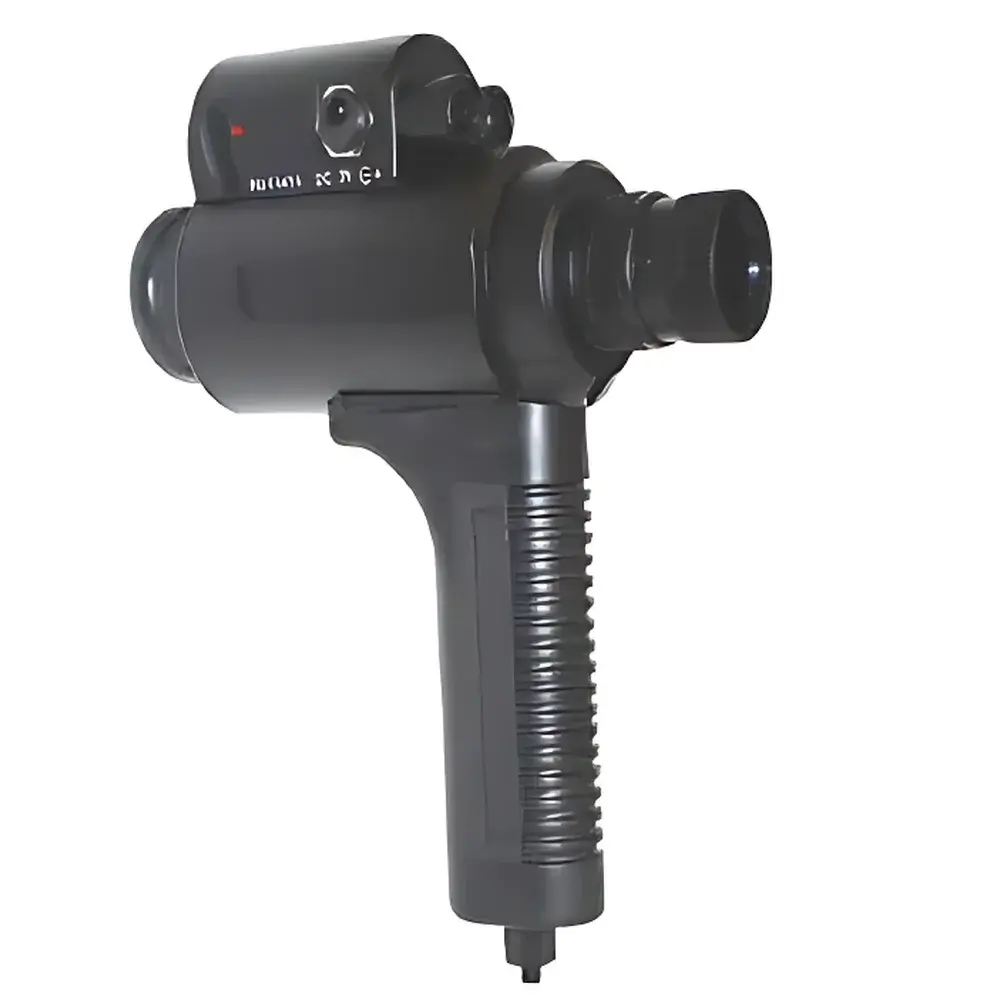
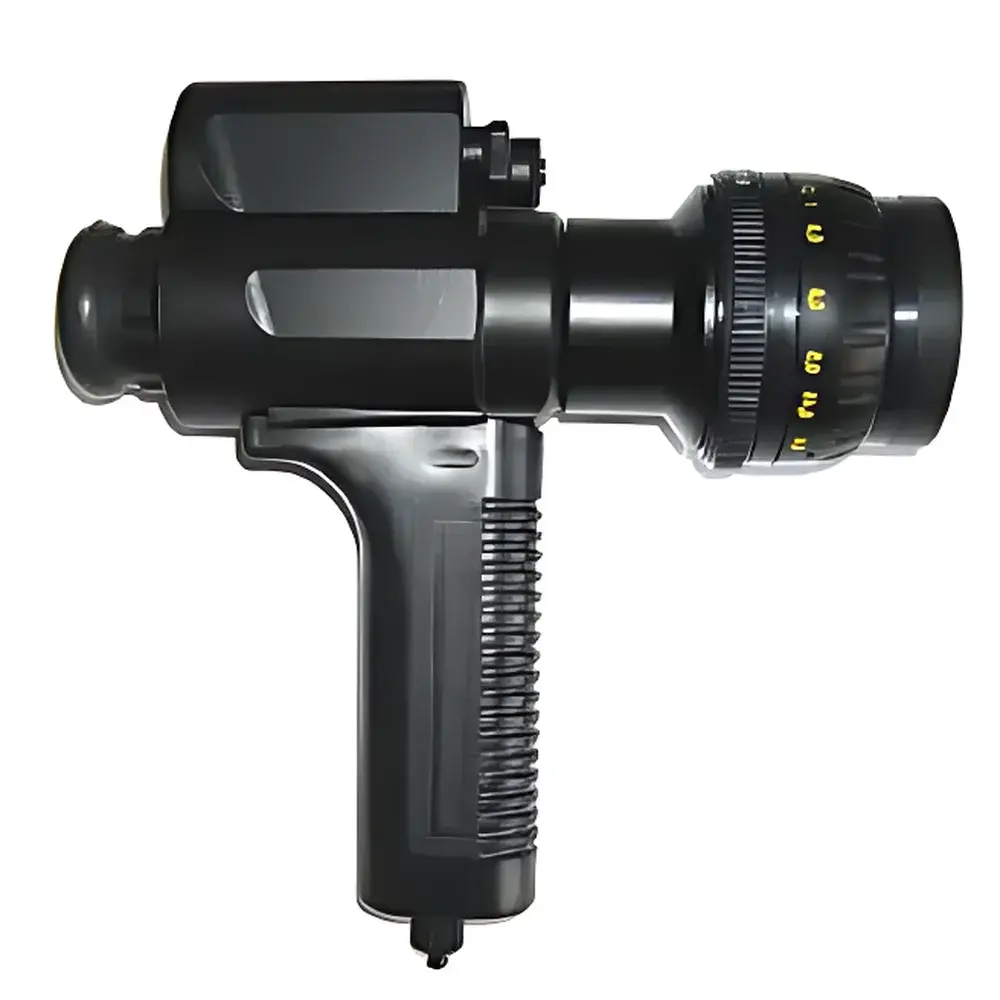
ElectroOptic Abris-M 2000 Infrared Laser Viewing Scope
| Brand | ElectroOptic |
|---|---|
| Origin | Belarus |
| Model | Abris-M 2000 |
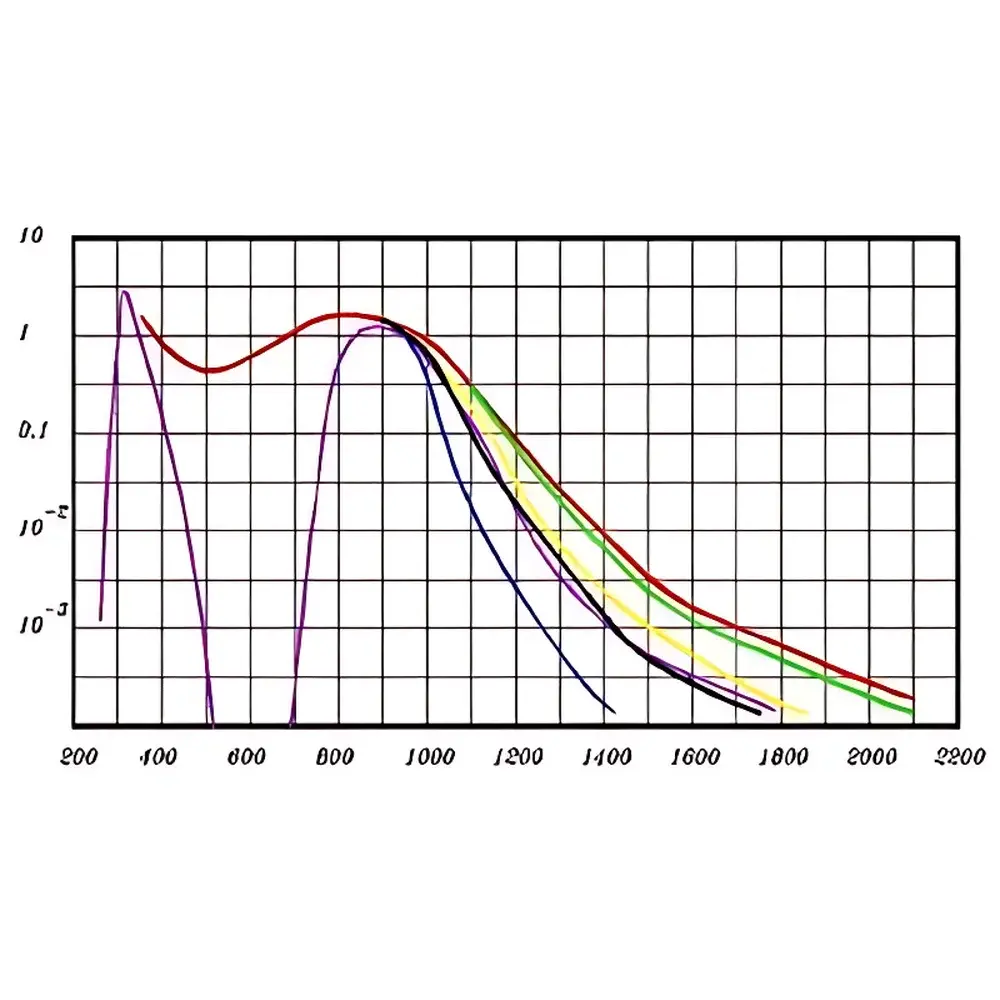
| Spectral Range | 350–2000 nm |
| Resolution | 60 lp/mm |
| Field of View | 40° |
| Magnification | 1× |
| Lens | F1.4 / 26 mm, uncoated |
| Focus Range | 0.15 m to ∞ |
| Power Supply | 1.5 V AAA battery (35 h runtime) or DC 3 V, ≤20 mA |
| Weight | 0.38 kg |
| Dimensions | 155 × 78 × 55 mm |
| Operating Temperature | −10 °C to +40 °C |
| Compliance | CE-marked optical safety device for laser alignment and IR visualization |
Overview
The ElectroOptic Abris-M 2000 Infrared Laser Viewing Scope is a compact, handheld optical instrument engineered for real-time visualization of near-infrared (NIR) and short-wave infrared (SWIR) laser radiation in the 350–2000 nm spectral range. Unlike thermal imaging cameras or phosphor-based viewers with limited dynamic response, the Abris-M 2000 employs a high-sensitivity, uncooled image converter tube optimized for direct photonic detection across UV-Vis-NIR bands. Its core principle relies on photoelectron emission from a semi-transparent photocathode, followed by electron acceleration and phosphor screen conversion—enabling instantaneous, low-latency observation of invisible laser beams, alignment spots, and scattered IR light without external cooling or complex calibration. Designed for laboratory, field service, and educational use, it supports safe, intuitive beam path verification during setup of Ti:sapphire oscillators, OPOs, fiber lasers (e.g., 1064 nm, 1550 nm), and supercontinuum sources.
Key Features
- Extended spectral sensitivity from 350 nm to 2000 nm—covering common laser wavelengths including 405 nm, 532 nm, 785 nm, 1064 nm, 1310 nm, 1550 nm, and 1950 nm.
- High-resolution imaging at 60 line pairs per millimeter (lp/mm), enabling clear distinction of beam profiles, hotspots, and spatial mode structure.
- Ergonomic head-mounted configuration via optional FaceMark adapter—freeing both hands for precision optical alignment, mirror adjustment, or fiber coupling.
- Fixed 1× magnification and 40° field of view ensure natural depth perception and wide-area scanning without parallax distortion.
- F1.4 / 26 mm fast lens with uncoated surface minimizes reflection losses and preserves signal fidelity for low-power beam observation.
- Integrated power management supporting dual-mode operation: three AAA alkaline batteries (35-hour continuous runtime) or regulated DC 3 V input (≤20 mA).
- Rugged aluminum housing (155 × 78 × 55 mm; 0.38 kg) rated for operation between −10 °C and +40 °C—suitable for cleanroom, industrial, and outdoor environments.
Sample Compatibility & Compliance
The Abris-M 2000 is compatible with all continuous-wave (CW) and pulsed laser sources emitting within its spectral window, including solid-state, diode-pumped, and fiber-based systems. It does not require sample preparation or coupling media and functions as a non-contact, passive viewing aid—ideal for alignment verification prior to detector installation or during maintenance. The device conforms to IEC 60825-1:2014 for Class 1 laser product safety when used with appropriate laser protective eyewear. While not a measurement instrument per se, its optical performance aligns with ISO 11146-1 for beam profiling auxiliary tools and supports GLP-compliant documentation workflows when integrated into controlled optical alignment SOPs.
Software & Data Management
The Abris-M 2000 operates as a standalone analog optical viewer and does not incorporate digital imaging sensors, firmware, or onboard data storage. Consequently, it requires no driver installation, software licensing, or cybersecurity configuration—making it inherently compliant with air-gapped lab networks and FDA 21 CFR Part 11 requirements for audit-trail-free instrumentation. Users may document observations via external high-resolution cameras mounted coaxially or through side-port adapters. For traceable alignment records, integration with third-party machine vision platforms (e.g., Thorlabs KCube-compatible capture systems) is supported using standard C-mount or SM1-threaded mechanical interfaces.
Applications
- Laser cavity alignment and mode-matching verification in ultrafast and tunable laser systems.
- Visual confirmation of beam delivery through free-space optics, fiber couplers, and waveguide outputs.
- Educational demonstration of NIR transparency, scattering behavior, and material absorption edges.
- Field service inspection of telecom-grade 1310/1550 nm transceivers and LIDAR subsystems.
- Quality control of IR LED arrays, VCSEL modules, and quantum cascade laser (QCL) emitters.
- Support for ISO/IEC 17025-accredited calibration labs performing laser parameter verification under Clause 5.5.2 (Equipment Verification).
FAQ
Is the Abris-M 2000 suitable for observing femtosecond laser pulses?
Yes—its image converter tube exhibits sub-microsecond temporal response, enabling visualization of individual pulses from Ti:sapphire and Yb-doped fiber lasers at repetition rates up to 80 MHz.
Can it be used with laser safety goggles?
The FaceMark adapter allows simultaneous wear with most ANSI Z87.1-compliant laser safety eyewear; however, overlapping optical paths must be verified empirically for each goggle model.
Does it require periodic recalibration?
No—being a passive analog optical device with no active electronics or drift-prone detectors, it maintains stable performance over its operational lifetime without scheduled recalibration.
What is the minimum detectable power density?
Detection threshold varies with wavelength and ambient lighting but typically ranges from ~10 µW/cm² at 1064 nm to ~50 µW/cm² at 1950 nm under dark-adapted conditions.
Is there an export-controlled version?
Standard Abris-M 2000 units fall outside EAR99 classification; however, configurations with enhanced NIR sensitivity beyond 2000 nm may be subject to Wassenaar Arrangement controls and require prior authorization for shipment outside Belarus and the EU.





