
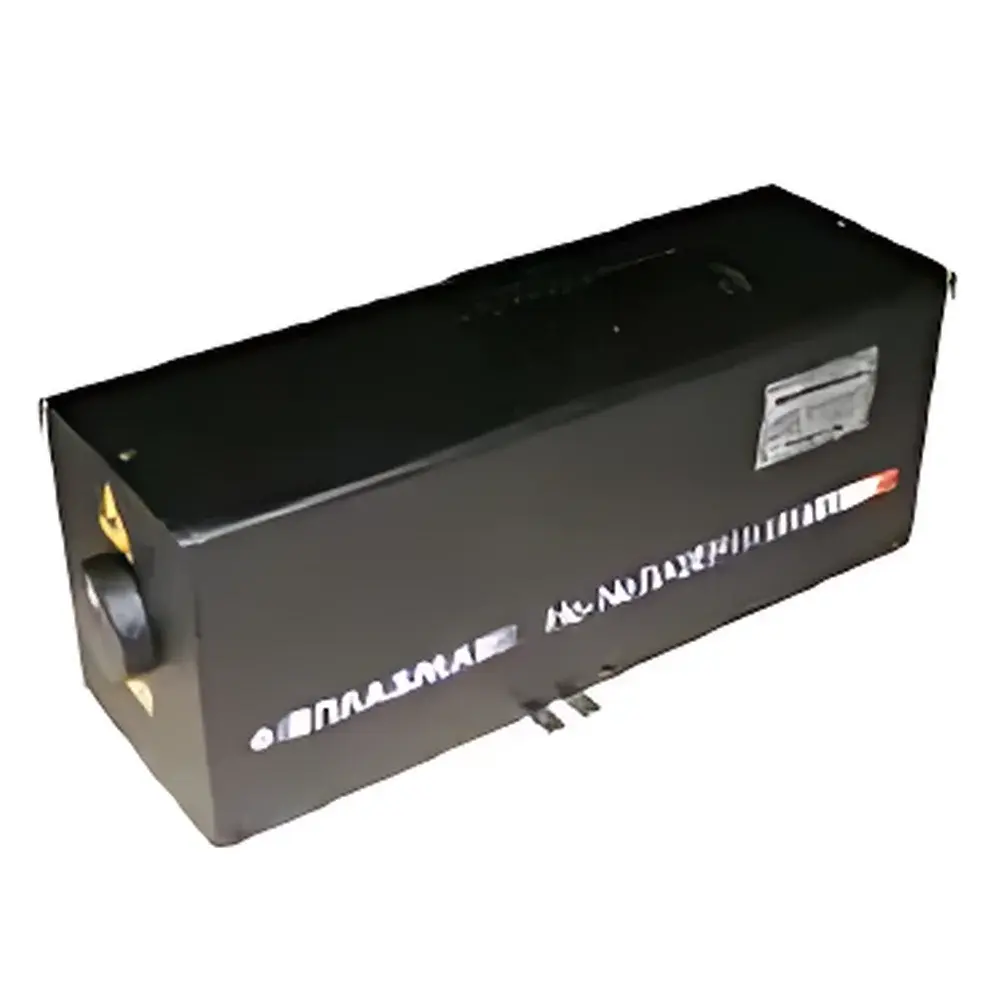
LGN-212 Stabilized Single-Frequency Helium-Neon Laser
| Origin | Russia |
|---|---|
| Manufacturer Type | Authorized Distributor |
| Origin Category | Imported |
| Model | LGN-212 |
| Pricing | Available Upon Request |
Overview
The LGN-212 is a high-stability, single-longitudinal-mode (SLM) helium-neon (HeNe) laser engineered for metrological-grade optical interferometry and precision wavelength-referenced applications. Operating at the fundamental 632.8 nm emission line in continuous-wave (CW) mode, it employs dual-frequency stabilization—typically via saturated absorption spectroscopy in an iodine cell or polarization-based locking—to achieve sub-MHz absolute frequency stability and long-term drift < ±1 MHz over 24 hours. Its monolithic cavity design minimizes mechanical sensitivity, while thermally compensated optics ensure robust performance under laboratory and industrial environmental fluctuations. Unlike multimode HeNe lasers, the LGN-212 suppresses mode-hopping and spatial hole-burning effects through optimized mirror curvature, gain tube bore geometry, and intra-cavity etalon integration—enabling coherence lengths exceeding 100 m and linewidths < 1 MHz (FWHM). This makes it suitable as a primary frequency standard in calibration laboratories, displacement metrology systems, and gravitational wave detector alignment subsystems.
Key Features
- Single-frequency output at 632.8 nm with guaranteed longitudinal mode purity (SMSR > 45 dB)
- Dual stabilization architecture: active electronic feedback combined with passive iodine-saturated absorption reference
- Output power stability ≤ ±0.5% over 8 hours (with temperature-controlled enclosure)
- Beam divergence < 1.2 mrad (full angle), TEM00 spatial profile with M² < 1.05
- Integrated piezoelectric transducer (PZT) for fine frequency tuning (±500 MHz range)
- Low-noise operation: intensity noise < 0.03% RMS (10 Hz–10 MHz bandwidth)
- Compliant with IEC 60825-1:2014 Class 3R laser safety requirements
Sample Compatibility & Compliance
The LGN-212 is designed for integration into open-beam optical benches, vacuum-compatible interferometer enclosures (e.g., Michelson, Fabry–Pérot, and heterodyne configurations), and OEM metrology platforms. It interfaces with standard 30 mm cage systems and accepts Ø25.4 mm kinematic mounts. All optical components meet ISO 10110 surface quality specifications (scratch-dig 10-5), and the laser head conforms to RoHS 2011/65/EU and REACH (EC) No. 1907/2006 material restrictions. For regulated environments—including ISO/IEC 17025-accredited calibration labs—the system supports traceable frequency calibration reports (NIST-traceable via accredited Russian NMIs such as VNIIM), and its analog modulation input enables synchronization with external timing standards compliant with IEEE 1588-2019 (PTP).
Software & Data Management
While the LGN-212 operates as a standalone analog instrument, it includes a 0–10 V DC analog monitor port for real-time power and frequency deviation tracking, compatible with standard data acquisition systems (e.g., National Instruments DAQmx, Keysight U2300A). Optional USB-to-TTL interface modules enable remote status interrogation (laser on/off, interlock state, temperature alarm) and PZT voltage control via SCPI-compliant ASCII commands. Firmware logs operational parameters—including cathode voltage, tube current, and heatsink temperature—at 1 Hz resolution; raw logs are exportable in CSV format for GLP/GMP audit trails. No proprietary software is required—integration with LabVIEW, Python (PyVISA), or MATLAB is supported out-of-the-box.
Applications
- Primary wavelength reference in national metrology institutes (NMIs) and calibration service providers
- Length metrology in coordinate measuring machines (CMMs) and laser trackers per ISO 10360 and VDI/VDE 2617
- Phase-sensitive detection in ellipsometers and scatterometers used in semiconductor wafer inspection
- Stabilized local oscillator in heterodyne interferometric vibrometers (e.g., for MEMS device characterization)
- Alignment source in synchrotron beamline optics and free-electron laser front-end diagnostics
- Teaching platform for advanced optics laboratories covering Doppler-free spectroscopy and laser locking techniques
FAQ
What is the typical warm-up time to achieve full frequency stability?
The LGN-212 requires approximately 30 minutes of continuous operation to reach thermal equilibrium; frequency lock is typically achieved within 45 minutes under ambient temperature variations < ±1 °C.
Is the laser compatible with vacuum environments?
The base model is air-cooled and rated for operation at atmospheric pressure only; however, a vacuum-compatible variant (LGN-212-VAC) with conduction-cooled housing and CF-35 flange mount is available upon request.
Does the system support external modulation at frequencies above 10 kHz?
Yes—the analog modulation input accepts signals up to 100 kHz bandwidth (−3 dB point); for digital TTL modulation, rise/fall times are < 50 ns.
Can the output polarization be rotated or controlled?
The laser emits linearly polarized light with extinction ratio > 500:1; a motorized half-wave plate (optional accessory) enables programmable polarization rotation with ±0.1° repeatability.
What documentation is provided for regulatory compliance in EU markets?
Each unit ships with an EC Declaration of Conformity, laser safety classification report, RoHS/REACH compliance certificate, and traceable calibration data sheet signed by the authorized distributor’s quality manager.



