
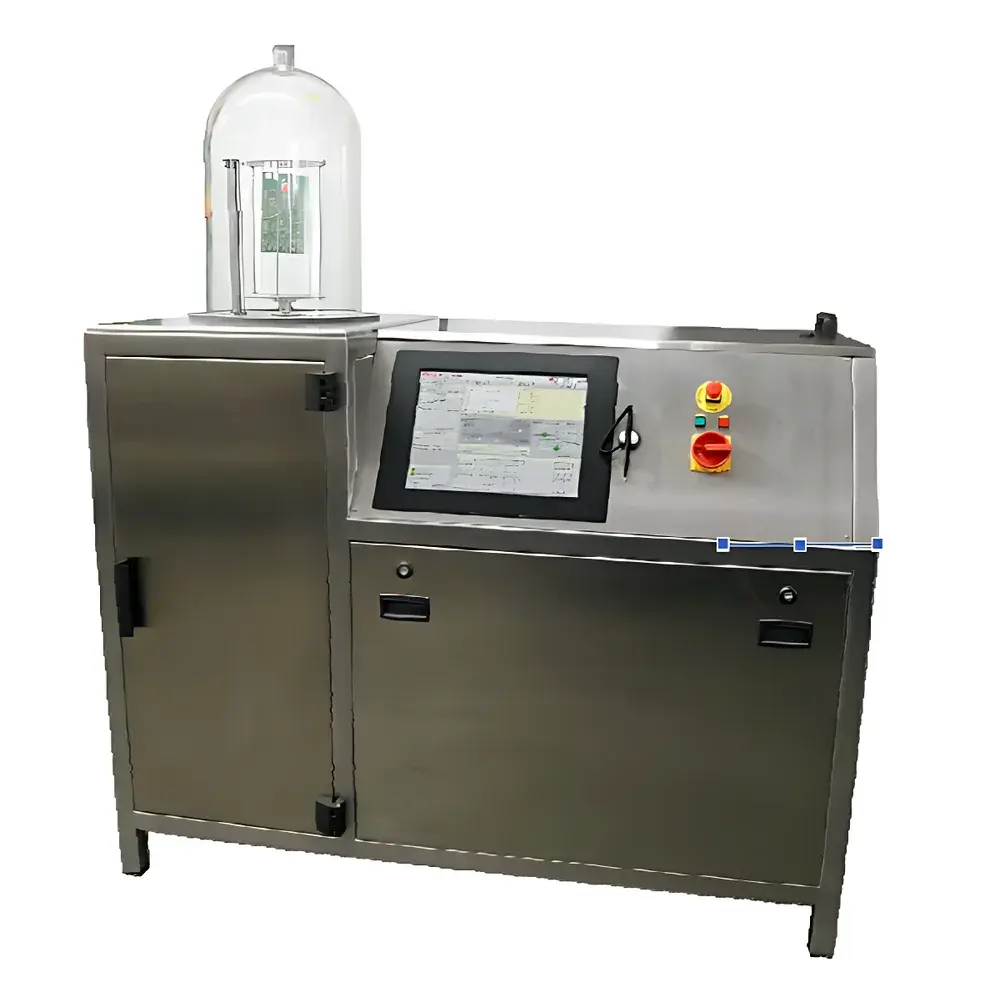
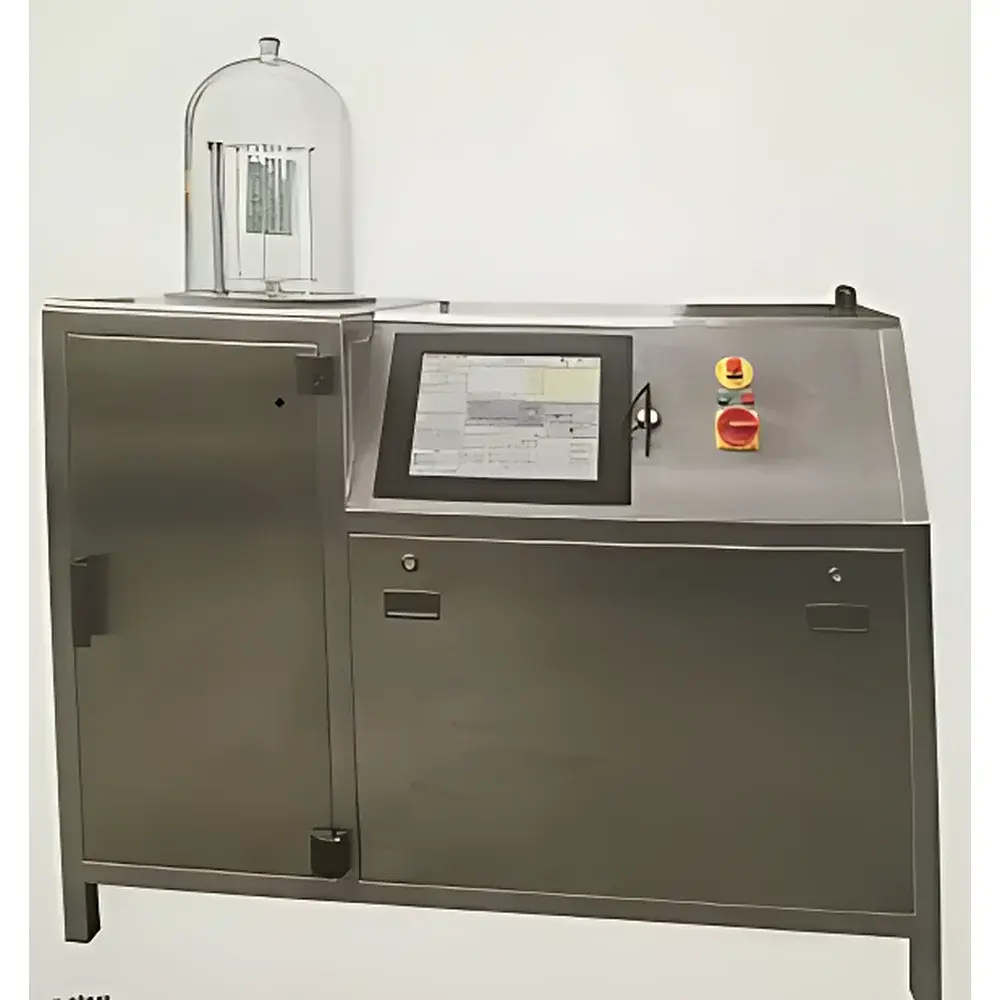
Diener P30 Parylene Coating System
| Brand | Diener |
|---|---|
| Origin | Germany |
| Model | P30 |
| Coating Types | Parylene N, C, D, F-VT4 |
| Coating Thickness Range | 0.05–50 µm |
| Chamber Dimensions (Diameter × Height) | 310 mm × 500 mm |
| Substrate Stage (Diameter × Height) | 150 mm × 270 mm |
| Pyrolyzer Power & Max Temp | 2 kW / 700 °C |
| Vacuum Pump | Dual-stage oil-sealed rotary vane pump |
| Pumping Speed | 25 m³/h |
| Ultimate Vacuum | 1 × 10⁻³ mbar |
| Control System | Integrated Windows-based PC platform |
| Electrical Supply | 400 V / 16 A / 50–60 Hz |
| Overall Dimensions (W × D × H) | 1400 mm × 700 mm × 1700 mm |
Overview
The Diener P30 Parylene Coating System is a fully integrated, vacuum-based chemical vapor deposition (CVD) platform engineered for the reproducible, conformal deposition of high-performance parylene polymer films—specifically Parylene N, C, D, and F-VT4—onto temperature-sensitive and geometrically complex substrates. Unlike conventional liquid-phase coating methods, parylene deposition occurs via a three-stage vacuum process: sublimation of the solid dimer (e.g., [2.2]paracyclophane), thermal cleavage in a high-temperature pyrolyzer (up to 700 °C) to generate reactive para-xylylene monomers, and spontaneous polymerization upon contact with ambient-temperature substrates within the deposition chamber. This gas-phase, room-temperature condensation mechanism ensures pinhole-free, uniform, and truly conformal coverage—even over sharp edges, deep trenches, and micro-scale features—without solvent residues, thermal stress, or line-of-sight limitations. Designed and manufactured in Germany, the P30 meets stringent requirements for cleanroom-compatible operation in R&D laboratories, quality control environments, and pre-production pilot lines serving electronics, medical device, aerospace, and photonics sectors.
Key Features
- True conformal coating capability across 3D microstructures, MEMS devices, and irregularly shaped components without shadowing or thickness variation.
- Multi-polymer compatibility: Supports deposition of Parylene N (high dielectric strength, low dissipation factor), C (enhanced barrier properties due to chlorine substitution), D (higher thermal stability), and F-VT4 (fluorinated variant offering superior UV resistance and lower moisture permeability).
- High-precision vacuum architecture: Dual-stage oil-sealed rotary vane pump achieves ultimate vacuum ≤1 × 10⁻³ mbar, ensuring optimal monomer transport and minimal oxygen contamination during polymerization.
- Integrated Windows-based PC control system with real-time monitoring of pressure, pyrolyzer temperature, chamber temperature, and process timing—enabling full parameter logging and recipe management.
- Dedicated cryogenic trapping (liquid nitrogen-cooled cold trap) prevents dimer recondensation in the vacuum line and maintains long-term pump integrity.
- Modular chamber design with 310 mm diameter × 500 mm height deposition volume and a 150 mm diameter × 270 mm height substrate stage—optimized for batch processing of PCBs, sensors, implantable components, and optical assemblies.
Sample Compatibility & Compliance
The P30 accommodates substrates ranging from silicon wafers and flexible printed circuits to stainless steel surgical tools, ceramic MEMS packages, and polymer-based biosensors. Its room-temperature deposition eliminates thermal degradation risks for heat-sensitive materials such as adhesives, polymers, and biological coatings. The system complies with ISO 14644-1 Class 5 (ISO Class 5) cleanroom integration standards when installed with appropriate ventilation and exhaust scrubbing. Process repeatability supports adherence to IPC-CC-830B (qualification and conformance of electrical insulating compounds), ASTM F1980 (accelerated aging of sterile barrier systems), and ISO 10993-5/10 (cytotoxicity and irritation testing for medical device coatings). Full audit trails, user-access controls, and electronic signature support align with FDA 21 CFR Part 11 requirements for regulated environments operating under GLP or GMP frameworks.
Software & Data Management
The embedded Windows-based control interface provides intuitive workflow navigation, multi-step recipe programming, and real-time graphical display of critical process variables—including chamber pressure decay profiles, pyrolyzer ramp rates, and deposition time stamps. All operational data—including start/stop timestamps, operator ID, environmental logs, and alarm history—are stored in encrypted CSV and SQLite formats for traceability. Optional OPC UA integration enables seamless connection to MES or LIMS platforms. Software updates are delivered via secure offline USB media to maintain system validation integrity in regulated labs.
Applications
- Electronics: Conformal insulation of PCBs, RF antennas, MEMS accelerometers, and high-frequency connectors; moisture and ionic contamination barrier for automotive ECUs and avionics modules.
- Medical Devices: Biocompatible encapsulation of neurostimulators, cochlear implants, and glucose sensors; lubricity enhancement and thromboresistance modification of catheter shafts and guidewires.
- Optics & Photonics: Anti-reflective and environmental protection layers on laser diodes, fiber Bragg gratings, and micro-optical benches.
- Aerospace & Defense: Corrosion-inhibiting coatings for turbine blade sensors, conformal shielding for satellite-mounted electronics, and radiation-hardened encapsulation for space-grade ICs.
- Research & Development: Surface functionalization for lab-on-chip platforms, controlled-release thin-film matrices, and model studies of diffusion-limited polymer growth kinetics.
FAQ
What parylene variants does the P30 support?
The system is configured for Parylene N, C, D, and F-VT4 deposition using dedicated dimer sources and optimized thermal profiles for each chemistry.
Can the P30 coat temperature-sensitive substrates like PET or polyimide film?
Yes—the entire deposition occurs at ambient substrate temperature, eliminating thermal stress. Typical substrate heating remains below 40 °C even during extended cycles.
Is the system compatible with ISO Class 5 cleanroom installation?
Yes, provided auxiliary HEPA filtration, exhaust abatement, and grounding protocols are implemented per Diener’s site preparation guidelines.
How is process validation supported?
The system records full parameter logs with timestamped metadata, supports IQ/OQ documentation templates, and includes calibration certificates for all critical sensors (pressure, temperature, power).
What maintenance intervals are recommended for the vacuum pump and cold trap?
Oil changes every 500 hours of pump operation; liquid nitrogen refills every 4–6 hours of continuous deposition; annual pyrolyzer thermocouple verification and chamber leak testing.



