
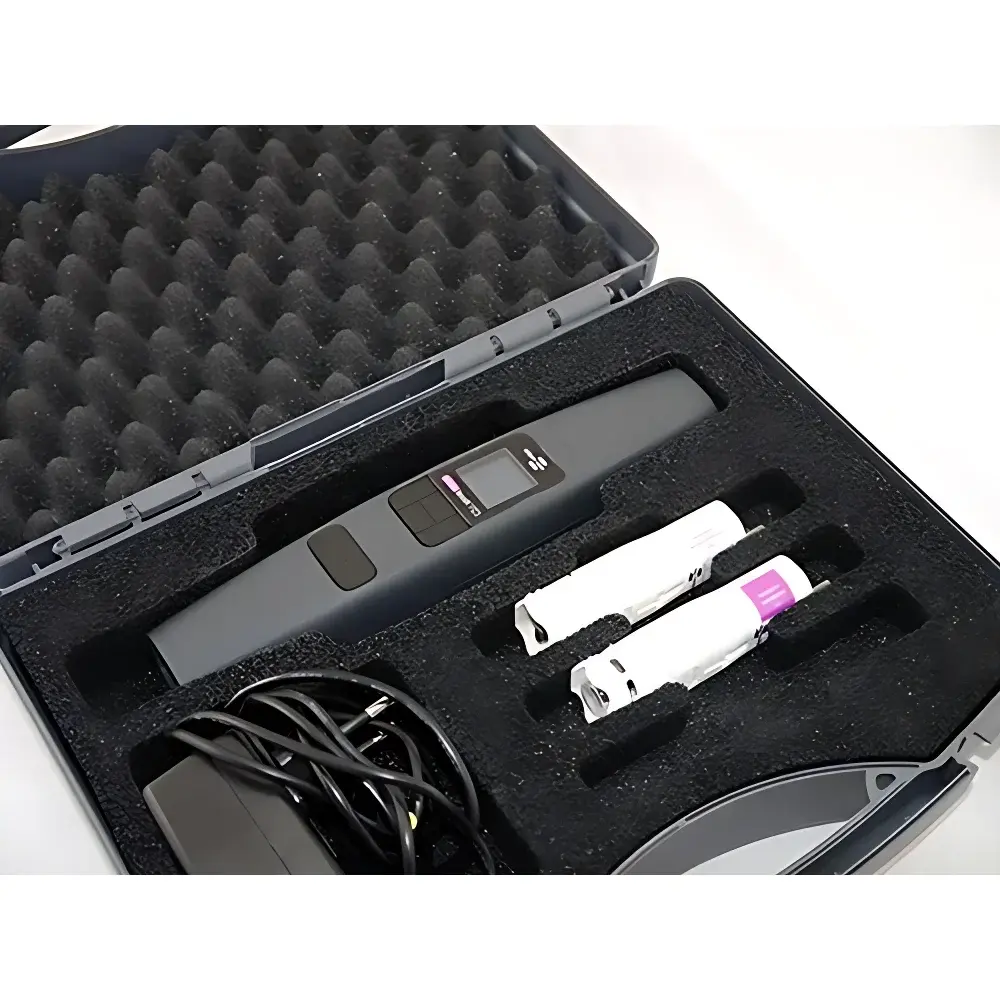
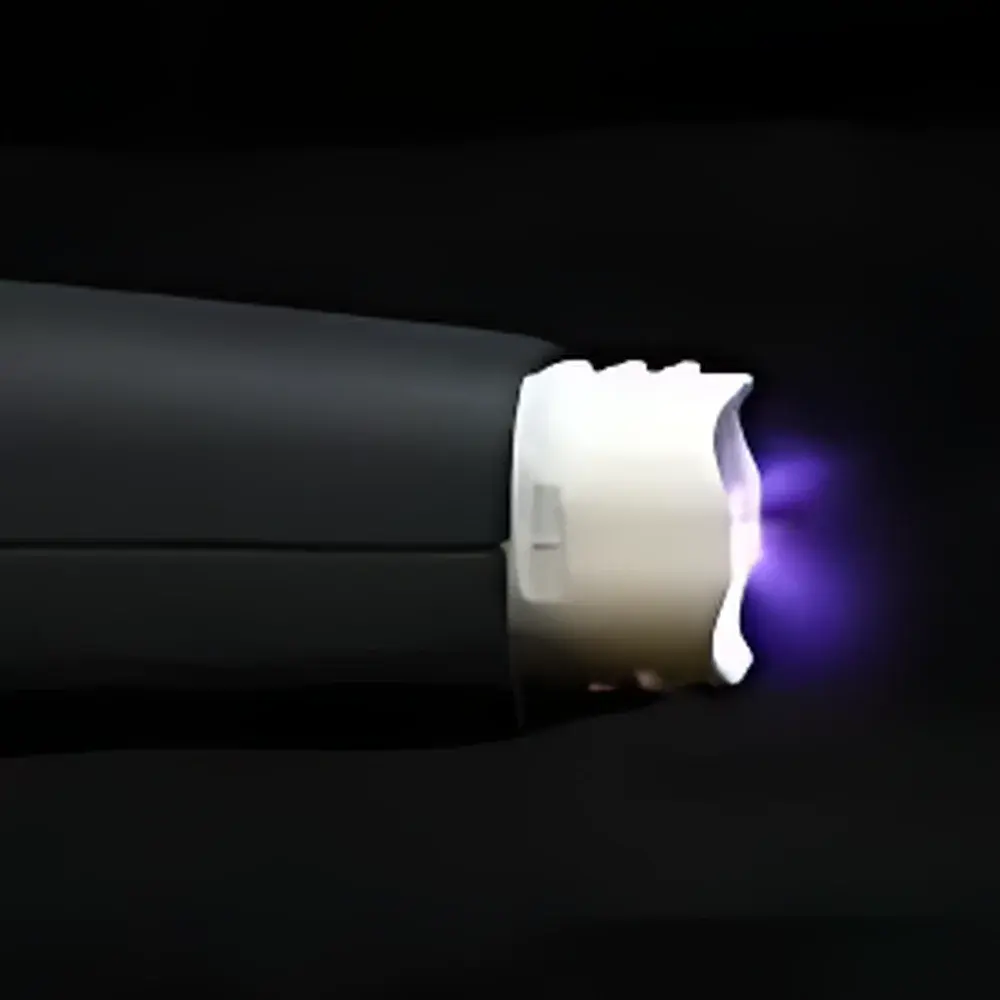
Relyon piezobrush® PZ3 Handheld Atmospheric Plasma Surface Treater
| Brand | Relyon |
|---|---|
| Origin | Germany |
| Model | PZ3 |
| RF Frequency | 80 kHz |
| Output Power | 10 W (nominal), up to 18 W max |
| Dimensions | 4 × 20 × 3 cm |
| Weight | 110 g |
| Operating Gas | Single-channel (Ar, He, or N₂) |
| Control Interface | Integrated LCD with timer, stopwatch, and metronome functions |
| Plasma Temperature | ≤50 °C |
| Treatment Speed | 5 cm²/s |
| Working Distance | 2–10 mm |
| Treatment Width | 5–29 mm |
| Module Types | Standard (for insulators), Near-field (for conductive/partially conductive substrates), Hybrid option available |
| Compliance | CE, RoHS, IEC 61000-6-3/6-4 |
Overview
The Relyon piezobrush® PZ3 is a compact, handheld atmospheric-pressure plasma surface treater engineered for precision surface activation, cleaning, and functionalization under ambient conditions. Unlike vacuum-based plasma systems, the PZ3 operates at standard temperature and pressure using Piezoelectric Direct Discharge (PDD®) technology—a proprietary high-field discharge method developed by TDK Electronics and integrated via the CeraPlas™ ceramic transducer module. This enables stable generation of cold, non-thermal plasma (<50 °C) without external gas supply lines or complex vacuum infrastructure. The device delivers reactive species (e.g., atomic oxygen, nitrogen radicals, excited metastables) directly onto substrate surfaces, modifying surface energy, removing organic contaminants at sub-monolayer levels, and introducing polar functional groups—critical for improving wettability, adhesion, printability, and coating uniformity. Its portability, low thermal load, and real-time process control make it suitable for iterative R&D workflows in microfabrication labs, medical device prototyping, and small-batch assembly lines where spatial constraints or material sensitivity preclude conventional plasma tools.
Key Features
- Handheld ergonomic design (4 × 20 × 3 cm; 110 g) enabling precise, localized treatment of complex geometries and hard-to-reach areas
- PDD® technology with CeraPlas™ transducer ensures stable, repeatable plasma ignition across diverse dielectric and conductive substrates
- Two interchangeable treatment modules: Standard module optimized for insulators (polymers, glass, ceramics); Near-field module for conductive or semi-conductive materials (metals, CFRP, metallized films, leaded glass)
- Automatic module recognition and adaptive parameter adjustment for consistent process outcomes
- Integrated LCD interface supporting programmable timer (auto-shutoff), elapsed-time stopwatch, and audible metronome for synchronized manual operation
- Multi-level plasma power regulation (10 W nominal, up to 18 W peak) with active thermal management and internal fan (45 dB(A))
- Single-gas inlet compatible with argon, helium, or nitrogen—no gas mixing required for most surface activation tasks
Sample Compatibility & Compliance
The PZ3 treats a broad spectrum of materials without requiring vacuum chambers or sample mounting fixtures. It accommodates rigid and flexible substrates—including thermoplastics (PP, PE, PET), elastomers, silicones, alumina, fused silica, stainless steel, copper foils, and bioresorbable polymers—without inducing thermal degradation or mechanical stress. For regulated environments, the system complies with CE marking requirements (2014/30/EU EMC Directive, 2014/35/EU LVD), RoHS 2011/65/EU, and IEC 61000-6-3 (emission) / IEC 61000-6-4 (immunity). While not certified for GMP production use out-of-the-box, its reproducible treatment parameters, auditable timing logs (via timer function), and absence of consumables support GLP-aligned documentation practices in preclinical research and QC validation protocols.
Software & Data Management
The PZ3 operates as a standalone instrument with no PC dependency. All operational parameters are managed through the built-in monochrome LCD and tactile keypad. Process metadata—including total runtime, number of activation cycles, and selected module type—is retained in volatile memory during operation but not stored long-term. For traceability in regulated labs, users may manually log treatment duration, distance, gas type, and substrate batch ID alongside visual inspection records. The device does not implement FDA 21 CFR Part 11-compliant electronic signatures or audit trails; however, its deterministic behavior (fixed RF frequency, calibrated power output, and geometrically constrained plasma plume) supports protocol-driven SOP execution and inter-operator repeatability studies.
Applications
- Surface activation prior to bonding, painting, or conformal coating of polyolefins, composites, and medical-grade polymers
- Pre-treatment of microfluidic chip substrates (e.g., PDMS, PMMA, COC) to enhance hydrophilicity and protein adsorption control
- Cleaning of optical components, sensor housings, and MEMS assemblies without solvent residues or particulate redeposition
- Decontamination of surgical instruments, dental prostheses, and labware surfaces—validated against ISO 14937 for microbial reduction efficacy
- Functionalization of textile fibers and natural biomaterials (e.g., chitosan, collagen scaffolds) for improved cell adhesion in tissue engineering
- Rapid prototyping support for adhesive joint development, printed electronics patterning, and flexible circuit repair
FAQ
What gases are compatible with the PZ3?
Argon, helium, and nitrogen are supported via a single gas inlet. No gas mixing capability is provided; optimal results depend on substrate chemistry and desired surface functionality.
Can the PZ3 treat conductive substrates safely?
Yes—when equipped with the Near-field module, the PZ3 safely activates metals, metallized films, and carbon-fiber composites by confining plasma ignition to sub-millimeter proximity, preventing arcing or current leakage.
Is the plasma truly “cold”?
Measured surface temperature rise remains ≤10 °C above ambient during continuous operation at 5 cm²/s, with bulk substrate temperature never exceeding 50 °C—even on thermally sensitive polymers like LDPE or PLA.
How does module selection affect treatment performance?
Standard modules generate diffuse plasma best suited for uniform activation of insulators; Near-field modules produce focused, higher-energy discharges necessary for reliable treatment of conductive surfaces or those with thin insulating coatings.
Does the PZ3 require preventive maintenance?
No scheduled maintenance is specified. Users should periodically inspect the ceramic electrode tip for contamination and clean with isopropanol if residue accumulates—especially after extended use with silicone-based or oily substrates.
Related Products



