
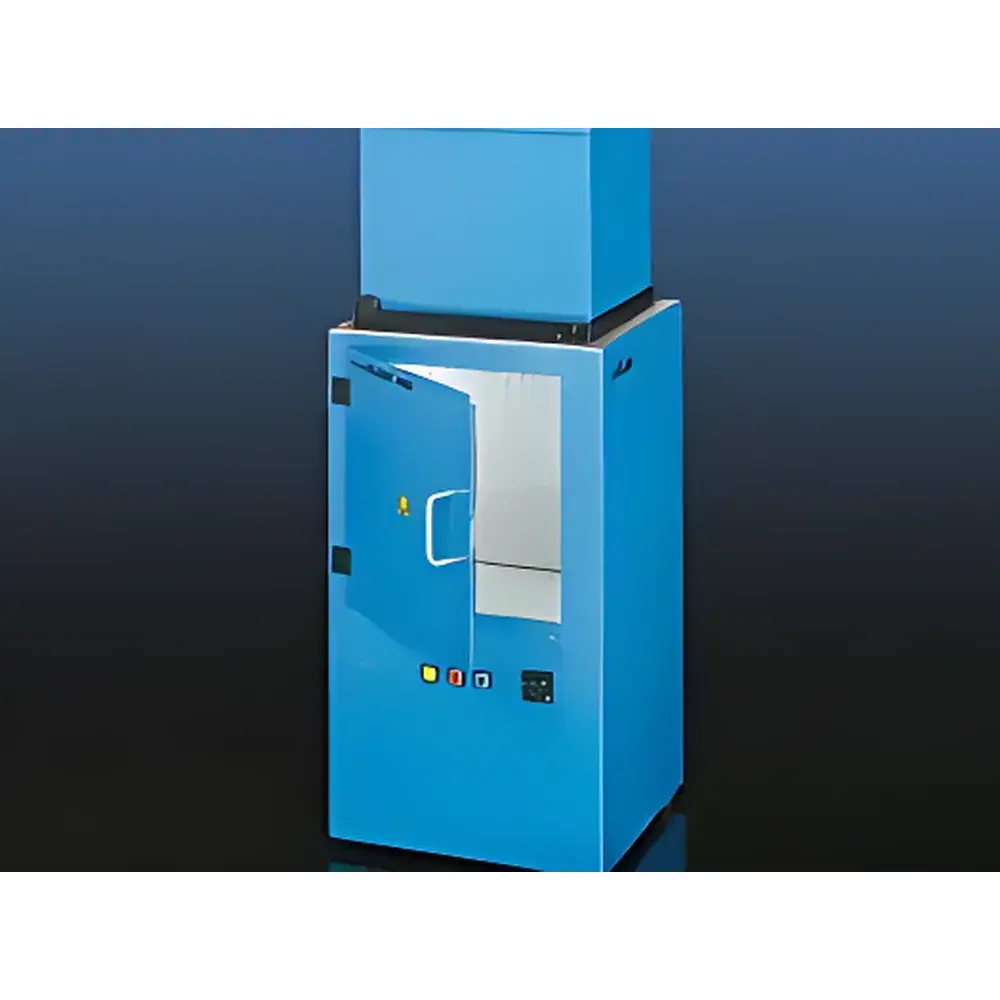
Honle UVACUBE400 UV Curing Chamber
| Brand | Hönle |
|---|---|
| Origin | Germany |
| Model | UVACUBE400 |
| Input Power | 400 W (UV lamp) |
| Spectral Options | Fe-doped, Ga-doped, Hg-based, and Solar-Simulated (SOL-SOL) lamps |
| Illuminated Area | max. 400 mm × 300 mm |
| Dimensions (L×W×H) | 834 mm × 466 mm × 402 mm (including lamp assembly) |
| Voltage/Frequency | 230 V / 50 Hz |
| Compliance | Meets IEC 60904-9 Class BBA–CCA requirements for steady-state solar simulation |
| Shutter | Integrated mechanical shutter |
| Lamp Lifetime | >1,000 h (typical, under recommended operating conditions) |
Overview
The Honle UVACUBE400 is a benchtop, enclosed ultraviolet (UV) and broad-spectrum irradiation chamber engineered for precision photopolymerization, material aging studies, and calibrated solar simulation in R&D and quality control laboratories. Based on Hönle’s decades of expertise in industrial UV technology, the UVACUBE400 employs high-intensity, low-ozone, medium-pressure mercury arc lamps—optionally doped with iron (Fe), gallium (Ga), or configured for solar-simulated output (SOL-SOL)—to deliver stable, reproducible irradiance across UVA (315–400 nm), UVB (280–315 nm), and visible (400–780 nm) spectral bands. Its optical architecture supports both pulsed and continuous irradiation modes, with an integrated mechanical shutter enabling precise exposure timing down to 0.1 s. Unlike open-frame UV systems, the fully enclosed design ensures operator safety (compliant with DIN EN 62471 for photobiological safety), consistent thermal management, and minimal ambient light interference—critical for quantitative photochemical testing and ISO/IEC 17025-accredited workflows.
Key Features
- Modular lamp system supporting four standardized spectral configurations: Fe-doped (peak ~385 nm), Ga-doped (peak ~403 nm), standard Hg (strong lines at 365 nm, 405 nm, 436 nm), and SOL-SOL (continuous spectrum approximating AM1.5G, validated per IEC 60904-9)
- Integrated mechanical shutter with programmable exposure control (0.1 s to 999 min), synchronized via TTL or analog input for automated test sequences
- Uniform irradiance distribution (>90% homogeneity) over 400 mm × 300 mm working area, verified using NIST-traceable radiometric mapping
- Robust stainless-steel chamber interior with reflective aluminum coating to maximize photon utilization and minimize thermal gradients
- Front-access quartz viewport (≥92% transmission from 254–700 nm) enabling real-time visual monitoring without interrupting irradiation
- Thermal management system with dual-zone forced-air cooling maintains sample temperature stability within ±2 °C during extended exposures
Sample Compatibility & Compliance
The UVACUBE400 accommodates samples up to 400 mm × 300 mm × 100 mm (W×L×H), including coated substrates, adhesive bonds, printed electronics, polymer films, and biological assay plates. Its sealed chamber meets IP20 ingress protection and conforms to DIN EN 61000-6-3 (EMC emission limits) and DIN EN 61000-6-2 (immunity). For solar simulation applications, the SOL-SOL configuration satisfies IEC 60904-9 Class CCA (spectral match) and Class BBA (irradiance non-uniformity and temporal stability), making it suitable for PV cell calibration, accelerated weathering per ISO 4892-2, and ASTM G155 cyclic corrosion testing. All UV lamp types comply with RoHS 2011/65/EU and are certified for use in GLP- and GMP-regulated environments where audit-ready exposure logs are required.
Software & Data Management
While the UVACUBE400 operates as a stand-alone instrument via front-panel controls, optional integration with Hönle’s UV-SoftControl software enables full remote operation, irradiance logging (via external calibrated sensor), and exposure protocol storage. The software supports CSV export of time-stamped irradiance, shutter status, and lamp hours—essential for 21 CFR Part 11-compliant electronic records. Audit trails include user ID, timestamp, parameter changes, and system error flags. Radiometric calibration certificates (traceable to PTB or NIST) are provided with each lamp replacement kit, and firmware updates maintain compatibility with evolving ISO/IEC 17025 documentation requirements.
Applications
- Photocuring of acrylate-based adhesives, conformal coatings, and 3D-printed resins under controlled spectral and dose conditions
- Accelerated UV aging of automotive clearcoats, packaging films, and outdoor signage per ISO 4892-3 and SAE J2020
- Stability testing of pharmaceutical formulations exposed to UV/visible light per ICH Q1B guidelines
- Solar simulator qualification for reference cell calibration and thin-film PV module stress testing
- Photochemical reaction kinetics in synthetic organic chemistry and photocatalysis research
- UV disinfection validation for surface materials using log-reduction protocols (e.g., ISO 15714)
FAQ
What spectral options are available—and how are they selected?
Four lamp types are factory-configurable: Fe-doped (UVA-focused), Ga-doped (violet-enhanced), standard Hg (multi-line UV/VIS), and SOL-SOL (broadband solar-simulated). Selection is hardware-based; lamps are mechanically interchangeable but require recalibration of irradiance sensors.
Is radiometric calibration included with the system?
Yes—a NIST-traceable spectral irradiance calibration certificate (covering 250–800 nm) is supplied with initial delivery and with each replacement lamp kit.
Can the UVACUBE400 be integrated into automated production lines?
Via optional digital I/O (TTL shutter trigger, lamp status feedback) and RS-485 Modbus RTU interface, enabling synchronization with PLCs and robotic handlers.
What safety certifications does the unit hold?
Complies with DIN EN 62471 (photobiological safety), DIN EN 61000-6-2/-3 (EMC), and carries CE marking for the European Economic Area.
How is lamp lifetime monitored and managed?
Total lamp-on hours are logged internally and accessible via front panel or UV-SoftControl; service alerts trigger at 900 h to support scheduled maintenance and ensure spectral consistency.




