
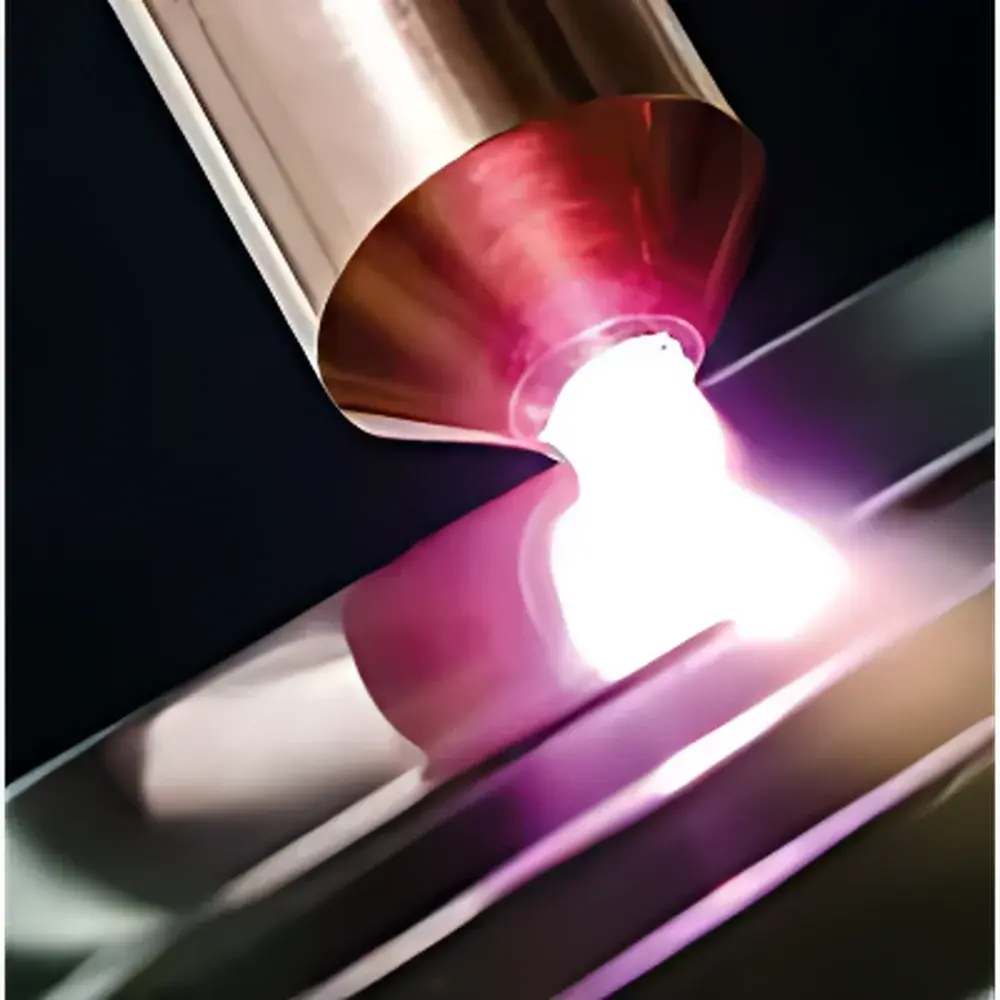
PlasmaBrush PB3 High-Power Atmospheric Plasma Generator
| Brand | Relyon |
|---|---|
| Origin | Japan |
| Model | PlasmaBrush PB3 |
| Instrument Type | Imported Atmospheric Plasma Surface Treater |
| Power Supply | PS2000 19-inch Rack-Mounted High-Voltage Source |
| Cable Length | 10 m |
| Weight | 680 g |
| Nozzle Diameter | 32 mm |
| Gas Inlet Connection | 6 mm |
| Operating Gas Flow Rate | 35–80 L/min |
| Typical Treatment Distance | 10–25 mm |
| Typical Treatment Width | 15–25 mm |
| Compatible Gases | Compressed Air, Nitrogen, Specialty Gases |
| Cooling | Passive, Low-Heat-Generation Housing |
| Technology | PAA – Pulsed Atmospheric Arc Technology® |
Overview
The PlasmaBrush PB3 is a high-power, atmospheric-pressure plasma generator engineered for precision surface activation, cleaning, and functionalization in both laboratory research and industrial manufacturing environments. Unlike low-power corona or dielectric barrier discharge (DBD) systems, the PB3 employs Relyon’s proprietary Pulsed Atmospheric Arc (PAA) Technology®, which integrates a unipolar pulsed high-voltage source with controlled vortex gas flow inside the nozzle head. This physical configuration enables stable, non-thermal plasma generation at ambient pressure—eliminating the need for vacuum chambers while maintaining high electron density and reactive species concentration. The system is designed for integration into automated production lines, robotic workcells, or benchtop sample preparation workflows where reproducible, localized surface modification is critical—such as pre-bonding treatment of polymers, adhesion promotion on composites, or contamination removal prior to coating or metallization.
Key Features
- Robust industrial architecture: Combines the PS2000 19-inch rack-mountable high-voltage power supply with the compact PB3 plasma head via a 10 m flexible high-voltage cable—enabling spatial decoupling and seamless integration into existing infrastructure.
- PAA Technology® operation: Delivers stable, arc-free plasma through synchronized pulse modulation and dynamic gas vortex formation, preventing thermal hotspot accumulation and minimizing electrode erosion over extended duty cycles.
- Modular, service-oriented design: Features a quick-release, field-replaceable nozzle assembly—reducing maintenance downtime and supporting application-specific optimization (e.g., narrow-jet or wide-area nozzles).
- Multi-gas compatibility: Certified for operation with compressed air, nitrogen, and custom gas mixtures (e.g., Ar/O₂, He/NH₃), enabling tunable plasma chemistry for oxidation, reduction, or amine-functionalization tasks.
- Thermally optimized housing: Engineered with passive heat dissipation and low thermal mass materials—ensuring surface temperature rise remains below 40 °C during continuous operation at rated flow and power.
- Wide operational envelope: Supports gas flow rates from 35 to 80 L/min and maintains stable plasma ignition across ambient temperatures from 5 °C to 40 °C, making it suitable for climate-controlled labs and factory-floor deployment.
Sample Compatibility & Compliance
The PlasmaBrush PB3 treats a broad spectrum of non-conductive and conductive substrates—including thermoplastics (PP, PE, PET), elastomers, ceramics, glass, metal foils, and printed circuit boards—without substrate damage or thermal distortion. Its atmospheric operation avoids vacuum-induced outgassing artifacts, preserving native surface topography and chemical integrity. The system complies with IEC 61000-6-3 (EMI emission limits) and IEC 61000-6-4 (industrial immunity), and its electrical safety design conforms to IEC 61010-1 for laboratory and industrial equipment. When used with validated protocols, plasma treatment processes support GLP-compliant documentation frameworks and are referenced in ASTM D726-22 (Standard Test Method for Resistance of Transparent and Translucent Plastic Sheet to Surface Abrasion) and ISO 12944-5 (Paints and varnishes — Corrosion protection of steel structures) for pretreatment qualification.
Software & Data Management
The PB3 operates as a stand-alone analog-controlled device; no embedded firmware or proprietary software is required for basic functionality. However, it is fully compatible with external programmable logic controllers (PLCs) and motion controllers via 0–10 V analog input (plasma on/off, power level) and digital I/O signals (arc detection, interlock status). For traceability in regulated environments, users may integrate the PB3 into SCADA or MES platforms using standard industrial communication protocols (e.g., Modbus RTU over RS-485). All operating parameters—including gas flow rate (via external mass flow controller), treatment distance, dwell time, and pass speed—are externally monitored and logged, supporting audit-ready process records aligned with FDA 21 CFR Part 11 requirements when paired with compliant data acquisition systems.
Applications
- Pre-adhesive treatment of polyolefin automotive trim components to achieve >3.5 N/mm peel strength per ASTM D903.
- Surface activation of medical-grade silicone tubing prior to plasma-enhanced chemical vapor deposition (PECVD) of anti-thrombogenic coatings.
- In-line cleaning of PCB solder masks to remove organic residues and improve solder wettability—validated per IPC-J-STD-001.
- Functionalization of polymer microfluidic chip channels to enable covalent immobilization of biorecognition elements (e.g., antibodies, aptamers).
- Decontamination of optical lens molds prior to injection molding—reducing defect rates by >92% in pilot-scale trials.
FAQ
What gases can be used with the PlasmaBrush PB3?
Compressed air, nitrogen, argon, helium, and custom mixtures (e.g., O₂-doped N₂) are supported. Gas selection directly influences reactive species composition (e.g., atomic oxygen for oxidation, excited nitrogen for amine grafting).
Is vacuum required for operation?
No. The PB3 generates stable non-thermal plasma at atmospheric pressure using PAA Technology®—eliminating vacuum pumps, chambers, and associated cycle time penalties.
Can the PB3 be integrated with robotic arms?
Yes. Its lightweight head (680 g), flexible 10 m HV cable, and analog/digital I/O interface make it ideal for mounting on 6-axis collaborative robots (e.g., Universal Robots UR series) with real-time path-synchronized plasma control.
How often does the nozzle require replacement?
Under typical use (8 h/day, air plasma, 50 L/min), nozzle service life exceeds 6,000 operating hours. Visual inspection for erosion or asymmetry is recommended every 1,000 hours.
Does the system include process validation support?
Relyon provides application notes, aging test protocols, and XPS/AFM correlation guidelines. Third-party IQ/OQ documentation templates are available upon request for GMP-aligned installations.



